
Revolutionizing Pediatric Organ Transplants: How 3D Printing Enhances Surgical Success
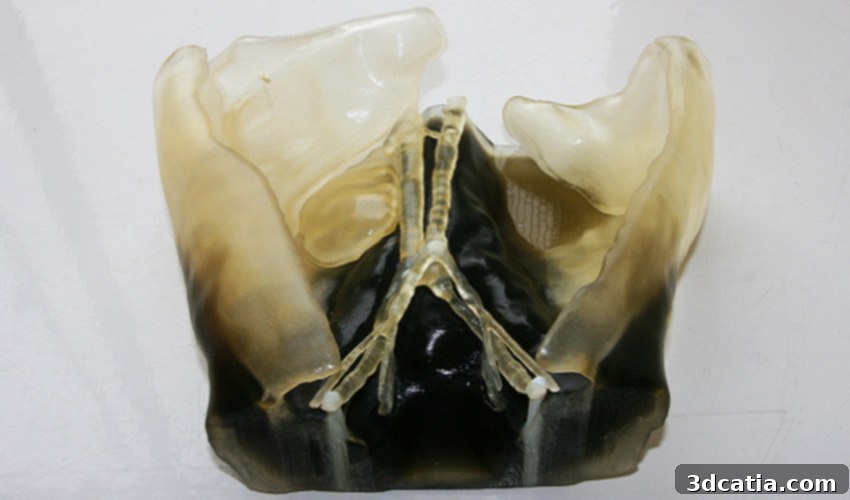
In a groundbreaking medical advancement, surgeons at Guy’s and St Thomas’ NHS Foundation Trust in London have leveraged the innovative power of 3D printing technology to significantly elevate the success rates of complex organ transplantation procedures, particularly in their most vulnerable patients – young children. This cutting-edge approach represents a paradigm shift in pediatric surgery, enabling a level of precision and preparedness previously unattainable. A recent triumph highlights this capability: a complex kidney transplant performed on a two-year-old boy named Dexter Clark, who had bravely battled a severe kidney problem since birth. The life-saving kidney was generously donated by his father, Brendan Clark. To meticulously prepare for this delicate operation, the surgical team ingeniously employed 3D printing, creating two highly accurate models: one replicating the father’s kidney and another detailing the intricate anatomy of Dexter’s abdomen, both derived from detailed 3D scans.
The integration of 3D technologies within the medical field is experiencing rapid growth, fundamentally transforming various aspects of healthcare. Beyond creating fully customized medical devices and patient-specific implants, this technology is revolutionizing surgeon training and pre-operative planning. Realistic post-operative models, tailored to specific anatomical complexities, are becoming indispensable tools for educating surgeons and refining their techniques. A prime example of this innovation is The French Startup BIOMODEX, which has placed anatomical 3D printed models at the core of its business. Their mission is to provide unparalleled training resources for doctors, allowing them to practice complex procedures in a lifelike environment before ever entering an operating room. This significantly reduces the potential for medical errors, which in high-stakes surgeries, could be potentially fatal. Furthermore, 3D technologies are increasingly facilitating organ transplants by offering superior simulation capabilities. Surgeons can now anticipate challenges and optimize their surgical approach with unprecedented clarity, leading to safer and more successful outcomes for patients worldwide.
The 3D printed kidney and abdomen models used for Dexter’s surgery.
A Complex Kidney Transplant: Overcoming Anatomical Challenges with 3D Printing
Dexter’s journey began with a congenital kidney problem that necessitated feeding through a gastric tube, indicating the severity of his condition from birth. As his health challenges persisted, it became clear that a kidney transplant was his only viable path to a healthier life. His father, Brendan, without hesitation, offered one of his own kidneys. However, this selfless act presented a significant surgical conundrum: Brendan, being an adult male of considerable stature, possessed a kidney that was considerably larger and wider than what would typically fit safely within the diminutive abdomen of a two-year-old. The surgical team faced a daunting challenge, grappling with significant concerns about the feasibility and safety of implanting an adult-sized organ into such a young recipient.
Traditionally, surgeons facing such complex pediatric transplant cases would often resort to an invasive surgical exploration to determine the viability of the procedure. This method involves placing the young patient under general anesthesia and making an incision simply to assess if the transplant is physically possible, carrying inherent risks and trauma. However, for Dexter’s case, the Guy’s and St Thomas’ team was determined to innovate. They opted for a non-invasive, technologically advanced approach: a detailed 3D scan of Brendan Clark’s kidney was performed, alongside an equally precise scan of Dexter’s tiny abdomen. These highly accurate digital blueprints were then transformed into tangible, physical models using a state-of-the-art 3D multi-material printer by Stratasys. This allowed the surgeons to hold exact replicas of the organs and the receiving cavity in their hands. As doctors explained, this revolutionary method provided an unparalleled understanding of the depth, spatial constraints, and intricate anatomical relationships within the child’s abdomen, enabling them to meticulously plan every aspect of the surgery. This forward-thinking initiative echoes successful precedents, such as the steps taken at the University Hospital of Amiens, which created a 3D printed model of a vertebral column to facilitate a complex spinal operation for a six-year-old, showcasing the growing utility of patient-specific models in challenging pediatric surgeries.
Dexter and his dad, Brendan Clark.
The impact of these 3D printed models extended far beyond just the planning phase. On the day of the transplant, these invaluable guides were brought directly into the operating room. The lead surgeons, who were responsible for the intricate procedure, meticulously examined and referenced the models throughout the surgery. One of the principal doctors involved in Dexter’s case elaborated on the profound benefits: “The ability to print a 3D model of the patient’s anatomy in varying textures, with the intricacies of the blood vessels clearly visible within it, enables us to differentiate critical anatomical relations between structures with extreme precision. Furthermore, the flexible materials employed allowed us to better mimic the natural flexibility and compliance of organs within the abdomen, providing a realistic simulation of the actual surgical environment. This level of tangible, haptic feedback before and during the operation significantly enhanced our confidence and precision, minimizing surprises and optimizing the entire surgical workflow.” This hands-on visualization proved instrumental in navigating the complex task of implanting an adult kidney into a child’s abdomen.
Thanks to this meticulous preparation and the unparalleled insights provided by 3D printing technology, the operation proceeded flawlessly. Little Dexter, a resilient and brave young boy, is now on a remarkable path to recovery and, for the first time in his life, can enjoy eating solid foods – a simple pleasure previously denied to him. The successful outcome of this complex procedure has brought immense relief and reassurance to Dexter’s family, who can now look forward to a healthier future for their son. They understand that the precisely created 3D models were not just aids, but realistic guides that significantly contributed to the surgeons’ success. This heartwarming story stands as a testament to the transformative potential of medical 3D printing. It is our fervent hope that this pioneering initiative at Guy’s and St Thomas’ is merely the beginning, and that many more such applications will emerge, allowing countless other patients, especially children facing similar life-threatening conditions, to heal quickly and safely through the power of advanced technology and dedicated medical expertise.
For more comprehensive information about their innovative work and patient care, please visit the official website of the London Foundation.
The Future Landscape of 3D Technologies in Surgical Innovation
The case of Dexter Clark serves as a powerful illustration of 3D printing’s immediate and profound impact on surgical outcomes. Looking ahead, the future of 3D technologies in the surgical field appears boundless, promising even more transformative advancements. We anticipate a continued evolution in multi-material printing, allowing for models that not only mimic texture and flexibility but also accurately simulate fluid dynamics and tissue responses. This could lead to even more realistic surgical rehearsals and a deeper understanding of patient-specific pathologies. Furthermore, the integration of artificial intelligence and machine learning could optimize the design process of these models, quickly identifying critical anatomical features and suggesting the most effective surgical approaches based on vast datasets. Beyond pre-operative planning, 3D printing is also paving the way for on-demand fabrication of customized surgical tools and even bioprinted tissues or organs, though the latter remains a more distant prospect. These innovations promise to further enhance surgical precision, reduce recovery times, and ultimately improve the quality of life for millions. The journey of additive manufacturing in healthcare is still unfolding, but its potential to redefine medical possibilities is undeniable.
What are your thoughts on the incredible potential of 3D technologies in the surgical field? We invite you to share your insights and predictions in a comment below, or join the conversation on our Facebook and Twitter pages! To stay abreast of the latest developments and breakthroughs in the world of additive manufacturing and medical innovation, make sure to sign up for our free weekly Newsletter here, delivering the most current 3D printing news straight to your inbox!