
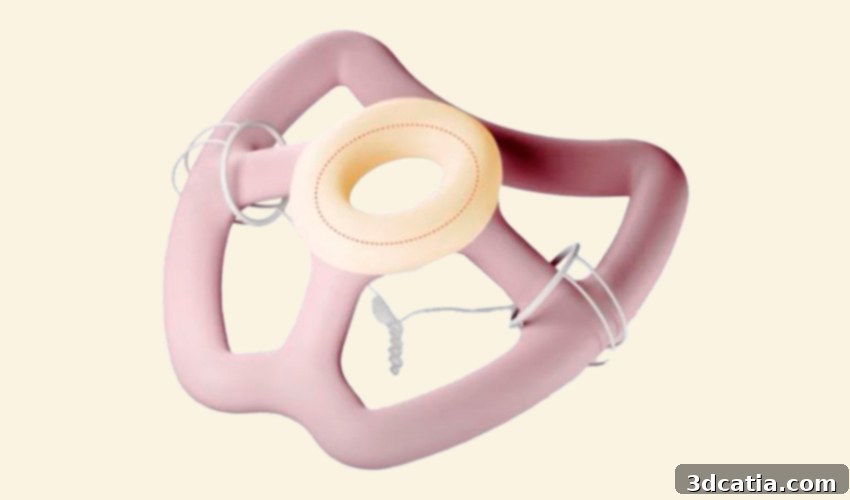
FemTherapeutics Pioneers Personalized Women’s Health: Revolutionizing Pelvic Organ Prolapse Treatment with Advanced 3D Printing Technology
In the vibrant and rapidly evolving landscape of healthcare innovation, Montreal-based startup FemTherapeutics is emerging as a groundbreaking force, dedicated to transforming women’s health through highly personalized solutions. The company specializes in the advanced treatment of pelvic organ prolapse (POP), a debilitating condition affecting millions worldwide. What truly distinguishes FemTherapeutics is its pioneering approach: developing custom, 3D-printed pessaries that are perfectly tailored to the unique anatomical and pathological needs of each individual patient. This innovative strategy marks a significant departure from traditional, one-size-fits-all treatments, promising enhanced efficacy and comfort. To delve deeper into their origins, methodologies, and ambitious future plans, we had the privilege of speaking with Vincent Castonguay-Siu, the Head of Engineering Research and Development at FemTherapeutics. Vincent generously shared insights into the company’s inception, the critical role of 3D printing technology in this specialized medical field, and the immense potential inherent in their patient-centric approach.
3DN: Could you introduce yourself and elaborate on your connection to 3D printing?

Vincent Castonguay-Siu, Head of Engineering R&D at FemTherapeutics.
At FemTherapeutics, our core mission is to revolutionize women’s health by providing truly personalized and effective treatment options for pelvic organ prolapse (POP). This condition, often overlooked but profoundly impactful, causes significant discomfort and diminishes the quality of life for countless women. To address this, we meticulously design and produce 3D-printed pessaries, ensuring each device is specifically customized for the individual patient. This bespoke customization process is driven by integrating detailed anatomical and pathological data unique to each woman into our advanced computational models. This allows us to precisely optimize the shape, fit, and functionality of the device, offering a level of precision and personalization previously unattainable.
My name is Vince, and I lead the mechanical engineering research and development efforts here at FemTherapeutics. My academic journey includes an M.Sc. in Biomedical Engineering from ETH Zurich, which provided me with a strong foundation in medical device innovation. With seven years of dedicated experience in the design and manufacturing sector, particularly within the challenging and regulated field of medical devices, I’ve had the privilege of contributing to several projects recognized for their innovative design and impact, both nationally and internationally. This background perfectly aligns with our ambitious goals at FemTherapeutics.
My initial exposure to 3D printing dates back to my formative high school and university years. Even then, I recognized the transformative power of this technology, leveraging it to create innovative prototypes such as corrective suspenders for scoliosis patients, advanced robotic rehabilitation gloves, and even intricate intervertebral disc implants. However, it was during my time as a volunteer manager at ETH’s Makerspace that my profound passion for creation, knowledge sharing, and continuous improvement truly flourished. The ability to rapidly iterate on designs, experiment with complex geometries, and empower others to bring their ideas to life solidified my commitment to additive manufacturing. Since then, the drive to create and innovate using 3D printing has been a constant in my professional life.
Our leadership team at FemTherapeutics brings a diverse and powerful blend of expertise. Inara, our co-founder and CEO, previously guided Fortune 500 companies through significant digital transformations and product launches as a technology consultant at E&Y, bringing invaluable strategic and operational acumen. Negin Ashouri, another co-founder and our CTO, possesses an impressive four years of experience in robotics, a field where she has garnered several international awards, contributing a deep understanding of complex system design and automation. Finally, Dr. Mihnea Gangal, co-founder and Medical Director, is a practicing urogynecologist at Notre-Dame and St. Mary’s hospitals in Montreal. His direct clinical experience and deep understanding of women’s health needs are absolutely vital, providing the crucial medical insight that grounds our technological innovations in real-world patient care.
3DN: How was FemTherapeutics created, and why did you choose to focus on 3D printing?
FemTherapeutics originated from the esteemed McGill Surgical Innovation Program, a unique initiative designed to unite students from diverse multidisciplinary backgrounds. This program immerses participants directly into the hospital environment, allowing them to gain an intimate understanding of the critical challenges faced by both surgeons and patients. It was within the gynecology department that Negin and Inara spent extensive hours alongside Dr. Gangal in operating rooms, observing numerous women undergoing surgical procedures to address a pervasive and recurring issue: pelvic organ prolapse (POP). They witnessed firsthand the physical and emotional toll this condition took on patients, as well as the limitations of existing treatment paradigms.
Through in-depth discussions with their mentor, Dr. Gangal, Negin and Inara critically identified significant shortcomings in the non-invasive solutions currently available for POP. These deficiencies often led to unsatisfactory outcomes, driving an increasing reliance on more invasive surgical interventions. Traditional pessaries, often mass-produced and poorly fitted, frequently resulted in discomfort, complications, and high rates of abandonment. It was this clear unmet need that ignited their determination. They resolved to embark on the development of a truly dynamic, personalized pessary, specifically engineered to dramatically improve patients’ quality of life, comfort, and long-term adherence to treatment.

Negin Ashouri (left), Dr Mihnea Gangal (center), Inara (right).
After comprehensive evaluation, FemTherapeutics unequivocally concluded that 3D printing, specifically additive manufacturing, represents the most appropriate and powerful technology for the sophisticated development of personalized medical devices like their pessaries. This technology offers the unparalleled ability to produce intricate, customized shapes with exceptional precision, which is absolutely critical for internal medical devices that must perfectly conform to unique human anatomies. Critically, 3D printing allows them to meet stringent quality standards essential for medical applications, while simultaneously remaining economically viable for the effective and scalable development of such specialized products. Unlike traditional manufacturing methods that struggle with mass customization, 3D printing provides the flexibility and cost-efficiency to create a truly unique device for every patient, directly addressing the core problem of ill-fitting, standardized treatments.
3DN: What printing processes and materials do you use?
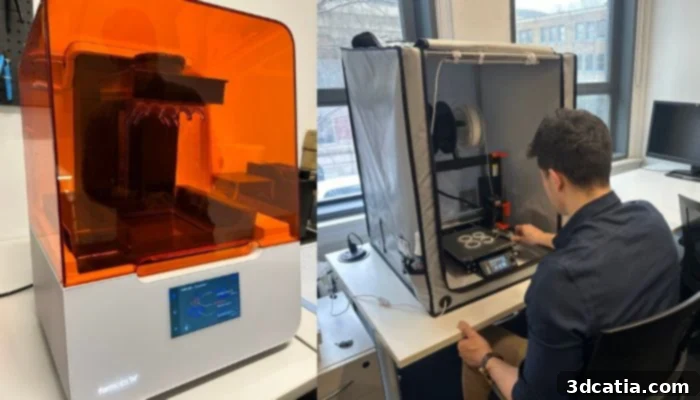
At FemTherapeutics, our primary preference for the development of our highly customized pessaries is stereolithography (SLA) 3D printing technology. This choice is driven by several key advantages that SLA offers, particularly its exceptional ability to produce the complex, intricate geometries required for effective pelvic organ prolapse treatment. The high resolution inherent in SLA technology minimizes the need for extensive manual post-processing or retouching, streamlining our production workflow and enhancing precision. Furthermore, SLA’s capability to yield remarkably smooth surfaces is a critical factor; it not only facilitates easier post-processing but also significantly reduces the risk of bacterial contamination, a paramount concern for any internal medical device. The smooth finish ensures greater patient comfort and minimizes potential irritation.
Regarding materials, our selection is always meticulously adapted to the specific application and functional requirements. For the definitive development of the pessaries themselves, we are actively evaluating and considering the use of medical-grade silicone or similar highly biocompatible materials offered by leading suppliers in the additive manufacturing space, such as Formlabs, Loctite, and Carbon. The inherent properties of medical silicone—its flexibility, inertness, and proven biocompatibility—make it an ideal candidate for long-term internal use. For functional prototypes, molds, and various other development devices within our R&D process, we frequently utilize a range of technical photopolymer resins. These include specialized resins like Elastic 50A, Flex 80A, and Tough 2000, which offer varying degrees of flexibility and durability essential for rigorous testing. Additionally, we employ filaments such as PLA, PETG, and TPEs for different prototyping needs. Our careful selection of materials is always predicated on the specific functional demands of each design iteration, taking into account critical characteristics like stiffness, hardness, and desired surface finish, ensuring optimal performance and safety at every stage of development.
3DN: How does the gynecological prosthesis work in the treatment of pelvic organ prolapse (POP) and urinary incontinence?
Pelvic floor disorders, including pelvic organ prolapse (POP) and urinary incontinence, represent a widespread and often silently endured challenge, affecting an estimated one in four women globally. These conditions can significantly impair daily activities, body image, and overall quality of life. Current treatment avenues primarily consist of pelvic floor surgery and the use of conventional vaginal pessaries. In countries like the USA and Canada, a substantial 20% of women eventually undergo pelvic floor surgery. Alarmingly, these surgeries often carry a 30% failure rate and an increased risk of severe complications, a fact tragically underscored by extensive litigation involving certain types of surgical mesh implants in 2019. This highlights the urgent need for safer, more effective alternatives.
On the other hand, traditional vaginal pessaries are mass-produced, intravaginal support devices available in a limited range of geometric shapes and standardized sizes. The fundamental flaw of these devices is their inability to perfectly conform to the highly varied and unique anatomies of individual women. Consequently, more than half of pessary wearers abandon their use within the first year due due to issues such as discomfort, poor fit leading to displacement, irritation, and the sheer inconvenience of managing an ill-fitting device. This high abandonment rate demonstrates a critical gap in non-surgical treatment options that FemTherapeutics is determined to bridge.
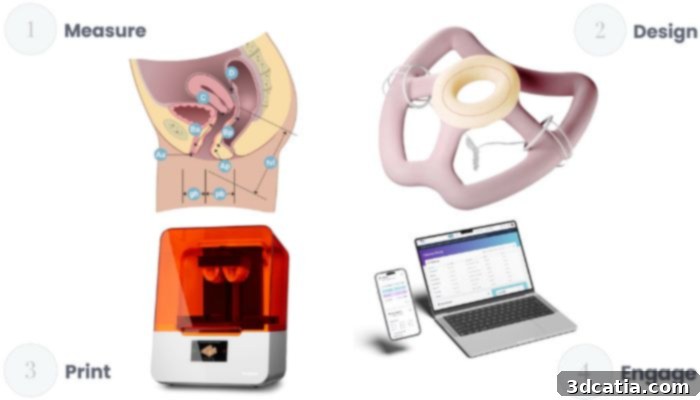
FemTherapeutics has innovated the world’s first truly adaptable vaginal pessary, designed to offer highly effective and symptomatic relief from pelvic floor disorders. Our solution is underpinned by a sophisticated, data-driven pelvic health platform, harnessing the latest advancements in secure iCloud software and artificial intelligence. This powerful software empowers healthcare providers to accurately visualize each patient’s unique pelvic anatomy and condition within a detailed 3D environment. From this precise digital model, doctors can then meticulously design pessaries that are perfectly tailored to her unique anatomical features, ensuring an optimal and comfortable fit. Once these personalized designs are finalized, we leverage state-of-the-art 3D printing techniques to directly produce the medical silicone device. This direct 3D printing of medical silicone for gynecological applications is an innovation never before achieved in this field, representing a monumental leap forward in personalized women’s health. The resulting device offers unparalleled support, comfort, and efficacy, significantly reducing the complications and discomfort associated with traditional, non-customized solutions.
3DN: What are FemTherapeutics’ future plans?
At FemTherapeutics, we are currently in a crucial phase, having completed the design freeze for our innovative personalized pessary. This means the core design has been finalized after extensive research, development, and iterative prototyping. The next critical steps involve rigorous biocompatibility testing, which is absolutely essential to ensure the device is safe, non-toxic, and fully compatible with the human body for long-term internal use. This testing is a prerequisite for initiating a comprehensive clinical study, which will be vital for gathering efficacy and safety data required for regulatory approval in major markets, specifically the USA (via the FDA) and Canada (via Health Canada). Successfully navigating these stringent regulatory pathways is paramount to bringing our product to market and making a real impact on women’s health.
Following the design freeze, we are actively engaged in the process of identifying and partnering with a qualified manufacturer. This collaboration will enable us to produce samples for the upcoming regulatory approval submissions and, subsequently, for commercial launch. We are targeting the third quarter of 2024 for this significant commercial launch, a milestone that will mark the culmination of years of dedicated innovation and hard work. Our overarching goal at FemTherapeutics is ambitious yet clear: to establish ourselves as the most effective personalized solution provider for women’s health, addressing critical unmet needs with cutting-edge technology.
Beyond our initial focus on pelvic organ prolapse, we envision a much broader application for our proprietary technology. Once our first product is firmly established and proven, we plan to strategically extend our personalized 3D printing platform and data-driven approach to other critical areas within women’s health. This includes maternal health, where customized devices could revolutionize prenatal and postnatal care; oncology, offering bespoke solutions for cancer treatment support; and menstruation, where personalized products could alleviate discomfort and improve hygiene for millions. This long-term vision underscores our commitment to continuous innovation and our aspiration to positively impact a wider spectrum of women’s health challenges globally.
3DN: Any last words for our readers?
As technological advancements continue at an unprecedented pace, personalized medicine is rapidly transitioning from a nascent concept to an increasingly widespread and essential component of modern healthcare. FemTherapeutics stands at the forefront of this revolution, particularly within women’s health, by leveraging the transformative power of 3D printing and artificial intelligence to deliver solutions that are not just effective, but truly tailored to the individual. Our dedication is rooted in improving the lives of women by providing comfortable, effective, and dignified treatment options that were once considered impossible.
We invite all our readers to learn more about FemTherapeutics, our groundbreaking initiatives, and our vision for a healthier future for women. Please visit our website HERE for detailed information and updates on our progress. We believe that by fostering innovation and embracing personalized approaches, we can create a significant and lasting positive impact on women’s health globally.

The FemTherapeutics team
What do you think of FemTherapeutics’ innovative approach to women’s health? Let us know your thoughts and insights in a comment below or engage with us on our LinkedIn, Facebook, and Twitter pages! Don’t forget to sign up for our free weekly newsletter here to receive the very latest 3D printing news, delivered straight to your inbox! You can also find all our compelling videos and interviews on our YouTube channel, offering a visual journey into the world of additive manufacturing.
*All Photo Credits: FemTherapeutics