
Weekly 3D Printing News: Prusa’s US Expansion, Advanced Metal AM, and Medical Innovations
Welcome to our latest #3DExpress news roundup, where we delve into the most compelling developments shaping the additive manufacturing landscape this week. The global 3D printing industry continues its rapid evolution, marked by strategic expansions, technological breakthroughs, and impactful applications across diverse sectors. From established leaders bolstering their international presence to pioneering material innovations and critical advancements in medical applications, this week’s news highlights the dynamic growth and increasing maturity of additive manufacturing worldwide. Join us as we explore these pivotal stories, offering insights into how these changes are setting new benchmarks for efficiency, accessibility, and transformative impact. Your feedback is always welcome, so let us know which news item you found most intriguing!
Prusa Research Expands Operations into the USA
In a significant move poised to reshape the desktop 3D printing market in North America, Prusa Research, the renowned Czech 3D printing specialist, has announced a major expansion of its operations into the United States. This strategic internationalization marks a pivotal moment for the company, as it establishes a direct presence in Delaware, solidifying its commitment to the American maker community and industrial users alike. From now on, key operational functions including assembly, production, and repair services will be carried out both from their existing headquarters in Prague and their new facility in Delaware. This dual-location strategy is designed to significantly enhance Prusa’s responsiveness and service capabilities across the Atlantic.
Prusa’s initial foray into the US market has already seen the creation of approximately 30 local jobs, a number that the company anticipates will steadily grow in the coming months as operations scale up. This expansion is not merely about establishing a new outpost; Prusa Research is embarking on a long-term vision to embed itself deeply within the US manufacturing ecosystem. Their ambitious goal is to become a leading US manufacturer of 3D printers and filaments within the next twelve months. This dedication to local manufacturing, coupled with their reputation for high-quality, open-source hardware like the popular Prusa i3 MK4 and the advanced Prusa XL, is expected to yield substantial benefits for customers.
For the vibrant American maker community, this expansion is particularly exciting. The establishment of a US-based hub means drastically shorter delivery times for Prusa hardware and Prusament filaments, which have historically faced longer shipping periods from Europe. Furthermore, localized customer support and quicker access to spare parts and repair services will greatly improve the overall user experience. This direct engagement will also foster stronger relationships with American educators, hobbyists, and businesses who rely on Prusa’s reliable and innovative 3D printing solutions. By bringing production closer to its customer base, Prusa Research is not only streamlining its supply chain but also reinforcing its position as a global leader dedicated to democratizing additive manufacturing.
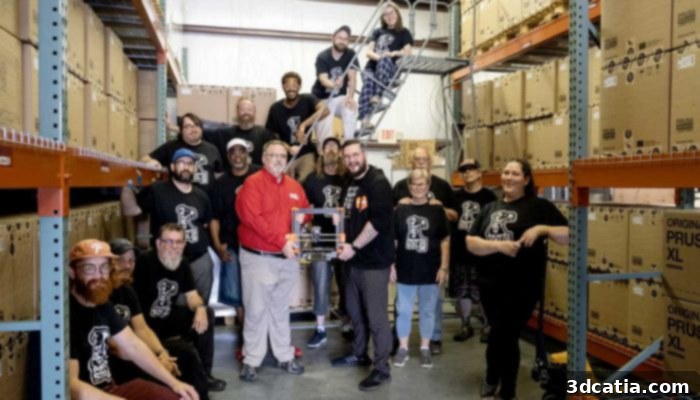
Photo Credits: Prusa
Renishaw Strengthens US Additive Manufacturing Through Coalition Membership
Renishaw, a global leader in engineering and scientific technology with significant expertise in additive manufacturing, has announced its membership in the American Additive Manufacturing Coalition. This strategic alliance underscores Renishaw’s commitment to advancing the adoption and understanding of AM technologies across the United States. The Additive Manufacturing Coalition is a prominent American advocacy group dedicated to shaping public policy that fosters the growth and widespread use of AM in critical sectors.
The importance of 3D printing has been increasingly recognized by US policymakers, especially following initiatives like the Biden administration’s AM Forward program, which aims to bolster domestic manufacturing capabilities through additive technologies. However, despite this growing awareness, a significant gap in education and comprehensive understanding of AM’s full potential persists among decision-makers, stakeholders, and the general public. This educational imperative is precisely what motivated Renishaw to join the coalition. The company intends to leverage its extensive experience and technical prowess to educate these groups on the multifaceted benefits of additive manufacturing, particularly its crucial role in enhancing national security, improving healthcare outcomes, safeguarding information security, and revitalizing domestic manufacturing capabilities.
John Laureto, AM Business Manager Americas at Renishaw Inc., emphasized the significance of this collaboration: “As the use of AM expands further and into new markets, the AM Coalition helps stand as a voice in support of all that AM has to offer. As a member, we will help drive AM use to improve economic prosperity and national security.” Renishaw’s participation brings invaluable insights into the practical applications and industrial benefits of metal AM technology. Their contributions will help the coalition articulate more effectively how policies can be crafted to accelerate innovation, create high-tech jobs, and ensure the United States remains at the forefront of additive manufacturing advancements. By working directly with policymakers, Renishaw aims to dismantle barriers to adoption and create an environment conducive to the sustained growth of AM, ultimately strengthening the US industrial base and technological competitiveness.
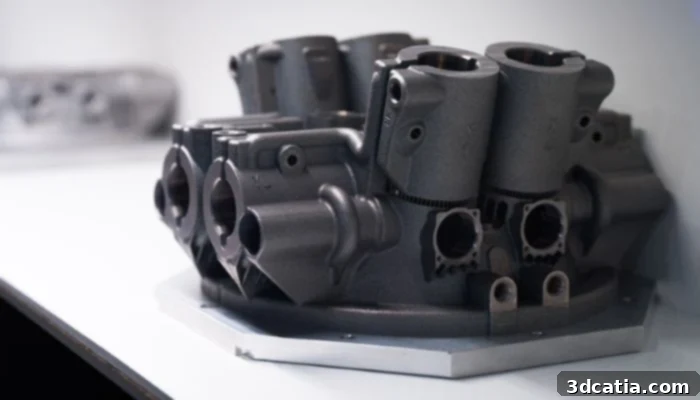
A part made with Renishaw’s metal AM technology (photo credits: Renishaw)
BLT Unveils Innovative High-Temperature Titanium Powder for 3D Printing
Bright Laser Technologies (BLT), a prominent Chinese firm known for its advancements in metal additive manufacturing, has recently launched a groundbreaking new material: BLT-Ti65. This innovative metal powder is a high-temperature multi-element titanium alloy specifically engineered for demanding additive manufacturing processes such as Laser Powder Bed Fusion (LPBF) and Directed Energy Deposition (DED). The introduction of BLT-Ti65 signifies a major leap forward in material science for 3D printing, addressing the critical need for components capable of withstanding extreme operational conditions.
The BLT-Ti65 alloy boasts an exceptional combination of properties that make it a superior choice for high-performance applications. It features excellent ductility, allowing for complex geometries and designs without compromising material integrity. Its remarkable creep resistance ensures structural stability under sustained stress at elevated temperatures, while its superior corrosion resistance guarantees longevity even in harsh environments. Most notably, BLT-Ti65 exhibits outstanding thermal stability, capable of maintaining its mechanical properties at temperatures up to an impressive 650°C. This performance far surpasses that of conventional titanium alloys, which typically begin to lose strength at much lower temperatures.
This strategic launch by BLT directly responds to the escalating demand from industries for lighter yet more robust materials that can perform reliably at high temperatures. Sectors such as aerospace and defense are particularly keen on such innovations, where components must meet stringent requirements for low density, high strength-to-weight ratios, and extreme thermal resilience. Engine components, structural parts, and specialized tooling can all benefit immensely from BLT-Ti65, enabling the design of more efficient and durable parts. Beyond aerospace, this advanced titanium alloy holds significant promise for the automotive, energy, and medical industries, where improved performance under challenging conditions can lead to revolutionary product developments and operational efficiencies. BLT-Ti65 underscores BLT’s role as a key innovator in the global metal additive manufacturing landscape, continually pushing the boundaries of what is possible with advanced materials.
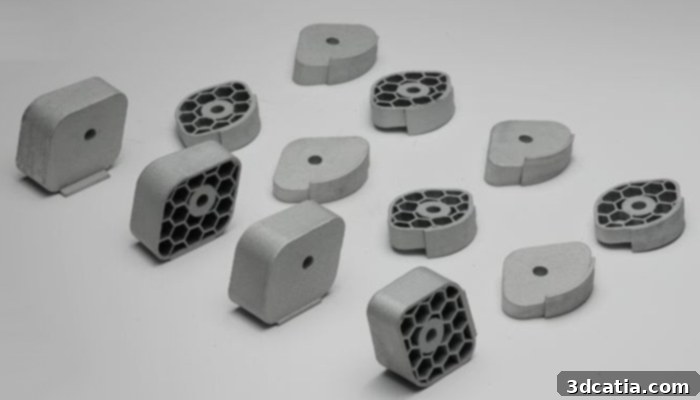
Photo Credits: Bright Laser Technologies
Nikon Launches Nikon AM Synergy to Accelerate Metal AM Adoption
Nikon Corporation, a global leader in precision optics and imaging technology, has announced a significant strategic reorganization that will see the Morf3D service bureau, which Nikon acquired in July 2023, rebranded as Nikon AM Synergy. This move represents a complete transformation of the company’s additive manufacturing operations, centralizing them at Nikon’s cutting-edge manufacturing facility in Long Beach, California. Nikon AM Synergy is designed to be a dedicated powerhouse focused on accelerating the adoption and scalability of metal additive manufacturing for the most advanced applications, with a particular emphasis on the demanding aerospace and defense sectors.
The core mission of Nikon AM Synergy is to bridge the gap between innovative AM technologies and industrial-scale production. This will be achieved through the seamless integration of Nikon SLM Solutions’ sophisticated Laser Powder Bed Fusion (L-PBF) technology with Nikon’s internally developed Directed Energy Deposition (DED) solutions. By combining these two powerful metal 3D printing methods, Nikon AM Synergy offers a comprehensive suite of capabilities, enabling the production of highly complex and high-performance metal components. This integrated approach ensures that customers can access optimal solutions tailored to their specific application requirements, from prototyping to full-scale production.
This reorganization marks a pivotal milestone in Nikon’s journey under its ambitious Nikon Vision 2030 plan. The broader vision for Nikon is to facilitate the widespread adoption and scalability of advanced manufacturing solutions, thereby firmly establishing Nikon as a leader in on-shore industrial manufacturing. By concentrating expertise and resources in Long Beach, Nikon AM Synergy will not only serve as a critical service bureau but also as a hub for research, development, and training. This strategic move aligns with the growing global emphasis on resilient and localized supply chains, particularly for critical industries like aerospace and defense. Nikon AM Synergy is poised to empower these sectors with the tools and expertise needed to leverage the full potential of metal additive manufacturing, driving innovation and efficiency in high-value production environments.
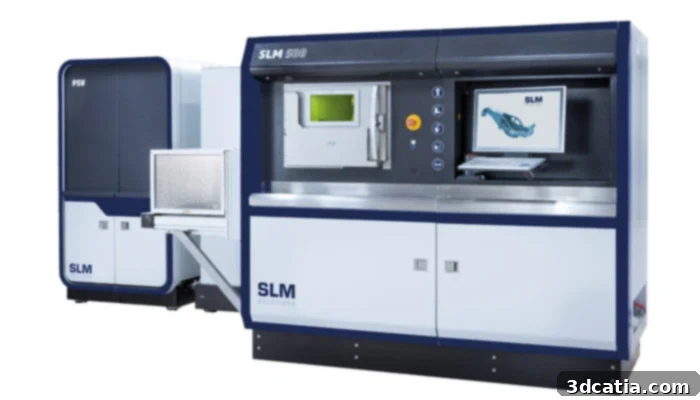
Photo Credits: Nikon SLM Solutions
Bolivian Hospital Adopts 3D Printing for Enhanced Traumatology and Surgical Planning
In a testament to the transformative power of additive manufacturing in healthcare, the La Portada Municipal Hospital in Bolivia has inaugurated a pioneering new 3D printing service. This cutting-edge facility will primarily serve the departments of traumatology and ultrasound, ushering in a new era of medical diagnostics and pre-surgical planning. This significant advance will enable medical professionals to create highly accurate, patient-specific 3D printed models of organs and bones. These tangible replicas provide an unprecedented level of detail for analysis and planning prior to any surgical intervention, greatly enhancing the precision and safety of medical procedures.
The implementation of this new service is set to revolutionize how surgeons approach complex cases. For instance, being able to physically hold and examine a 3D printed model of a fractured bone allows surgeons to observe the injury from every angle, palpate its unique contours, and meticulously plan the most effective surgical approach. This tactile interaction facilitates a deeper understanding of the patient’s anatomy and pathology than traditional two-dimensional images like X-rays or even tomographies can offer. Beyond surgical planning, the 3D models also play a crucial role in selecting the most appropriate implants and ensuring a perfect fit, thereby improving post-operative outcomes and patient recovery.
Iván Arias, the mayor of La Paz, underscored one of the main benefits of this new 3D printing capability: the provision of a more accurate and comprehensible diagnosis. He eloquently explained, “The advantage of the combination of X-ray, tomography and 3D, is that you can already palpate. For the patient it’s great. If I touch and you show me, I understand the severity of my situation. It is a great help for empathy between the patient and the physician.” This ability to visualize and physically interact with a model of their own injury empowers patients, fostering a stronger sense of understanding and trust between them and their medical team. This initiative by La Portada Municipal Hospital exemplifies how medical 3D printing is democratizing advanced healthcare, making complex diagnoses more accessible and improving patient care in regions that can greatly benefit from such innovative technologies.
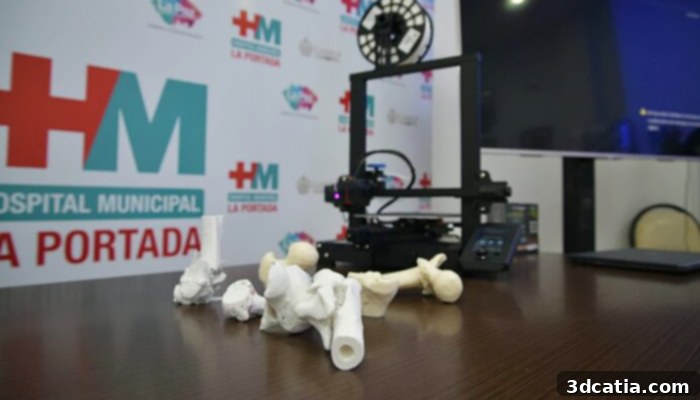
Photo Credits: Hospital Municipal La Portada
The relentless pace of innovation in additive manufacturing continues to amaze, from global market expansions to the frontiers of material science and life-saving medical applications. What are your thoughts on Prusa Research’s significant move into the US market, or the potential of BLT’s new titanium alloy? Perhaps the humanitarian impact of 3D printing in traumatology in Bolivia caught your attention. Let us know your opinions in a comment below or join the conversation on our LinkedIn, Facebook, and Twitter pages! Don’t forget to sign up for our free weekly newsletter here for the latest 3D printing news delivered straight to your inbox! You can also find all our engaging videos and exclusive content on our YouTube channel.