
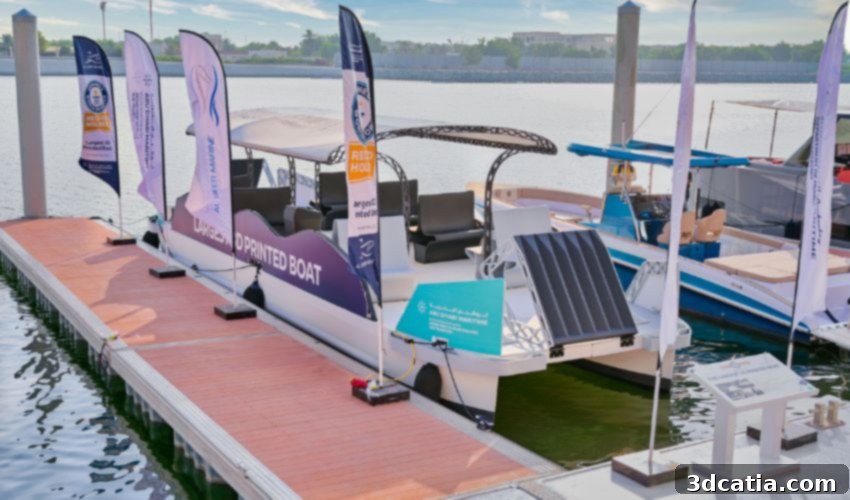
Al Seer Marine Shatters Records: The World’s Largest 3D Printed Water Taxi Redefines Sustainable Maritime Transportation
The maritime sector, a realm traditionally associated with centuries-old shipbuilding techniques, is undergoing a profound transformation thanks to the rapid advancements in additive manufacturing. From the personalized design of kayaks to the intricate components of superyachts, 3D printing is making significant waves, revolutionizing everything from on-demand part fabrication at sea to mitigating global supply chain disruptions. Increasingly, this innovative technology is also being deployed for the creation of entire vessels, pushing the boundaries of what’s possible in marine engineering. A prime example of this pioneering spirit is the unveiling of a new 3D printed water taxi by Al Seer Marine and Abu Dhabi Maritime. This remarkable vessel not only showcases the immense potential of additive manufacturing but also proudly holds the distinction of breaking the Guinness World Record for the largest 3D printed boat ever built, setting a new benchmark for the industry.
The concept of fully 3D printed boats, while still relatively novel, has a nascent yet impressive history of pushing technological frontiers. Indeed, the previous two Guinness World Records for the largest 3D printed boat were both proudly held by the esteemed University of Maine, a testament to their continuous innovation in large-format additive manufacturing. Their initial record-breaking achievement came with the creation of the 3Dirigo, a formidable vessel measuring 25 feet in length and weighing a substantial 5,000 pounds. This groundbreaking boat was manufactured at the university’s Advanced Structures and Composites Center, utilizing what was, at the time, considered the world’s largest 3D printer. Not content with a single record, the University of Maine subsequently surpassed its own achievement, designing and 3D printing a patrol boat specifically for the U.S. Marines. While exact specifications for this military vessel remain confidential due to national security considerations, it was reportedly twice as large as the pioneering 3Dirigo, further cementing the university’s reputation as a leader in this field. Now, with its impressive dimensions and innovative construction, the newly unveiled 3D printed water taxi from Al Seer Marine and Abu Dhabi Maritime proudly claims this coveted distinction, marking a new chapter in the evolution of large-scale additive manufacturing for marine applications.
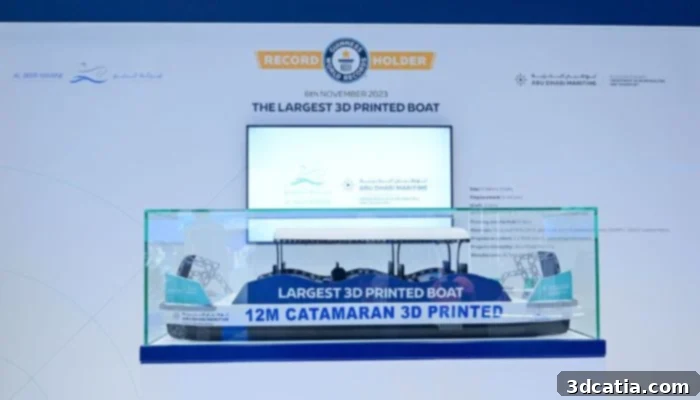
The 3D printed water taxi broke the Guinness World Record for largest 3D printed boat
The sheer scale of this latest record-breaking vessel is undeniably impressive and represents a significant engineering triumph. Measuring an astounding 11.98 meters, or approximately 39.3 feet, in length, this water taxi firmly establishes itself as the largest 3D printed boat. While its precise weight has not yet been disclosed, its substantial length undeniably places it far ahead of the 3Dirigo. The classification regarding the University of Maine’s second, larger 3D printed patrol boat for the U.S. Marines remains somewhat ambiguous for record-keeping purposes, primarily due to the stringent secrecy surrounding its dimensions, which are understandably withheld for national security considerations. However, the Al Seer Marine and Abu Dhabi Maritime water taxi’s readily verifiable size ensures its place in history. But beyond its impressive dimensions, the innovation inherent in its design and manufacturing process holds even greater significance for the future of maritime transportation and sustainable shipbuilding.
A Commitment to Sustainable Maritime Innovation
Al Seer Marine, a company that has rapidly positioned itself at the forefront of maritime innovation, established its dedicated additive manufacturing business unit in January 2022. Since its inception, the unit has embarked on numerous pioneering projects, consistently leveraging 3D printing technology to redefine manufacturing processes. A core driving force behind the creation of this record-breaking 3D printed water taxi, as highlighted by Al Seer Marine, is the profound potential of additive manufacturing to foster more sustainable practices within the shipbuilding sector. This commitment to environmental responsibility is not merely a philosophical stance but a tangible aspect of the vessel’s construction: the water taxi was meticulously 3D printed using an impressive 67% recycled materials. This significant achievement marks a monumental step forward in developing environmentally friendly water transportation solutions, aligning perfectly with global efforts to reduce carbon footprints and promote a circular economy. By embracing recycled materials in such a large-scale application, Al Seer Marine demonstrates that advanced manufacturing can indeed be synonymous with ecological stewardship, setting a powerful precedent for the entire industry.
The choice of additive manufacturing inherently offers several advantages that contribute to sustainability. Unlike traditional subtractive manufacturing methods, which often involve carving parts from larger blocks of material and generating considerable waste, 3D printing is an “additive” process, building objects layer by layer. This precision significantly reduces material consumption, leading to less scrap and a more efficient use of resources. Furthermore, the design freedom offered by 3D printing allows for the creation of optimized geometries that can reduce a vessel’s weight, leading to lower fuel consumption and emissions during operation. Localized production capabilities, enabled by 3D printing, also contribute to sustainability by shortening supply chains and reducing the transportation impact associated with acquiring parts and materials from distant suppliers. The integration of a high percentage of recycled materials into the water taxi further amplifies these environmental benefits, transforming what would typically be waste into valuable resources for advanced manufacturing.
In an inspiring Instagram post announcing the groundbreaking 3D printed water taxi, Al Seer Marine underscored the broader implications of their achievement, stating, “This milestone is not just a record-breaking feat; it’s a call to action for the industry to adopt greener technologies. Let’s continue pushing the boundaries of innovation and sustainability, setting a precedent for the future of transportation worldwide.” This powerful statement reflects a clear vision: to inspire widespread adoption of sustainable manufacturing practices across the maritime industry. It emphasizes that technological progress should go hand-in-hand with environmental responsibility. This collaborative project between Al Seer Marine and Abu Dhabi Maritime is a beacon, illustrating how cutting-edge technology can be harnessed to address pressing ecological concerns, paving the way for a new era of eco-conscious shipbuilding and marine operations. You can find more details and witness their journey on Al Seer Marine’s Instagram HERE.
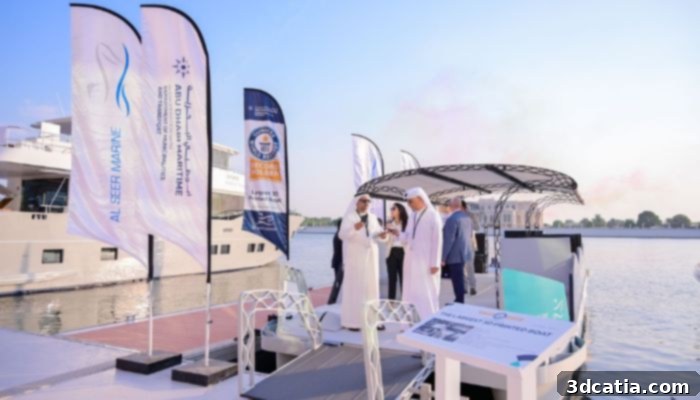
Al Seer Marine and Abu Dhabi Maritime collaborated on the 3D printed boat to advance more sustainable water transportation
Beyond Records: The Broader Impact of Additive Manufacturing in the Maritime Sector
The successful deployment of a record-breaking 3D printed water taxi is more than just an isolated triumph; it’s a potent symbol of additive manufacturing’s growing and diverse impact across the entire maritime sector. While the creation of complete vessels garners significant attention, 3D printing offers a myriad of benefits for smaller-scale applications as well. For instance, the ability to produce complex and customized parts on-demand, even while a ship is at sea, dramatically reduces downtime and logistical challenges. This capability is invaluable for urgent repairs, replacing obsolete components, or fabricating specialized tools, ensuring operational continuity and efficiency. From intricately designed propellers that enhance hydrodynamic performance to bespoke internal fixtures and structural components, additive manufacturing provides unparalleled design freedom. This allows engineers to optimize parts for weight reduction, material efficiency, and improved functionality, leading to better-performing and more fuel-efficient vessels. The technology also facilitates rapid prototyping, enabling designers to quickly test and iterate on new concepts, drastically shortening development cycles and bringing innovations to market faster. This versatility underscores why additive manufacturing is becoming an indispensable tool for modern shipbuilding and marine operations, offering solutions that were previously unimaginable.
The Future of Water Transportation: A Vision Realized
The achievement by Al Seer Marine and Abu Dhabi Maritime with their record-breaking 3D printed water taxi paints a vivid picture of the future of water transportation. This feat transcends a mere technological demonstration; it heralds an era where personalized, efficient, and environmentally responsible vessels can become commonplace. Imagine urban waterways bustling with quiet, electric water taxis, each uniquely designed to meet specific operational requirements, reducing congestion on roads and minimizing pollution. The potential for mass customization, enabled by 3D printing, could lead to a diverse fleet of specialized boats, from tourist ferries to rapid response vessels, all manufactured with unprecedented speed and cost-effectiveness. Furthermore, this innovation positions regions like Abu Dhabi as global leaders in adopting and fostering advanced manufacturing technologies, attracting further investment and talent into the burgeoning marine tech industry. The insights gained from printing such a large-scale structure with recycled materials will undoubtedly inform future projects, encouraging further research into sustainable composites and printing techniques. This isn’t just about making boats bigger; it’s about making them smarter, greener, and more accessible, ultimately reshaping how we perceive and utilize our aquatic environments for transport and leisure.
In conclusion, the launch of the world’s largest 3D printed water taxi by Al Seer Marine and Abu Dhabi Maritime represents a groundbreaking moment for both additive manufacturing and the global maritime industry. It stands as a powerful testament to human ingenuity and a clear vision for a more sustainable future. By shattering a Guinness World Record and simultaneously championing the use of recycled materials, this project demonstrates that technological innovation and environmental stewardship can, and indeed must, go hand in hand. This achievement not only propels the capabilities of large-scale 3D printing but also serves as an urgent call to action for industries worldwide to embrace greener, more efficient manufacturing processes. As we look ahead, this pioneering vessel from Abu Dhabi stands as a symbol of progress, indicating that the future of transportation on our planet’s waters will be defined by sustainability, innovation, and a renewed commitment to ecological balance.
What are your thoughts on this monumental 3D printed water taxi and its implications for the future of maritime transport? We’d love to hear from you! Share your insights in a comment below or join the conversation on our LinkedIn, Facebook, and Twitter pages! Don’t miss out on the latest advancements and breaking news in 3D printing—sign up for our free weekly Newsletter here and get curated updates delivered straight to your inbox! You can also explore all our fascinating videos on our dedicated YouTube channel for more in-depth content.
*All Photo Credits: Al Seer Marine