
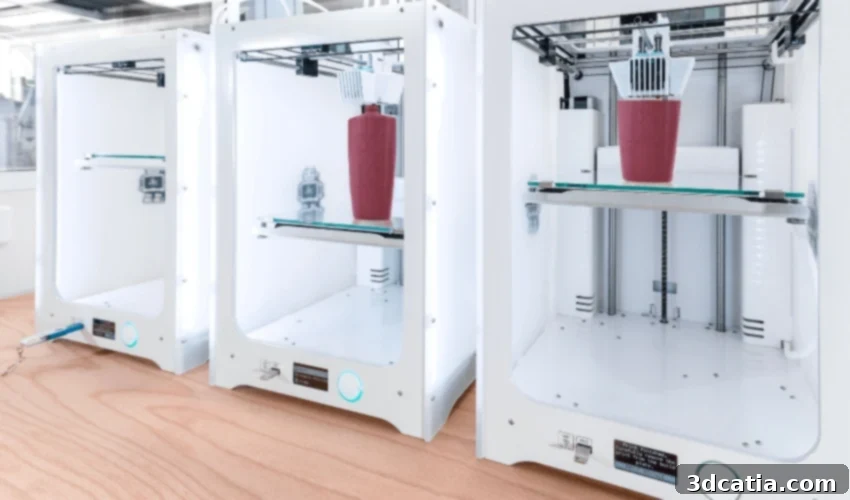
L’Oréal Revolutionizes Rapid Prototyping with AMFG’s Cutting-Edge MES Software for Enhanced 3D Printing Workflows
Global beauty giant L’Oréal has announced a strategic partnership that will significantly enhance its additive manufacturing capabilities. The company is set to integrate AMFG’s Manufacturing Execution System (MES) software, widely recognized as a pivotal workflow solution for additive manufacturing, into its dedicated 3D printing lab. This adoption marks a significant step towards optimizing its rapid prototyping workflows, aiming to streamline operations, improve efficiency in order handling, and dramatically accelerate prototype turnaround times. For a company like L’Oréal, renowned for its continuous innovation in personal care and beauty products, speed and precision in product development are paramount. The implementation of AMFG’s MES software is poised to deliver these crucial advantages, ensuring that L’Oréal remains at the forefront of innovation.
Matthew Forrester, Additive Technical Manager at L’Oréal, articulated the rationale behind this strategic investment, stating, “Considering our 3D printing volumes of thousands of parts per year, investing in an additive MES has been a natural step for us. We chose AMFG for its vast functionality and the ability to customise it to our needs.” This statement underscores the growing reliance on 3D printing for large-scale prototyping within major corporations. As L’Oréal continues to expand its 3D printing operations and increase production volumes of prototypes, the need for a robust, scalable, and intelligent solution like AMFG’s MES workflow software became not just beneficial, but essential for sustaining and accelerating the company’s ambitious growth trajectory. The ability to customize the software ensures that it perfectly aligns with L’Oréal’s unique operational requirements and ambitious innovation roadmap, further solidifying its position as an industry leader.
The initial phase of integration has already seen L’Oréal implementing key components of AMFG’s comprehensive suite. This includes a sophisticated ordering portal, an advanced instant price calculation software, and intuitive data visualization tools. These features are specifically designed to simplify and accelerate the process of ordering prototypes for engineers and designers across the company. The software empowers internal users to effortlessly order, track the progress of, and re-order 3D printed parts, thereby eliminating bottlenecks and reducing administrative overheads. This digital transformation of the ordering process not only enhances user experience but also provides unparalleled transparency and control over the prototyping pipeline. Forrester further highlighted the immediate benefits, adding, “Integrating AMFG’s software allows us to automate previously manual and time-consuming processes, like 3D parts ordering. This, in turn, helps us to improve the efficiency of our 3DLabs and ensures that our engineers and designers get prototypes in the fastest way possible.” This automation is critical in a fast-paced industry where time-to-market can be a significant competitive differentiator.
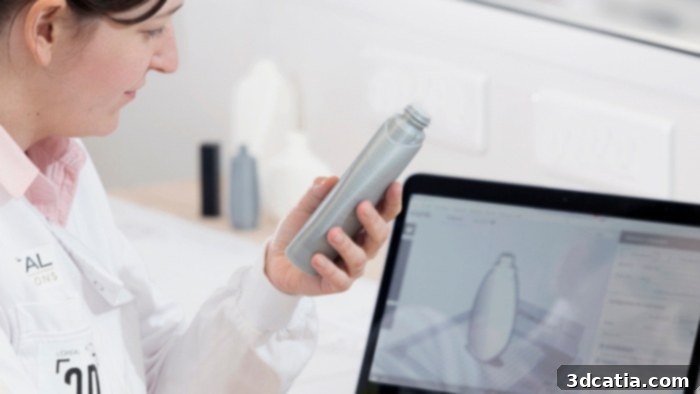
L’Oréal will accelerate time to market thanks to 3D printing and AMFG’s MES workflow software. (Photo credit: AMFG)
Beyond the ordering front-end, AMFG’s robust backend system provides the L’Oréal 3DLab assistants with powerful tools for comprehensive workflow management. This includes the ability to meticulously track all incoming requests, apply custom pricing formulae to 3D printed parts for accurate cost estimation, and visualize intricate 3D designs. The latter feature is particularly valuable, allowing any team member to easily review and verify designs before an order is officially placed, thus minimizing errors and rework. Furthermore, AMFG’s software integrates a highly useful feature that enables engineers to seamlessly convert files into multiple formats, ensuring compatibility and flexibility across various 3D printing technologies and design software. These advanced capabilities are integral to a broader initiative of automating manual processes, a trend where additive manufacturing plays an increasingly critical role across diverse sectors, from medical device development to aerospace engineering. This comprehensive automation, coupled with the standardization of the order submission process, significantly contributes to creating a superior and more intuitive user experience for all stakeholders involved in additive manufacturing at L’Oréal.
The strategic adoption of an additive MES like AMFG’s reflects a broader industry movement towards digital transformation and the smart factory concept. For L’Oréal, this translates into not just faster prototyping but also enhanced data analytics, better resource allocation, and improved quality control. The data collected through the MES can provide invaluable insights into material usage, machine performance, and overall operational efficiency, allowing for continuous process improvement and informed decision-making. This level of insight is crucial for scaling 3D printing operations effectively and transitioning beyond mere prototyping towards potential future applications in customized small-batch production or even on-demand manufacturing of specialized beauty tools and packaging. The partnership exemplifies how technology leaders like AMFG are enabling traditional manufacturing giants to embrace the complexities and opportunities presented by advanced digital manufacturing techniques.
David Winn, Vice President of Growth and Innovation at AMFG, emphasized the widespread applicability of their solution, stating, “Rapid prototyping remains the most common 3D printing use case. RP departments at large companies, like L’Oréal, face a lot of challenges when it comes to submitting and managing 3D printing requests. Our workflow automation software helps to reduce the time spent on manual submission tasks and automates the process of analysing and pricing AM orders. We’re honoured to partner with L’Oréal and provide our workflow automation solution that helps them streamline their rapid prototyping workflow.” Winn’s comments highlight a universal challenge in the additive manufacturing space: efficiently managing the myriad of requests that flow through rapid prototyping departments. AMFG’s platform directly addresses these pain points by offering a streamlined, automated approach to managing the entire additive manufacturing workflow, from initial request to final part delivery. This partnership not only validates AMFG’s innovative approach but also sets a benchmark for how global enterprises can leverage smart software to optimize their manufacturing processes and accelerate product innovation.
For L’Oréal, this collaboration with AMFG is more than just a software implementation; it’s an investment in the future of product development and a testament to their commitment to digital innovation. By automating critical aspects of their 3D printing workflow, L’Oréal can free up valuable engineering and design resources to focus on creative problem-solving and groundbreaking product concepts, rather than getting bogged down in administrative tasks. This agility is crucial in the highly competitive beauty and personal care market, where consumer trends evolve rapidly and continuous product launches are key to maintaining market share. The ability to quickly iterate on designs, test new formulations with custom components, and bring novel product ideas to life faster directly translates into a stronger market presence and a more responsive innovation pipeline. The synergy between L’Oréal’s extensive R&D capabilities and AMFG’s advanced software promises a future where product innovation cycles are dramatically shortened, leading to more revolutionary products reaching consumers faster than ever before.
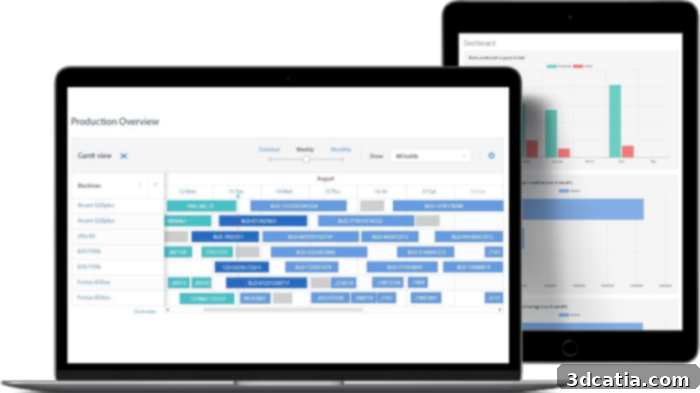
A view of AMFG’s workflow automation software for additive manufacturing. (Photo credit: AMFG).
The successful deployment of AMFG’s MES workflow software by a global leader like L’Oréal underscores the increasing maturity and indispensability of specialized software solutions in the additive manufacturing ecosystem. As 3D printing moves beyond niche applications and into mainstream industrial production, robust, intelligent, and integrated systems for managing complex workflows become absolutely essential. AMFG’s solution provides the necessary infrastructure for L’Oréal to scale its additive manufacturing operations, ensure data integrity, maintain quality standards, and foster a truly collaborative environment across its design and engineering teams. This partnership is a clear indicator of the direction in which advanced manufacturing is heading – towards fully digitalized, automated, and interconnected processes that drive efficiency and accelerate innovation across all stages of product lifecycle management.
For those interested in exploring the capabilities of this cutting-edge technology further, detailed information about AMFG’s Manufacturing Execution System can be found HERE. The continuous evolution of such platforms is crucial for unlocking the full potential of additive manufacturing and ensuring its seamless integration into modern industrial environments.
What are your thoughts on L’Oréal’s significant integration of AMFG’s MES workflow software to enhance its 3D printing capabilities? How do you foresee this partnership impacting the future of product development in the beauty and personal care industry? Share your insights and comments below, or join the conversation on our Facebook, Twitter, and LinkedIn pages! Don’t miss out on the latest advancements and news in the world of 3D printing; sign up for our free weekly Newsletter here to receive direct updates straight to your inbox!
*Cover photo courtesy of AMFG