
Revolutionizing Infrastructure: Cambridge University’s 3D Printed Smart Concrete Headwall Project
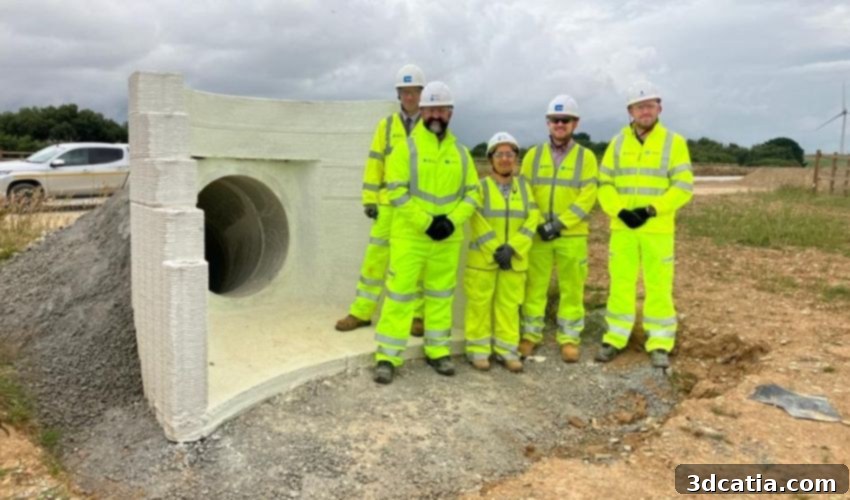
The future of civil engineering is being meticulously shaped by groundbreaking advancements, and at the forefront of this innovation stands Cambridge University. Researchers from Cambridge have achieved a monumental milestone by developing and successfully installing the first 3D printed concrete infrastructure for a National Highways project in the UK. This pioneering structure, known as a headwall, has been strategically placed on the A30 in Cornwall, serving not only its primary functional purpose but also as a “living laboratory.” What sets this headwall apart is its integration with an advanced array of sensors, also developed by Cambridge University, which provide crucial real-time data on critical parameters such as temperature, strain, and pressure. This intelligent monitoring capability ushers in an era of proactive infrastructure management, allowing for the early detection of potential faults and unprecedented insights into structural performance.
The adoption of 3D printing technology for this project represents a significant departure from conventional construction methods. By leveraging additive manufacturing, the Cambridge team was able to construct a complex, curved hollow wall entirely without the need for traditional formwork or cumbersome steel reinforcement. This innovative approach yields substantial benefits, including a dramatic reduction in construction costs, a more efficient use of materials, and a considerable decrease in carbon emissions – aligning perfectly with global sustainability goals. This initiative doesn’t merely present an alternative construction method; it offers a transformative pathway towards more resilient, cost-effective, and environmentally friendly infrastructure development.
Behind this ambitious project is the dedicated and visionary team led by Professor Abir Al-Tabbaa at Cambridge’s Department of Engineering. For over six years, Professor Al-Tabbaa’s group has been at the cutting edge of developing advanced sensor technologies specifically designed for infrastructure applications, alongside exploring the fascinating potential of self-healing concrete. Their extensive expertise, combined with strategic collaborations with industry partners, culminated in the successful design, fabrication, and implementation of this 3D printed headwall on the A30. This landmark achievement unequivocally showcases the immense possibilities that additive manufacturing brings to the table, poised to redefine practices within the entire construction industry.
Advanced Manufacturing and Structural Design
The physical dimensions of the headwall are substantial, measuring approximately two meters in height and three and a half meters in width. Its fabrication was a marvel of modern engineering, executed using a sophisticated robot arm-based concrete printer. The printing process took place at the headquarters of Versarien, an advanced engineering company situated in Gloucestershire, underscoring the collaborative spirit driving this innovation. This cutting-edge printing method not only delivered significant savings on both costs and materials but also substantially minimized carbon emissions when compared to conventional, resource-intensive construction techniques. The unique design of the wall, characterized by its curved hollow structure, ingeniously derives its inherent stability from its geometry, completely eliminating the need for traditional formwork or the costly and carbon-intensive steel reinforcement typically found in such structures. This geometric optimization is a testament to the power of design freedom offered by 3D printing, enabling structures that are inherently more efficient and sustainable.
Smart Monitoring and Sensor Integration
A cornerstone of this intelligent infrastructure project is the comprehensive integration of an array of advanced sensors directly embedded within the concrete during the printing process. These sophisticated sensors are designed to continuously monitor a diverse range of critical parameters essential for assessing the structural integrity and long-term performance of the 3D printed headwall. This includes precise measurements of temperature, which is vital for understanding thermal expansion and contraction; moisture levels, crucial for detecting potential water ingress or freeze-thaw damage; pressure and strain, providing direct insights into load distribution and structural stress; electrical resistance, which can indicate the presence of cracks or material degradation; and electrochemical potential, a key indicator for potential corrosion risks within the concrete matrix, even in the absence of steel reinforcement, by observing the concrete’s internal environment. By diligently collecting this real-time data, these embedded sensors act as an early warning system, enabling the immediate detection of any anomalies, unusual behaviors, or potential issues. This invaluable information allows for proactive, timely intervention and targeted maintenance, thereby extending the lifespan of the structure and enhancing its overall resilience.
The Power of Digital Twins for Enhanced Analysis
Further augmenting the intelligence of this pioneering structure is the innovative application of LiDAR scanning during the printing process. This advanced scanning technique captured highly detailed spatial data, which was then used to create a comprehensive digital twin of the headwall. This digital representation is far more than just a 3D model; it’s a dynamic, living replica that mirrors the physical structure’s behavior and status in real-time, fed by the continuous data stream from the embedded sensors. The digital twin provides a deeply granular understanding of the structure’s performance under varying conditions, facilitating more precise analysis, predictive modeling, and informed decision-making regarding its maintenance and operational lifespan. The powerful synergy between these advanced sensors and the digital twin significantly enhances the wall’s ability to “communicate” its own status and needs. This self-reporting capability is instrumental in accelerating the acceptance and broader adoption of 3D printed structures within the construction industry, as it offers a quantifiable, data-driven assurance of their reliability and longevity, addressing key concerns for infrastructure developers and regulatory bodies alike.
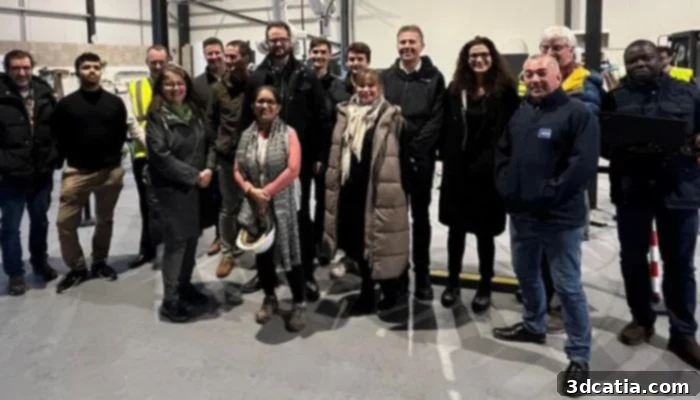
Members of the Cambridge team
A Living Laboratory for Future Infrastructure
Professor Abir Al-Tabbaa eloquently articulated the profound significance of this project, stating, “Making the wall digital means it can speak for itself. And we can use our sensors to understand these 3D printed structures better and accelerate their acceptance in the industry.” Indeed, the successful implementation of the 3D printed headwall on the A30 transcends a mere construction project; it establishes a vital “living laboratory.” Over its entire operational lifespan, this headwall will continuously generate a wealth of invaluable data, providing unprecedented insights into the long-term behavior and durability of 3D printed concrete in real-world conditions. This continuous stream of empirical data is crucial for fostering a deeper, more robust understanding of how 3D printing can be effectively scaled and applied to create larger, more complex, and more critical cement-based materials and structures across the strategic road network and other vital infrastructure systems. The data will inform future design parameters, material compositions, and best practices, paving the way for the widespread integration of additive manufacturing in civil engineering.
This pioneering project is a key component of broader, forward-thinking initiatives, specifically the Resilient Materials for Life Program and the Digital Roads of the Future Initiative. Its development and execution have been generously supported by significant funding from the Engineering and Physical Sciences Research Council (EPSRC) and the European Union, highlighting its importance on both national and international research agendas. Through this groundbreaking achievement, Cambridge researchers have not only definitively demonstrated the technical feasibility and practical benefits of 3D printed concrete infrastructure but have also laid a robust foundation for extensive further advancements in additive manufacturing within the demanding construction industry. The seamless integration of intelligent sensors and dynamic digital twins into 3D printed structures heralds immense potential for dramatically enhancing the efficiency, bolstering the durability, and significantly improving the sustainability of future infrastructure projects globally. This collaborative effort serves as a powerful testament to how academic research, industrial partnership, and strategic funding can converge to deliver truly transformative solutions for the built environment.
What are your thoughts on this first-ever 3D printed concrete infrastructure for a National Highways project? We invite you to share your perspectives and engage with us in the comments section below or connect with us on our LinkedIn, Facebook, and Twitter pages! For the very latest news and updates from the world of 3D printing, don’t forget to sign up for our free weekly Newsletter here, delivered straight to your inbox! You can also explore all our insightful videos on our dedicated YouTube channel.
*All photo credits: University of Cambridge