
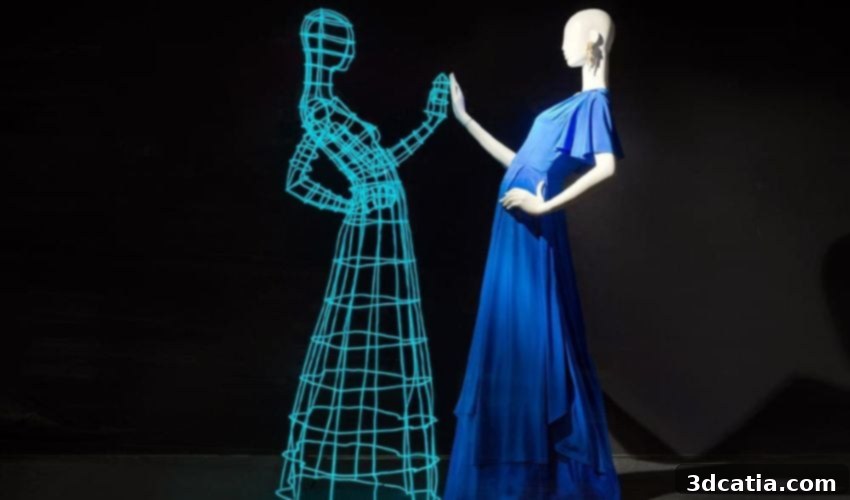
Meta’s Deep Dive into 3D Printing: From Advanced Smart Lenses to Mark Zuckerberg’s Innovative 3D-Printed Fashion Projects
Just a few months ago, the technological world buzzed with news of a significant strategic move by Meta, the parent company renowned for its expansive social media empire including Facebook, WhatsApp, and Instagram. Meta announced its acquisition of Luxexcel, a pioneering Belgian-Dutch company celebrated for its specialization in producing high-quality 3D-printed lenses. This acquisition was not merely a financial transaction but a profound statement, signaling Meta’s serious intent to solidify its position within the burgeoning additive manufacturing space. Luxexcel had already garnered considerable investment, accumulating millions of euros to advance and commercialize its innovative eyeglass lenses, making it a prime target for a tech giant looking to innovate in the wearable technology sector.
The strategic importance of the Luxexcel acquisition for Meta cannot be overstated. It provides the tech giant with a crucial foothold in the cutting-edge field of additive manufacturing, enabling it to leverage sophisticated 3D printing technologies for its ambitious projects. More specifically, this move is poised to significantly accelerate Meta’s efforts to expand and enhance its range of smart glasses. These devices are central to Meta’s long-term vision of the metaverse – an immersive, interconnected digital world where augmented and virtual reality play pivotal roles. High-performance, custom-printable lenses are indispensable for developing lightweight, stylish, and functionally superior smart glasses, which are crucial for widespread adoption of AR/VR technologies. This acquisition also serves as a powerful indicator of the escalating interest among major corporations in the transformative potential of 3D technologies across various industries, pushing the boundaries of what’s possible in product development and manufacturing.
Mark Zuckerberg’s Personal Foray into 3D-Printed Fashion
While Meta makes headlines with its corporate strategies, its CEO, Mark Zuckerberg, has been capturing attention for a different, yet equally intriguing, application of 3D printing. Zuckerberg recently found himself in the spotlight, not for a new platform feature, but for his personal venture into creating 3D-printed clothes for his daughters. This personal project underscores a broader, rapidly expanding trend within the fashion industry: the adoption of additive manufacturing for garment production. According to an insightful study by Future Market Insights, the global market for 3D-printed garments was estimated at a substantial $3.6 billion in 2022. Projections indicate a remarkable growth trajectory, with this figure expected to almost double to $7.2 billion by 2029. Such rapid expansion unequivocally highlights the increasing popularity and viability of using additive manufacturing for creating innovative and sustainable clothing.
The Rise of Additive Manufacturing in Fashion
The allure of 3D printing for designers is multifaceted. This revolutionary technology liberates designers from the constraints of traditional manufacturing methods, opening up unprecedented avenues for creativity and complex designs. It allows for the creation of intricate geometries, bespoke patterns, and entirely new textures that would be either impossible or prohibitively expensive to produce using conventional techniques like cutting, sewing, or weaving. Beyond creative freedom, sustainability stands as a crucial advantage. Additive manufacturing processes inherently reduce material waste compared to subtractive methods, as objects are built layer by layer only where material is needed. Furthermore, the technology enables the use of recycled and innovative materials, such as PET plastic, which can be repurposed and extruded into filaments for production, contributing to a more circular economy in fashion. This capability aligns perfectly with growing consumer demand for environmentally responsible products and production processes, making 3D printing a powerful tool for sustainable fashion innovation.
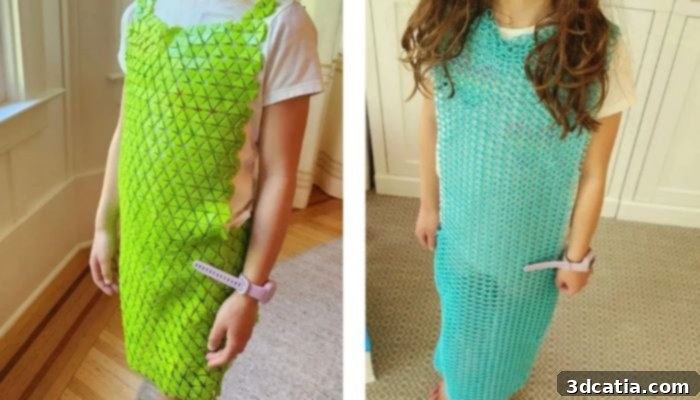
It appears that Mark Zuckerberg’s latest personal endeavor was indeed inspired by this burgeoning trend of 3D-printed garments. His enthusiasm for “building things” has clearly extended beyond software and digital platforms into tangible, wearable art. Recently, he delighted his followers by sharing a series of pictures on Instagram showcasing his daughters modeling unique dresses that he had personally designed and 3D printed. One of the dresses, a vibrant green creation composed of interconnected triangular elements, was worn playfully over regular clothes, demonstrating a blend of futuristic design with everyday wearability. Another heartwarming photograph captured one of his daughters wearing a striking turquoise 3D-printed dress, highlighting the aesthetic versatility of the technology. The caption accompanying his Instagram post offered a glimpse into his creative process and dedication: “I love building things and recently started designing and 3D printing dresses with the girls. A few projects from the last month…. (and yes, I had to learn to sew).” This candid admission not only showcases his hands-on approach but also hints at the interdisciplinary skills required, even for a tech mogul, to bring such innovative projects to life.
The Technical Details Behind Zuckerberg’s Creations
The details surrounding these unique dresses quickly sparked curiosity among his followers. In response to fan inquiries, Zuckerberg candidly revealed the technical specifications behind his creations. He utilized a Prusa 3D printer, a popular and highly regarded brand known for its reliability and open-source nature, making it accessible to both hobbyists and professionals. For the printing material, he opted for a combination of PLA (Polylactic Acid) and carbon thread. PLA is a biodegradable thermoplastic derived from renewable resources like corn starch, making it an environmentally friendly choice often favored for its ease of printing and wide availability. The addition of carbon thread was a deliberate decision to enhance the structural integrity and durability of the dresses, ensuring sturdiness while potentially adding a subtle texture or sheen to the garments. This choice of materials demonstrates a thoughtful consideration of both aesthetic appeal and practical functionality, crucial for creating wearable items. Mark Zuckerberg’s Instagram post, detailing these fascinating projects, can be accessed HERE for those eager to see the original photos and comments.
Meta’s Broader Vision: Integrating 3D Printing for the Metaverse Future
The dual narratives of Meta’s acquisition of Luxexcel and Mark Zuckerberg’s personal involvement in 3D-printed fashion are more interconnected than they might initially appear. Both exemplify Meta’s overarching commitment to leveraging cutting-edge technologies to build the foundational infrastructure for the metaverse. On one hand, the Luxexcel acquisition represents a strategic corporate investment in the precise manufacturing capabilities required for advanced hardware – specifically, the next generation of smart glasses that will serve as primary interfaces to the metaverse. These devices demand highly sophisticated optical components that are lightweight, thin, and capable of integrating complex electronics, all of which 3D printing is uniquely positioned to deliver. The ability to customize lenses for individual users, offering unparalleled comfort and visual performance, is a critical step towards mass-market adoption of AR/VR wearables.
On the other hand, Zuckerberg’s personal projects underscore the democratization of additive manufacturing and its potential to revolutionize consumer goods, including fashion. If the metaverse is to be an immersive world where digital identities and assets have physical counterparts, then the ability to easily prototype and even produce physical items based on digital designs becomes immensely valuable. 3D-printed fashion, with its capacity for extreme customization and on-demand production, aligns perfectly with a future where individuality and personalized experiences are paramount. It hints at a world where users could design their own digital outfits in the metaverse and then, with relative ease, translate those designs into tangible garments for the real world. This blurs the lines between digital creativity and physical manifestation, a core tenet of the metaverse vision.
The Transformative Potential of Additive Manufacturing
Beyond Meta’s specific ventures, the increasing interest in 3D printing by high-profile individuals and corporations like Meta signals a broader shift in how products are designed, manufactured, and consumed. Additive manufacturing offers unprecedented flexibility, enabling rapid prototyping, iterative design improvements, and the production of highly complex parts with minimal waste. Its impact extends far beyond smart lenses and fashion, revolutionizing industries from healthcare (with custom prosthetics and implants) to aerospace (with lightweight, geometrically optimized components) and automotive (for rapid prototyping and custom parts). The ability to produce items on demand also has profound implications for supply chains, potentially leading to more localized manufacturing, reduced shipping costs, and a smaller environmental footprint.
The future of 3D printing, especially in combination with advancements in material science, artificial intelligence, and design software, promises even more revolutionary applications. As the technology becomes more accessible and versatile, we can expect to see an explosion of innovation in custom consumer goods, personalized medical devices, and entirely new product categories that are currently unimaginable. Meta’s dual approach – investing in industrial-scale 3D printing for its core hardware and its CEO personally championing creative applications – positions it at the forefront of this transformative wave, indicating a clear understanding of 3D printing’s role in shaping both the immediate future of technology and the eventual realization of the metaverse.
What are your thoughts on these innovative 3D-printed dresses and Meta’s expansive strategy in additive manufacturing? We invite you to share your insights and comments below, or engage with us on our LinkedIn, Facebook, and Twitter pages! Don’t forget to sign up for our free weekly Newsletter here to receive the latest 3D printing news straight to your inbox. You can also find all our compelling videos and interviews on our YouTube channel for deeper dives into the world of additive manufacturing.
*Cover photo credits: What Gadget