
The Rise of 3D Printed Guns: Navigating Legalization, Ghost Guns, and the Future of DIY Firearms
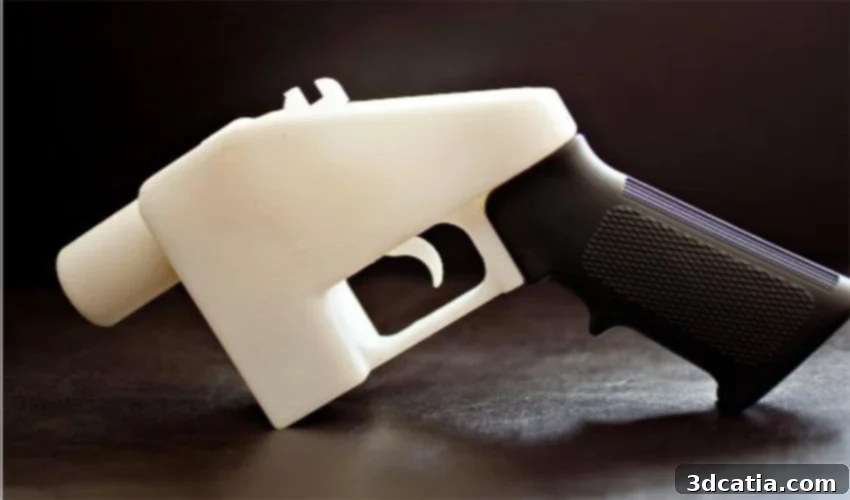
The advent of 3D printing technology has ushered in an era of unprecedented manufacturing accessibility, empowering individuals to create objects previously confined to industrial production. While this innovation promises advancements across countless sectors, it has also introduced complex challenges, particularly concerning the fabrication of firearms. The saga of 3D printed guns began to unfold dramatically in 2013 with the emergence of the first fully functional 3D printable handgun, famously dubbed “The Liberator.” This single-shot plastic pistol, developed by Cody Wilson and his organization Defense Distributed, ignited a firestorm of controversy, immediately thrusting the concept of homemade, digitally distributed weapons into the global spotlight.
The initial distribution of “The Liberator” files quickly spiraled into a major legal and political battle in the United States. Within a mere 24 hours of their release, over 100,000 individuals had downloaded the design files, demonstrating a significant public appetite for the technology and highlighting the profound implications for gun control and national security. The US State Department swiftly intervened, forcing the removal of the files from the internet, citing violations of international arms trafficking regulations. However, this action did little to quell the underlying issue, merely pushing the distribution of these digital blueprints into more obscure corners of the web. This intervention marked the beginning of a protracted legal struggle, pitting the principles of free speech and technological innovation against governmental concerns for public safety and arms control. Cody Wilson, advocating for the right to publish these designs, ultimately won his legal battle in 2018, leading to a settlement that allowed him to once again make the digital files publicly available. This landmark decision effectively legalized the distribution of blueprints for 3D printed guns, opening a new chapter in the ongoing debate over firearm regulation and the capabilities of additive manufacturing.
The re-legalization of these files in 2018 triggered a renewed and intensified public debate, not just about 3D printed weapons, but more broadly about the concept of homemade firearms. A central and profoundly concerning aspect of 3D printed guns is their inherent difficulty to detect. Manufactured primarily from plastic polymers, these weapons can bypass traditional security measures, such as metal detectors, which are designed to identify conventional firearms. This characteristic has earned them the ominous moniker of “ghost guns.” The term accurately reflects their elusive nature: they are often undetectable, untraceable, and unregulated. Unlike commercially manufactured firearms, which are typically stamped with serial numbers for identification and tracking purposes, 3D printed guns downloaded and produced at home often lack any such markings. This absence of serial numbers, despite being a legal requirement for most firearms, makes it incredibly challenging for law enforcement agencies to trace these weapons back to their source or owner if they are used in a crime. The proliferation of such untraceable weapons presents a significant obstacle to maintaining public safety and complicates efforts to prevent and investigate gun violence.
Cody Wilson, the figure at the center of the 3D printed gun debate.
The issue of firearms remains a deeply divisive and emotionally charged topic in the United States, with robust debates surrounding gun rights and gun control. The emergence of undetectable “ghost guns” only exacerbates these existing tensions. The fact that many of these firearms, readily accessible through online blueprints, are printed predominantly from plastic materials means they can easily bypass conventional security checkpoints, posing an immediate threat to public spaces, transportation hubs, and government buildings. This raises critical questions about the efficacy of current security protocols and the need for advanced detection technologies capable of identifying non-metallic weapons. The ability for individuals to produce these weapons without any oversight or official record creates a dangerous loophole in existing firearm legislation, making it increasingly difficult for authorities to monitor or control their spread.
In response to these burgeoning concerns, major players in the 3D printing industry have begun to articulate their positions. Notably, HP, a prominent manufacturer of 3D printing equipment, has publicly declared its opposition to the production of “ghost guns” using its machines. This stance highlights a growing recognition within the industry of the ethical and legal responsibilities associated with powerful manufacturing technologies. However, the practical implementation of such a policy presents significant challenges. How can a company like HP effectively regulate the specific files its customers choose to print on their privately owned machines? The company has introduced the concept of a “responsible use policy,” which aims to preclude its printers from being used for manufacturing firearms unless specific conditions are met. These conditions include possessing the proper licenses required for gun manufacturing and ensuring that any produced firearms incorporate traceable markings and materials detectable by security screeners, suchs as a minimum amount of metal. This move by HP underscores the complex dilemma faced by technology providers: balancing innovation and user freedom with public safety and corporate accountability.
Many observers interpret HP’s proactive stance as a strategic effort to mitigate potential liability. The company seeks to distance itself from any damages or incidents that might arise from the misuse of its 3D printers for illicit purposes. By clearly articulating a policy against “ghost gun” production, HP aims to shield itself from legal and reputational risks should one of its machines be linked to the manufacture of an untraceable weapon involved in a crime. This new policy is likely to be enforced through contractual agreements, specifically detailing these usage restrictions and requirements in purchase agreements and end-user license agreements (EULAs). While such contracts may not physically prevent a determined individual from printing a weapon, they are designed to legally obligate customers to comply with existing firearm laws and regulations. This approach attempts to shift the burden of responsibility back to the user, ensuring that they are aware of and legally bound by responsible use guidelines, even if the technical enforcement remains a hurdle. This move also sets a precedent for other 3D printer manufacturers, potentially influencing industry-wide best practices for ethical technology deployment.
Despite the intense debate and legal complexities surrounding them, current iterations of 3D printed guns often have functional limitations. Most designs still require significant manual assembly of various printed parts, and their overall reliability and durability can be questionable compared to conventionally manufactured firearms. Typically made from consumer-grade plastics like PLA (Polylactic Acid) or ABS (Acrylonitrile Butadiene Styrene), these early plastic guns are far from being efficient, robust, or consistently safe firearms. The inherent properties of these materials mean they are less resistant to heat, stress, and repeated firing, leading to potential malfunctions, structural failures, or even dangerous fragmentation during use. This current state of affairs suggests that while the *concept* of a 3D printed gun is alarming, their *practical effectiveness* as a reliable weapon has historically been limited. However, it is crucial not to underestimate the rapid pace of technological advancement in additive manufacturing. Materials science is constantly evolving, with new, stronger, and more resilient polymers and composites being developed. Design methodologies are also becoming more sophisticated, allowing for better integration of components and improved structural integrity. These ongoing improvements mean that the limitations observed today, particularly regarding material strength and design complexity, are likely to be overcome in the not-too-distant future, making 3D printed firearms potentially more functional, durable, and reliable.
The rapid evolution of 3D printing technology also brings with it a fascinating, yet challenging, technical dilemma: the possibility of programming 3D printers to inhibit the printing of specific files. Conceptually, a manufacturer could integrate software or firmware that recognizes the digital signatures of known firearm blueprints and automatically blocks the printing process. This would represent a significant step towards controlling the illicit use of these machines. However, the reality is far more complex. The open-source nature of much of the 3D printing community, coupled with the ingenuity of users, suggests that it would only be a matter of time before methods to circumvent such restrictions are discovered and shared. Users could modify firmware, use different slicing software, or even alter the firearm files themselves to bypass detection mechanisms. This creates a persistent “cat-and-mouse” game between those attempting to impose controls and those seeking to bypass them, rendering any software-based solution a temporary deterrent at best. The decentralized and accessible nature of 3D printing makes it exceedingly difficult to enforce universal prohibitions or technical limitations effectively. The issue of 3D printed firearms, therefore, remains a multi-faceted and complicated problem with no straightforward or definitive technological, legal, or societal answer as of yet. It requires continuous adaptation from policymakers, manufacturers, and law enforcement alike.
Looking ahead, the debate surrounding 3D printed firearms will undoubtedly intensify as the technology continues to mature. As materials become stronger and designs more refined, the line between homemade novelty and genuinely dangerous weapon will blur further. This evolution necessitates a global conversation about appropriate regulatory frameworks, export controls for digital files, and international cooperation to prevent the proliferation of untraceable weapons. The potential for metal 3D printing to create firearm components, or even entire firearms, adds another layer of complexity, raising the stakes considerably. The balance between individual liberty, technological freedom, and collective public safety is at the heart of this challenge. Policymakers must grapple with the difficult task of enacting legislation that is both effective in mitigating risks and flexible enough to adapt to rapid technological change, without stifling innovation or infringing upon fundamental rights. The conversation must extend beyond mere prohibition, exploring solutions that encompass education, responsible manufacturing practices, and advanced detection capabilities.
The landscape of personal manufacturing is undergoing a profound transformation, and 3D printed guns serve as a stark reminder of the ethical and regulatory hurdles that accompany such powerful advancements. It is a frontier where technology, law, and public perception intersect, creating a dynamic and often unpredictable environment. The challenges posed by these devices are not merely technical; they are deeply rooted in societal values, legal interpretations, and the ever-present tension between freedom and security. As we move forward, a comprehensive, multi-stakeholder approach involving governments, industry leaders, and civil society is paramount to navigating the complex trajectory of 3D printed firearms and ensuring a safe and responsible future for additive manufacturing.
We value your insights on this critical and evolving topic. Please share your thoughts and perspectives in the comments section below or join the conversation on our Facebook and Twitter pages! Don’t forget to sign up for our free weekly Newsletter to stay informed with all the latest news in 3D printing, delivered straight to your inbox!