
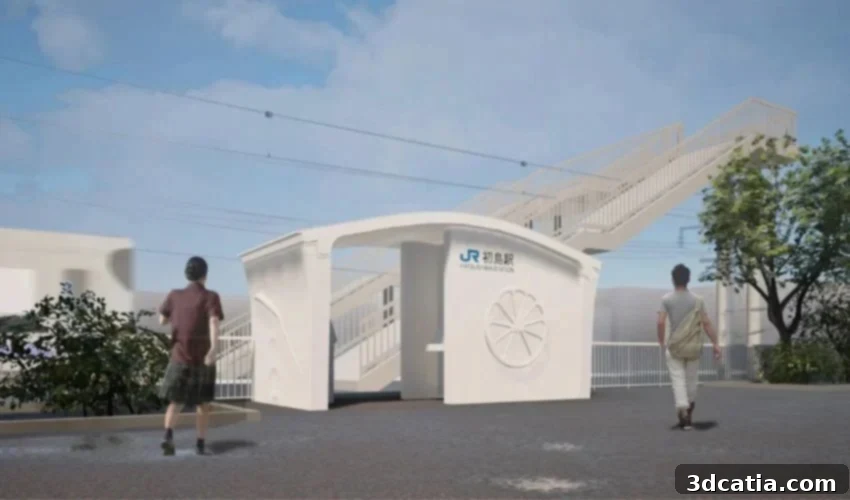
Japan’s First 3D Printed Train Station: JR West Pioneers Sustainable Rail Infrastructure with Additive Manufacturing
The stark contrast between cutting-edge urban infrastructure and dilapidated rural facilities is a familiar sight for regular commuters. While major cities boast technologically advanced train stations serving as vibrant hubs for high-speed rail networks, countryside stations often remain frozen in time, characterized by outdated structures and leisurely services reminiscent of a bygone era. This disparity isn’t exclusive to regions with historically underdeveloped rail infrastructure, such as parts of the United States; even Japan, a nation celebrated globally for its exemplary and efficient rail transportation system, faces this challenge. Beyond the gleaming modernity of Tokyo, numerous rural train stations, frequently constructed from wood, are increasingly susceptible to decay and structural obsolescence. To address this widespread issue and usher in an era of modernized, sustainable transportation, West Japan Railway Co (JR West), a prominent operator of the country’s iconic bullet trains, is embracing the transformative potential of 3D printing technology. The company has announced groundbreaking plans to construct Japan’s very first 3D printed train station, marking a significant leap forward in rail infrastructure development.
This pioneering 3D printed station is slated to replace the existing wooden structure of Hatsushimo station, situated on the scenic Kisei-Arita line in Wakayama Prefecture. The design for the new single-storey facility is both practical and efficient, measuring 2.6 meters in width, 6.3 meters in length, and 2.1 meters in height, encompassing a compact yet functional area of approximately 10 square meters. The station will be fabricated using reinforced concrete by Serendix, a renowned Osaka-based company specializing in the 3D printing of affordable and resilient housing solutions. Serendix leverages Japan’s deep-rooted expertise in constructing earthquake-proof buildings, seamlessly integrating this traditional knowledge with cutting-edge modern construction technologies. Their innovative approach relies on robotic extrusion, a highly precise method that allows for the rapid and accurate production of complex building components from concrete, paving the way for revolutionary developments in the construction sector, particularly for public infrastructure projects like train stations.
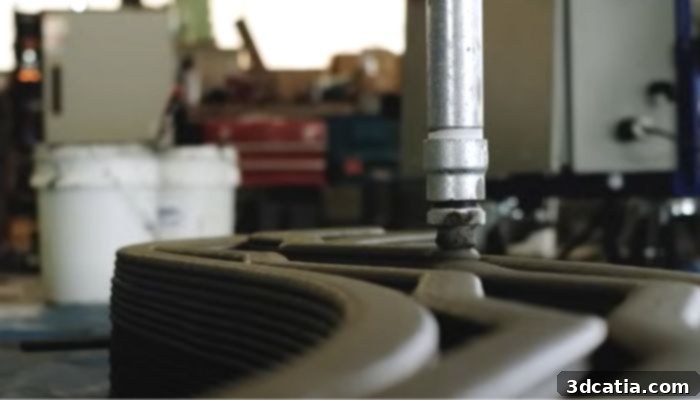
Serendix prints new buildings using concrete extrusion (photo credits: TMA / Serendix)
The construction methodology for Hatsushimo station highlights the exceptional efficiency of additive manufacturing. Individual sections of the 3D printed station building will first be precisely fabricated off-site, benefiting from controlled factory conditions that ensure optimal quality and consistency. Following production, these components will be transported to the Hatsushimo site and swiftly assembled into a complete, integrated structure using a crane. This streamlined process is designed for remarkable speed and minimal disruption. According to JR West, the entire on-site assembly is projected to take an astonishingly brief six hours. This rapid deployment is strategically planned for the night of March 25th, an optimal window between the last evening train and the first morning service. Such an expedited construction timeline is virtually unattainable with conventional building methods, underscoring the revolutionary potential of 3D printing for infrastructure projects where speed, cost-effectiveness, and minimal operational interruption are paramount.
Beyond its impressive speed, 3D printing is demonstrating its value as a highly cost-effective manufacturing technique for public infrastructure. This innovative approach significantly reduces the need for extensive skilled labor on-site, offering a strategic advantage for JR West in an era where labor shortages in the construction industry are becoming increasingly prevalent. By automating a substantial portion of the construction process, 3D printing helps mitigate these challenges, allowing resources to be allocated more efficiently. Furthermore, additive manufacturing unlocks unprecedented levels of design freedom, providing a robust solution to long-standing limitations inherent in traditional concrete construction. Traditional methods often constrain architects and engineers to simpler geometries due to the complexities and costs associated with formwork. 3D printing completely bypasses these constraints, opening up a world of creative possibilities for more aesthetically pleasing and functionally optimized structures.
Conventional concrete buildings are typically constructed using formwork – a laborious and material-intensive process involving the creation of temporary molds, often made from wooden or metal beams, into which wet concrete is poured and allowed to cure. This method, while effective for standard rectilinear shapes, makes the realization of complex curves, intricate patterns, or unique designs prohibitively expensive and time-consuming. Consequently, most concrete structures default to the tried and tested rectangular form. However, 3D printing fundamentally transforms this paradigm. In the additive production of buildings, a robotic arm precisely extrudes layers of concrete, building up the structure from the ground up without the need for cumbersome formwork. This capability makes elegant curves, complicated designs, and even organic shapes not only possible but also economically viable. The enhanced design freedom and creative potential offered by concrete 3D printing allow for infrastructure that is not only functional but also visually appealing and integrated seamlessly with its surroundings.
Embracing this design flexibility was a key objective for JR West, which sought to imbue the new 3D printed station building with a distinctive local character. To achieve this, the concrete relief on the station’s exterior will feature intricate designs depicting two beloved regional specialties: local mandarins and the Tchiuo fish. These artistic elements serve as a tribute to the rich cultural heritage and natural bounty of the Wakayama region, ensuring the station is not just a transit point, but also a reflection of local identity and pride. This thoughtful integration of cultural motifs demonstrates how modern construction techniques can be harmoniously blended with local aesthetics, creating infrastructure that resonates deeply with the community it serves. It underscores the potential for 3D printing to move beyond mere utility, enabling the creation of unique, context-specific structures that enhance the built environment and celebrate regional distinctiveness.
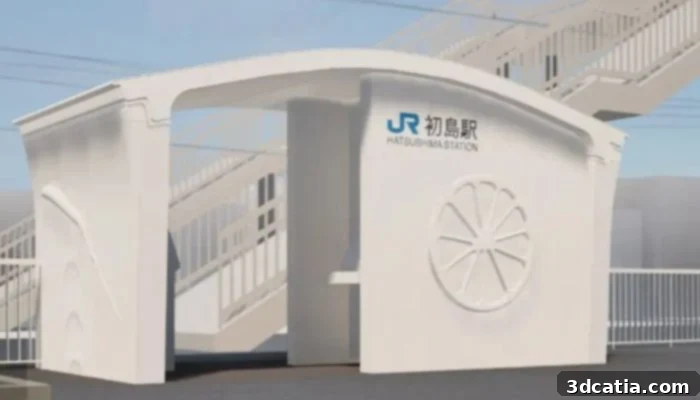
The relief pays homage to the local culture (photo credits: PR Times)
The overarching aim of this innovative pilot project extends beyond mere construction; it is a comprehensive initiative to rigorously test and evaluate the long-term cost-effectiveness of both construction and subsequent maintenance. The expectation is that the 3D printed train station building, constructed from reinforced concrete, will exhibit exceptional durability and superior corrosion resistance compared to traditional materials, particularly the aging wooden structures it replaces. Proving these attributes is crucial before the successful implementation of this pilot project can be scaled and replicated across other stations within JR West’s extensive network. Furthermore, JR West’s strategic embrace of 3D printing is intrinsically linked to broader objectives of enhancing sustainability within railroad infrastructure. By pioneering these advanced construction methods, the company aims to not only modernize its facilities but also to significantly reduce the environmental footprint of its operations, paving a clear path towards safer, more environmentally friendly, and resilient transportation systems for the future. For more detailed information, readers can explore the Japanese language report HERE.
What are your thoughts on this groundbreaking 3D printed train station project? We invite you to share your perspectives and engage in the conversation by leaving a comment below or by connecting with us on our LinkedIn, Facebook, and Twitter pages! Don’t miss out on the latest advancements and innovations in additive manufacturing – remember to sign up for our free weekly Newsletter here, delivering the most current 3D printing news directly to your inbox! Additionally, you can explore all our compelling videos on our dedicated YouTube channel. If your interests lie specifically within the automotive and transport sectors, you can discover more relevant news and updates HERE.
*Cover Photo Credits: PR Times