
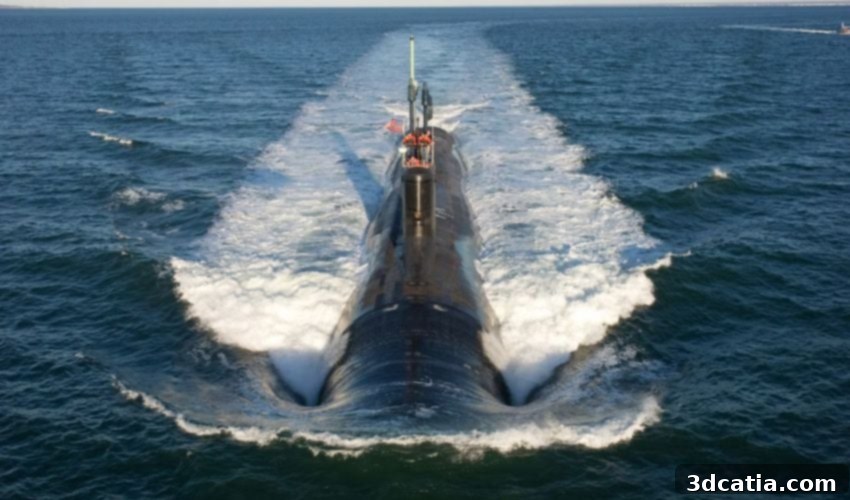
Pioneering Naval Defense: Rosotics’ Large-Scale Metal 3D Printing Bolsters U.S. Navy Capabilities
In a significant development for national defense and advanced manufacturing, Rosotics, a prominent leader in large-scale metal additive manufacturing, recently announced a pivotal milestone. The company has officially entered the fabrication and testing stage of a federal contract awarded by Fluor Marine Propulsion (FMP), LLC, operating under the purview of the U.S. Department of Energy at the prestigious Bettis Atomic Power Laboratory. This collaboration marks a crucial step forward in integrating cutting-edge industrial 3D printing technologies into vital defense applications.
Founded in 2019 in Cape Canaveral, Florida, Rosotics has rapidly distinguished itself within the additive manufacturing landscape. The company is particularly recognized for its innovative **induction-based metal AM technologies**, which offer unique advantages in processing various metal alloys. Rosotics also harbors an ambitious vision: to design, construct, and operate some of the world’s largest metal 3D printers, specifically tailored to meet the rigorous demands of the aerospace and defense sectors. This new project with Fluor Marine Propulsion is a testament to that vision, aiming to leverage Rosotics’ expertise to enhance critical capabilities for the U.S. Navy. The contract’s focus is on addressing specific material challenges and expanding the operational readiness of the naval fleet through advanced manufacturing techniques.
Strengthening Naval Manufacturing Through Advanced Metallurgy
The primary objective of this groundbreaking project is to meticulously demonstrate and refine deposition parameters for advanced low-carbon, high-manganese steel alloys. These specialized materials are not chosen arbitrarily; they are specifically engineered to effectively weld high-strength structural steels such as HY-80 and HSLA-80. These particular steel grades are the bedrock of modern naval construction, forming foundational components for submarines, aircraft carriers, and other critical vessels due to their exceptional strength, toughness, and resistance to harsh marine environments. The ability to precisely deposit and process these alloys via additive manufacturing is crucial for both new construction and especially for the maintenance and repair of existing naval assets.
More broadly, the scope of this project extends into essential atomic energy operations. This encompasses the critical maintenance, efficient repair, and streamlined provision of operating supplies for the U.S. Navy’s extensive nuclear-powered fleet. This fleet, vital for national security and global presence, requires components that meet the highest standards of reliability and performance. By developing advanced additive manufacturing capabilities for these applications, the project directly contributes to bolstering the long-term sustainability and operational readiness of the Navy. Ultimately, this strategic initiative will play a significant role in strengthening the overall U.S. naval manufacturing capabilities, ensuring greater self-reliance and efficiency in defense production.

The Rosotics team, at the forefront of large-scale metal additive manufacturing innovation.
Working in close collaboration, Rosotics and FMP are jointly committed to pushing the boundaries of metal additive manufacturing. Their efforts aim to unlock applications that were once considered technically unattainable, thereby establishing new benchmarks for the entire advanced manufacturing sector. The strategic importance of this partnership is underscored by the contract’s certification with a high-priority E2 rating for National Defense use. This rating, granted under the Defense Priorities and Allocations System (DPAS), highlights the critical nature of the project for U.S. national security and its direct contribution to the nation’s defense industrial base. The E2 rating ensures that resources and efforts are prioritized, accelerating the development and deployment of these vital technologies for the armed forces.
Rosotics’ Proprietary Induction-Derived, Wire-Based Print Architecture
For this critical contract, Rosotics will deploy its highly specialized and proprietary induction-derived, wire-based print architecture. This advanced technology is already integrated into the company’s commercial manufacturing platforms, demonstrating its robustness and readiness for demanding industrial applications. Unlike traditional additive manufacturing methods that often struggle with certain alloys, Rosotics’ innovative approach is specifically designed to reliably tackle the complex challenges associated with additively manufacturing or treating low-carbon, high-manganese steel alloys. These include critical grades such as HY-80 and ER100S-1, which are essential for naval infrastructure due to their unique mechanical properties and resistance to corrosion.
The induction-derived, wire-based method offers several distinct advantages. It provides superior control over the material deposition process, leading to enhanced material integrity, reduced residual stresses, and improved mechanical properties in the final components. This precision is paramount when dealing with specialized steel alloys required for high-stress environments. Furthermore, Rosotics’ technology boasts an impressive ability to scale, meaning it can be adapted and expanded for heavyweight applications. This scalability is a key factor for the U.S. Navy, which requires large-format components for its vessels, ranging from structural elements to propulsion system parts. The capability to produce large, high-integrity metal parts on demand promises to revolutionize the logistics and supply chain for naval manufacturing and repair, offering unprecedented flexibility and efficiency.
Christian LaRosa, the visionary Founder and CEO of Rosotics, underscored the profound implications of this contract: “This effort represents not only a critical advancement for national defense, but also a historic step forward for additive manufacturing in the naval sector. We are proud to contribute our expertise to such a vital national initiative.” His statement reflects the strategic importance of this partnership, emphasizing its dual impact on enhancing defense capabilities and propelling the entire additive manufacturing industry forward, particularly within maritime applications. The collaboration between Rosotics and FMP is a clear demonstration of a shared dedication to fostering innovation, building robust production resilience, and continually redefining the boundaries of what is achievable in modern manufacturing for the most demanding environments.
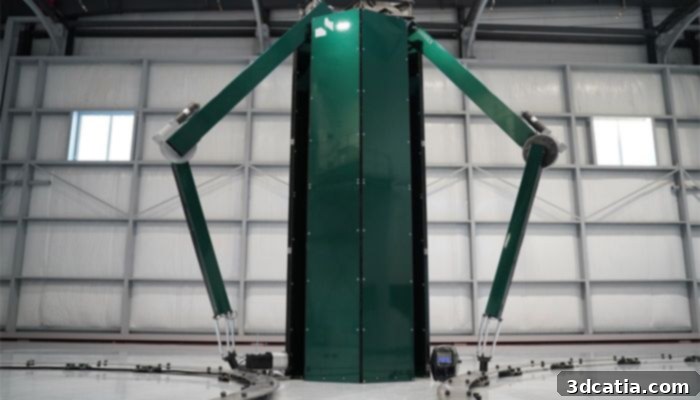
Rosotics’ M1 manufacturing platform, utilizing advanced induction-based metal additive manufacturing technology.
The U.S. Navy’s Strategic Embrace of Additive Manufacturing
The partnership between Rosotics and Fluor Marine Propulsion is far from an isolated incident; rather, it represents just one facet of the U.S. Navy’s broader and increasingly strategic integration of additive manufacturing technologies. The Navy has been aggressively exploring and adopting 3D printing across numerous applications, recognizing its immense potential to enhance operational readiness, streamline supply chains, and reduce maintenance costs. This proactive approach highlights a fundamental shift in how defense forces view manufacturing and repair.
A few months prior, a significant collaboration saw Velo3D enter into a four-year agreement with the Naval Air Warfare Center Aircraft Division (NAWCAD) and Fleet Readiness Center East (FRC East). This landmark agreement is specifically aimed at advancing the widespread adoption of metal additive manufacturing for complex aerospace and defense components. The ability to print intricate, high-performance parts on demand reduces lead times, cuts inventory costs, and provides greater design freedom for engineers developing next-generation aircraft and missile systems. This directly impacts the readiness of naval aviation assets, ensuring that critical parts are available precisely when and where they are needed.
Further illustrating this trend, late in 2024, significant strides were made in metal 3D printing onboard U.S. Navy ships. The ability to print or repair parts directly at sea offers an unparalleled advantage, significantly reducing reliance on shore-based supply chains and dramatically improving the speed of repairs. This on-demand manufacturing capability is a game-changer for extended deployments, allowing vessels to remain operational longer and reducing the need for costly returns to port for simple part replacements. Imagine a scenario where a critical, yet minor, component breaks hundreds of miles from land; with onboard 3D printing, a replacement can be fabricated within hours or days, rather than weeks or months.
Around the same period, another groundbreaking achievement took place: the installation of the first critical submarine component featuring a 3D printed impeller in a U.S. Navy vessel. This was a monumental step, as impellers are crucial for propulsion systems and require extremely high precision and material integrity. The successful integration of such a vital, 3D printed part into a submarine underscores the Navy’s growing confidence in the reliability and performance of additive manufacturing for mission-critical applications. This move not only demonstrates technological readiness but also signals a future where more complex, high-stress components can be rapidly manufactured and deployed.
The inherent advantages of additive manufacturing—its efficient and adaptable nature, coupled with ongoing research to continuously refine the technology and materials—make it an ideal solution for the evolving needs of the Navy. These benefits include accelerated prototyping, customized parts tailored to specific needs, lighter components that save fuel, and the ability to produce complex geometries impossible with traditional manufacturing. We will undoubtedly witness a sustained and intensified effort to fully integrate AM into all facets of naval practices, from design and production to maintenance and logistics. This strategic shift promises to create a more agile, resilient, and technologically superior U.S. Navy. To delve deeper into Rosotics’ specific project for the Navy, you can find more information here.
What are your thoughts on Rosotics’ ambitious goals and the expanding role of additive manufacturing in national defense? We invite you to share your insights in a comment below or join the discussion on our LinkedIn or Facebook pages! Furthermore, don’t miss out on the latest advancements in this dynamic field; sign up for our free weekly Newsletter to receive top 3D printing news directly in your inbox. For a visual experience, explore all our videos on our YouTube channel. For more focused coverage on 3D printing news within the aerospace and defense sectors, be sure to visit our dedicated page HERE.