
Revolutionizing Critical Core Parts: The Transformative Power of Metal Additive Manufacturing
As additive manufacturing continues its rapid ascent and maturation, a pivotal trend has become unequivocally clear: the escalating importance of metal AM across a diverse array of industrial sectors. Original Equipment Manufacturers (OEMs) are increasingly embracing metal additive manufacturing technologies, recognizing their unparalleled potential for creating geometrically intricate, high-performance, and lightweight components. This widespread adoption is propelling the industry forward at an astonishing pace, with expert projections estimating the metal 3D printing market to be worth an impressive $18.5 billion within the next decade. However, this growth doesn’t imply a landscape devoid of challenges. Significant hurdles remain in the production of metal additive manufacturing parts, particularly when it comes to the highly demanding requirements of crucial core components.
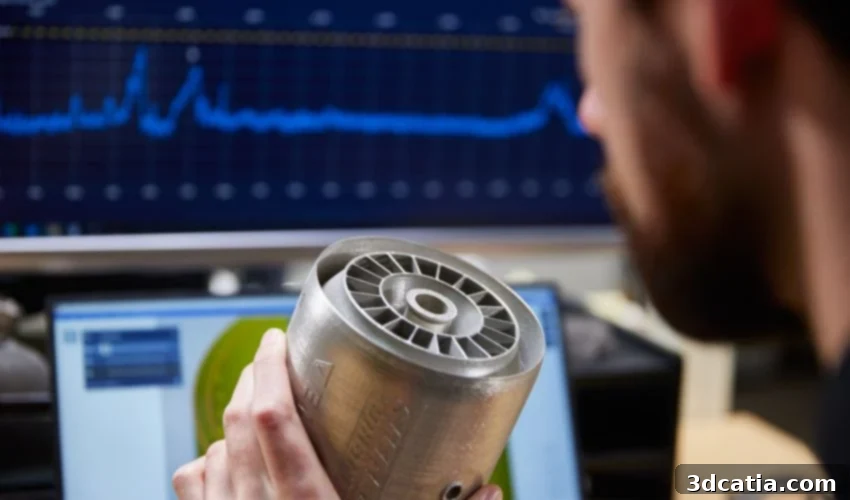
To address these intricate challenges and showcase the immense capabilities of advanced metal additive manufacturing, one of the foremost metal 3D printer manufacturers, renowned for its contributions to industries like aerospace, has published an insightful white paper. Titled “Metal in Motion: Redefining Critical Parts Production with Velo3D,” this document delves deep into how cutting-edge metal AM can be leveraged for the creation of essential core parts. Through compelling case studies featuring components such as microturbines, high-pressure tanks, heat exchangers, static mixers, and turbopumps, the paper meticulously illustrates how common manufacturing obstacles can be effectively surmounted through the strategic application of metal additive manufacturing. Furthermore, it highlights the distinct advantages offered by the Velo3D end-to-end solution, presenting real-world examples from innovators like Launcher and Sierra Turbines. We’ve thoroughly examined this paper to provide a comprehensive understanding of the transformative benefits of utilizing metal 3D printing for critical core parts.
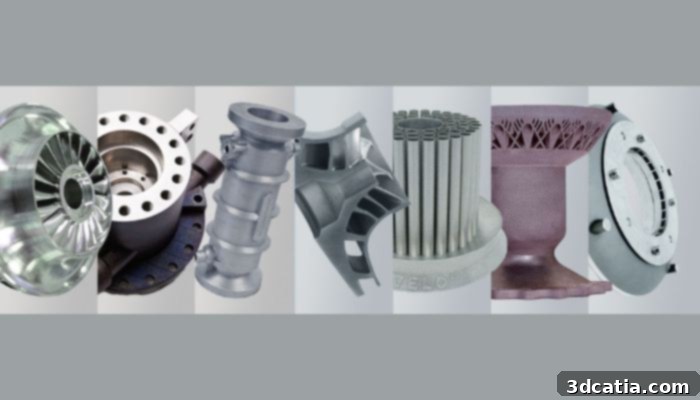
A selection of core parts successfully manufactured using Velo3D’s advanced end-to-end metal AM solution (photo credits: Velo3D)
Overcoming Existing Manufacturing Challenges for Critical Components
The creation of core parts typically presents two primary categories of challenges: those related to design and those inherent in the manufacturing process itself.
Design Complexities in Core Parts
From a design perspective, core parts are frequently characterized by their need for extremely intricate geometries and highly precise, often unique, performance requirements. Achieving these specifications through conventional manufacturing methods can be exceptionally difficult, if not impossible, often necessitating compromises that impact efficiency or functionality. Engineers are continuously pushing the boundaries of what is possible, demanding components that can withstand extreme conditions, operate with optimal efficiency, and yet remain compact and lightweight.
Consider, for example, heat exchangers – a broad and vital category of core components. As their name implies, these devices are engineered to efficiently transfer thermal energy from one medium (typically a hot liquid or gas) to another cooler medium, critically without allowing the two substances to mix. They are indispensable components in a vast array of systems, from automotive engines and industrial power plants to HVAC systems and aerospace applications, enabling machinery to operate efficiently and preventing detrimental overheating. Due to their critical function, the design requirements for heat exchangers are exceptionally stringent and complex.
In their insightful paper, Velo3D articulates these challenges with precision: “In design, heat exchangers require maximal surface area between the hot and cool side of the part; the walls separating them also need to be as thin as possible to allow for as much heat transfer as possible, all while keeping the sides leak tight. There is also a delicate balance that must be achieved between the roughness of the surface necessary to transfer heat and the resulting pressure drop that occurs with varying texture differences. In the end, engineers are confronted with the monumental challenge of producing exchangers with complex internal channels and thin, high aspect ratio walls.” This description, while specific to heat exchangers, perfectly encapsulates the broader design hurdles faced across many core parts. Such components routinely demand precise, often tortuous, internal geometries, the integration of multiple complex functions within a single form, and the meticulous management of material properties and surface characteristics. These requirements often push traditional manufacturing techniques beyond their limits, leading to suboptimal designs or protracted development cycles.
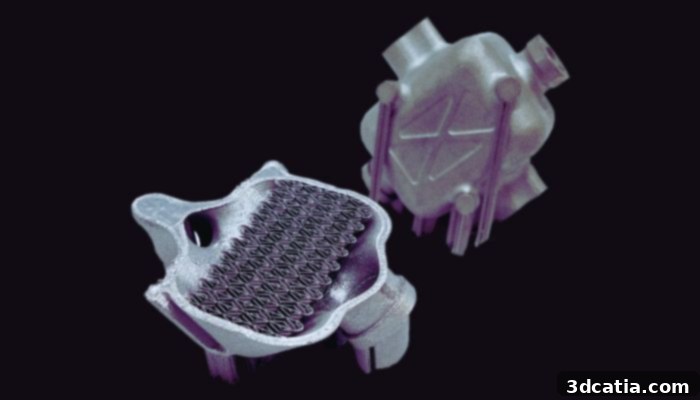
Metal Additive Manufacturing facilitates the creation of highly efficient heat exchanger designs, optimizing performance (photo credits: Velo3D)
Manufacturing Obstacles with Conventional Methods
Beyond design, the actual manufacturing of these critical core parts using conventional methods also presents significant challenges. For many complex components, traditional processes involve fabricating numerous distinct sub-components, which must then be meticulously assembled through methods like welding, brazing, or bolting. This multi-part approach is inherently time-consuming, requiring extensive labor and specialized skills at each assembly stage. More critically, every joint – be it a weld, a braze, or a bolted connection – introduces a potential point of failure. For safety-critical parts where reliability is paramount, the risk of potential leaks or structural weaknesses from these joints is simply unacceptable. Engineers are constantly seeking ways to minimize part count and eliminate these failure points.
This is precisely where metal additive manufacturing offers a revolutionary advantage. By enabling significant part consolidation, metal AM fundamentally eliminates the issue of multiple joints that could become points of weakness or failure. Take the compelling example of Sierra Turbines. Through the adoption of metal additive manufacturing, they were able to dramatically consolidate 61 discrete components of their microturbine into a single, unified geometry. This single-piece design not only incorporated fine details and features previously unattainable by any other method but also yielded astounding performance improvements. This consolidation alone resulted in a 10x increase in power density and an impressive 40x improvement in efficiency. Consequently, the microturbine achieved a nearly 20x extension in its time between overhauls (TBO), demonstrating a profound impact on operational lifespan and maintenance costs.
Furthermore, embracing metal additive manufacturing directly contributes to substantial reductions in both lead time and overall production costs. For instance, the manufacture of complex heat exchangers, which traditionally could entail lead times of 12-18 months due to multi-stage fabrication and assembly, can be compressed to as little as four weeks using metal AM. This drastic reduction not only makes the production process significantly more agile and efficient but also profoundly enhances supply chain resiliency, allowing manufacturers to respond more quickly to market demands and unforeseen disruptions. These efficiencies translate into a competitive edge, fostering innovation and accelerating product development cycles across various industries.
Advanced Metal Additive Manufacturing: Beyond Conventional AM Limitations
Despite the immense promise of additive manufacturing, even conventional metal AM techniques can present their own set of challenges, particularly when creating highly advanced geometries for core parts. A significant limitation is the frequent requirement for support structures. These temporary structures are often necessary to prevent parts from deforming during the printing process, especially for overhanging features and complex internal channels. However, the subsequent removal of these supports can be a painstaking, time-consuming, and expensive post-processing step. Manual removal risks damaging delicate features, while automated methods require specialized equipment and still add to the overall production time and cost. Moreover, traditional support structures can leave behind undesirable surface imperfections, such as valleys and peaks, which can degrade the part’s performance, especially under fatigue testing where surface finish plays a crucial role in preventing crack initiation.
As clearly demonstrated in the Velo3D white paper, their advanced metal additive manufacturing solution has effectively helped numerous companies overcome not only the inherent challenges of traditional manufacturing but also the limitations associated with conventional AM technologies. This transformative capability is vividly illustrated in the case of Launcher, an innovative company that has been successfully developing next-generation rockets, pushing the boundaries of space exploration through strategic adoption of additive manufacturing.
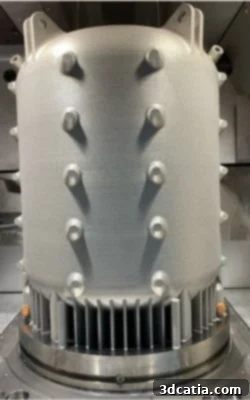
Launcher has successfully utilized Velo3D’s advanced solution for the creation of various rocket components, including high-pressure tanks (photo credits: Velo3D)
Launcher specifically turned to Velo3D to address the significant challenges associated with the traditional manufacturing of high-pressure tanks – essential core components for rocket propulsion systems. These tanks are notoriously difficult to fabricate due to a confluence of demanding requirements: they must be meticulously optimized for minimal size and weight, yet simultaneously possess sufficient strength and structural integrity to safely contain propellants under extreme pressures and temperatures, and withstand the punishing environmental conditions of launch and spaceflight. Traditionally, their production is a highly manual, lengthy, and multi-component process, often involving numerous intricate parts that are then assembled. Each weld, mating surface, and connection point required to bring these individual components together introduces a potential leak site, which is an unacceptable risk for critical aerospace applications where even a minuscule leak can have catastrophic consequences.
To overcome these formidable hurdles, Launcher made the strategic decision to leverage Velo3D’s comprehensive end-to-end advanced metal additive manufacturing solution, specifically utilizing their Sapphire series printers. While conventional additive manufacturing might initially appear as a safer and more efficient alternative to traditional multi-part production, it often falls short for highly complex designs due to the aforementioned reliance on extensive support structures. These supports, essential for conventional printers to build overhanging features, prove incredibly difficult and often impossible to fully remove from intricate internal channels and complex geometries. This difficulty not only inflates production time and costs but, crucially, can also lead to surface irregularities – the ‘valleys and peaks’ – that compromise the structural integrity and performance of the part, particularly under the cyclic loading conditions encountered during fatigue testing.
Velo3D’s Sapphire printers distinguish themselves through a groundbreaking capability: the ability to print complex geometries, including angles below 45 degrees, without the need for cumbersome support structures in many instances. This unique feature fundamentally liberates design engineers from the constraints imposed by conventional AM, allowing for unprecedented design freedom. Thanks to this breakthrough, Launcher was able to create a revolutionary design for their fuel tanks that consolidated all previously separate parts into a single, monolithic structure. This single-piece design expertly integrated internal plumbing, complex bracket fixtures, and lightweight iso-grids directly into the tank’s structure. This holistic consolidation drastically reduced the overall part count, eliminated numerous potential leak paths, and, most importantly for aerospace applications, significantly reduced the overall weight of the component – a critical factor for achieving optimal rocket performance and payload capacity.
The Velo3D metal AM system is not merely a printer; it is a holistic ecosystem that integrates advanced hardware with sophisticated software. This system includes ‘Flow,’ intelligent print preparation software that optimizes build strategies, and ‘Assure,’ a robust quality assurance and validation software suite. This integrated approach “enables engineers to print the geometries that they need with high-quality surface finishes, right out of the machine. Internal channels and intricate flow paths for fluids, as well as large cavities like those found in pressure vessels, can all be printed seamlessly in a single monocoque design.” A hallmark of Velo3D’s commitment to quality is its rigorous data acquisition: with approximately 1,000 sensors generating a terabyte of data per build, every single laser event during the printing of each part is meticulously tracked and verified for unparalleled quality and consistency. This unparalleled combination of design complexity freedom, real-time process control, and comprehensive quality assurance allows for the rapid creation of high-pressure tanks, like those developed for Launcher, in a matter of days rather than the months typically required by traditional or even conventional AM processes. This represents a paradigm shift in manufacturing speed, cost-effectiveness, and design innovation.
The Future of Critical Parts Manufacturing with Metal AM
In any case, it is abundantly clear that metal additive manufacturing has undergone tremendous advancements over the past few years. It has evolved from a niche technology to an indispensable tool, increasingly becoming a crucial asset in the creation of safety-critical parts across various high-stakes industries. When it comes to manufacturing core components such as microturbines, heat exchangers, high-pressure vessels, and turbopumps, innovative solutions like Velo3D’s integrated platform are not just improving processes; they are actively revolutionizing the entire sector. By offering unparalleled design freedom, significant part consolidation, superior performance, and drastically reduced lead times, metal AM is setting new benchmarks for what is possible in advanced manufacturing. If you are interested in delving deeper into these transformative capabilities and understanding how specific obstacles can be overcome, we highly recommend downloading Velo3D’s comprehensive white paper for free HERE. It provides invaluable insights into the future of critical parts production.
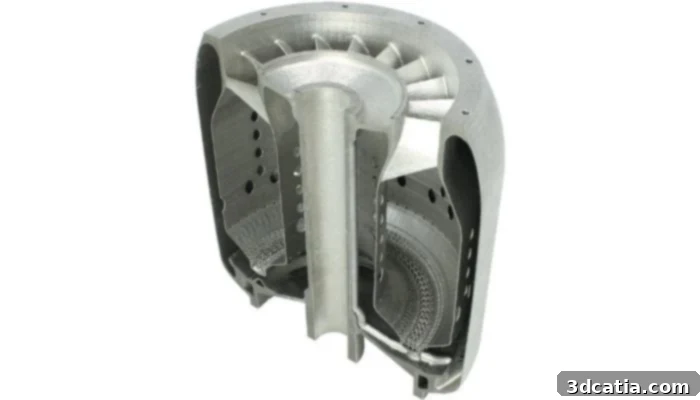
Sierra Turbines successfully employed metal additive manufacturing for the efficient creation of their advanced microturbines, achieving unprecedented performance metrics (photo credits: Velo3D)
What are your thoughts on leveraging metal additive manufacturing for the production of critical core parts? We invite you to share your insights and opinions in a comment below or connect with us on our social media channels:LinkedIn,Facebook, andTwitter. Don’t miss out on the latest 3D printing news and developments! Be sure to sign up for our free weeklyNewsletter here, delivered directly to your inbox. You can also explore all our engaging videos and content on our dedicatedYouTube channel.