
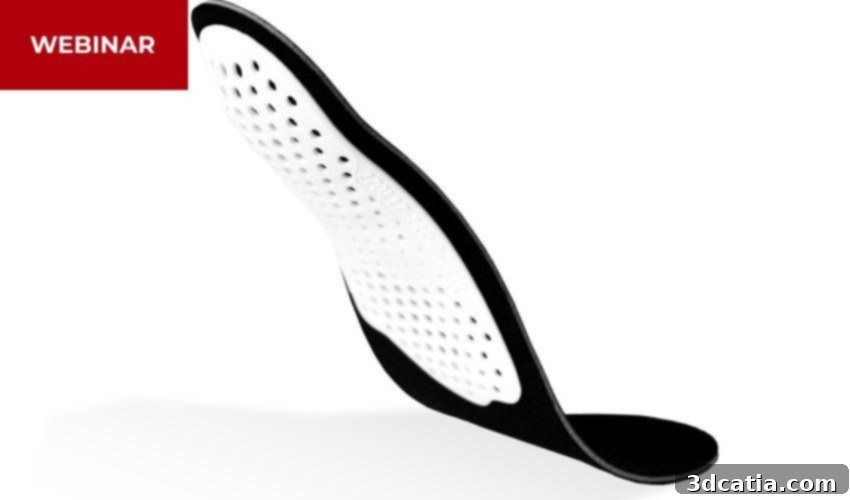
SLS 3D Printing: Revolutionizing Orthotics with Patient-Specific Production and Advanced Customization
The landscape of manufacturing is undergoing a profound transformation, and Selective Laser Sintering (SLS) 3D printing stands at the forefront of this evolution. While traditionally revered as a cornerstone for rapid prototyping, SLS technology has transcended its initial applications. Thanks to significant advancements in machine capabilities, material science, and sophisticated post-processing techniques, SLS 3D printing is now robust enough to meet the stringent standards of high-volume manufacturing industries. This pivotal shift is enabling professionals across various sectors to transition from conventional manufacturing paradigms directly into the production of high-performance, end-use parts, fundamentally altering supply chains and product development cycles.
Beyond Prototyping: The Rise of Additive Manufacturing in End-Use Production
The journey of SLS 3D printing from a prototyping tool to a mainstream production method is a testament to its inherent strengths. Unlike many other additive manufacturing processes, SLS excels in producing complex geometries without the need for support structures, allowing for unparalleled design freedom. Its ability to create parts with isotropic mechanical properties and excellent surface finish, coupled with the growing availability of engineering-grade polymers like Nylon (PA11, PA12) and flexible Thermoplastic Polyurethane (TPU), has made it an ideal candidate for producing durable, functional components. This evolution has opened doors to industries that demand precision, customization, and efficient production scales, moving beyond mere design validation to direct manufacturing.
The Orthotics Industry: A Prime Example of 3D Printing’s Impact
Among the industries most significantly impacted by this 3D printing revolution is orthotics. Orthoses, defined as externally applied devices designed to influence the structural and functional characteristics of the neuromuscular and skeletal systems, are critical for patient mobility, support, and rehabilitation. This sector, intrinsically linked to the broader medical and prosthetics fields, has experienced consistent growth, driven by an aging global population, increased awareness of personalized healthcare, and technological advancements. A recent report underscores this trajectory, projecting the orthotics market to reach an impressive $6 billion valuation by 2028. This growth is inextricably linked to the digitization of the entire orthotics workflow, where 3D printing plays a central role.
The adoption of SLS 3D printing in orthotics offers transformative benefits. It facilitates the rapid and precise manufacturing of orthoses perfectly tailored to each patient’s unique anatomical requirements. This level of customization was previously labor-intensive and often limited by traditional casting and molding methods. With SLS, orthoses can be designed to be remarkably thin, lightweight, exceptionally durable, and, crucially, highly repeatable. This means not only an ideal fit for enhanced patient comfort and efficacy but also the ability to produce multiple identical or slightly modified devices with consistent quality, optimizing patient outcomes and reducing lead times.
Key Advantages of SLS 3D Printing for Custom Orthoses
The application of SLS 3D printing in orthotics brings forth a multitude of advantages that traditional manufacturing struggles to match. Firstly, **unparalleled customization and patient-specificity** are at the core. Utilizing 3D scanning technologies, healthcare professionals can capture highly accurate digital models of a patient’s anatomy. These digital blueprints are then used to design orthoses that conform perfectly, ensuring maximum comfort, support, and therapeutic effectiveness. This personalized approach dramatically improves patient compliance and treatment outcomes, moving away from a “one-size-fits-many” model.
Secondly, SLS enables the creation of **highly optimized and functional designs**. Its ability to print complex internal lattice structures allows for significant weight reduction without compromising strength. These lattice structures can also be engineered to provide specific zones of flexibility and rigidity, enhancing shock absorption, breathability, and overall performance. Materials like medical-grade Nylons and flexible TPUs offer biocompatibility, durability, and skin-friendly properties essential for medical devices worn directly against the body. This combination of material and design freedom leads to orthoses that are not only lighter and thinner but also more resilient and comfortable for daily wear.
Thirdly, **efficiency in production and supply chain management** is a major benefit. SLS allows for on-demand manufacturing, significantly reducing lead times from diagnosis to device delivery. This ‘print-on-demand’ model minimizes inventory costs and waste, as devices are produced only when needed. The digital workflow, from scan to print, streamlines the entire process, making it more scalable and adaptable to varying patient needs and production volumes. Furthermore, the inherent repeatability of 3D printing ensures consistent quality across batches, which is paramount in medical applications.
The Future is Personalized: Market Growth and Technological Drivers
The projected growth of the orthotics market to $6 billion by 2028 is a clear indicator of the transformative power of additive manufacturing. This expansion is fueled by several key factors. An aging global population, unfortunately, brings an increased prevalence of musculoskeletal disorders, neurological conditions, and diabetes, all of which often necessitate orthotic intervention. Concurrently, there is a growing global emphasis on personalized medicine and preventive healthcare, where tailored solutions are preferred over generic ones. Technological advancements in 3D scanning, CAD/CAM software for medical applications, and continuous innovation in 3D printing materials and processes are consistently pushing the boundaries of what’s possible, making patient-specific orthoses more accessible and affordable.
Beyond the immediate benefits for patients, the integration of SLS 3D printing into orthotics manufacturing signals a broader paradigm shift in the medical device industry. It exemplifies how digital fabrication can enable rapid iteration, localized production, and profound customization, leading to superior products and more efficient healthcare delivery systems. This technology is not just about making parts; it’s about making a tangible difference in people’s lives by providing precisely engineered solutions that enhance mobility, reduce pain, and improve overall quality of life.
Unlocking Insights: Watch the Webinar Replay
For those eager to delve deeper into the intricate ways SLS 3D printing is revolutionizing the orthotics sector, we invite you to explore the replay of our insightful webinar, “How is SLS 3D Printing Being Used in Orthotics?” This event, originally broadcast on May 24th, provided an invaluable platform for understanding the cutting-edge advancements and practical applications of SLS technology in the field. Attendees gained comprehensive knowledge about how this additive manufacturing process is being harnessed to create next-generation orthotic devices.
During the webinar, leading experts from Axis Prototyping and Prodways shared their extensive knowledge and real-world experiences. They explored a diverse range of 3D printing applications within the orthotics industry, from highly customized insoles to more complex bracing solutions. The discussion also highlighted how Prodways’ advanced SLS 3D Printers are specifically engineered and adapted to meet the demanding requirements of orthotics production, emphasizing their precision, reliability, and material compatibility. Whether you are a healthcare professional, a medical device manufacturer, or simply curious about the future of additive manufacturing in medicine, the insights shared are highly relevant. You can access the full replay and discover these valuable discussions by clicking HERE.
Meet the Experts
 Lee Barbiasz is an AMER Sales Manager at Prodways Tech, bringing several years of invaluable experience in 3D printing and additive manufacturing. His expertise has been instrumental in assisting numerous customers with the successful deployment of 3D printing solutions across a wide array of applications, helping them harness the full potential of additive technologies.
 Gilles Desharnais serves as the CEO at Axis Prototypes Inc. With over two decades of experience in the dynamic 3D Printing industry, Gilles offers a strategic and forward-thinking perspective on the applications and ongoing developments in rapid prototyping, manufacturing, and various 3D printing technologies. He holds a prestigious Master Level certification in Rapid Technologies & Additive Manufacturing from the SME (Society of Manufacturing Engineers).
 Madeleine Prior is the English Content Specialist for 3Dnatives, recognized as the leading international online magazine dedicated to 3D Printing and Additive Manufacturing. As a key member of the 3Dnatives team, Madeleine is responsible for curating and defining the content presented to its English-speaking audience, ensuring readers receive the latest and most relevant news about the additive manufacturing sector and its far-reaching implications.
Connect With Us & Stay Informed
Are you fascinated by the transformative potential of SLS 3D printing in the production of orthotics? We encourage you to watch the webinar replay to gain a deeper understanding of this innovative field. Share your thoughts, questions, and insights in a comment below or connect with us on our vibrant social media platforms: find us on LinkedIn, Facebook, and Twitter! To ensure you never miss out on the latest breakthroughs and essential news in the additive manufacturing world, don’t forget to sign up for our free weekly Newsletter here, delivering the freshest 3D printing updates directly to your inbox. Additionally, immerse yourself in our comprehensive video library by visiting our YouTube channel, where you can explore a wealth of content on all things 3D printing.