
3D Printing Industry Flourishes: Key Investments, Innovations, and Global Market Expansion
The landscape of 3D printing, or additive manufacturing, continues its remarkable evolution, marked by groundbreaking technological advancements and robust financial activity. From the introduction of cutting-edge machinery to the strategic integration of additive manufacturing into major production chains, the industry is experiencing unprecedented growth. This month’s comprehensive edition dives deep into the most significant business and finance news shaping the 3D printing sector. We’ll explore the latest investment rounds, detailed financial reports, strategic company acquisitions, and ambitious expansion strategies undertaken by the leading players across the globe, providing a snapshot of an industry poised for even greater impact.
Catalytic International Investments Propelling Additive Manufacturing Forward
Investment capital continues to flow into the 3D printing space, signaling strong confidence in its future potential and current capabilities. These financial injections are not just funding operations but are actively accelerating innovation, market penetration, and the broader industrialization of additive manufacturing technologies across diverse sectors.
Xometry, a prominent online manufacturing marketplace known for connecting businesses with a vast network of manufacturing services, has successfully secured a substantial $15 million in funding. This significant financing round was spearheaded by the venture capital division of the prestigious BMW Group, a testament to the growing interest of automotive giants in advanced manufacturing solutions. With this fresh capital, Xometry aims to significantly expand its national network of manufacturing partners, with a particular focus on those specializing in 3D printing. This expansion will not only enhance their service offerings but also democratize access to sophisticated additive manufacturing capabilities for a wider range of businesses, fostering greater innovation and efficiency in custom part production.
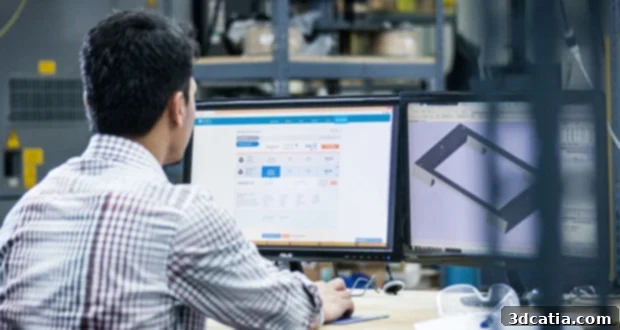
The Xometry platform facilitating access to advanced manufacturing.
In a crucial move to advance healthcare innovation, the Canadian government has committed $3 million towards bolstering the development of additive manufacturing within hospitals in Québec City. This strategic investment is designed to facilitate the creation of a specialized medical 3D printing center. The primary objectives of this initiative are multifaceted: to enable the production of highly customized prostheses tailored to individual patient needs, to develop more efficient and specialized medical equipment, and to further crucial research and application in the cutting-edge field of 3D bioprinting. This funding underscores the transformative potential of 3D printing in personalized medicine and healthcare delivery.
The defense sector continues to recognize the strategic importance of additive manufacturing, as demonstrated by Lockheed Martin, a global security and aerospace giant. The company has awarded a significant $1 million grant for the establishment and development of an advanced additive manufacturing lab on the campus of Metropolitan State University of Denver. This substantial grant is earmarked for the creation of a state-of-the-art facility that will be dedicated to pioneering new manufacturing technologies specifically for space programs. This initiative provides invaluable opportunities for students to engage directly with the latest 3D printing technology, allowing them to design and create complex parts and components vital for future aerospace applications, thereby cultivating the next generation of additive manufacturing experts.
US-based company Voodoo Manufacturing, a prominent player in on-demand 3D printing services, is experiencing rapid growth. After successfully raising $1.5 million earlier in the year, the startup has now secured an additional $5 million investment, designed to significantly accelerate its ambitious business endeavors. This fresh capital will be strategically deployed to double their existing equipment capacity, further automate their production line for increased efficiency and scalability, and launch an innovative new injection molding service. These steps are crucial for Voodoo Manufacturing as it aims to solidify its position as a leading provider of rapid prototyping and on-demand production, addressing the evolving needs of various industries.
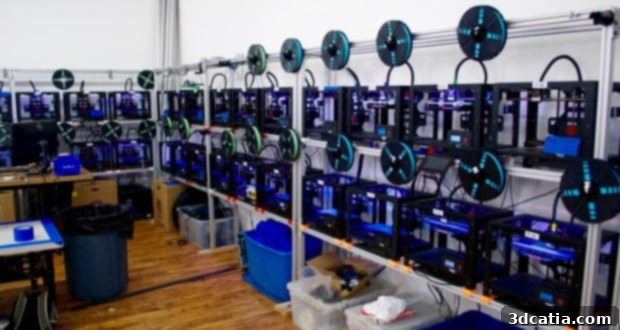
Voodoo Manufacturing’s array of 3D printers, ready for scaled production.
In the consumer and prosumer segment of the market, 3D printer manufacturer Robo 3D has demonstrated significant momentum by raising $1.37 million. This funding boost followed the successful launch of two new printers on the popular crowdfunding platform Kickstarter, showcasing strong market demand for their latest offerings. The capital was secured from GTT Venture, complemented by a trade finance loan provided by Albion Capital Partners. This crucial investment will enable Robo 3D to significantly extend its production capabilities, ensuring they can effectively meet the high volume of pre-order demands generated by their successful crowdfunding campaigns and broader market interest.
Israeli company Nano Dimension, known for its pioneering work in 3D printed electronics and having unveiled a groundbreaking 3D printed circuit printer at the last CES in Las Vegas, is set to receive a substantial $4.8 million in funding. This investment, originating from several key investment funds, marks a pivotal moment for the company. The capital infusion will specifically enable Nano Dimension to intensify its research and development efforts, leading to the creation of an innovative new machine dedicated to 3D ceramic printing. This development holds immense promise for applications in high-temperature environments, electronics, and specialized industrial components, further diversifying the capabilities of additive manufacturing.
Crowdfunding Triumphs: Innovators Secure Support Through Kickstarter
Kickstarter continues to be a vibrant platform for 3D printing innovators to bring their ideas to life, gather early adopter support, and secure essential funding. The success of these campaigns often highlights emerging trends, market demand for accessible technology, and the power of community backing in driving product development.
The Bean 3D printer has achieved phenomenal success on Kickstarter, far surpassing its initial funding goal by raising over $500,000. Developed by Kudo3D, the established manufacturer behind the popular Titan 3D printer, the Bean 3D represents a significant advancement in resin-based 3D printing. This new machine distinguishes itself by utilizing LED lights to solidify the liquid resin material, offering precision and efficiency. A key factor in its overwhelming success was the strategic pricing: backers could acquire the printer for an incredibly competitive price of just $399 until July 18th, a stark contrast to its projected retail price of $1,200. This aggressive early bird pricing strategy clearly resonated with the community, demonstrating a strong appetite for affordable, high-quality resin 3D printers.
Blackbelt, renowned for pioneering the innovative conveyor belt 3D printer, has successfully concluded its latest Kickstarter campaign, once again demonstrating the appeal of its unique technology. The campaign managed to raise an impressive sum exceeding €100,000. This significant funding will be directly allocated towards financing their ambitious new project, which aims to further develop and refine their conveyor belt technology to enable the creation of pieces with theoretically infinite length. This capability opens up new horizons for manufacturing, allowing for continuous production and the printing of objects that defy the traditional build volume limitations of most 3D printers, making it a game-changer for industrial applications and large-scale projects.
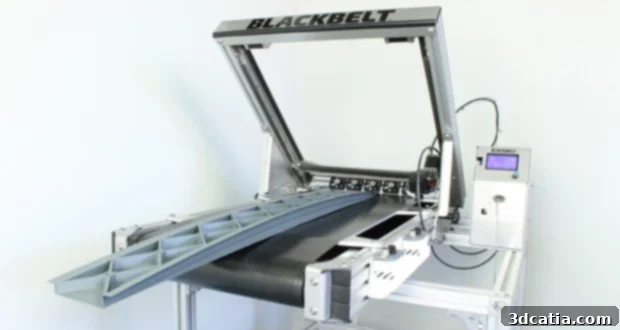
The Blackbelt 3D printer, featuring its revolutionary conveyor belt system.
Kodama’s Obsidian low-cost 3D printer has emphatically shattered its Kickstarter goal, rapidly accumulating an astounding $800,000 within just a few days of its launch. This remarkable crowdfunding success underscores the enduring demand for affordable and accessible 3D printing technology among enthusiasts and new users alike. Early bird supporters who pledged their backing to the project were able to claim their very own Obsidian printer for an exceptionally low price of $49, with the standard supporter price set at $99. This achievement marks Kodama’s second triumphant crowdfunding venture, following the equally successful campaign for their first 3D printer, the Trinus, which garnered significant attention in April 2016. Such repeated success solidifies Kodama’s reputation for delivering popular, cost-effective 3D printing solutions.
Strategic Alliances and Developmental Initiatives Driving Industrialization
The industrialization of 3D printing is not just about technology; it’s also heavily reliant on strategic partnerships and carefully planned developmental strategies. Leading companies are forging alliances to combine expertise, share resources, and accelerate the adoption of additive manufacturing in mainstream industrial applications.
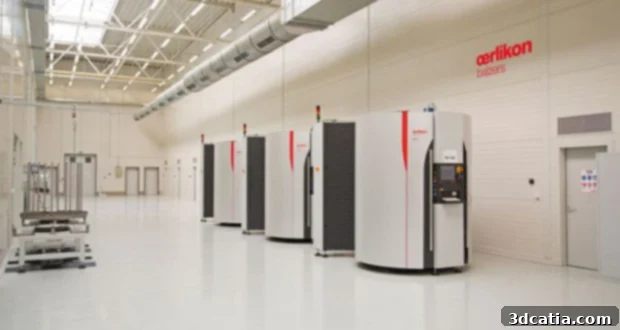
GE Additive, a powerhouse in the additive manufacturing space, has announced a significant partnership with Oerlikon, a global technology group specializing in surface solutions, manmade fibers, and drive systems. This collaboration is specifically designed to accelerate the industrialization of 3D printing across various sectors. Under the terms of this strategic alliance, GE Additive will be positioned as the preferred machine supplier for the Swiss company, providing cutting-edge additive manufacturing equipment. Conversely, Oerlikon will leverage its extensive expertise to become a key component manufacturer for GE, likely supplying specialized parts and materials crucial for GE’s advanced manufacturing initiatives. This symbiotic relationship is expected to streamline the adoption of additive manufacturing, optimize supply chains, and foster greater innovation in industrial-scale production.
Straumann, a recognized global leader in the highly specialized and competitive dental implant market, has made a strategic move by announcing a 35% stake acquisition in German manufacturer Rapid Shape. This significant investment highlights the growing importance of 3D printing within the dental industry. Rapid Shape, headquartered in the suburbs of Stuttgart, Germany, is a well-regarded producer of high-precision 3D resin printers. While their technology serves a broad range of markets including jewelry and hearing aids, their robust capabilities in the dental sector were undoubtedly a key factor for Straumann’s investment. This partnership is expected to integrate Rapid Shape’s advanced 3D printing solutions more deeply into Straumann’s digital workflows, enhancing the speed, precision, and customization options for dental prosthetics and implants, ultimately benefiting both practitioners and patients.
Major Industry Announcements and Technological Milestones
Beyond investments and partnerships, the 3D printing industry is continually marked by significant product announcements, software enhancements, and the unveiling of new material capabilities. These developments are crucial indicators of the industry’s health and its trajectory toward broader adoption.
US giant HP has been particularly active this month, making several significant announcements related to its acclaimed Multi Jet Fusion (MJF) technology. The company is actively extending its strategic partnership initiatives to new geographical regions, notably expanding its presence and influence in the Asia-Pacific market. Concurrently, HP is establishing its latest demonstration centers worldwide, providing potential clients with firsthand experience of the capabilities of MJF technology. In addition to these market expansion efforts, HP has also unveiled substantial improvements to its Multi Jet Fusion software, enhancing user experience and printing efficiency. Furthermore, the company is actively developing new materials, promising a wider array of applications and functionalities for their printers. HP reports impressive statistics, stating that their printers have already produced over 500,000 parts, with the majority of their users expressing high satisfaction with the technology’s performance and reliability.
Following the grand unveiling of the ATLAS 3D printer at the prestigious Paris Airshow – an event renowned for showcasing the pinnacle of aerospace innovation – GE has solidified its position as a dominant leader in the 3D printing industry. The ATLAS, one of the largest 3D printers specifically designed for the aerospace industry, immediately captured the market’s attention. GE successfully secured an astonishing $31 billion worth of orders for this groundbreaking printer, underscoring the immense demand for large-scale, high-precision additive manufacturing capabilities in critical sectors like aerospace. This colossal order book not only validates GE’s significant investment in additive manufacturing but also firmly establishes them at the forefront of industrial 3D printing technology.
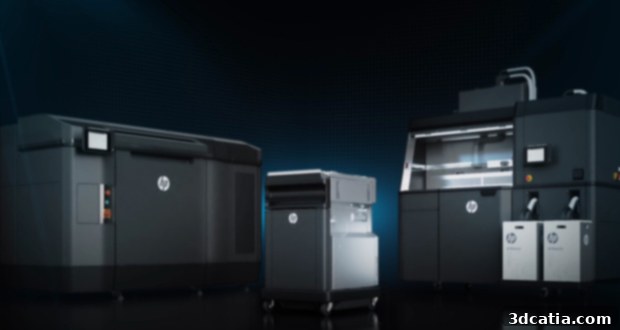
The Multi Jet Fusion Technology, enabling high-volume, functional parts.
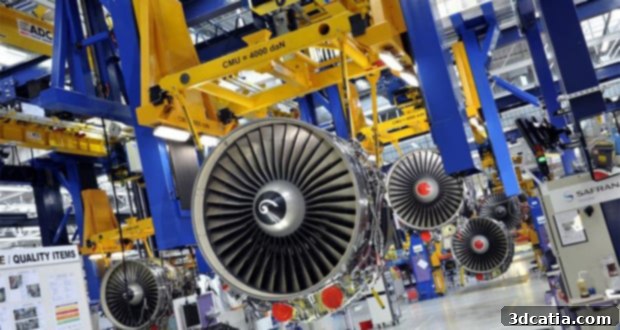
Further demonstrating their innovative prowess, a joint venture between GE and Safran led to the creation of a revolutionary new line of LEAP jet engines. These advanced engines were prominently featured and available for order at the 2017 Paris Airshow, drawing significant interest from airlines worldwide. A key innovation within these LEAP jet engines is the incorporation of sophisticated 3D printed fuel nozzles, which significantly enhance performance and fuel efficiency. Moreover, these engines utilize special materials known as “super ceramics,” which boast the incredible toughness of metal but are significantly lighter and possess exceptional resistance to extreme high temperatures. This combination of additive manufacturing and advanced material science delivers unparalleled advantages. Following their unveiling, the joint venture received orders for an impressive 1,658 LEAP and CFM56 engines. These orders, valued at over $27 billion, represent unanimous support and strong market confidence in the companies and their state-of-the-art products, marking a triumph for additive manufacturing in critical aerospace applications.
SLM Solutions, a leading provider of metal additive manufacturing machines, has announced its largest order to date, a monumental deal that includes 10,500 multi-laser machines with a total value of $13 million. This substantial shipment of advanced metal 3D printers is destined for China over the next 15 months, indicating a major expansion into one of the world’s most dynamic manufacturing markets. According to CEO Uwe Bögertshausen, this landmark order represents a crucial strategic step for SLM Solutions, enabling them to firmly establish and significantly expand their presence within the rapidly growing Chinese additive manufacturing market. The demand for multi-laser technology underscores the industry’s shift towards higher productivity and efficiency in metal 3D printing for industrial applications.
The Future is Additive: A Dynamic and Growing Industry
The flurry of activity highlighted this month – from substantial investments and successful crowdfunding campaigns to strategic partnerships and major product launches – paints a vivid picture of a 3D printing industry in a phase of accelerated growth and maturation. The consistent flow of capital indicates strong investor confidence in the long-term viability and transformative potential of additive manufacturing. Innovations in medical, aerospace, and general manufacturing applications are not only pushing technological boundaries but also making 3D printing more accessible, efficient, and versatile than ever before. As companies like GE, HP, and specialized startups continue to invest heavily in R&D and market expansion, the integration of 3D printing into global supply chains and everyday production processes is becoming an undeniable reality. This dynamic environment promises a future where customized, on-demand, and highly efficient manufacturing becomes the norm, further solidifying 3D printing’s role as a cornerstone of the next industrial revolution.
What are your thoughts on these groundbreaking announcements from June? We invite you to share your insights and comments below, or engage with us on our Facebook and Twitter pages! Don’t miss out on the latest advancements and industry news; make sure to sign up for our free weekly Newsletter, delivering all the essential updates in 3D printing directly to your inbox!