
3D Printed Pavilion: Pioneering Sustainable Architecture and Affordable Housing in Mexico City
Mexico City, a vibrant metropolis pulsating with cultural significance and architectural innovation, annually hosts MEXTRÓPOLI. Recognized as the largest Architecture and City Festival in the Americas, MEXTRÓPOLI serves as a vital platform for dialogue, knowledge exchange, and the envisioning of future urban landscapes. The 2022 edition, which drew an impressive crowd of over 80,000 attendees, was a testament to the festival’s growing influence, fostering a collective new vision for cities through the lens of groundbreaking architectural concepts and practices. Among the myriad of forward-thinking projects showcased, one particular initiative captivated imaginations by boldly embracing additive manufacturing as its core production methodology: a revolutionary 3D printed pavilion. This groundbreaking structure, conceived and brought to life in Mexico, represents a powerful convergence of three pivotal ideas: cutting-edge new technologies, the rich heritage of craftsmanship, and a steadfast commitment to recycling and material reuse. The ambitious project was made possible through a remarkable collaborative effort, bringing together an expert engineering team from Digital Structures MIT, the international non-profit organization New Story, renowned for its dedication to eradicating global homelessness, and Échale, a Mexican social enterprise providing integrated housing solutions through comprehensive community development.
The emergence of this pavilion underscores a broader, accelerating trend: the exponential growth and increasing adoption of additive manufacturing across various sectors. Within the realm of architecture, specifically, the application of this transformative technology is experiencing an unprecedented boom, driven by its inherent advantages in terms of design flexibility, material efficiency, cost-effectiveness, and accelerated construction timelines. The impact of 3D printing in construction is already tangible, with numerous high-profile examples illustrating its practical utility and aesthetic potential. A prime instance is the iconic 3D printed metal bridge, now a functional landmark in Amsterdam, demonstrating how advanced digital fabrication can redefine urban infrastructure. The Mexico City pavilion not only contributes to this burgeoning field but also pushes the boundaries further by integrating sustainability and social impact directly into its foundational design. Let us now delve deeper into the unique characteristics of this pioneering project and explore how it masterfully combines innovation with other critical contemporary considerations.
Credits: Dinorah Schulte / Arturo Arrieta
The Vision Behind “Dreams with Fiber/Timber, Earth/Concrete”
Dubbed “Dreams with Fiber/Timber, Earth/Concrete,” the pavilion is far more than just a structural exhibit; it is a profound statement and an exploratory prototype. Its design explicitly acknowledges and celebrates Mexico City’s rich and complex architectural history, drawing inspiration from traditional building techniques while boldly envisioning new possibilities. According to the project’s visionary creators, the design philosophy hinges on reimagining the future of construction through a critical adaptation of traditional paper craftsmanship – perhaps referencing its lightweight yet structurally resilient qualities – coupled with the creative reuse of recycled wood and the innovative application of earth and concrete through additive manufacturing. This holistic approach leverages the inherent strengths of each component: the structural integrity and aesthetic versatility of fiber and timber, and the localized, sustainable properties of earth and concrete. The overarching goal of incorporating additive manufacturing into this architectural endeavor is multifaceted: primarily, to explore viable pathways for the future of affordable housing within Mexico and beyond, and equally, to significantly minimize the substantial environmental impact typically associated with conventional construction methods. By fusing ancient wisdom with cutting-edge technology, the pavilion aims to set a new precedent for sustainable and accessible building practices.
Revolutionizing Construction: The 3D Printing Process and Sustainable Design
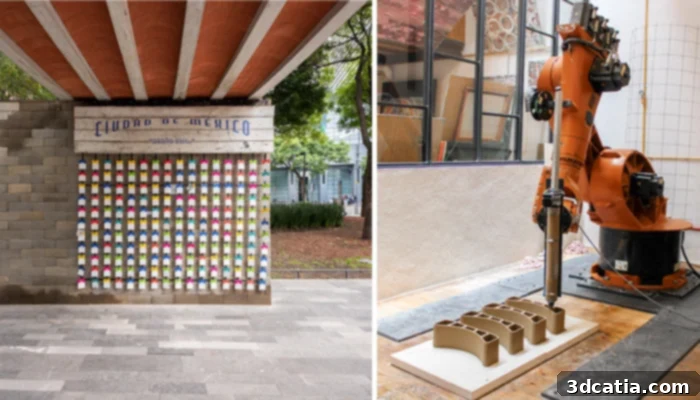
The elegant and highly optimized design of the pavilion is a direct outcome of sophisticated computational methods developed by MIT’s esteemed research department, Digital Structures. These advanced algorithms allowed for the exploration of complex geometries and structural optimizations that would be challenging, if not impossible, to achieve through traditional design processes. At its core, the pavilion features an innovative horizontal roof structure that thoughtfully builds upon the existing, time-tested joist-and-vault system prevalent in Mexican architecture. This adaptation is not merely aesthetic; it is engineered for superior sustainability. By computationally optimizing the shape of the precast reinforced concrete beams, the design drastically reduces the amount of material required without compromising structural integrity. This principle of ‘form follows performance’ is central to the project’s eco-conscious ethos.
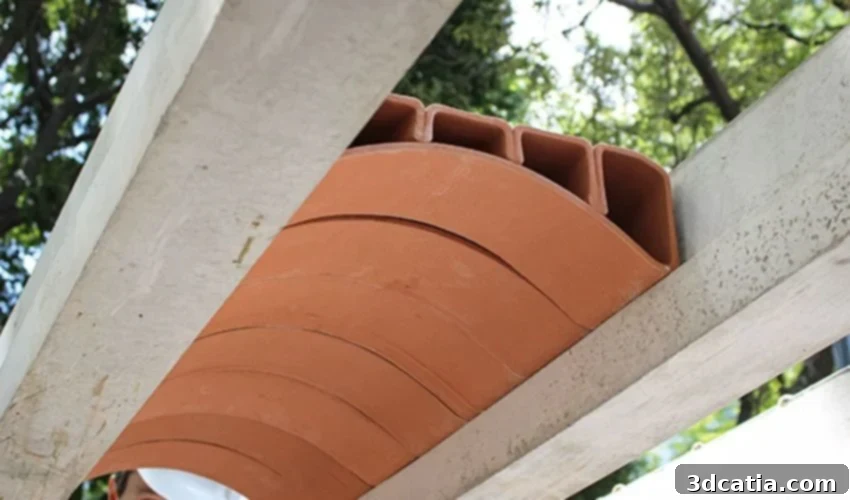
A key innovative element is the integration of clay 3D printed blocks, which are strategically placed to bridge the spaces between the optimized beams. These blocks serve a dual purpose: they act as formwork and integral structural components, allowing for the efficient pouring of a top slab that completes the roof system. The choice of clay and earth as primary 3D printable materials is deliberate and highly strategic. Sourcing these materials locally not only significantly reduces transportation costs and logistical complexities but also dramatically minimizes the project’s carbon footprint, reinforcing the commitment to environmental stewardship. This localized approach makes the entire production process more affordable and accessible, particularly for developing communities. The pavilion thus stands as a powerful testament to the intersection of traditional local construction techniques, deeply rooted in Mexico’s heritage, and the revolutionary capabilities of new digital fabrication technologies. This synthesis embodies a forward-thinking model of collaboration, uniting industry leaders, social enterprises, and academic institutions in a concerted effort towards pioneering a more sustainable and equitable built environment for the future.
Beyond the Pavilion: Addressing Affordable Housing and Environmental Impact
The “Dreams with Fiber/Timber, Earth/Concrete” pavilion represents a critical step forward in addressing two of the most pressing global challenges: the need for affordable housing and the urgent imperative to mitigate the environmental impact of construction. Traditional building methods are often resource-intensive, wasteful, and time-consuming, contributing significantly to greenhouse gas emissions and material depletion. By contrast, additive manufacturing offers a compelling alternative. The precision of 3D printing minimizes material waste, as structures are built layer by layer only where material is needed. Furthermore, the speed of construction offered by robotic 3D printers can drastically cut down on labor costs and overall project timelines, making housing more accessible and economically viable. The use of locally sourced earth and clay, abundant and natural materials, further enhances the project’s sustainability credentials, reducing reliance on manufactured, energy-intensive materials like steel and cement.
New Story’s involvement in this project highlights the direct link between architectural innovation and social impact. Their mission to end global homelessness aligns perfectly with the pavilion’s exploration of affordable housing solutions. While this specific pavilion is a prototype, the underlying technologies and material strategies demonstrate immense potential for scalable, low-cost housing development in communities that need it most. Imagine entire neighborhoods built with minimal waste, using local resources, and constructed in a fraction of the time. Échale’s expertise in integral community development ensures that such innovations are not just technically feasible but also culturally appropriate and socially impactful, empowering local populations through participatory design and construction processes.
The Future of Construction: A Collaborative and Sustainable Path
This collaborative model, bringing together Digital Structures MIT’s cutting-edge research, New Story’s social mission, and Échale’s community-focused implementation, sets a powerful precedent. It illustrates how cross-sector partnerships are essential for tackling complex societal and environmental challenges. Academic institutions provide the theoretical framework and technological advancements, social enterprises bridge the gap between innovation and community needs, and industry partners bring the necessary resources and scalability. The pavilion is not merely an architectural object; it is a blueprint for a more integrated, responsive, and responsible approach to urban development.
The lessons learned from the “Dreams with Fiber/Timber, Earth/Concrete” pavilion extend far beyond its physical footprint. It demonstrates that the future of construction lies in a harmonious blend of high-tech innovation and low-tech wisdom, respecting local contexts while embracing global possibilities. As urban populations continue to grow, particularly in developing nations, the demand for sustainable, affordable, and resilient infrastructure will only intensify. Projects like this MEXTRÓPOLI pavilion offer tangible proof that these demands can be met through inventive design, smart material choices, and collaborative spirit. It encourages architects, engineers, policymakers, and communities alike to rethink traditional paradigms and embrace the transformative potential of additive manufacturing for a brighter, more sustainable urban future.
What are your thoughts on this inspiring 3D printed pavilion and its implications for sustainable architecture and affordable housing? We invite you to share your insights and comments below, or engage with us on our LinkedIn, Facebook, and Twitter pages! For the very latest news and developments in the world of 3D printing, don’t forget to subscribe to our free weekly Newsletter here, delivered straight to your inbox. You can also explore all our in-depth videos and exclusive content on our YouTube channel.
*Cover photo credits: Dinorah Schulte / Arturo Arrieta