
Ben Serotta and APWorks Forge the Future of Cycling with Personalized 3D Printed Road Bikes
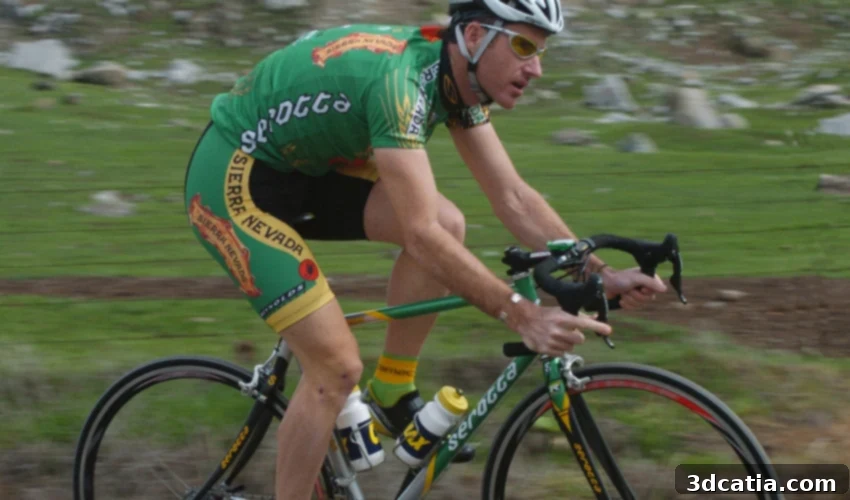
In a groundbreaking collaboration set to redefine the cycling landscape, Ben Serotta, a titan in the bicycle industry, is teaming up with APWorks, a visionary leader in additive manufacturing (AM). Their ambitious goal: to revolutionize road bike design and production through the power of personalization and advanced 3D printed bikes. Serotta, serving as the chairman of Higher Ground Cycling LLC, brings his unparalleled expertise in crafting the highly sought-after Serotta limited edition steel and titanium bikes. After an eight-year hiatus, the company triumphantly returned in 2020, powered by a renewed commitment to innovation and individual rider focus. Ben Serotta himself is widely celebrated as a pioneer in bike sizing and fitting, a critical discipline that ensures every aspect of a bicycle is meticulously designed and rigorously tested to match the rider perfectly.
The ethos driving Serotta’s approach is a steadfast dedication to individualization. Unlike the prevailing “one-size-fits-all” model or even standard size increments, Serotta and APWorks reject the notion of off-the-shelf solutions. Instead, their process begins with a deep dive into the unique needs, aspirations, and physical characteristics of each customer. By drawing upon extensive rider data and a profound understanding of cycling ergonomics, they craft road bikes that are truly bespoke. This meticulous attention ensures that every bike is not just a mode of transport, but a finely tuned extension of the rider, engineered to their exact specifications. As Serotta eloquently states, “Ask any successful endurance athlete and there’s no doubt that when it comes to optimizing performance, nothing beats the benefits that come from customizing equipment, as long as it’s done right.” This philosophy underpins their belief that optimal performance, comfort, and injury prevention stem directly from a perfectly tailored fit, a promise that conventional manufacturing struggles to deliver.
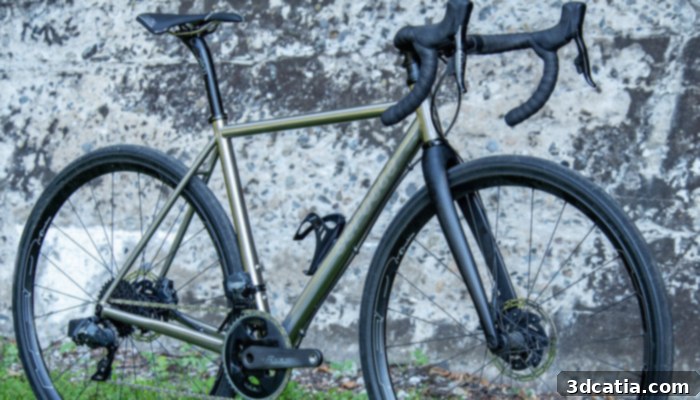
Serotta bikes, such as the Duetti road bike, are crafted in close collaboration with the customer. Throughout the manufacturing process, meticulous attention is given to fine-tuning the bike to meet the individual’s specific requirements, taking into account their needs, preferences, and riding style. (Photo credits: Serotta)
Headquartered just south of Munich, Germany, APWorks brings formidable technical prowess to this partnership. As a subsidiary of Airbus, APWorks has long recognized the transformative potential of personalization, especially when empowered by advanced manufacturing technologies. Their mission extends to leveraging their proprietary additive manufacturing capabilities to elevate the customizability of consumer goods across various sectors. With 3D printing at its core, APWorks enables the production of superior, high-performance products that are not only tailored to specific user requirements but also delivered with unprecedented speed and efficiency. Their distinguished track record in the aerospace sector stands as a testament to their engineering excellence, particularly through their mastery of Laser Powder Bed Fusion (LPBF) printing, utilizing advanced materials like Scalmalloy. This expertise, honed through successful collaborations with industry giants such as Airbus, firmly establishes APWorks’ leading position in the field of metal additive manufacturing.
The integration of additive manufacturing into bicycle production offers a paradigm shift. Traditional bike manufacturing, often reliant on standardized molds and welding processes, imposes limitations on design complexity, weight optimization, and ultimately, customization. 3D printing, specifically LPBF as employed by APWorks, liberates designers from these constraints. It allows for the creation of intricate geometries, lattice structures, and organic forms that are impossible or cost-prohibitive with conventional methods. This means frames can be optimized for specific stiffness, compliance, and aerodynamic properties precisely where needed, based on the individual rider’s power output, weight distribution, and riding style. Furthermore, the iterative design process becomes significantly faster, enabling rapid prototyping and adjustments, thus reducing the time from concept to a perfectly realized custom bike. The ability to print complex parts in a single piece also reduces the need for multiple welds, which can be points of weakness or add unnecessary weight in traditional frames.
APWorks: Pioneering Personalized 3D Printed Bicycles with Scalmalloy
Central to APWorks’ innovative offerings is Scalmalloy, a truly remarkable material. This proprietary alloy, a unique blend of scandium and aluminum, has earned the prestigious title of the “highest strength aluminum alloy for additive manufacturing.” Its exceptional strength-to-weight ratio, combined with excellent fatigue properties, makes it an ideal candidate for high-stress applications in industries as demanding as aerospace and, increasingly, high-performance cycling. While Scalmalloy initially gained significant recognition for its groundbreaking applications in the aerospace industry, APWorks is now strategically extending the benefits of its automated workflow and streamlined additive manufacturing processes to a wider array of business sectors. By prioritizing product customization and leveraging the unique attributes of Scalmalloy, APWorks is not merely demonstrating but actively showcasing the profound advantages that 3D printing brings to the consumer goods market. The company’s prior involvement in the production of the Swanigami X23, which prominently featured 3D printed components made from Scalmalloy, has already provided invaluable experience within the bicycle industry, serving as a powerful testament to their deep expertise in additive manufacturing and advanced material science. This experience is now directly channeled into the collaboration with Serotta, ensuring that the bespoke bikes benefit from the pinnacle of material innovation.
The advantages of using a material like Scalmalloy in bicycle manufacturing are manifold. Traditional aluminum alloys, while lightweight, often compromise on strength or fatigue resistance, requiring thicker sections or more complex designs to achieve desired structural integrity. Scalmalloy, however, allows for significantly thinner wall sections and lighter components without sacrificing durability. This translates directly to lighter bikes with superior performance characteristics, offering riders an unparalleled experience in terms of acceleration, climbing efficiency, and overall agility. The material’s inherent properties also lend themselves well to intricate lattice structures achievable only through 3D printing. These structures can be engineered to absorb road vibrations more effectively, enhancing rider comfort without adding unnecessary weight, or to provide targeted stiffness for optimal power transfer. This level of material and structural customization is simply not feasible with conventional manufacturing techniques, positioning Serotta and APWorks at the forefront of cycling innovation.
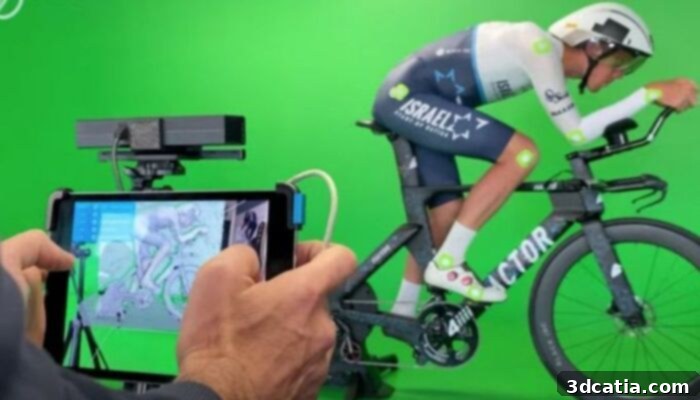
3D printed components made of Scalmalloy from APWorks were already used in the design of the Swanigami X23. (Photo credits: Toot Racing)
In a market brimming with choices, consumers invariably seek assurance and rely heavily on credible feedback and proven track records from experienced manufacturers. APWorks and Serotta fully comprehend this crucial aspect of consumer trust and are resolute in their mission. They are meticulously combining their vast and complementary knowledge bases in bike customization, deep cycling expertise, cutting-edge material science, innovative design principles, advanced engineering methodologies, and state-of-the-art additive manufacturing (AM) to deliver an unparalleled cycling experience. The inherent challenge, and indeed their greatest opportunity, lies in seamlessly harmonizing these diverse and highly specialized domains to forge something truly exceptional – a bespoke bicycle that performs beyond conventional expectations and fits like a second skin. This synergy between Serotta’s artistic vision and ergonomic mastery and APWorks’ industrial-grade additive manufacturing capabilities promises to usher in a new era of highly personalized, performance-optimized cycling. This collaboration is not just about making a bike; it’s about crafting an extension of the rider, designed from the ground up to maximize their potential and joy on two wheels.
The implications of this partnership extend beyond just elite cyclists. While professional athletes often benefit from custom setups, the accessibility of highly personalized bikes through advanced manufacturing could democratize optimal fit and performance for a broader range of riders. Imagine a future where every cyclist, regardless of their budget, can access a bike perfectly suited to their unique biomechanics and riding goals, reducing discomfort, improving efficiency, and enhancing the pure enjoyment of cycling. This move towards mass customization, facilitated by 3D printing, represents a significant leap forward from traditional mass production, offering individual solutions without the prohibitive costs associated with manual bespoke craftsmanship. The fusion of Serotta’s legacy in bike fitting with APWorks’ manufacturing prowess is poised to transform the industry standard, making high-performance personalization the new benchmark. To learn more about this exciting collaboration and the innovative products emerging from it, we encourage you to visit the APWorks and Serotta homepage HERE.
What are your thoughts on this exciting development in 3D printed designer bikes and the future of personalized cycling? Share your opinions in a comment below or join the conversation on ourLinkedIn,Facebook, andTwitter pages! Don’t forget to sign up for our free weeklyNewsletter here to receive the latest 3D printing news straight to your inbox! You can also find all our compelling videos and in-depth discussions on our dedicatedYouTube channel, where we explore the frontiers of additive manufacturing and its revolutionary applications.
*Cover Photo Credits: Serotta