
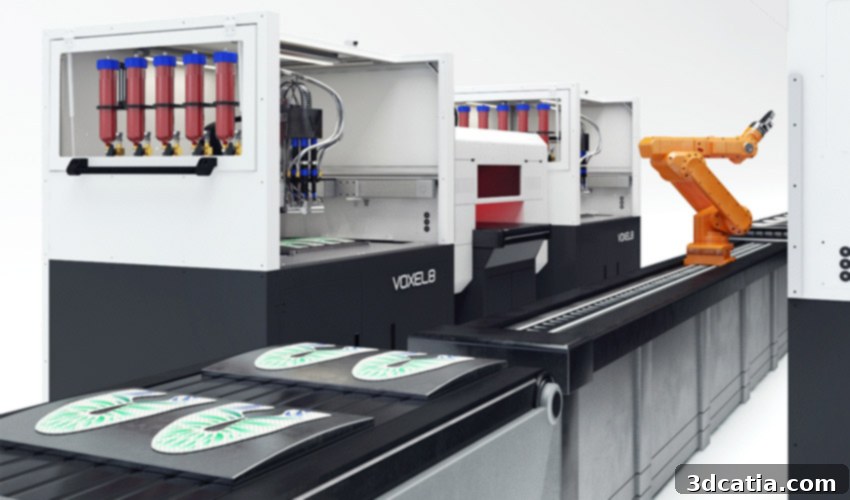
Voxel8 Revolutionizes Footwear & Apparel with ActiveMix: The Future of Multi-Material 3D Printing and Mass Customization
Voxel8, an innovative American company, stands at the forefront of additive manufacturing, specifically targeting the dynamic design and production of sports shoes and performance apparel. While many industry players have concentrated their efforts on developing 3D printed soles, Voxel8 distinguishes itself by focusing on the intricate creation of the entire upper part of the shoe. Their groundbreaking ActiveMix process facilitates the precise printing of high-performance, color-reactive polyurethanes, opening up new possibilities in material customization and aesthetic design. The startup envisions a future where more manufacturers can offer mass-customized solutions locally, significantly reducing production costs and lead times. We recently had the opportunity to sit down with Voxel8’s co-founder, Travis Busbee, who provided an in-depth explanation of this transformative platform and its associated benefits for various industries.
Meet Travis Busbee: A Journey into Additive Manufacturing Innovation
 Travis Busbee, with a robust background in Materials Science and Engineering, first encountered the revolutionary field of additive manufacturing during his PhD studies at Jennifer Lewis’ Lab at the Harvard School of Engineering and Applied Sciences. Unlike many who are introduced to 3D printing through commercial machines or hobbyist kits like a RepRap, Busbee’s initial experiences were far more fundamental. He delved into developing entirely new materials and crafting custom programs to create sophisticated, fully 3D printed multi-material pharmaceutical testing devices, complete with integrated electronic sensors. This pioneering work led him to be a co-first author on the Nature Materials publication, “Instrumented cardiac microphysiological devices via multimaterial three-dimensional printing.”
This profound foundational experience, starting from the ground up by developing novel materials and writing the code to precisely pattern structures with them, instilled in Busbee a deep understanding of the inherent complexities of additive manufacturing. Crucially, it also ignited an appreciation for the vast, untapped potential of multi-material additive manufacturing, especially when utilizing high-performance materials. Recognizing this immense opportunity, a small, visionary group from the lab, including Jennifer Lewis and Jack Minardi, collaboratively decided to establish Voxel8. Their shared mission was to transition these innovative multi-material 3D printing technologies from the academic environment of the Harvard Lab into practical, high-volume production applications. Since its inception, Voxel8 has consistently pushed the boundaries of innovation, developing several groundbreaking technologies poised to fundamentally transform various industries, setting new standards for manufacturing capabilities.
Unveiling the ActiveMix System: Precision, Performance, and Digital Color
At the heart of Voxel8’s innovation is the ActiveMix® printhead system, an advanced solution featuring highly precise dynamic mixing and dispensing capabilities. These printheads are specifically engineered to enable additive manufacturing with reactive, high-performance elastomers, including versatile polyurethanes, durable silicones, and strong epoxies. What makes ActiveMix® truly revolutionary is its ability to facilitate dynamic changes in the material properties of printed parts. This is achieved by altering the composition of the material in real-time as it is patterned during the printing process. By precisely varying the ratios of the same set of raw materials, manufacturers can achieve a remarkably wide spectrum of material characteristics within a single print. This allows for the creation of parts ranging from highly flexible, rubber-band-like textures to rigid, plastic-like structures, and everything in between, all customized to specific performance requirements.
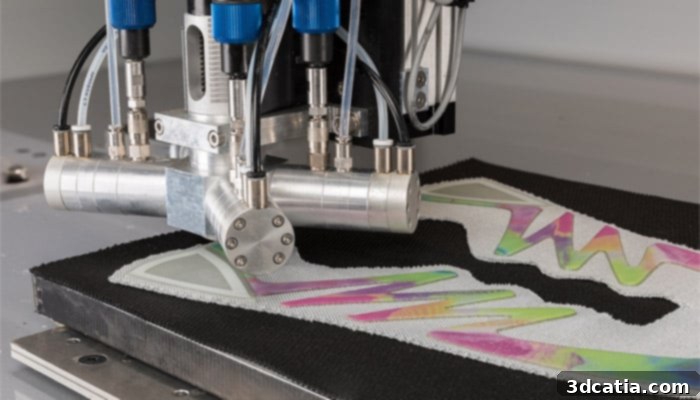
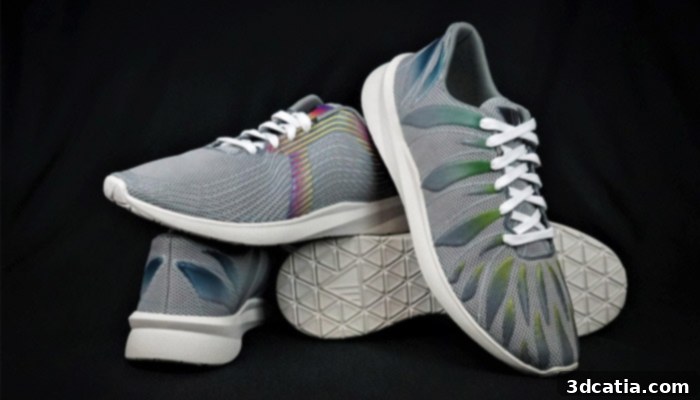
Taking this technological leap even further, Voxel8’s ActiveImage® process introduces full digital color control to printed parts. Traditional additive manufacturing technologies typically necessitate changing the material feedstock to alter the properties of printed parts, and each part is generally restricted to a single material and a single color. In stark contrast, ActiveMix® and ActiveImage® Printing Technologies empower users to print an extensive range of material properties in full digital color within a single print job, without the need to ever change the base raw materials. This unprecedented level of control unlocks a new dimension of design freedom and functional integration.
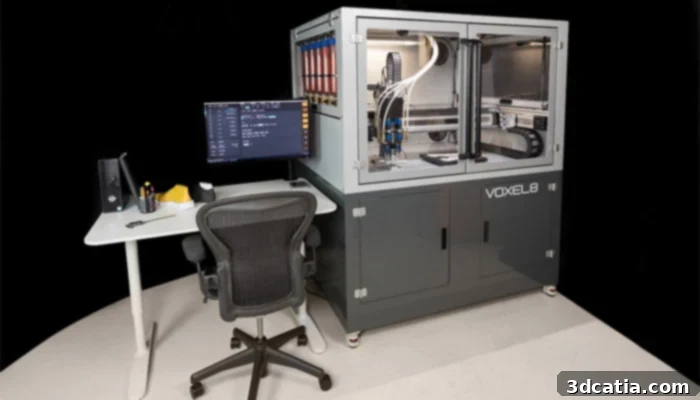
These groundbreaking technologies are seamlessly integrated into what Voxel8 calls the ActiveLab® Digital Fabrication System. This comprehensive ecosystem encompasses cutting-edge hardware, sophisticated software, and proprietary material formulations, now available for purchase at $250,000. A crucial component of this ecosystem is a proprietary software tool developed by Voxel8, which facilitates product design through digitally defined zonal tuning of material properties. Initially, the full system was conceived and optimized for the design, rapid prototyping, and production of unique new athletic footwear uppers and apparel, featuring zonally tuned performance characteristics and vibrant full-color capabilities. Looking ahead, Voxel8 anticipates that the ActiveLab® system will be adopted across diverse and emerging fields, including but not limited to sporting goods, advanced medical devices, smart wearables, and various consumer products, driven by its unparalleled flexibility and performance.
Transforming the Footwear Industry with Agile Manufacturing
The athletic footwear industry operates on a remarkably lengthy product development cycle, typically requiring 12 to 18 months to bring new products from initial design sketch to retail shelves. This protracted timeline is largely due to a supply chain established in the early 1980s that has remained largely stagnant since then. Each new product introduction demands a substantial investment in tooling—often 5 to 15 pieces of tooling per size, across 21 different sizes, for both left and right shoes, with each piece costing approximately $1000. The iterative process of prototyping and wear testing alone frequently consumes weeks, or even months, for each refinement cycle. Furthermore, traditional manufacturing processes are exceptionally labor-intensive, necessitating production in Asia, despite steadily rising labor costs in the region. This geographical distance also means that shoes spend weeks in transit, traveling by sea to major consumer markets like the US and Europe, exacerbating lead times.
Compounding these challenges, the fashion industry, of which footwear is a significant part, is evolving at an unprecedented pace. Predicting future fashion trends 12 or more months in advance has become nearly impossible. Despite this, footwear companies are compelled to place orders for hundreds of thousands of pairs of a specific shoe line long before they can accurately gauge actual market demand. Modern consumers, particularly Millennials and Generation Z, expect a constant stream of new, desirable products. Their preference leans heavily towards unique and customized items, moving away from mass-produced goods that everyone else owns. This shift is clearly demonstrated by the rapid emergence and success of online marketplaces like GOAT and the burgeoning global phenomenon of Sneakerhead Culture, where exclusivity and personalization are highly valued.
It has become abundantly clear that the traditional manufacturing paradigm, characterized by long lead times, heavy tooling requirements, and labor-intensive processes, is fundamentally incapable of meeting the demands of the modern consumer. Footwear companies are acutely aware of this disconnect and are actively seeking innovative solutions. A quiet but intense battle is underway behind the scenes to lead the digital manufacturing revolution within the athletic wear sector. Major athletic brands are making substantial investments in efforts to modernize their supply chains and gain a competitive edge. Evident examples include Adidas’ Speedfactory initiative, Nike’s strategic partnership with Flex, Reebok’s Liquid Factory, Under Armour’s Lighthouse innovation hub, and numerous others. In this dynamic landscape, Voxel8 emerges as a pivotal Digital Manufacturing Solution, specifically optimized for the agile and customized production of athletic footwear uppers.
Key Advantages of Voxel8’s Digital Fabrication Technology
Voxel8’s pioneering technology offers a compelling suite of benefits that address critical pain points in modern manufacturing, particularly within the footwear and apparel sectors:
- Dramatically Reduced Time to Market: This innovative approach slashes product development cycles from the conventional 1.5 years down to mere weeks. This agility allows brands to respond swiftly to fleeting fashion trends and evolving consumer preferences, bringing new products to market with unparalleled speed and efficiency.
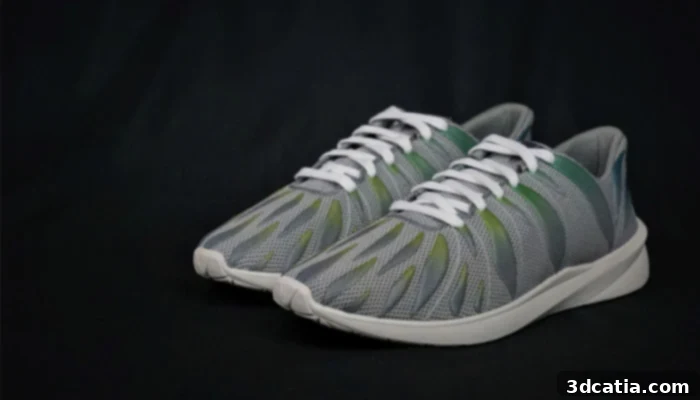
- Unique New Designs and Enhanced Performance: The multi-material and full-color printing capabilities unlock entirely new avenues for design creativity. Manufacturers can now create footwear products with unprecedented aesthetic appeal and zonally tuned performance, integrating varied material properties precisely where they are needed for optimal comfort, support, and durability.
- Local Manufacturing Capabilities: By significantly reducing labor costs through automation, Voxel8’s technology enables production closer to major customer bases in regions like the US and Europe. This not only shortens supply chains and reduces shipping times but also minimizes environmental impact and fosters local job creation.
- Individual Customization of Both Mechanics and Aesthetics: The ability to dynamically change material properties and colors within a single print allows for true mass customization. Each shoe can be individually tailored to a wearer’s specific biometric data, performance requirements, and personal style preferences, moving beyond simple size variations to truly bespoke products.
- Agile Manufacturing Processes and Zero Tooling Costs: Voxel8’s system eliminates the need for expensive and time-consuming tooling. This significantly reduces upfront investment and enables the introduction of smaller batches of products to the market. Brands can test new designs with minimal risk, immediately respond to demand fluctuations, and adapt their offerings with unmatched flexibility.
Furthermore, Voxel8’s additive manufacturing technology distinguishes itself from other solutions on the market through several unique differentiators:
- Direct Printing onto Existing Objects: A key advantage is the capability to print directly onto pre-existing objects, such as textile uppers, without the need for additional adhesives or complex assembly processes. This streamlines manufacturing, reduces material waste, and enhances structural integrity.
- High-Performance Elastomers at Competitive Costs: Voxel8 enables the fabrication of structures using high-performance elastomers—including polyurethanes, medical-grade silicones, and epoxies—that can withstand millions of bending/flexing cycles and exhibit elongations exceeding 600%. Crucially, this is achieved at costs significantly lower than typical 3D printing materials, making advanced material properties more accessible for widespread adoption.
- Embedding High-Resolution Full-Color Images: The ActiveImage® technology provides the unique ability to embed high-resolution, full-color images directly within structural parts. This opens up unparalleled possibilities for brand integration, aesthetic detailing, and personalized visual elements, elevating product design to new levels.
The Future of Additive Manufacturing and Mass Customization
Travis Busbee firmly believes that the future of all wearable consumer products will intrinsically revolve around mass customization. This paradigm shift, he asserts, will be made possible through the advent of innovative new digital manufacturing technologies, precisely like those Voxel8 is actively bringing to market today. However, Busbee cautions that this transformation will not occur overnight. He anticipates a transitional period spanning several years during which the concept of mass customization will gradually ramp up and integrate into the mainstream consumer consciousness and manufacturing practices. Mindful of this evolutionary trajectory, Voxel8 has meticulously designed its products and core technology to be economically competitive with traditional production processes from the outset. This strategic approach ensures that their solutions offer immediate value while concurrently possessing the inherent capability to seamlessly enable mass customization when market demand fully matures.
Busbee’s vision is that Voxel8 can significantly accelerate the adoption of mass customization. This will be achieved by first displacing traditional manufacturing processes for standard products, leveraging their cost-effectiveness and efficiency. By doing so, Voxel8 aims to create a robust, modern supply chain that is not only capable of supporting current production needs but is also inherently adaptable and ready to embrace the comprehensive demands of future mass customization at scale. This dual strategy positions Voxel8 as a key enabler in bridging the gap between today’s manufacturing realities and the personalized future of consumer goods, setting the stage for a new era of product creation and delivery.