
Unlocking Innovation: A Deep Dive into Artec 3D’s Advanced 3D Scanning Solutions and Their Transformative Impact
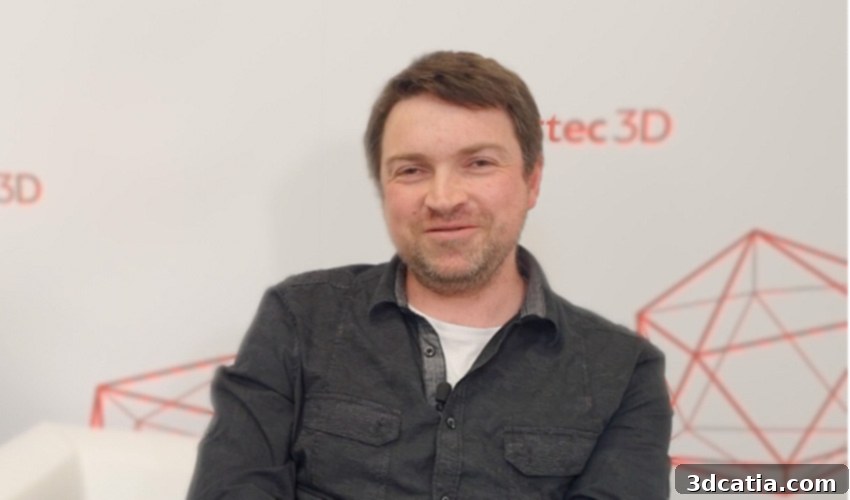
Artec 3D, a prominent technology innovator headquartered in Luxembourg, stands at the forefront of developing sophisticated 3D scanning hardware and software solutions that cater to an extensive array of industrial and creative sectors. Since its inception and the launch of its groundbreaking technology in 2007, Artec 3D has rapidly ascended to become a recognized global leader in the realm of handheld and portable 3D scanners. The company’s commitment to accessibility and cutting-edge performance is evident in its diverse product portfolio, designed to meet the varying demands of all user types. From the cost-effective and user-friendly Eva Lite, which serves as an ideal entry point for many professionals, to highly specialized instruments such as the Ray scanner, engineered for precise long-range data capture, and the Micro scanner, which delivers unparalleled ultra-high-precision 3D scanning for intricate objects, Artec 3D offers a solution for virtually every need. In our ongoing #TALK3D series, we had the distinct pleasure of engaging with Artyom Yukhin, the esteemed CEO of Artec 3D, to gain deeper insights into the critical and expanding importance of 3D scanning technologies across a multitude of industries today.
Artec 3D: Pioneering Professional 3D Scanning Technology Across Diverse Industries
The utility of advanced 3D scanners extends far beyond simple data collection, encompassing a vast spectrum of critical applications that drive innovation and efficiency. In the rapidly evolving additive manufacturing sector, for instance, 3D scanning technology plays an indispensable role, particularly through reverse engineering. This process allows engineers and designers to accurately capture the precise geometry of existing physical parts, facilitating the creation of highly accurate digital models. The ability to collect comprehensive data on an object’s shape, and in many cases, its aesthetic attributes like colors and textures (depending on the sophistication of the 3D scanner), dramatically enhances the design process. This integration accelerates prototyping cycles, significantly reduces the potential for errors during data acquisition, and ultimately translates into substantial time and cost savings for design, engineering, and manufacturing teams. Beyond additive manufacturing, 3D scanning finds crucial applications in quality control and inspection, where scanned data can be compared against CAD models to detect deviations; in heritage preservation, by creating digital archives of artifacts; and in automotive design for vehicle customization and aerodynamic analysis.
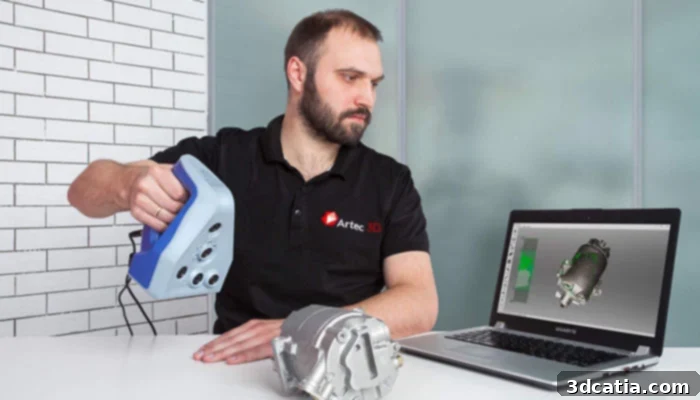
Understanding the underlying technologies is key to appreciating the versatility of 3D scanning. As many professionals are aware, 3D scanning predominantly relies on distinct technological principles, with the two most prevalent being laser technology and structured light technology. Artec 3D strategically develops and offers a range of 3D scanners built upon both these foundational technologies, ensuring that users can select the most appropriate tool for their specific application requirements. Structured light technology, for example, operates by projecting a series of light patterns onto an object. The scanner then captures the deformation of these patterns, allowing it to calculate the object’s surface geometry. This method is typically favored for short-to-medium distances and excels in rapid data acquisition, offering high detail and often capturing vibrant color textures. Artec’s widely acclaimed Eva scanner, a versatile and intuitive device, is a prime example of structured light technology in action, making it a popular choice for capturing medium-sized objects quickly and efficiently.
Conversely, laser scanning technology employs a laser beam to precisely measure distances to an object’s surface. This technique is renowned for its exceptional accuracy and its capability to perform over significantly longer ranges. Artec’s Ray solution, a powerful long-range 3D scanner, leverages laser scanning technology to deliver high-precision data capture over vast distances, up to an impressive 110 meters. This makes the Ray scanner an invaluable tool for applications such as reverse engineering large industrial machinery, conducting architectural surveys of buildings, or performing quality inspections on expansive infrastructure. The choice between structured light and laser scanning often hinges on factors like object size, required accuracy, environmental conditions, and the need for color data. Artec 3D also pushes the boundaries with its Micro scanner, utilizing advanced optical systems to achieve unprecedented accuracy for minuscule objects, opening doors for precision applications in dentistry, jewelry design, and forensic science.
At its core, 3D scanning can be comprehensively summarized as a sophisticated method for digitally collecting highly detailed geometric and often textural data about the physical world around us. Once this invaluable data has been meticulously captured and processed, the potential applications unfurl into an incredibly wide and diverse landscape, touching almost every imaginable sector of activity. From enabling precise reverse engineering and enhancing industrial design and manufacturing processes, to revolutionizing healthcare through custom prosthetics and medical device development, and advancing science & education through detailed anatomical models or archaeological reconstructions, to inspiring creativity in art & design, 3D scanners have become indispensable tools. While the technology is remarkably versatile, certain limitations do persist; for example, objects with highly shiny, reflective, or transparent surfaces can present challenges to accurate data collection due to the way light interacts with them. However, continuous advancements in scanning hardware and software, including the use of scanning sprays and advanced algorithms, are steadily overcoming these hurdles. During our illuminating conversation with Artyom Yukhin, he articulated a compelling vision for the future, explaining that the true next revolution in 3D scanning will not merely concern improvements in data collection, but rather a profound transformation in how we utilize and interpret the vast amounts of data we gather. This future, he believes, lies in introducing advanced tools and intelligent systems that empower companies to truly understand and derive actionable insights from their scanned data, unlocking unprecedented levels of efficiency, innovation, and strategic advantage.
Empowering Data Intelligence: The Future Vision with Artyom Yukhin, CEO of Artec 3D
Artyom Yukhin’s vision emphasizes moving beyond simply “collecting” data to actively “understanding” it. This profound shift suggests the integration of cutting-edge analytics, artificial intelligence (AI), and machine learning (ML) directly into the 3D scanning workflow. Imagine a scenario where a scanned model of a complex industrial component isn’t just a static representation, but a dynamic dataset that can be instantly analyzed for wear and tear, automatically compared against original CAD specifications for quality control, or simulated under various stresses to predict performance and lifespan. This deeper understanding could facilitate predictive maintenance, optimize manufacturing processes through real-time feedback, and enable the creation of highly accurate digital twins for entire facilities or products. Such advancements would allow businesses to make more informed decisions, accelerate product development cycles, and reduce operational costs significantly. Artec 3D is actively working on developing the software ecosystems and intelligent algorithms required to bring this vision to fruition, ensuring their solutions remain at the forefront of the industry and continue to deliver transformative value to their users worldwide. Their commitment to innovation extends not only to their hardware but equally to their powerful software, which acts as the brain behind the scan, processing raw data into intelligent, actionable information.
For those interested in exploring further insights from industry leaders, you can find our previous #TALK3D HERE, offering more perspectives on the dynamic world of 3D technologies.
What are your thoughts on Artec 3D’s innovative activities and the future trajectory of 3D scanning technology? We encourage you to share your insights and comments below, or engage with us on our vibrant Facebook and Twitter pages. Your feedback is invaluable in assessing whether the information provided here was useful and informative. Furthermore, don’t miss out on the latest advancements and breaking news in the additive manufacturing space by signing up for our free weekly Newsletter, delivering all the essential updates straight to your inbox!