
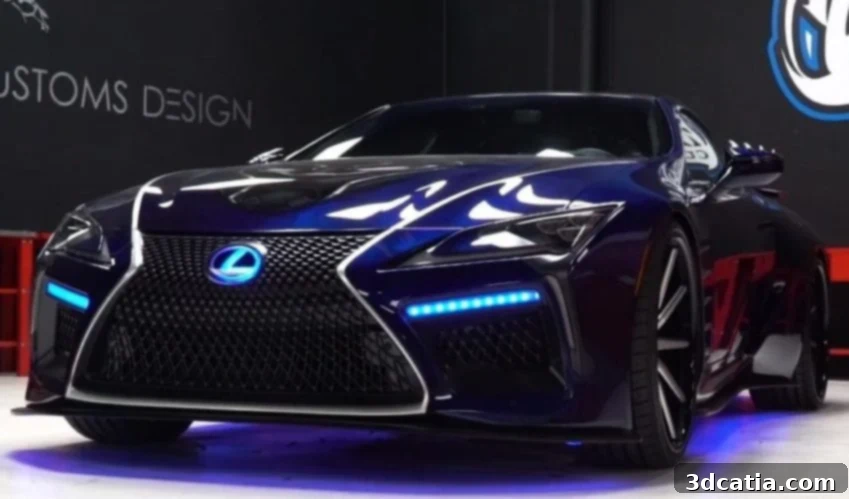
West Coast Customs Unleashes the Black Panther Lexus: The Power of Artec 3D Scanning in Automotive Customization for Marvel
The world of automotive customization, where groundbreaking design meets cutting-edge technology, has been irrevocably transformed by the advent of 3D scanning. A prime example of this evolution is the remarkable collaboration between West Coast Customs (WCC), a renowned leader in vehicle modification, and Artec 3D, a pioneer in professional 3D scanning solutions. This powerful synergy recently culminated in the creation of an extraordinary, one-of-a-kind Lexus LC 500, meticulously tailored for its starring role in Marvel’s highly anticipated film, Black Panther 2, which premiered on July 8, 2022. This ambitious project saw WCC leverage Artec 3D scanners to digitize various components of the luxury vehicle, securing crucial approvals from both Marvel and Lexus studios. The result was a stunning, brand-new car cloaked in an iridescent opalescent blue – a true automotive masterpiece dubbed the Black Panther Lexus. This comprehensive and intricate undertaking spanned an intensive nine months, demonstrating the dedication and precision required to achieve a truly satisfactory and cinematic outcome.
The entertainment industry, particularly the realm of filmmaking, has increasingly embraced advanced 3D technologies to elevate cinematic realism and push the boundaries of visual storytelling. From creating fantastical landscapes to crafting hyper-realistic props and characters, 3D scanning and additive manufacturing have become indispensable tools. These digital manufacturing processes offer unparalleled flexibility and freedom in design, allowing studios to bring even the most imaginative concepts to life. We witnessed this innovation firsthand during the production of the first Black Panther film, where advanced 3D printing technologies were ingeniously utilized to create highly detailed and iconic costumes. For the sequel, the focus shifted to automotive excellence, with the acclaimed Artec Eva scanner playing a pivotal role. This powerful device allowed the WCC team to precisely digitize the existing structure of the Lexus LC 500, providing an accurate foundation for extensive modifications. Through this digital alchemy, WCC successfully transformed several critical aspects of the car, including the wheelbase, the prominent front radiator grille, and even the intricate design of the side mirrors, all while adhering to the demanding specifications of the Black Panther aesthetic.
Precision Engineering with Artec Eva: The Heart of the Black Panther Lexus Customization
The genesis of this spectacular vehicle began when Marvel, the comic book giant now celebrated globally for its cinematic universe, approached West Coast Customs with a vision: to create a Lexus Black Panther that would seamlessly integrate into the film’s immersive world. The chosen base vehicle, the luxurious Lexus LC 500, presented a perfect canvas, but required extensive adaptation to embody the spirit of Wakanda. This collaborative effort was co-supervised by both Marvel and Lexus, ensuring that every single design stage, from the initial conceptual sketches to the final paint samples, interior variations, and intricate thematic elements inspired by Black Panther, received individual approval before any physical modification commenced. This rigorous, multi-stage approval process underscored the high stakes and exacting standards of the project, demanding absolute precision and creative fidelity at every turn.
Musa Tjahjono, the esteemed chief designer for West Coast Customs, faced the critical challenge of obtaining an incredibly precise 3D model of the Lexus LC 500, with an accuracy requirement down to the nearest millimeter. Such exacting standards are paramount in high-end automotive customization, where even the slightest deviation can impact aesthetics, fit, and functionality. To meet this stringent demand, Tjahjono and his team turned to the Artec Eva, one of Artec 3D’s most advanced and reliable portable 3D scanners. This professional-grade, full-color 3D scanner is universally recognized for its exceptional capability to rapidly capture medium-sized to large objects with an astounding accuracy of up to 0.1mm. This level of detail ensures that all subsequent design modifications and fabrication processes are built upon a flawless digital foundation. West Coast Customs, with its history of working on dozens of high-profile projects, has frequently relied on the Artec Eva in the past, consistently achieving precise, true-to-life results without the slightest error, a testament to the scanner’s reliability and performance in demanding environments.
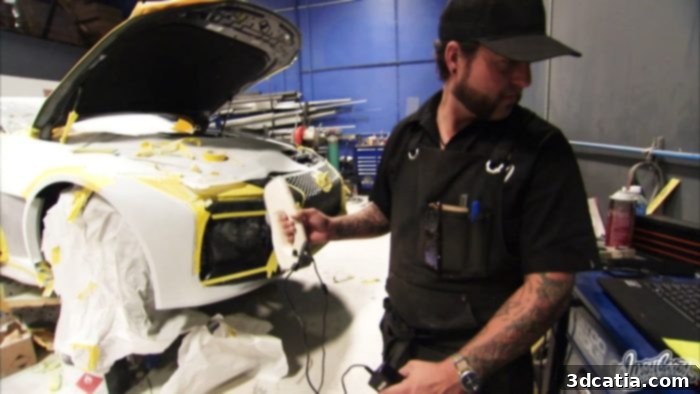
The Artec EVA being used to scan the Lexus LC 500 at West Coast Customs (Photo credit: Artec 3D)
The scanning process itself with the Artec Eva is remarkably intuitive and efficient. Operators at WCC meticulously circled the Lexus LC 500, guiding the lightweight scanner with simple, fluid up and down movements. This technique allowed for the comprehensive capture of the car’s intricate surfaces, down to every square centimeter, from multiple angles. The ease of use and speed of the Artec Eva were particularly appreciated by the WCC team. Lorenzo Strong, West Coast Customs VP of Sales, enthusiastically commented on the experience: “It’s a huge help that Eva is lightweight and comfortable to hold, which makes scanning actually fun to do, even though because it’s capturing surfaces so fast you don’t need to use it for long before you look over at the laptop and realize that you’ve scanned the whole car.” This highlights a significant advantage of modern 3D scanning – its ability to quickly and comfortably digitize large objects, drastically reducing the time traditionally associated with manual measurements and design iterations. Once the physical vehicle was fully scanned, the raw data, or “rendering,” was then processed using Artec Studio, Artec 3D’s powerful and user-friendly software. Artec Studio excels at quickly and easily aligning multiple scan sections, cleaning up data, and transforming it into polished, export-ready 3D models in a wide array of formats. For the Black Panther Lexus project, the meticulously scanned file of the LC500 was subsequently exported to professional CAD software platforms like Geomagic Design X and SOLIDWORKS, where designers could begin the intricate work of applying the custom Black Panther aesthetics.
The modifications made to the original Lexus LC 500 were extensive and truly transformed it into a vehicle worthy of a superhero. The custom Lexus Black Panther now boasts a significantly wider wheelbase, which includes broadened fenders that give the car a more aggressive and formidable stance, perfectly reflecting the power and agility of its namesake. The front grille received a striking redesign, widened to enhance its visual impact and integrate seamlessly with the car’s new, more dominant presence. Perhaps one of the most thematic and visually captivating changes is found in the side mirrors, which are subtly capped with the iconic claws of Black Panther, a subtle yet powerful nod to the character’s signature weapon. Furthermore, and adding a touch of authentic Marvel lore, three fictitious Vibranium reactors – drawing inspiration from the fictional material central to Wakanda, Black Panther’s birthplace in the Marvel universe – were ingeniously integrated into the rear window. These elements are not just decorative; they tell a story, connecting the vehicle directly to the rich narrative of Black Panther. After months of dedicated work, West Coast Customs proudly unveiled the Lexus Black Panther to the public. This exquisite onyx blue racing machine subsequently embarked on an extensive tour across the Americas, captivating fans and automotive enthusiasts alike. Today, it stands as a testament to unparalleled craftsmanship and technological innovation, proudly on display at Lexus headquarters in Plano, Texas, a permanent tribute to this incredible cinematic and automotive collaboration.
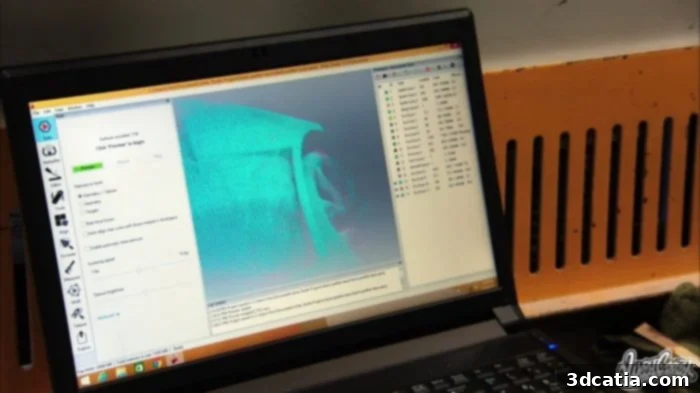
A 3D scan of the Lexus LC 500 in Artec Studio software (Photo credit: Artec 3D)
Expanding Horizons: Artec Leo and West Coast Customs’ Future Ambitions
Building on the tremendous success and experience gained from projects like the Black Panther Lexus, West Coast Customs has continued to embrace innovation, recently incorporating the advanced Artec Leo into their workflow. The Artec Leo represents the next generation of portable 3D scanners, boasting revolutionary features such as powerful on-board processing capabilities and an integrated touchscreen. These advancements allow users to interact with and visualize scans in real-time directly on the device, eliminating the need for a tethered computer and significantly streamlining the scanning process.
West Coast Customs harbors ambitious plans for the Artec Leo, recognizing its potential to further revolutionize their operations and client services. The Leo’s superior portability is a game-changer; its self-contained design makes transportation incredibly simple, empowering WCC to bring their elite 3D scanning capabilities directly to clients, whether they are at a remote parking lot, a bustling car show, or any other off-site location. This flexibility means that precise scans can be performed immediately, wherever the vehicle happens to be, without the logistical complexities of transporting the vehicle to the workshop for initial assessment. Furthermore, the Artec Leo’s impressive acquisition rate of 44 frames per second, coupled with its wide field of view, makes scanning objects of varying sizes – from intricate components like a steering wheel or dashboard to larger elements such as a fender, or even an entire car – a considerably less complicated and faster task than ever before. This versatility allows WCC to tackle a broader range of projects with greater efficiency. Moreover, Leo’s intuitive user interface and inherent ease of use ensure that it is accessible to everyone on the team, regardless of their prior experience level, whether they are completely new to 3D scanning technologies or seasoned experts in digital design. This accessibility fosters wider adoption and empowers more team members to leverage the power of 3D data in their daily tasks.
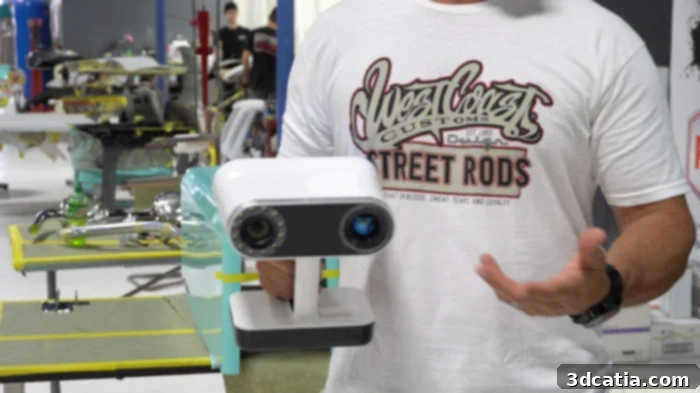
Artec Leo in the hands of a mechanic at West Coast Customs headquarters in Burbank (Photo credit: Artec 3D)
The transformative impact of 3D scanning technologies, particularly those from Artec 3D, on automotive customization and film production is undeniable. The Black Panther Lexus project serves as a powerful testament to how digital tools can facilitate unprecedented levels of design freedom, accuracy, and collaboration. From capturing existing geometries with millimeter-level precision to enabling complex custom modifications, 3D scanning streamlines workflows, reduces design cycles, and ensures that the final product perfectly matches the original vision. West Coast Customs, by embracing these advanced technologies, continues to solidify its position at the forefront of the automotive customization industry, delivering bespoke vehicles that not only meet but exceed the demands of high-profile clients and cinematic masterpieces. The future of custom vehicle design and film prop creation will undoubtedly be shaped by these innovations, pushing the boundaries of what is visually and technically possible.
You can find out more about how WCC utilized the Artec Leo for various projects and their comprehensive approach to customization by visiting the detailed case study here. We are keen to hear your thoughts! What do you think of the magnificent Lexus Black Panther? Let us know your impressions in a comment below or share your views on our Facebook and Twitter pages! For the latest breaking news and insights from the world of 3D printing, sign up for our free weekly Newsletter here, delivered straight to your inbox!