
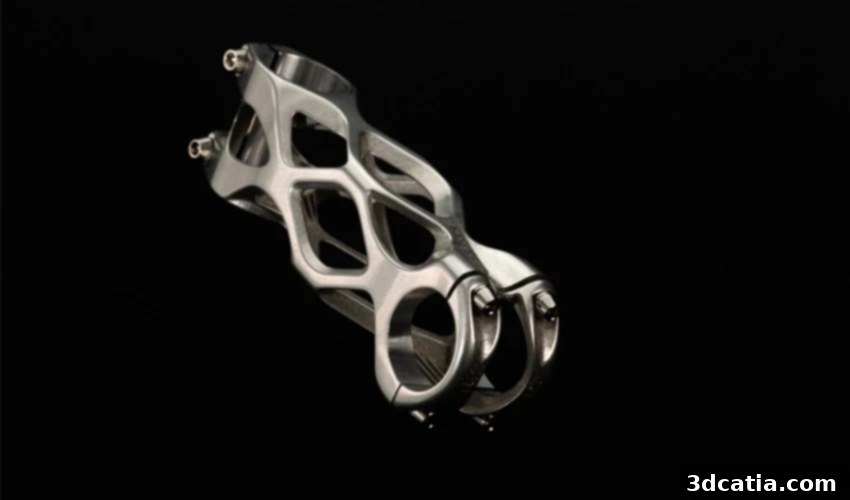
Revolutionizing Cycling: Mythos Unveils the 3D Printed Elix Stem – The Future of Lightweight Performance
In the relentless pursuit of speed, efficiency, and ultimate performance, the world of cycling constantly seeks groundbreaking innovations. British brand Mythos has unequivocally delivered on this front with the introduction of its revolutionary new bicycle component: the 3D printed bicycle stem, named Elix. Now readily available on the market for £500, this extraordinary piece of engineering is more than just a bike part; it represents a significant leap forward in additive manufacturing applied to high-performance sports, promising unparalleled strength, stiffness, and an exceptionally low weight.
For those unfamiliar, the bicycle stem is a crucial, often overlooked, component that serves as the vital link between the handlebars and the fork steerer tube. Its integrity and design directly impact a bicycle’s handling, responsiveness, and rider comfort. The Elix stem stands out not only for its cutting-edge manufacturing method but also for its material composition. It is touted as the world’s first stem to be made from an advanced alloy containing scandium, aluminum, and magnesium, a material originally developed by APWorks, a subsidiary of aerospace giant Airbus. This special alloy, known as Scalmalloy, boasts an exceptional strength-to-weight ratio and superior fatigue properties, making it an ideal choice for the most demanding aerospace applications and now, crucially, for professional cycling where every gram and every watt counts.
Behind the pioneering design of the Mythos Elix stem is Dimitris Katsanis, a name synonymous with innovation in cycling. Katsanis has a rich history of equipping racing bikes with 3D printed parts and has previously collaborated with prestigious organizations such as British Cycling and Team Sky. His extensive experience at the pinnacle of competitive cycling, understanding the nuanced demands of elite athletes and the technical requirements for marginal gains, is profoundly evident in the Elix stem’s sophisticated engineering. Available in several sizes to accommodate various bike geometries and rider preferences, the Elix stem proudly boasts a starting weight of only 150 grams, setting a new benchmark for lightweight performance.
The Additive Manufacturing Advantage: Design Beyond Conventional Limits
What truly sets the Mythos Elix stem apart is its radical design, conceived specifically to leverage the full potential of additive manufacturing. Unlike traditional manufacturing methods that are constrained by tooling and material removal, 3D printing allows for the creation of incredibly complex geometries that were previously impossible. The Elix stem’s design is immediately eye-catching and unusual, featuring an intricate lattice structure. This advanced structural approach ensures that material is strategically placed only in areas subjected to stress, thereby maximizing strength and stiffness while minimizing overall weight. Mythos succinctly explains their design philosophy: “Having been designed specifically around the most extreme load-paths experienced by a stem, the Elix stem is 15% stiffer in torsion than an equivalent alloy stem while maintaining the same bending stiffness, so you can put more power down when you need to and still stay comfy on the rough stuff.” This statement highlights a dual benefit: enhanced power transfer for competitive advantage and maintained comfort, a critical factor for long rides and varying terrain.
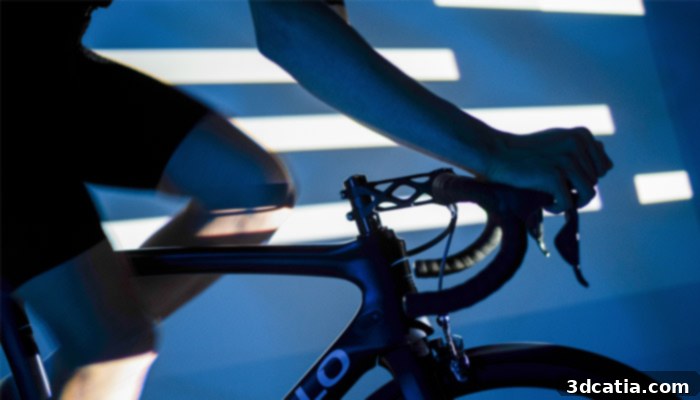
Photo Credits: Mythos – The revolutionary Elix stem features a unique lattice structure.
The development process for the Elix stem involved rigorous testing and meticulous optimization. Mythos’s engineering teams employed advanced Finite Element Analysis (FEA) simulations and sophisticated CAD (Computer-Aided Design) software to iterate through numerous design variations. This iterative process allowed them to precisely identify areas that required less material without compromising structural integrity. Mythos elaborates further: “We wanted to eliminate areas of high stress with small local reinforcements and reduce weight around other areas by skilfully removing any non-essential material. Not only that, but the fact that all of this happens in-house, without the need for any part-specific tooling, means that we can create one-off products and prototypes in days that would normally take months.” This in-house capability is a testament to the agility and efficiency offered by additive manufacturing, enabling rapid prototyping and accelerating the journey from concept to market-ready product.
Scalmalloy: Aerospace Grade Performance for Cycling
The choice of Scalmalloy is pivotal to the Elix stem’s superior performance. Developed by APWorks, an Airbus subsidiary specializing in advanced materials and additive manufacturing, Scalmalloy is a high-performance aluminum-scandium-magnesium alloy specifically designed for 3D printing. It combines the low density of aluminum with the exceptional strength and fatigue resistance typically associated with much heavier materials. Scandium, though present in small amounts, dramatically refines the grain structure of aluminum, increasing its strength and weldability, while magnesium contributes to its excellent ductility. This unique combination results in a material with a tensile strength comparable to some steels but at a fraction of the weight, making it perfectly suited for applications where structural integrity and minimal mass are paramount, such as in aerospace components and, increasingly, in elite competitive cycling. The ability to 3D print with Scalmalloy allows for designs like the Elix stem’s lattice structure, which would be impossible with traditional forging or CNC machining of this material, thereby unlocking its full potential for ultra-light, ultra-strong components.
The Economics of Innovation: Price, Exclusivity, and Future Impact
The utilization of additive manufacturing has undoubtedly provided Mythos with the flexibility and speed necessary to bring such an advanced component to market relatively quickly. However, this cutting-edge technology and material innovation come with a premium price tag. At £500, approximately $625 USD, the Elix stem positions itself among the most expensive bicycle components currently available. This price reflects not only the cost of the advanced Scalmalloy material and the intricate 3D printing process but also the extensive research, development, and sophisticated engineering that went into creating a part of this caliber. For serious cyclists, professional athletes, and enthusiasts seeking every possible performance advantage, this investment is justified by the promise of enhanced power transfer, superior handling, and a significant weight reduction that can contribute to marginal gains in competition.
The Elix stem measures between 3.9 inches and 5.1 inches (or 100mm to 130mm), depending on the specific model and the bike it is intended for, with the aforementioned remarkable starting weight of 150 grams. This range of sizes ensures compatibility with a broad spectrum of road and racing bicycles, allowing riders to fine-tune their fit and optimize their aerodynamic position. Every Elix stem is proudly made in the UK, underscoring Mythos’s commitment to precision engineering and quality control. Cyclists also have the choice of two classic finishes: sleek silver or stealthy black, ensuring the stem can complement various bike aesthetics. Enthusiasts eager to experience this technological marvel can already place their orders for the Mythos Elix stem HERE.
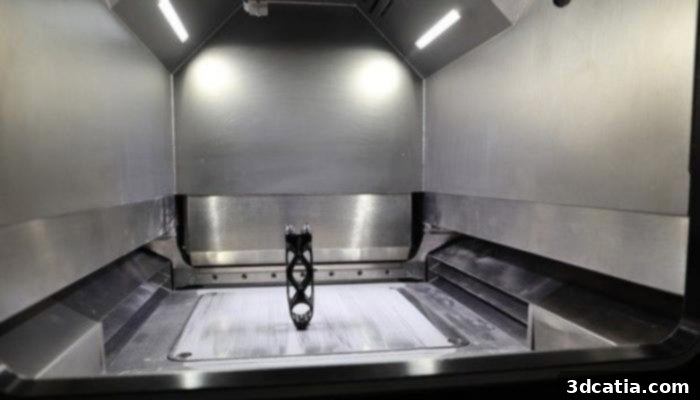
The 3D printed part, showcasing its intricate and optimized design (photo credits: Mythos)
The introduction of the Mythos Elix stem marks a pivotal moment in the evolution of cycling components. It demonstrates the profound impact that advanced materials science, combined with sophisticated additive manufacturing techniques and expert design, can have on athletic performance. As cycling continues to push the boundaries of human and mechanical capabilities, innovations like the Elix stem pave the way for a future where lighter, stronger, and more aerodynamically efficient components are not just possibilities but realities. Mythos, with its Elix stem, is not just selling a product; it’s offering a glimpse into the future of high-performance cycling, where engineering excellence and radical design converge to create an unparalleled riding experience.
What are your thoughts on the revolutionary Elix Mythos stem and the growing application of 3D printing in sports? We’d love to hear your insights! Share your comments below or engage with us on our LinkedIn, Facebook, and Twitter pages! Don’t forget to sign up for our free weekly Newsletter here to get the latest 3D printing news delivered straight to your inbox! You can also find all our videos and more innovative content on our YouTube channel.