
Exploring Breakthroughs in 3D Printing: From Whimsical Play Structures to Aerospace Innovations and Sustainable Practices
The world of 3D printing, also known as additive manufacturing, continues its rapid evolution, pushing the boundaries of design, engineering, and sustainability across diverse sectors. In this comprehensive review, we delve into some of the most impactful developments shaping the industry, highlighting groundbreaking applications and strategic advancements. From an imaginative 3D printed play structure in Japan that redefines public spaces, to critical research on environmental sustainability in additive manufacturing by ASTM International, the scope of innovation is truly vast. We will also explore the dynamic landscape of aerospace 3D printing, featuring significant investments in component manufacturing by Sintavia, Materialise’s strategic move into a leading aerospace innovation hub, and ADDiTEC’s launch of an advanced system for defense applications. Join us as we uncover these fascinating stories from the forefront of 3D printing technology.
Revolutionary 3D Printed Möbius Strip Play Structure Unveiled in Japan
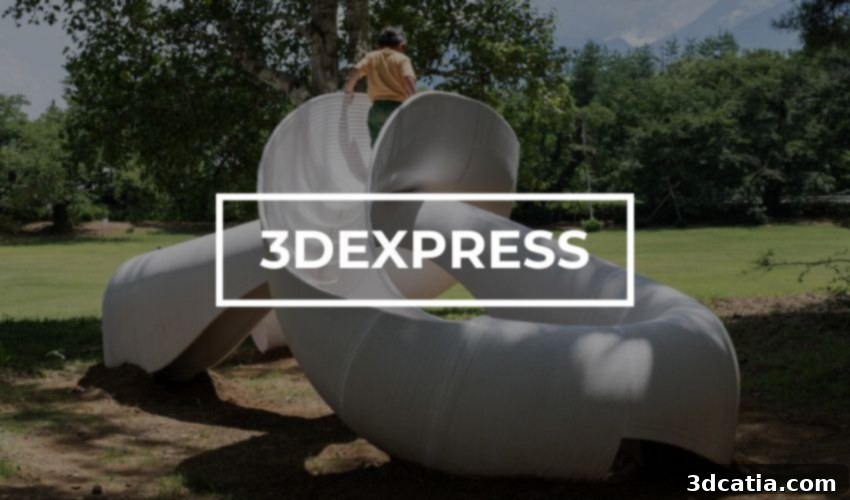
One of the most compelling advantages of 3D printing lies in its unparalleled design freedom, enabling the creation of intricate and previously impossible geometries. This capability is vividly demonstrated in a new, captivating play structure installed in Japan, which ingeniously recreates the concept of a Möbius strip. For those unfamiliar, a Möbius strip is a fascinating, one-sided surface that can be formed by taking a strip of paper, giving one end a half-twist, and then joining the ends. This unique topological object now serves as the inspiration for an interactive children’s playground element.
Nestled within the Kyoharu Art Village, this innovative structure, aptly named “White Loop,” stands as a testament to the creative potential of additive manufacturing. Designed and fabricated by VUILD, the White Loop is more than just a visually striking art piece; it’s a fully functional play environment. It integrates climbing features and slides seamlessly into its continuous, Mobius strip-like form, inviting children to explore its endless pathways. The inspiration behind this remarkable design stemmed from a thoughtful observation of children’s natural play behaviors on conventional slides. The aim was to move beyond linear play experiences, encouraging more spontaneous and imaginative interaction.
The designer articulated their vision, stating, “I envisioned an image in my mind of children weaving between birch trees, spiraling up and down in large, expansive loops, chasing each other playfully, which became my initial concept.” This philosophy translated into a structure that encourages fluid movement, problem-solving, and continuous exploration, mimicking the instinctive, non-linear ways children engage with their environment. The use of 3D printing was crucial in realizing such a complex, organic form that would be difficult, if not impossible, to achieve with traditional manufacturing methods. This process allows for precise control over the structure’s curvature and integrated features, ensuring both aesthetic appeal and structural integrity for public use. Furthermore, the material choices for such an installation often prioritize durability, safety, and potentially sustainability, leveraging advancements in large-format polymer 3D printing or even specialized composite materials, making it a robust and enduring addition to the public park.
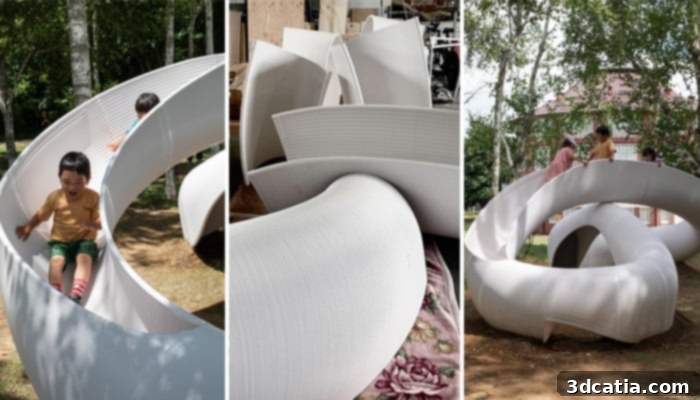
Photo Credits: Hayato Kurobe
ASTM International Awarded Significant Grant to Advance Sustainability in Additive Manufacturing
In a pivotal step towards a more environmentally responsible future for advanced manufacturing, ASTM International has proudly announced that it has secured substantial funding through an America Makes project call. This significant grant, awarded by the Office of the Under Secretary of Defense for Research and Engineering’s Manufacturing Technology Office (OSD(R&D)), will empower ASTM International to lead crucial research initiatives focused on sustainability and the environmental benefits inherent in additive manufacturing.
The organization is set to receive a portion of a $2.1 million total grant, shared among five critical projects, to spearhead investigations into how additive manufacturing can contribute to a greener industrial landscape. This initiative is particularly timely, as industries globally are facing increasing pressure to reduce their carbon footprint and adopt more sustainable practices. ASTM International, a global leader in the development and delivery of international voluntary consensus standards, is uniquely positioned to guide this research, leveraging its extensive expertise and network within the advanced manufacturing community.
Under this new funding, ASTM will delve into several key areas that are vital for establishing a sustainable additive manufacturing ecosystem. These include exploring innovative strategies for material recovery, which aims to maximize the reuse and recycling of costly and often specialized additive manufacturing materials, reducing waste and raw material consumption. The research will also encompass comprehensive lifecycle assessments (LCAs), a methodology to evaluate the environmental impacts of a product throughout its entire life cycle, from raw material extraction to processing, manufacturing, distribution, use, repair, maintenance, and disposal or recycling. By conducting thorough LCAs, ASTM can identify hotspots of environmental impact and provide data-driven recommendations for improvement.
Furthermore, the project will focus on developing robust frameworks to help manufacturers seamlessly implement eco-friendly practices into their additive manufacturing workflows. This includes everything from optimizing energy consumption during the printing process to designing parts for easier disassembly and recycling. Crucially, these sustainability efforts will be pursued without compromising on part performance, reliability, and cost-effectiveness – a delicate balance that is essential for widespread industry adoption. Mohsen Seifi, ASTM International’s Vice President of Global Advanced Manufacturing, emphasized the importance of this collaboration: “We are pleased to lead this important project with America Makes. Our focus will be on developing methodologies that eventually promote the sustainable use of materials in additive manufacturing, ensuring both environmental benefits and high-quality outcomes for end users.” This grant underscores a collective commitment to fostering a more sustainable future for additive manufacturing, paving the way for innovations that are not only technologically advanced but also environmentally conscious.
Photo Credits: ASTM International COE
Sintavia Secures $10 Million Investment to Boost Aerospace 3D Printing Capabilities
Sintavia, a recognized leader in the digital manufacturing of advanced components for the aerospace and defense sectors, has announced a significant financial boost, receiving a $10 million investment from the Stifel North Atlantic AM-Forward fund. This crucial capital injection is earmarked to refinance existing equipment and substantially strengthen the company’s working capital, propelling its continued growth and innovation in the highly demanding aerospace market.
Additive manufacturing has been a transformative force for Sintavia, enabling the company to fabricate complex and high-performance components that are critical for modern aircraft and defense systems. Specialized in producing parts like advanced heat exchangers and intricate combustors, Sintavia leverages the unique capabilities of 3D printing to achieve superior designs, enhanced functionality, and reduced weight – all paramount in aerospace applications. These components, often subjected to extreme temperatures and pressures, benefit immensely from the design freedom offered by additive manufacturing, allowing for optimized internal geometries that improve efficiency and performance.
Commenting on this strategic new investment, Brian R. Neff, founder and CEO of Sintavia, expressed his enthusiasm: “It is great to see Stifel’s strong commitment to funding profitable, high-growth users of additive technology, and this new fund will certainly have a positive impact across the industry.” This investment not only signals confidence in Sintavia’s market position and technological prowess but also highlights a broader trend of financial institutions recognizing the immense potential and profitability of companies excelling in additive manufacturing, particularly within specialized sectors like aerospace and defense. The AM-Forward initiative itself aims to strengthen the U.S. industrial base by supporting companies that adopt and advance additive manufacturing technologies.
With this substantial investment, Sintavia is poised to further accelerate its expansion and solidify its global leadership in additive manufacturing for critical applications. This funding complements a previously announced ambitious $25 million growth plan, which includes the development of new, state-of-the-art facilities and a significant increase in its industrial printing capacity. These initiatives will not only allow Sintavia to meet the escalating demand for its advanced components but also drive further innovation, create high-skilled jobs, and contribute to the overall technological advancement of the aerospace and defense supply chains.
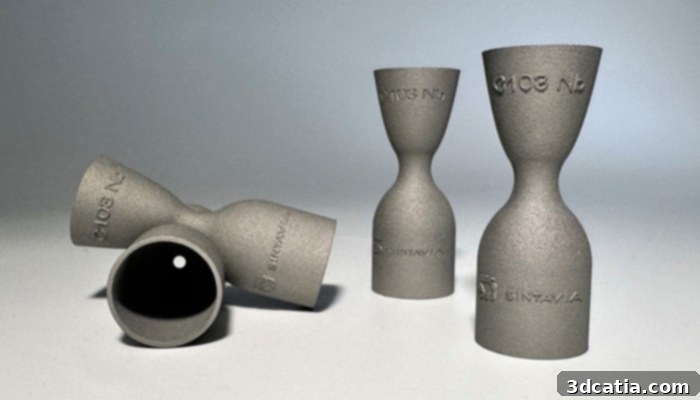
Photo Credits: Sintavia
Materialise Establishes Aerospace Competence Center in Delft Innovation Hub
Materialise, a global pioneer in 3D printing software and services based in Belgium, has made a strategic move to bolster its presence and expertise within the burgeoning aerospace 3D printing sector. This week, the company announced its official integration into the prestigious Aerospace Innovation Hub in Delft, the Netherlands. This move signifies a critical step in Materialise’s commitment to advancing additive manufacturing applications for the aerospace industry.
Notably, Materialise is the first additive manufacturing company to establish a dedicated presence within this highly selective innovation hub, underscoring its leadership and strategic vision. The company is inaugurating a new competence center specifically designed to foster innovation and collaboration in aerospace additive manufacturing. The Delft Aerospace Innovation Hub itself is renowned as a vibrant ecosystem that brings together leading industry professionals, innovative startups, governmental bodies, and bright academic minds from universities. Its mission is to accelerate technological advancements and drive the future of aerospace.
The newly opened competence center will serve as a nexus for developing groundbreaking projects, facilitating knowledge exchange, and nurturing partnerships across this diverse network. Materialise’s primary objective through this initiative is to significantly expand the adoption and utilization of additive manufacturing technologies within the aerospace industry. This includes addressing challenges related to part certification, material qualification, and the integration of AM into existing aerospace production workflows.
Brigitte de Vet-Veithen, an executive at Materialise, articulated the strategic importance of this expansion: “The opening of our new Aerospace Competence Center aligns with our commitment to support the aerospace industry through more than three decades of experience in additive manufacturing and software solutions, as well as our pioneering role in producing certified parts. By joining this selective aerospace network, we can strengthen our capabilities, expand partnerships, and enable other aerospace leaders in this hub to accelerate innovation and explore new possibilities with AM.” Materialise’s long-standing heritage in developing robust software solutions and its proven track record in manufacturing certified 3D printed parts for medical and industrial applications uniquely positions it to contribute to the stringent demands of the aerospace sector. This strategic partnership at the Delft Innovation Hub promises to unlock new frontiers for lightweighting, part consolidation, performance optimization, and sustainable manufacturing practices in aviation and space exploration.
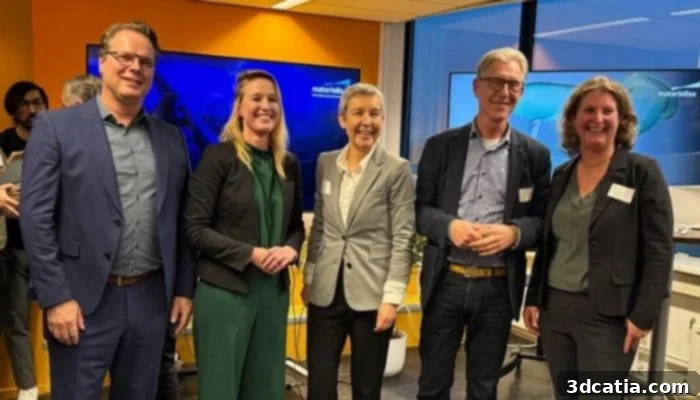
From left to right: Niels Krol, Maaike Zwart, Brigitte de Vet-Veithen, Henri Werij and Femke Verdegaal (photo credits: Materialise).
ADDiTEC Unveils AMDROiD X: A Rugged Additive Manufacturing System for Defense
Concluding this edition of 3DExpress, we turn our attention to ADDiTEC, a company making significant strides in industrial additive manufacturing, as they unveiled their latest innovation, the AMDROiD X, at the MILAM 2025 event in Florida. This new product represents a cutting-edge advanced printing system specifically engineered to meet the rigorous demands of the defense industry.
The AMDROiD X leverages advanced Laser Direct Energy Deposition (LDED) technology, a sophisticated additive manufacturing process that uses a focused laser beam to melt and fuse powdered metal as it’s precisely deposited onto a substrate. This technology is particularly well-suited for high-performance applications, offering the ability to fabricate large-scale metal components and perform complex repairs with superior material properties. What sets the AMDROiD X apart is its optimization for demanding operations in some of the most challenging and hostile environments, both on land and at sea, making it ideal for military and naval applications where reliability and robustness are paramount.
Equipped with a powerful 12 kW fiber laser, the AMDROiD X is capable of achieving high deposition rates and precision, enabling the rapid fabrication and repair of large metal components crucial for defense infrastructure and equipment. Its versatility extends to material compatibility, as it can process a wide range of engineering-grade metals, including stainless steel, aluminum, and copper alloys. This broad material capability ensures high production efficiency and flexibility, allowing defense contractors to produce parts tailored to specific mission requirements, from structural elements to conductive components.
One of the most innovative features of the AMDROiD X is its modular and portable design. The entire system is housed within a 10-foot expandable container, facilitating rapid deployment and setup in virtually any location. This self-contained unit can be quickly transported to remote operational bases, naval vessels, or disaster relief zones, enabling on-site manufacturing and repair capabilities that significantly reduce logistics chains and downtimes. Such portability offers unparalleled operational flexibility for military forces. Finally, the system’s advanced software suite empowers users to print complex geometries across multiple axes, opening up new possibilities for intricate part design and functional integration. The intuitive interface and powerful algorithms enhance accessibility for both seasoned additive manufacturing experts and new users, democratizing access to this advanced technology and accelerating innovation within the defense sector.
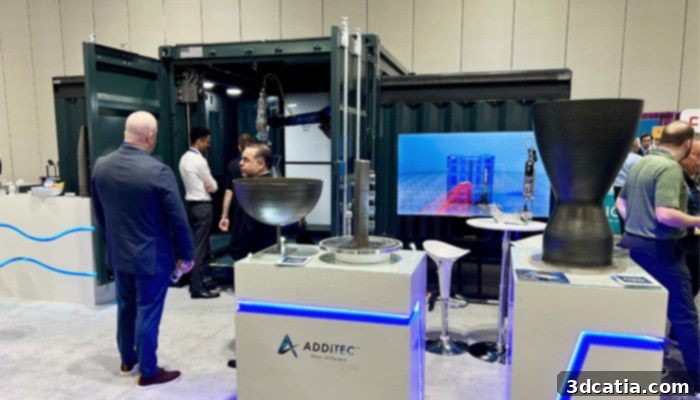
Photo Credits: ADDiTEC
The dynamism of the 3D printing industry continues to astound, with innovations spanning from creative public installations to critical advancements in sustainability and high-stakes aerospace applications. These developments underscore the transformative power of additive manufacturing in shaping our future. What are your thoughts on the ingenious 3D printed Möbius Strip play structure in Japan, or the vital steps being taken towards sustainability in additive manufacturing? We invite you to share your insights in a comment below or join the conversation on our LinkedIn, Facebook, and Twitter pages! Don’t forget to sign up for our free weekly Newsletter here, to get the latest 3D printing news delivered straight to your inbox. You can also find all our compelling videos on our YouTube channel, offering a visual dive into the world of additive manufacturing.