
Transforming Industries: A Comprehensive Roundup of Additive Manufacturing Innovations in Aerospace, Footwear, Defense, and Healthcare
Additive manufacturing, commonly known as 3D printing, continues to redefine possibilities across a multitude of sectors, from the depths of the ocean to the vastness of space. This week’s industry update highlights groundbreaking developments that underscore the technology’s growing impact and strategic importance. We delve into how aerospace pioneers are leveraging 3D printing for rocket propulsion, how footwear manufacturers are revolutionizing design and production, how defense sectors are enhancing workforce capabilities, and how medical orthotics are becoming more personalized and effective. Join us as we explore the latest advancements, significant investments, and crucial partnerships shaping the future of industrial innovation.
INNOSPACE Propels Aerospace Forward with Dedicated Additive Manufacturing Division for Rocket Engines
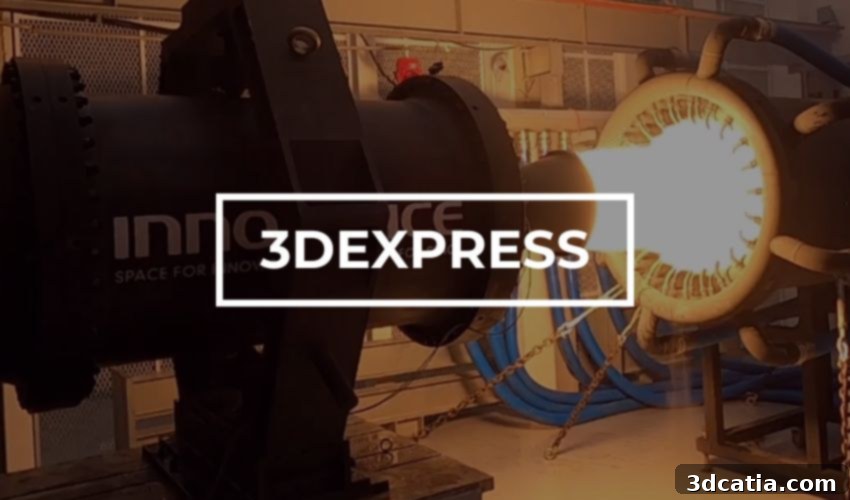
South Korean aerospace trailblazer INNOSPACE has taken a monumental leap by establishing a dedicated advanced manufacturing division. This strategic move is aimed at bringing the entire production of its sophisticated launch vehicle engines and critical components in-house. This new division operates on a cutting-edge production system that seamlessly integrates various metal additive manufacturing technologies, marking a pivotal moment for both the company and the South Korean aerospace industry. By harnessing the power of 3D printing, INNOSPACE aims to significantly enhance its capabilities in producing complex, high-performance rocket engine parts with unparalleled efficiency and precision.
The company proudly announced that its new division is now operating at full capacity, having achieved a significant milestone: becoming the first entity in South Korea to pass the rigorous ISO/ASTM 52941-20 international standard shipping inspection for additive manufacturing equipment in the aerospace industry. This certification is a testament to INNOSPACE’s commitment to quality, reliability, and adherence to global best practices in advanced manufacturing. Their comprehensive production system encompasses the entire value chain, starting from initial design and simulation, progressing through manufacturing with advanced 3D printers, and concluding with meticulous surface treatment and stringent quality control – all managed internally to ensure maximum control and agility.
Looking ahead, INNOSPACE has ambitious plans for the remainder of the year. The company intends to further consolidate its engine production processes and optimize the manufacturing of other key launch vehicle components. A core focus will be the implementation of a sophisticated, data-driven quality management system, which will further refine production consistency and performance. These efforts are not only geared towards optimizing costs and significantly reducing delivery times for their space launch vehicles but also to fortify INNOSPACE’s competitive standing in the rapidly evolving global space market. Furthermore, Soojong Kim, founder and CEO of INNOSPACE, envisions an even broader impact for their advanced production system. Kim stated, “This system has the potential to expand into high-value-added industries beyond aerospace and defense, including automotive and semiconductors, further enhancing Innospace’s commercialization competitiveness.” This forward-thinking approach underscores the versatility and transformative potential of their additive manufacturing expertise.
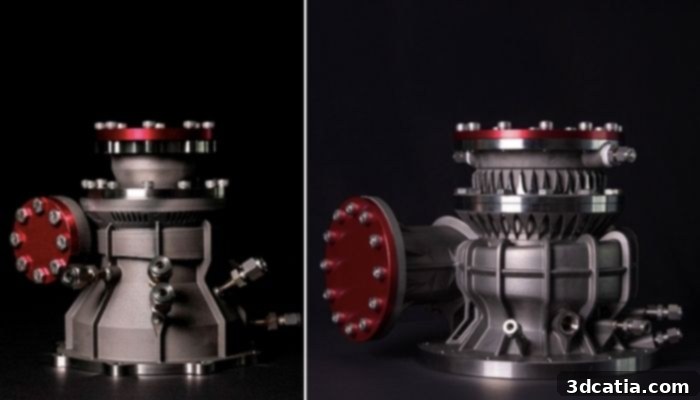
3D printed oxidizer pumps for INNOSPACE’s “HANBIT-Nano” launch vehicle (Credits: INNOSPACE)
3D Printed Footwear Innovator Koobz Secures $7.2 Million in Latest Funding Round to Scale Production
California-based footwear manufacturer Koobz, a company at the forefront of revolutionizing shoe production through additive manufacturing, recently announced a significant achievement: securing $7.2 million in its latest funding round. This substantial investment is a clear indicator of growing confidence in the transformative power of 3D printing within the consumer goods sector, particularly for footwear. With this fresh capital, Koobz is set to aggressively pursue its mission of disrupting traditional footwear manufacturing paradigms, offering a glimpse into a future where shoes are produced with unprecedented speed, customization, and sustainability.
The footwear industry has historically been characterized by complex, labor-intensive processes. Traditional shoe manufacturing typically demands anywhere from 70 to 200 individual components per shoe and involves a staggering 300 to 700 production steps. This intricate process often leads to lengthy design-to-market cycles, taking many months to bring new products to consumers, and relies heavily on globalized supply chains that are prone to disruptions and high logistics costs. Koobz, however, is dramatically streamlining this entire workflow. By embracing advanced 3D printing technologies, the company has managed to reduce the entire production process to as few as two essential steps. This radical simplification allows for product launches in a matter of weeks, not months, providing unparalleled agility and responsiveness to market trends and consumer demands.
Beyond speed, this innovative approach also facilitates localized production, significantly simplifying the supply chain and reducing its environmental footprint. Less shipping means lower carbon emissions, and less material waste contributes to a more sustainable manufacturing model. The newly acquired funding will be strategically deployed to expand Koobz’s production capabilities, allowing them to scale up manufacturing to meet growing demand. A significant portion of the investment will also be directed towards intensified research and development efforts, pushing the boundaries of material science and printing technologies to create even more durable, comfortable, and aesthetically pleasing 3D printed footwear. The Koobz team is also committed to incorporating advanced automation technologies to further streamline their production lines, enhancing efficiency and reducing their overall environmental impact. Additionally, this funding will foster crucial collaborations and partnerships, ranging from working with independent designers to developing strategic alliances with large, established global brands, thereby democratizing access to cutting-edge footwear manufacturing and design.
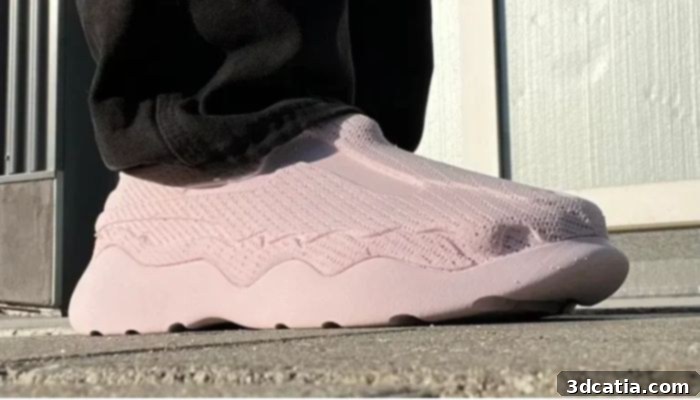
3D printed shoe from Koobz (Photo Credits: Koobz)
ASTM International and Nikon Advanced Manufacturing Forge Partnership for Defense Sector Workforce Development
In a move poised to bolster national security and manufacturing prowess, ASTM International, a global leader in standards development, and Nikon Advanced Manufacturing have formalized a strategic alliance through a Memorandum of Understanding (MOU). This collaboration is specifically designed to develop and deliver comprehensive training programs tailored to meet the exacting requirements of the U.S. Department of Defense (DoD). The joint objective is clear: to cultivate a highly skilled workforce proficient in advanced manufacturing processes, directly addressing the evolving needs of the defense sector and ensuring a robust, resilient domestic supply chain.
Under this pivotal partnership, Nikon Advanced Manufacturing will assume the primary responsibility for developing these specialized training programs. These programs will be meticulously crafted and delivered at Nikon AM Technology Center, a state-of-the-art facility located in Long Beach, California. This center is equipped not only with cutting-edge Laser Powder Bed Fusion (LPBF) machines, a key additive manufacturing technology, but also with a suite of advanced metrology tools essential for precision quality control and verification. The availability of both manufacturing and inspection technologies under one roof ensures a holistic and practical training experience for participants. Furthermore, Nikon AM has committed to increasing its active involvement in various ASTM events, contributing its expertise and insights to shape future industry standards and practices.
The collaboration extends beyond training program development. Both ASTM International and Nikon AM plan to jointly organize a series of seminars and workshops. These events will serve as crucial platforms for knowledge sharing, fostering innovation, and addressing critical challenges within the advanced manufacturing landscape, especially as it pertains to defense applications. There are also concrete plans to establish closer working relationships with federal agencies and to participate in government-sponsored projects aimed at accelerating manufacturing innovation and adoption. Hamid Zarringhalam, CEO of Nikon AM, emphasized the strategic imperative of this partnership: “It has become increasingly clear that advanced manufacturing is critical to national competitiveness, and over the past couple of years, Nikon AM has been executing a strategic plan focused on onshoring these vital capabilities. In order to develop, build and operate the next generation of manufacturing equipment and solutions, we also need to inspire, educate and train the next-generation workforce about AM technology.” Andrew G. Kireta, Jr., President of ASTM International, echoed this sentiment, adding, “This collaboration with Nikon AM brings together two institutions with unmatched legacy and global recognition. Together, we’re reinforcing the connection between workforce development, resilient supply chains, and national security—all while helping accelerate the adoption of advanced manufacturing at an industrial scale.” This alliance marks a significant step towards bridging the skills gap and fortifying the nation’s advanced manufacturing capabilities for defense.
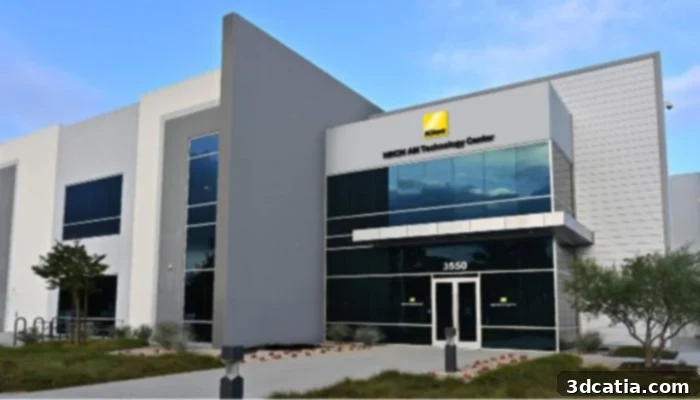
Nikon AM Technology Center in Long Beach, California (Image: Nikon)
Dimension Ortho and Rothman Orthopaedics Partner to Revolutionize Orthotic Care with Personalized 3D Printing
In a groundbreaking move set to redefine patient care in orthopedics, Rothman Orthopaedics, one of the most prominent and largest orthopedic practices across the U.S., has announced a strategic partnership with Dimension Ortho, a recognized leader in the field of 3D printed orthotics. This collaboration marks a significant leap forward in leveraging advanced manufacturing to deliver highly personalized, comfortable, and effective solutions for patients requiring bracing and fracture care. Dimension Ortho stands out for its innovative approach, which combines advanced scanning technologies, sophisticated software design, and novel biomaterials to fabricate custom casts, braces, and splints, moving far beyond the limitations of traditional orthopedic devices.
The core of this partnership involves Rothman Orthopaedics integrating Dimension Ortho’s cutting-edge platform for personalized bracing and fracture care across its extensive network of clinical sites. This integration is poised to establish a new standard for patient care by providing customized, high-quality orthotic devices that are precisely tailored to each individual’s anatomy and specific medical needs. Alexander R. Vaccaro, President of Rothman Orthopaedics, articulated the compelling rationale behind this transformative decision: “This is something patients want and need in an environment of time constraints and rising healthcare costs.” His statement highlights the dual benefits of 3D printed orthotics: they offer superior patient experience while also addressing the growing pressures on healthcare systems to deliver efficient and cost-effective solutions.
Dimension Ortho’s advanced production system is designed for remarkable versatility, capable of being seamlessly adopted across virtually any treatment setting, from busy emergency rooms to specialized orthopedic clinics. This adaptability is a key factor that will empower Rothman providers to offer their patients more advanced, precise, and comfortable braces and casts than ever before. “Traditional cast and splint immobilization has seen little innovation for decades,” said Pedro Beredjiklian, MD, Co-Founder of Dimension Ortho, underscoring the long-standing need for disruption in this area. He further elaborated, “At Dimension Ortho, we’re leveraging proprietary technology to transform fracture care with solutions that are more effective, comfortable and tailored to each patient.” This partnership not only promises to enhance patient outcomes through superior customization and comfort but also positions both organizations at the forefront of medical innovation, demonstrating how additive manufacturing can profoundly impact the future of healthcare.
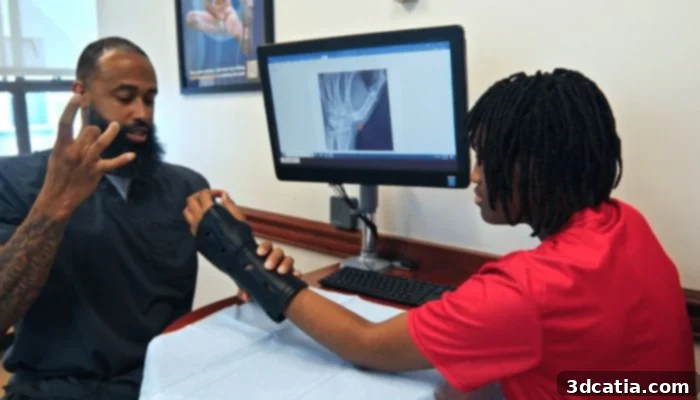
Patient with 3D printed cast from Dimension Ortho, made with the company’s patented printing and post-processing method. (Photo Credits: Dimension Ortho)
Freemelt Marks Significant Milestone with First Industrial Machine Delivery to German Customer
Freemelt AB, the innovative Swedish manufacturer renowned for its advanced industrial 3D printers, has achieved a pivotal milestone in its journey to expand its global market presence. The company recently announced the successful lease of its inaugural machine to an industrial customer based in Germany. This development represents a significant strategic step, as while several Freemelt printers are already actively utilized within German universities and various research institutes for academic and scientific pursuits, this marks the very first instance of one of their cutting-edge machines being delivered directly to an industrial client for commercial applications. This transition from research to industrial deployment is a strong indicator of the growing confidence in Freemelt’s Electron Beam Melting (EBM) technology within the manufacturing sector.
The undisclosed German industrial customer will deploy the Freemelt ONE machine primarily for advanced research and development (R&D) initiatives, as well as for rapid prototyping applications. The choice of the Freemelt ONE underscores its reputation for precision, material versatility, and suitability for demanding industrial environments where high-quality metal parts are critical. While the identity of this pioneering customer remains confidential, the implications of this partnership are far-reaching for Freemelt. It signifies a crucial validation of their technology’s readiness and capability to meet the rigorous demands of industrial production, moving beyond experimental stages into practical, real-world manufacturing scenarios. The lease agreement for the printer is valued at 2.7 million Swedish kronor, with the delivery successfully scheduled for the fall. This transaction not only boosts Freemelt’s revenue but also reinforces its position as a key player in the additive manufacturing industry.
This milestone delivery is undoubtedly a landmark achievement for Freemelt, solidifying its commitment to establishing a stronger foothold in industrial applications and accelerating the adoption of EBM technology across diverse manufacturing sectors. It opens new avenues for market penetration and demonstrates the company’s ability to transition its innovative solutions from academic labs to commercial production floors. The move into the German industrial market, known for its stringent quality standards and manufacturing excellence, further validates Freemelt’s technology and sets a precedent for future industrial partnerships. It highlights a growing trend where specialized additive manufacturing technologies are being increasingly integrated into core industrial processes, driving efficiency, innovation, and competitive advantage across various industries.
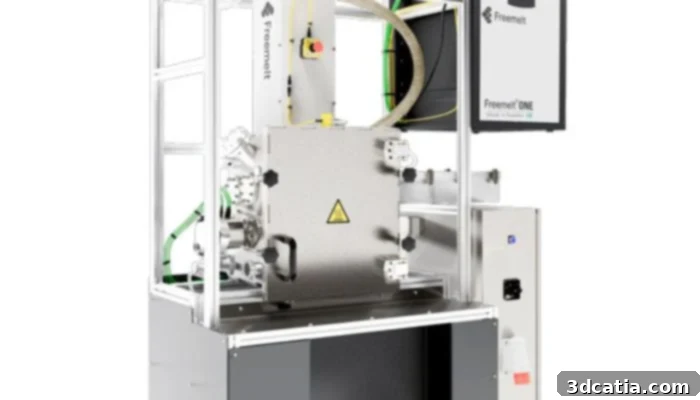
Photo Credits: Freemelt
The rapid pace of innovation in additive manufacturing continues to amaze and transform industries globally. From enabling more efficient rocket launches with INNOSPACE’s advanced engines to creating personalized and comfortable orthotics with Dimension Ortho, the applications are as diverse as they are impactful. Koobz is reshaping footwear production with speed and sustainability, while the partnership between ASTM International and Nikon Advanced Manufacturing is strategically preparing the defense sector with a skilled workforce for the future. Finally, Freemelt’s first industrial delivery in Germany signals a growing industrial acceptance and expansion of specialized 3D printing technologies. These developments collectively paint a vibrant picture of an industry not just growing, but fundamentally changing how we design, produce, and innovate across vital sectors.
What are your thoughts on these groundbreaking advancements in 3D printing and additive manufacturing? Do you foresee even greater integration of these technologies into everyday life and critical industries? Share your insights and join the conversation by leaving a comment below or engaging with us on our LinkedIn and Facebook pages! Don’t miss out on the latest updates and industry news – be sure to sign up for our free weekly Newsletter here, delivering the most relevant 3D printing news straight to your inbox.