
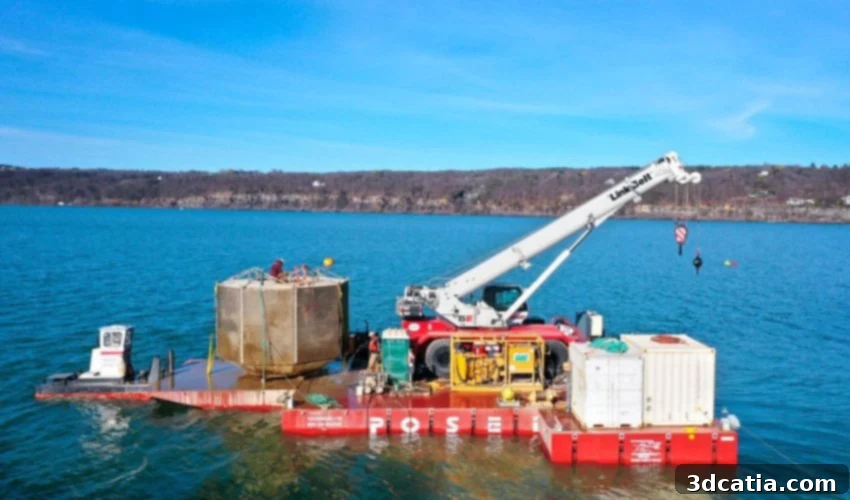
Leveraging 3D Printing for Sustainable Campus Cooling: Cornell University’s Innovative Lake Source System Maintenance
Maintaining sustainability across a sprawling university campus presents a multifaceted challenge, demanding a delicate balance between environmental responsibility, operational efficiency, and technological innovation. Large institutions often consume vast amounts of energy for heating, cooling, and various facilities, making the pursuit of eco-friendly solutions paramount. Last week, Cornell University showcased a groundbreaking approach to this challenge when its renowned Lake Source Cooling (LSC) system underwent critical maintenance. This project wasn’t just a routine upkeep; it marked the strategic integration of innovative 3D printed components, demonstrating a powerful synergy between dedicated engineers, bright students, and cutting-edge additive manufacturing technology. This initiative underscores Cornell’s commitment to sustainable campus operations and its leadership in adopting advanced technologies for environmental stewardship.
The LSC system, a testament to ingenious engineering, harnesses the naturally icy depths of Cayuga Lake to provide cooling for a significant portion of the Cornell University campus and even Ithaca High School. This visionary infrastructure has revolutionized their approach to climate control, delivering substantial environmental and economic benefits. Annually, the LSC system slashes electricity consumption by over 20 million kilowatt-hours – an impressive figure that translates into massive cost savings and a significant reduction in the institutions’ carbon footprint. Crucially, it achieves this without relying on harmful refrigerants or releasing toxic greenhouse gases, directly contributing to cleaner air and a healthier planet. However, even such an advanced system faces persistent environmental threats. The aggressive proliferation of invasive zebra and quagga mussel colonies in Cayuga Lake has consistently threatened the LSC system’s operational integrity. These biofouling organisms attach themselves to submerged surfaces, drastically reducing water flow within the system’s intricate pipe network. This accumulation necessitates periodic, yet extensive, maintenance procedures to ensure the LSC continues to operate at peak performance, a challenge that spurred Cornell to seek more efficient and innovative solutions.
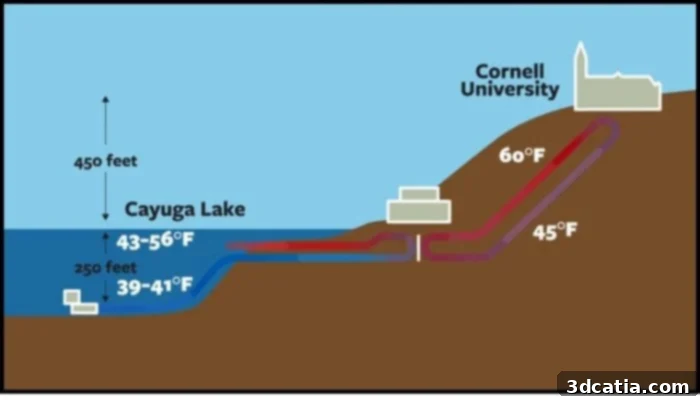
The Lake Source Cooling System of Cornell University.
The essential maintenance process for the LSC system traditionally commenced with a complex and challenging task: retrieving a massive metal intake screen submerged approximately 250 feet beneath the surface of Cayuga Lake. This screen, vital for preventing larger debris and organisms from entering the cooling system, must be periodically raised for thorough cleaning. The conventional method involved hooking heavy chains to designated attachment points on the screen. However, this seemingly straightforward task was anything but. The immense depth, poor visibility, and the screen’s substantial size and weight made aligning the chains incredibly difficult. After multiple failed and time-consuming attempts to securely attach the retrieval chains, it became abundantly clear that Cornell University needed a more innovative, precise, and efficient solution. Recognizing the transformative potential of 3D printing, the university’s engineering teams quickly determined that additive manufacturing offered the optimal pathway to overcome these alignment challenges, significantly enhancing the safety and efficiency of this critical operation.
Under the innovative leadership of engineering student Mark Tarazi, the project swiftly moved to implement custom-designed 3D printed thermoplastic components. These specially engineered pieces were designed to act as precise guides and connectors, facilitating the swift and accurate alignment and attachment of the retrieval chains to the submerged screen. The choice of thermoplastic was strategic; its durability, resistance to underwater conditions, and flexibility in rapid prototyping made it an ideal material for this application. Tarazi, reflecting on the project’s resounding success, shared his enthusiasm: “It’s really cool to see it in action. We don’t usually get to see the end project or how our part fits into it. It was really meaningful to see that we’re making a difference.” This firsthand experience not only provided an invaluable learning opportunity for students but also demonstrated the tangible impact of their academic work on real-world operational challenges. With the screen successfully retrieved and secured, the team was then able to seamlessly proceed to the next, equally vital, stage of the LSC system’s comprehensive maintenance.
The subsequent phase of maintenance involved a highly sophisticated and collaborative effort aimed at thoroughly purging the LSC system’s extensive network of intake pipes. This intricate operation brought together the expertise of Cornell’s engineers, the ingenuity of undergraduate students, and the advanced capabilities of state-of-the-art underwater robots. At the heart of this cleaning process were specially designed cylindrical devices affectionately known as “pigs.” These innovative tools, significantly enhanced through strategic application of 3D printing technology, were crucial for navigating the complex, miles-long network of pipes with unparalleled precision and efficacy. Roughly seven and a half feet in diameter and approximately five feet in length, these automated pigs were guided by sophisticated algorithms and equipped with custom-designed scraping elements, many of which were themselves 3D printed for optimal fit and function. As they traversed the pipelines, these robotic devices systematically scraped and meticulously removed the encrusted mussel colonies and accumulated debris with remarkable ease. This highly efficient cleaning process was instrumental in restoring uninterrupted water flow and significantly improving the overall cooling efficiency provided by the LSC system, safeguarding its long-term performance and environmental benefits.
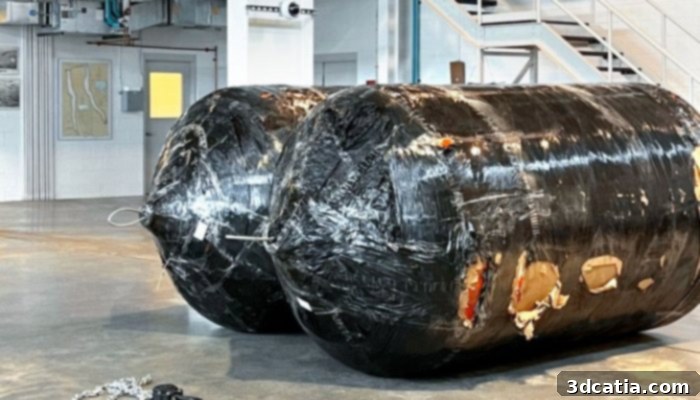
Cornell’s cylindrical “pigs”.
Cornell University’s successful and innovative maintenance of its Lake Source Cooling system marks a pivotal moment, paving the way for continued sustainable cooling solutions not just for Cornell, but potentially for other large institutions facing similar environmental and operational challenges. This project unequivocally highlights 3D printing as an invaluable tool, transforming from a novel technology into a critical enabler for efficient, cost-effective, and environmentally responsible campus operations. The application of additive manufacturing for custom components in challenging environments, from submerged screen retrieval to enhancing robotic pipe cleaners, demonstrates its immense versatility and practical utility. As Cornell and other pioneering institutions continue to explore and invest in advanced 3D printing technologies, they are setting a powerful precedent for even more creative, sustainable, and resilient infrastructure management solutions. This collaboration between human ingenuity, student innovation, and cutting-edge technology serves as a beacon for how universities can lead in addressing complex sustainability issues. The long-term implications include reduced operational costs, enhanced system longevity, and a significantly smaller ecological footprint, reaffirming Cornell’s commitment to environmental stewardship and innovation. To delve deeper into the fascinating details of this remarkable project and its broader impact, interested readers can find more information by clicking here.
What are your thoughts on Cornell’s ingenious use of 3D printing for its Lake Source Cooling system? We invite you to share your insights and comments below, or engage with us on our LinkedIn, Facebook, and Twitter pages! Don’t miss out on the latest advancements and news in additive manufacturing – remember to sign up for our free weekly newsletter here to get all the essential 3D printing updates delivered straight to your inbox! You can also explore our extensive video library and stay informed by visiting our YouTube channel.
*All Photo Credits: Cornell University