
Top 5 3D Printing Videos: Unveiling the Latest Innovations in Additive Manufacturing
Welcome to our weekly roundup of the most captivating and impactful videos from the world of 3D printing. Each week, we scour the internet to bring you a curated selection of content that highlights the dynamic advancements, groundbreaking applications, and evolving debates within additive manufacturing. This week’s Top 5 Videos offer a broad spectrum of insights, ranging from the controversial topic of 3D printed firearms and the exciting realm of automotive personalization to industrial metal printing, cutting-edge full-color machines, and an unexpected entry from a photography giant. Prepare to dive deep into the future of manufacturing as we explore these fascinating developments. Remember to tune in every Sunday for a fresh batch of essential 3D printing content.
1. The Ongoing Debate: 3D Printed Guns and Their Implications
The issue of gun control has long been a contentious subject in the USA, sparking passionate debates across the nation. In recent years, the emergence of 3D printed guns has added a new, complex layer to this already fraught discussion. At the center of this controversy is Cody Wilson and his organization, Defense Distributed, which gained significant public attention for releasing digital files enabling individuals to 3D print functional firearms. What started as an ideological statement about digital freedom and gun rights has evolved, with Defense Distributed now reportedly selling these specialized printers and files. The video featured this week delves into the intricate arguments both for and against the ability to 3D print firearms. It explores the technological processes involved in creating these weapons, the legal and ethical dilemmas they pose, and the broader societal implications of making undetectable or untraceable guns accessible through home manufacturing. This segment highlights the critical intersection of technology, individual liberties, and public safety, pushing the boundaries of traditional regulatory frameworks and forcing policymakers to confront a new era of digital fabrication challenges.
2. Driving Personalization: Custom MINI Car Parts with 3D Printing
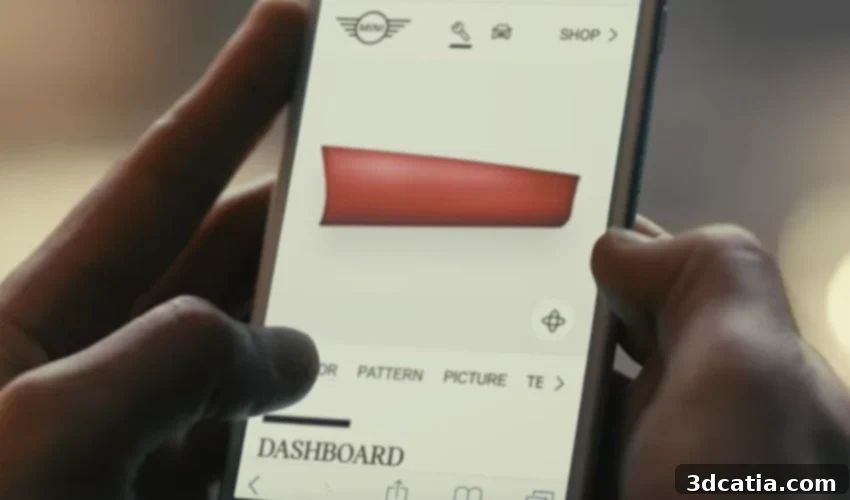
The automotive industry is no stranger to innovation, but MINI has taken a significant leap forward in personalization by integrating 3D printing into its customer experience. The iconic car manufacturer recently launched a pioneering custom parts service, allowing drivers to design and produce bespoke accessories for their vehicles using advanced additive manufacturing techniques. This initiative transforms the concept of vehicle customization, moving beyond standard options to offer truly unique components. Imagine driving a MINI with your name elegantly embossed on a dashboard trim, or perhaps the distinctive skyline of your favorite city integrated into a side scuttle design. This service makes such personalized touches a reality, enabling a level of individuality previously unattainable in mass-produced cars. By leveraging 3D printing, MINI can efficiently produce one-off or small-batch parts without the high tooling costs associated with traditional manufacturing. This not only enhances brand loyalty and customer satisfaction but also showcases the power of 3D printing in enabling mass customization on an industrial scale. It allows car enthusiasts to forge a deeper, more personal connection with their vehicles, transforming their MINI into a unique expression of their identity. We covered this exciting development in depth, and you can read our full story on this groundbreaking service here.
3. The Power of Metal: 3D Printed Parts Transforming Industrial Sectors
Metal 3D printing, a subset of additive manufacturing, has rapidly evolved from a niche prototyping tool into a robust technology capable of producing functional, end-use parts for the most demanding industries. This week’s featured video vividly illustrates how advanced metal 3D printers are being deployed to create components that were once impossible or prohibitively expensive to manufacture using traditional methods. The advancements in metal additive manufacturing over the past few years have been remarkable, enabling the creation of exceptionally complex geometries with unparalleled precision and strength. Industries such as aerospace, healthcare, and automotive are at the forefront of adopting this technology, recognizing its transformative potential. In aerospace, metal 3D printing allows for the production of lightweight components with intricate internal structures, significantly reducing fuel consumption and increasing performance. For medical applications, it facilitates the creation of custom implants and prosthetics perfectly tailored to individual patient anatomy. The benefits extend beyond complexity and customization; metal 3D printed parts often boast superior strength-to-weight ratios, reduced material waste, and the ability to consolidate multiple components into a single, integrated part. This not only streamlines assembly but also enhances the overall reliability and performance of the final product, ushering in a new era of design freedom and manufacturing efficiency across critical industrial sectors.
4. HP’s Bold Expansion: Introducing the Jet Fusion 300 / 500 Series
HP, a venerable name in printing and computing, has firmly established itself as a significant player in the industrial 3D printing market with its Multi Jet Fusion (MJF) technology. The company recently made waves with the announcement of four new HP 3D printers, slated for release in the latter half of 2018. This expansion of their Jet Fusion portfolio marks a strategic move to broaden accessibility and capability within additive manufacturing. Among the most exciting additions are the Jet Fusion 380 and 580, which introduce full-color 3D printing to a wider market segment. This capability represents a monumental leap forward, allowing designers and engineers to create prototypes and even end-use parts with precise color fidelity, enabling more realistic and aesthetically rich designs. Beyond the full-color functionality, these new models are also positioned at a more accessible price point compared to HP’s existing high-end lines, such as the Jet Fusion 4210. With starting prices around $50,000, these printers aim to democratize advanced 3D printing, making it attainable for small to medium-sized businesses, design studios, and educational institutions that previously found industrial-grade solutions out of reach. This move by HP underscores a growing trend in the industry towards making sophisticated additive manufacturing technologies more widespread, fostering innovation and adoption across diverse professional landscapes. For a deeper dive into this pivotal announcement, you can read our comprehensive analysis here.
5. Kodak’s Unexpected Leap: Entering the 3D Printing Arena
Kodak, a name synonymous with photography and imaging, once dominated its industry for decades, capturing moments and memories for generations. While its traditional business faced significant challenges with the rise of digital photography, Kodak has proven resilient, strategically expanding its product lines and venturing into new technological frontiers. One such unexpected, yet intriguing, foray is into the world of 3D printing. At CES 2018, the renowned consumer electronics show, Kodak unveiled its own FDM 3D printer, signaling its ambition to diversify and innovate within the additive manufacturing space. This move highlights how established brands, even those from seemingly unrelated sectors, are recognizing the pervasive impact and potential of 3D printing. Kodak’s entry with an FDM (Fused Deposition Modeling) printer suggests a focus on accessibility and user-friendliness, typically targeting prosumers, educational markets, or small businesses seeking reliable desktop 3D printing solutions. The video provides a detailed explanation of this Kodak 3D printer, exploring its features, capabilities, and how a company with such a rich legacy in imaging science might leverage its expertise in materials and precision to offer a competitive edge in the additive manufacturing market. It’s a testament to the transformative nature of 3D printing that it continues to attract a diverse range of companies, fostering innovation and expanding the ecosystem of available solutions for creators and manufacturers alike.
This week’s Top 5 Videos have offered a compelling snapshot of the 3D printing landscape, from critical societal debates to groundbreaking industrial applications and exciting new product launches. We’ve witnessed how additive manufacturing continues to push boundaries, enabling unparalleled customization, fostering industrial efficiency, and attracting innovation from diverse sectors. The rapid evolution of this technology promises an even more exciting future, making it imperative to stay informed about the latest developments. What are your thoughts on this week’s selection of videos? We’d love to hear your insights! Share your opinions in a comment below or join the conversation on our Facebook and Twitter pages. For all the latest news, trends, and innovations in 3D printing delivered straight to your inbox, don’t forget to sign up for our free weekly Newsletter!