
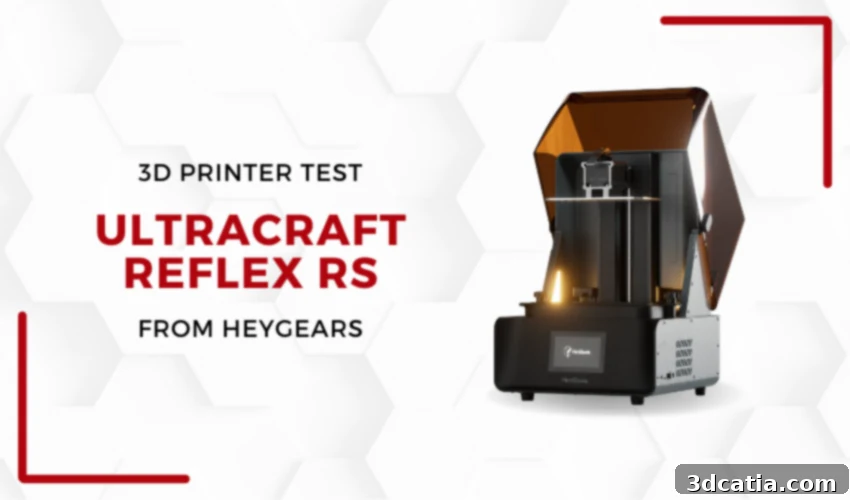
HeyGears UltraCraft Reflex RS Review: Affordable 8K Resin 3D Printing for the Consumer Market
HeyGears, a name synonymous with professional dental 3D printing solutions, has strategically expanded its reach into the consumer market with the introduction of its desktop resin printers. Following the successful launch of the UltraCraft Reflex, the innovative Chinese brand has now unveiled a more economically accessible model: the UltraCraft Reflex RS. This new iteration, designed with the budget-conscious user in mind, promises to deliver print quality comparable to its predecessor, but at a significantly lower price point. In this comprehensive review, we delve into the specifics of this new machine, examining its technical specifications, real-world performance, and the various design and feature compromises made to achieve its attractive price. Our goal is to determine if the UltraCraft Reflex RS (Rapid Shaper) truly offers exceptional value without sacrificing the quality HeyGears is known for.
While the original UltraCraft Reflex targeted a broader consumer audience with a more complete ecosystem and premium features, the Reflex RS is positioned as a highly accessible alternative. It promises enhanced performance, primarily due to its impressive 8K resolution LCD masking screen, which allows for incredibly detailed prints. On the surface, the Reflex RS appears to strike an ideal balance between superior print quality and a competitive price. However, achieving this balance often necessitates trade-offs. What compromises has HeyGears implemented to reduce the cost of this desktop resin 3D printer? In this article, we will revisit our detailed testing of the HeyGears Reflex RS to thoroughly evaluate its claims and see if it truly lives up to its promise of delivering high-quality 3D printing within an affordable package. We will explore everything from its unboxing experience to its software ecosystem and crucial print performance metrics, providing an honest assessment for potential buyers.
Unpacking the UltraCraft Reflex RS: Initial Impressions and Design Choices
The unboxing experience of the Reflex RS immediately highlights one of its primary distinctions from its predecessor: a simpler accessory pack. Unlike the more comprehensive toolkit provided with the original Reflex, which included useful items such as cleaning trays, resin filters, and cutting pliers designed to streamline the post-processing workflow, the Reflex RS comes with a more basic set. Users will find a silicone spatula, two Allen keys, a metal spatula, and a quick-start guide. This reduced accessory offering means that users will likely need to procure additional tools for resin handling, cleaning, and support removal, potentially increasing the overall initial investment despite the printer’s lower price point. This decision reflects HeyGears’ strategy to keep the base unit’s cost down by shifting some accessory responsibility to the user.
In terms of physical footprint, the Reflex RS measures 380 x 360 x 584 mm, making it slightly more compact than the Reflex. Despite its smaller external dimensions, HeyGears has managed to achieve a larger print volume for the RS, offering 222 x 122 x 230 mm compared to the Reflex’s 192 x 121 x 220 mm. This clever optimization of internal space is partly achieved by moving the power supply unit outside the printer’s main chassis. While this contributes to the printer’s compact design, it’s important for users to note that this external power brick will require additional space on their workbench, something to consider during setup.
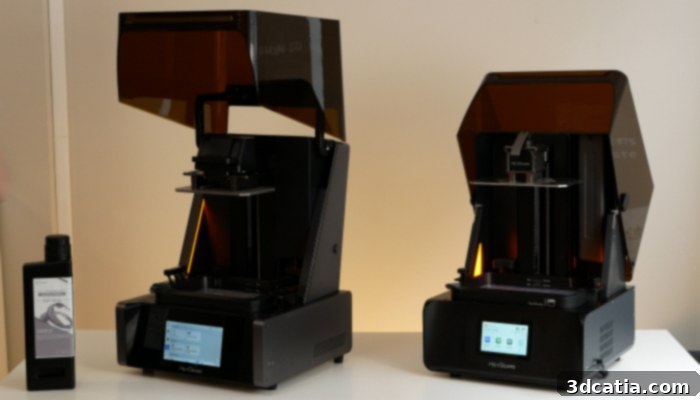
Reflex RS follows the aesthetic lines established by Reflex
Aesthetically, the Reflex RS largely retains the distinctive design language of HeyGears, ensuring brand continuity. However, closer inspection reveals that some construction elements are less robust when compared to the original Reflex. The chassis incorporates a greater proportion of plastic, particularly noticeable in critical areas such as the hinge mountings. While this choice contributes to cost reduction, it could potentially affect the printer’s long-term durability and resistance to wear and tear. Furthermore, the presence of small gaps in the frame is a notable departure from the original version, which boasted a more sealed construction. These gaps could allow dust or resin fumes to escape or enter, which is a concern for print quality and maintenance. The control screen is also smaller, measuring five inches diagonally compared to the Reflex’s seven-inch display. While still functional, this reduction in size might slightly impact ease of navigation for some users. Moreover, most connectors, aside from those dedicated to the optional PRM (Pulsing Release Module), have been relocated to the right-hand side of the machine, which might require some adjustment for users familiar with other printer layouts.
One of the most significant compromises made to reduce the price of the Reflex RS concerns the build platform mounting system. Unlike the original Reflex, which featured an integrated tilting mechanism designed to efficiently drain excess resin back into the vat after a print, the Reflex RS has omitted this convenient function. This means users will now need to manually remove the build plate and then either carefully scrape off excess resin or, more practically, print an adapter that allows the plate to tilt for drainage. This additional step adds a layer of complexity and potential mess to the post-processing workflow, directly impacting user convenience and efficiency. It’s a clear example of a design simplification that saves manufacturing costs but introduces a minor inconvenience for the end-user.
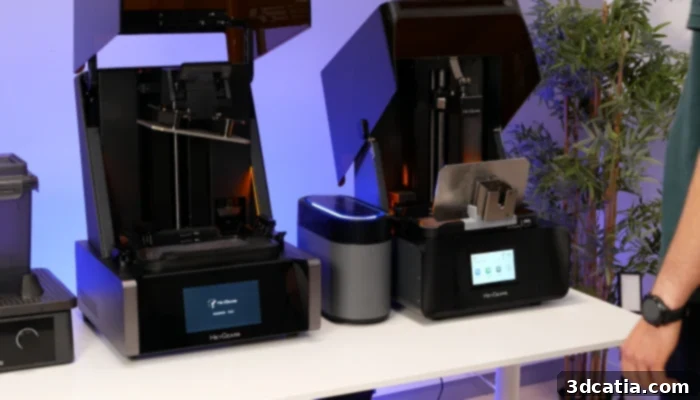
On the Reflex RS, HeyGears has simplified the tray attachment system, making it necessary to print an adapter to tilt the tray
Further impacting the post-processing experience, the printing plate on the Reflex RS is solid, a stark contrast to the perforated plate found on the Reflex. This seemingly minor design choice has significant practical consequences. A solid plate, being entirely flat on top, tends to retain resin more readily, making it essential to exercise greater caution when removing the plate from the machine after a print. Without due care, the residual resin can easily spill onto the printer itself or the surrounding work area, increasing the risk of mess and requiring more thorough cleanup. The perforated plate of the Reflex allowed resin to drip back into the vat more easily, making for a cleaner and more streamlined removal process. This change on the RS is another compromise aimed at cost reduction, but it does necessitate a more mindful approach from the user during print removal.
Simplified 3D Printer Installation and Enhanced Features
Despite the design compromises, the installation of the Reflex RS maintains the user-friendly, simplified process established by the original Reflex. The 5-inch touch screen, though smaller, offers a remarkably fluid and intuitive interface, greatly aided by a recent firmware update that has also been rolled out to the standard Reflex model. This sophisticated system includes several features designed to simplify the setup for novice and experienced users alike. A virtual spirit level, for example, makes it exceptionally easy to level the machine precisely using its adjustable feet, ensuring optimal print foundation. Additionally, the printer boasts automatic material detection through NFC tags embedded in the proprietary resin cartridges, which automatically configures print settings for the chosen material, significantly reducing setup time and potential user error.
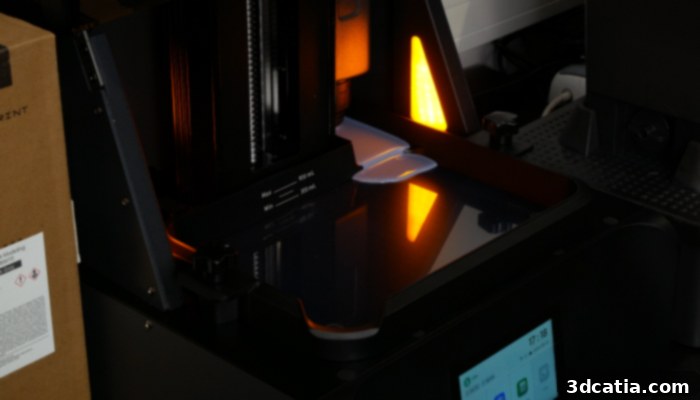
The reflex RS uses an automatic gravity flow system to ensure a sufficient resin level during printing
Once the Reflex RS is plugged in and powered on, the touch screen interface expertly guides the user through each essential step of the installation process. This includes the crucial automatic build plate calibration, which ensures perfect first-layer adhesion, and seamless Wi-Fi connection for remote monitoring and control. Thanks to this streamlined and guided setup, the machine is typically ready to begin printing in a remarkably short amount of time, allowing users to quickly move from unboxing to creation.
An innovative and cost-effective feature implemented in the Reflex RS is its new gravity-fed resin system. This design is not only simpler in operation but also promises significantly lower maintenance requirements and a reduced risk of breakdowns compared to more complex pumping systems found in some other resin printers. This system efficiently ensures a consistent resin level in the vat during printing, contributing to print reliability and ease of use, all while minimizing potential points of failure and associated repair costs.
A key technical difference between the two models lies in their light sources. The UltraCraft Reflex RS utilizes a 405 nm light source, in contrast to the 385 nm wavelength employed by the original Reflex. This longer wavelength allows for deeper and faster curing of the resin, which in turn speeds up the overall printing process. While this might result in a marginal, barely perceptible difference in extreme fine detail accuracy compared to the shorter wavelength, this choice is strategically aimed at a wider consumer audience. It prioritizes print speed and broader material compatibility over the absolute highest precision, making it more forgiving and versatile for general use cases. Crucially, a 405 nm light source is compatible with a much broader range of less technical and more affordable resin materials available on the market, broadening the appeal and reducing running costs for users.
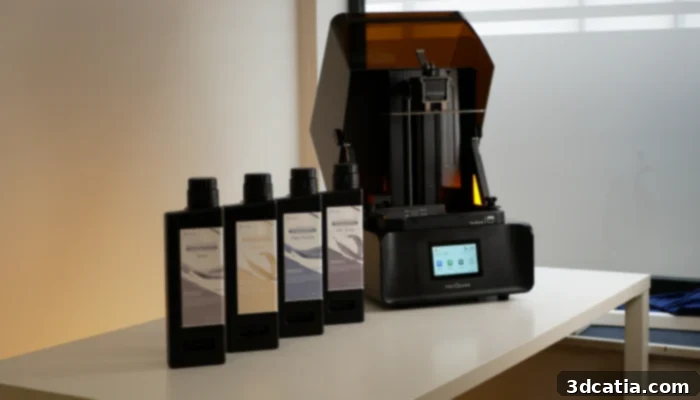
HeyGears Reflex RS uses proprietary resin cartridges
However, another notable omission in the Reflex RS is the integrated heater module, a feature present in its predecessor. For users operating in environments with low ambient temperatures, maintaining consistent resin temperature is crucial for reliable print outcomes. Therefore, HeyGears advises investing in the PRM (Pulsing Release Module) kit, which is sold separately for approximately $199. This module effectively stabilizes the resin temperature, guaranteeing consistent and high-quality prints even under variable climatic conditions. Despite this additional expense, the overall price of the Reflex RS, even with the PRM module, remains roughly $200 less than the base Reflex model, reinforcing its value proposition as a more affordable option that still offers performance parity when properly equipped.
Software and Ecosystem: The Blueprint Advantage
Just like the original Reflex, the Reflex RS benefits from seamless integration into HeyGears’ sophisticated Blueprint ecosystem. This comprehensive, connected software platform is designed to provide users with unparalleled control and oversight of their entire 3D printing workflow. Whether accessed via the intuitive mobile application or the robust desktop software, users can remotely monitor print jobs in real-time, adjust settings, and manage post-processing tasks directly from the platform. This centralized approach significantly simplifies the workflow, allowing for greater efficiency and flexibility. Although there haven’t been major feature updates to the core software since our initial review of the Reflex, the interface remains exceptionally user-friendly. It continues to offer advanced functionalities like one-click slicing, which streamlines the print preparation process, making it accessible even for those new to resin 3D printing.
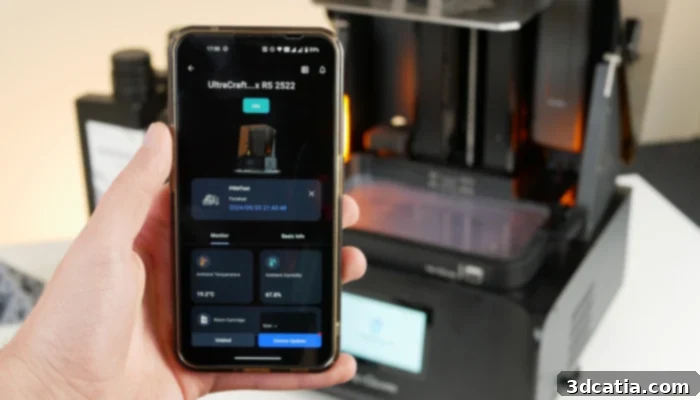
The BlueprintGo mobile application is particularly useful for keeping track of the various printing and post-processing stages
Nevertheless, as highlighted in our previous Reflex review, Blueprint Studio, while powerful within its ecosystem, still exhibits some limitations compared to other leading slicer software options on the market. Specifically, the absence of certain advanced features, such as highly granular support customization, and the lack of support for increasingly common and versatile file formats like 3MF, may limit its appeal for users requiring maximum flexibility or working with complex multi-material models. This closed-ecosystem approach, while offering stability and ease of use, can sometimes be restrictive for power users accustomed to open-source or more feature-rich proprietary slicers.
Blueprint Studio’s undeniable strength lies in its deep integration within the broader HeyGears ecosystem. Through seamless cloud connectivity, prepared print files can be sent directly to the Reflex RS and associated post-processing machines. This integration enables a high degree of automation, with certain settings for washing and curing automatically configured based on the specific material used or the model being printed. This level of automation significantly streamlines the overall workflow, reducing manual intervention and potential errors. However, for users who prefer the flexibility to experiment with a wide array of third-party materials or different file formats, this closed-system approach could represent a significant limitation. It essentially locks users into HeyGears’ own materials and software pipeline, which might not suit every user’s needs or preferences.
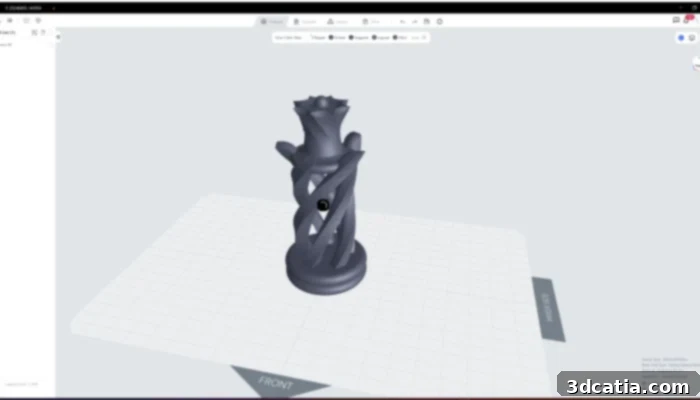
Blueprint, HeyGears’ proprietary slicer for preparing models for printing and sending them to machines in the wireless ecosystem
While the HeyGears ecosystem is already meticulously designed and well-implemented, there is always room for refinement. One particular feature that would greatly enhance the user experience is the integration of global commands, allowing users to initiate both printing and subsequent post-processing stages with a single action, rather than managing them separately. Imagine sending a command from the BlueprintGo mobile app that not only starts the print but also cues the washing and curing stations to begin their respective tasks once the print is complete. This holistic command structure would further automate and smooth out the entire 3D printing pipeline, reducing the need for constant monitoring and manual intervention, and ultimately making the user experience even more seamless and efficient.
Exceptional Print Performance and Material Considerations
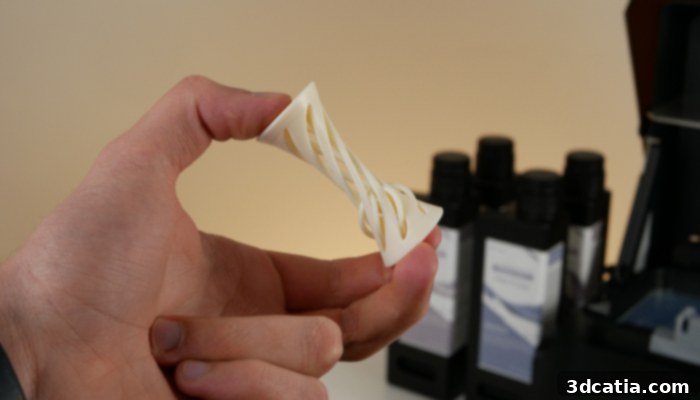
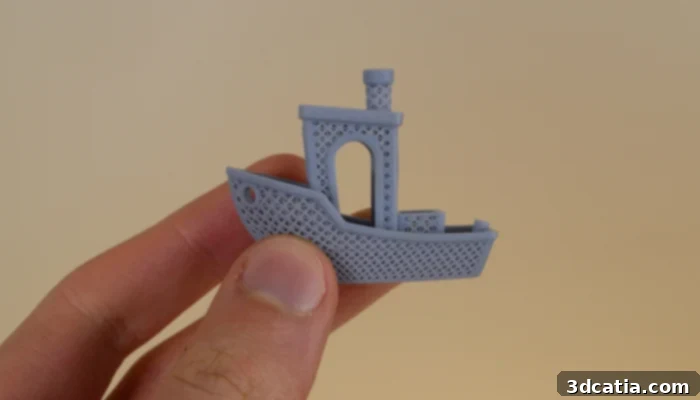
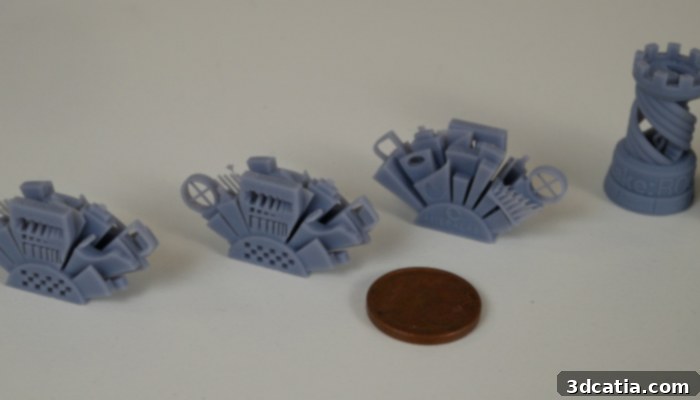
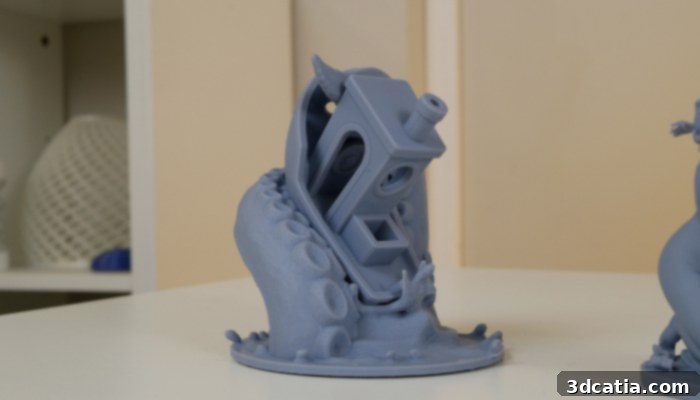
In terms of raw print quality, the HeyGears Reflex RS consistently meets the high expectations associated with a premium resin 3D printer. Our tests confirm that prints emerge with exceptional crispness and precision, exhibiting virtually invisible layer lines. The resulting parts are not only aesthetically pleasing but also robust and durable, suitable for a wide range of applications from intricate miniatures to functional prototypes. Remarkably, the difference in print quality between the Reflex and the Reflex RS is barely perceptible to the naked eye. The RS actually boasts a slight advantage in printing speed, which HeyGears attributes to a more optimized algorithm. Additionally, the shift to a 405 nm light source, as opposed to the Reflex’s 385 nm, contributes to faster resin curing times, further boosting overall print efficiency without compromising detail.
However, these performance benefits come with a few practical compromises that users should be aware of. Unlike the original Reflex, the Reflex RS does not incorporate a weight sensor to accurately measure resin levels within the vat. This omission can pose a challenge, especially during longer or larger print jobs where it becomes difficult to precisely estimate the remaining resin quantity. Users will need to manually monitor resin levels, risking failed prints or inconvenient mid-print refills if the resin runs out unexpectedly. This feature was a significant convenience on the Reflex, and its absence on the RS is a clear trade-off for the lower price point.
Another notable aspect of the Reflex RS ecosystem is the strategic expansion of HeyGears’ proprietary resin portfolio. To make its platform more appealing and affordable to a wider audience, including those accustomed to open hardware solutions, HeyGears has introduced a range of cheaper materials specifically formulated for the Reflex RS. This expanded selection now includes resins suitable for diverse applications, from detailed technical parts to rapid prototyping, providing more versatility within the closed ecosystem. However, mirroring the situation with the classic Reflex, the necessity of exclusively using HeyGears’ proprietary materials can be a drawback for users seeking greater diversity in material choice or those with specific requirements for third-party resins. This limitation, while ensuring optimized print results and machine compatibility, restricts user freedom.
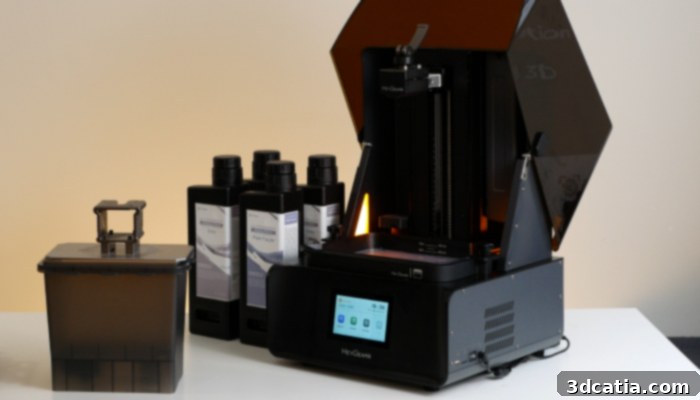
Unfortunately, the wash bins are too small for the Reflex RS tray to fit into
Regarding material compatibility, it’s important to note that the Reflex RS, due to its different wavelength, is not compatible with *all* of HeyGears’ existing professional-grade resins designed for the Reflex. However, it does support several mainstream and newly introduced resins that are widely applicable. This includes popular options such as water-washable resins, which simplify cleanup, robust wear-resistant resins for functional parts, and a variety of entry-level materials that make 3D printing more accessible. Users should always consult HeyGears’ compatibility charts to ensure they select the appropriate resin for their specific Reflex RS model and application.
Support structures on prints produced with the Reflex RS are generally engineered for easy removal, which significantly streamlines the post-processing phase. However, for models printed with some tougher, more durable materials, such as HeyGears’ PAWR10 resin, greater effort and more careful technique may be required to cleanly detach the supports without damaging the print. Furthermore, the overall post-processing experience on the Reflex RS is slightly less convenient than on the Reflex. A key issue arises with the shared washing station, which, unfortunately, is not large enough to accommodate the Reflex RS build plate directly. This necessitates removing parts from the platform before they can be cleaned, adding an extra step and increasing the chances of accidental damage or resin spills during transfer.
One consistent point of feedback we raised during the initial testing of the Reflex was the relatively high noise level generated, particularly from the PRM (Pulsing Release Module) and the post-polymerization (curing) station. With the Reflex RS, these accessory components remain largely unchanged, meaning the noise level can still be a noticeable factor, especially if the printer is operated in a quiet office environment or a living space. While not excessively loud, the combined hum and operational sounds may be annoying for some users, highlighting an area where future iterations could see improvement.

Conclusion: Is the UltraCraft Reflex RS the Right Choice for You?
The HeyGears UltraCraft Reflex RS confidently steps into the consumer 3D printing market as a strong contender, offering an enticing combination of high-resolution 8K printing and a significantly more accessible price point than its predecessor. Our in-depth review confirms that it largely delivers on its promise of maintaining HeyGears’ renowned print quality, producing crisp, precise, and durable parts that are virtually indistinguishable from those made on the more expensive Reflex. The enhanced speed, user-friendly installation, and integrated Blueprint ecosystem further solidify its appeal as a modern and efficient desktop resin 3D printer.
However, it’s crucial for potential buyers to understand that this affordability comes with a series of deliberate design and feature compromises. These include a simpler accessory pack, increased use of plastic in the chassis, a smaller control screen, and notably, the omission of the convenient tilting build plate mechanism and resin weight sensor. The solid print plate also demands more careful handling during post-processing to avoid spills, and the washing station’s inability to accommodate the build plate means an extra step in the cleaning workflow. While the 405 nm light source offers broader material compatibility and faster curing, it slightly alters the material ecosystem compared to the Reflex’s 385 nm. The lack of an integrated heater module requires a separate purchase of the PRM for optimal performance in cooler environments, though the overall cost still remains competitive.
The HeyGears Reflex RS is best suited for users who prioritize exceptional print detail and an intuitive, guided workflow, but are willing to accept a few minor inconveniences in their post-processing routine for a substantial cost saving. It’s an excellent choice for hobbyists, designers, and small businesses looking for a high-quality 8K resin 3D printer without the premium price tag of its more feature-rich sibling. For those who value a complete, tightly integrated ecosystem and don’t mind the reliance on proprietary resins, the Reflex RS offers a compelling value proposition. While some advanced users might miss the flexibility of open material systems or more robust accessory kits, the Reflex RS stands out as a smart, economical gateway to high-resolution resin 3D printing, proving that HeyGears can deliver professional-grade results even in a more consumer-friendly package. It successfully navigates the balance between cutting costs and preserving the core print quality that defines the brand.