
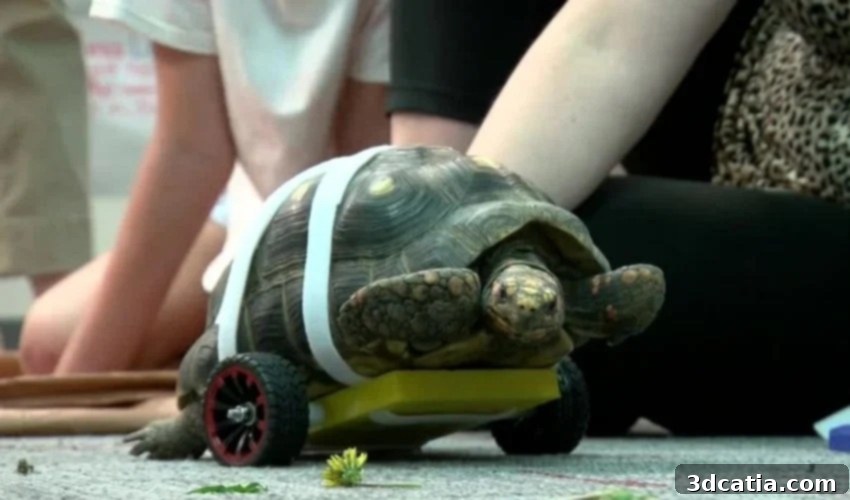
Prairie Queen Elementary: How Students Engineered a 3D Printed Wheel System for Shelly the Disabled Turtle
In a heartwarming display of community science and student ingenuity, the third to sixth-grade students at Prairie Queen Elementary School in Papillion, USA, embarked on a truly remarkable project. These dedicated members of the school’s 3D printing club channeled their collective skills in additive manufacturing to design and create a bespoke 3D-printed wheel system, aiming to significantly improve the quality of life for a physically challenged red-footed tortoise named Shelly. This innovative endeavor not only highlighted the practical applications of modern technology but also instilled invaluable lessons in empathy, problem-solving, and perseverance in young minds.
The inspiring journey began with a compelling appeal circulating on Facebook from Wildlife Encounters, a renowned non-profit educational organization dedicated to animal rescue and conservation. They sought assistance in developing a specialized mobility solution for Shelly, who had been under their care for approximately five years. According to KMTV 3 News, Shelly had been struggling with her physical limitations for about a year, enduring a period of decreased mobility despite receiving extensive swimming and physical therapy to build her strength. The vision was clear: a custom-designed 3D-printed wheel system would enable Shelly to move more freely and independently on land, providing crucial support while still allowing her to exercise her legs and maintain muscle tone. This call to action ignited a spark within the Prairie Queen students, presenting a unique opportunity to make a tangible difference in an animal’s life.
A Compassionate Challenge: Designing Mobility for Shelly
Upon learning of Shelly’s plight and Wildlife Encounters’ innovative request, the Prairie Queen Elementary 3D printing club enthusiastically accepted the challenge. For these young innovators, the decision to embark on this unique community science project was unanimous and immediate. The opportunity to apply their burgeoning skills in additive manufacturing to a real-world problem, especially one involving an animal in need, resonated deeply with each student. Third-grader Parker McCauley articulated this sentiment perfectly to WRTV News, expressing the club’s collective desire to help Shelly achieve a quality of life where she could “be like any other turtle.” This simple yet profound wish became the driving force behind their dedicated efforts, transforming a classroom activity into a mission of compassion and technological ingenuity. The project not only promised to enhance Shelly’s mobility but also offered the students an unparalleled educational experience, blending STEM principles with tangible altruism.
The Journey Begins: Research, Measurement, and Prototyping
The initial phase of the project, which took place back in February, involved a crucial meeting between representatives from Wildlife Encounters and the Prairie Queen students. During this pivotal session, the students received a comprehensive introduction to Shelly, learning intricate details about red-footed tortoises – their anatomy, movement patterns, and specific needs. This foundational knowledge was essential for designing a truly effective and comfortable mobility aid. Following the educational briefing, the students meticulously measured Shelly, carefully noting her dimensions and unique physical characteristics. These precise measurements were then translated into initial designs, which first took shape as cardboard prototypes. This hands-on approach allowed the young engineers to experiment with different configurations and sizes, understanding the nuances of their designs before committing to the 3D printing stage. Wildlife Encounters provided vital guidelines for the 3D-printed wheel system: the entire structure should not exceed one inch in height, ensuring Shelly could freely move her front and back legs without obstruction. Furthermore, the material for the walker needed to be robust and suitable for various terrains, including dirt and other natural substrates found in a tortoise’s typical habitat, emphasizing durability and practicality.
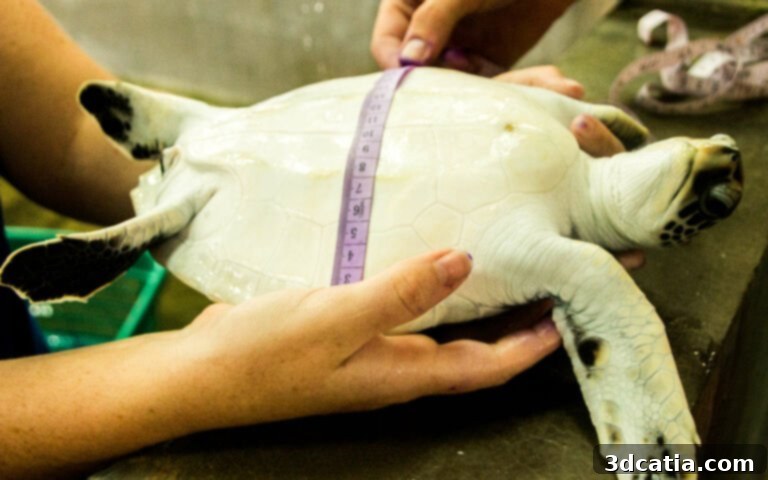
Students learning to measure a turtle for their 3D printing project (photo credits: Praktikawelten.de)
For these students, who were already quite familiar with the basics of 3D printing, as noted by their teacher Laura Smith, this project represented a welcome and significant step up in complexity and purpose. Previously, their club activities involved creating useful, everyday items like door stops, remote control holders, and other practical gadgets. However, this new undertaking transcended mere utility; it offered them a profound opportunity to apply their additive manufacturing skills to a life-changing cause, demonstrating how technology can directly help an animal survive and thrive. The shift from crafting mundane objects to engineering a medical device for a living creature infused the project with a heightened sense of responsibility and excitement, motivating the students to push the boundaries of their creativity and technical abilities.
Embracing Iteration: The Power of Trial and Error
The path to innovation is rarely linear, and the students quickly discovered this truth after a few initial test runs. The project, involving precise measurements, material selection, and functional design for a living creature, inherently involved a substantial amount of trial and error. Far from being discouraged by setbacks, the students embraced this iterative design process as a fundamental part of problem-solving. With remarkable patience and determination, they slowly but surely refined their designs, learning from each attempt what would work best for Shelly. Teacher Laura Smith, observing their progress, emphasized this crucial learning phase: “We printed things we knew wouldn’t work, but we wanted them to see that and make changes when they had things in hand.” This approach allowed the students to gain invaluable hands-on experience, understanding the direct impact of their design choices and fostering a deep appreciation for engineering principles. Smith also highlighted the students’ innate technical aptitude, noting that the kids were “highly tech-savvy,” a characteristic that undoubtedly aided their ability to adapt and innovate throughout the challenging project.
Given that Shelly couldn’t attend every single design meeting – a logistical challenge for any project involving an animal – the students had to be exceptionally patient and creative. They relied heavily on a cardboard cutout of the tortoise, using it as a stand-in for measurements and preliminary fitting tests. This practical solution allowed them to continue prototyping and refining their wheel system designs in Shelly’s absence, ensuring continuous progress. The culmination of their diligent work came on a memorable Thursday morning when the final test run of the 3D-printed wheel system took place. This critical evaluation revealed significant progress, and to the delight of everyone involved, Shelly was finally allowed to test her new 3D-printed walker. The results were immediate and profoundly rewarding; the tortoise seemed quite happy and comfortable with her newfound mobility. Jillian Lenz of Wildlife Encounters in Nebraska eloquently captured the emotional and educational impact of the project, stating:
“We’re so excited with what has been created today and just to see the kids process throughout it, and the way their brain kind of works to solve this problem — how we get a tortoise to walk again. It’s just been a really, really cool experience.”
This quote encapsulates the essence of the project: not just the creation of a physical device, but the profound educational journey and the spark of problem-solving ignited in young minds. The success of Shelly’s new mobility aid stands as a testament to the power of combining modern technology with youthful enthusiasm and compassion.
The Broader Impact: STEM Education and Animal Welfare Through 3D Printing
This inspiring initiative by Prairie Queen Elementary School goes far beyond simply helping one turtle; it serves as a powerful example of how hands-on, project-based learning can revolutionize STEM education. The students weren’t just learning about 3D printing in theory; they were applying complex engineering concepts – design, measurement, material science, iteration, and problem-solving – to a real-world, impactful challenge. This practical application fostered a deeper understanding of scientific principles and engineering design processes, igniting a passion for innovation at an early age. Moreover, the project instilled vital lessons in empathy and social responsibility, demonstrating how their technical skills could be used for altruistic purposes, making a tangible difference in an animal’s life. It highlights the growing potential of additive manufacturing in animal welfare, where custom-made prosthetics and mobility aids can provide solutions for creatures with unique needs, giving them a second chance at a fulfilling life. The success with Shelly the turtle is a beacon, illustrating the incredible synergy between education, technology, and compassion, and inspiring future generations to leverage their skills for the greater good.
To delve deeper into this exciting and heartwarming community science project, we invite you to watch the following YouTube video, which provides a visual journey through the students’ efforts and Shelly’s inspiring recovery:
What are your thoughts on this incredible project and the impact of student-led initiatives in applying 3D printing for animal welfare? We encourage you to share your comments below or engage with us on our Linkedin, Facebook, and Twitter pages! Don’t forget to sign up for our free weekly Newsletter here to receive the latest 3D printing news straight to your inbox! You can also find all our videos, including more inspiring stories, on our YouTube channel.
*Cover Photo Credits: KMTV News