
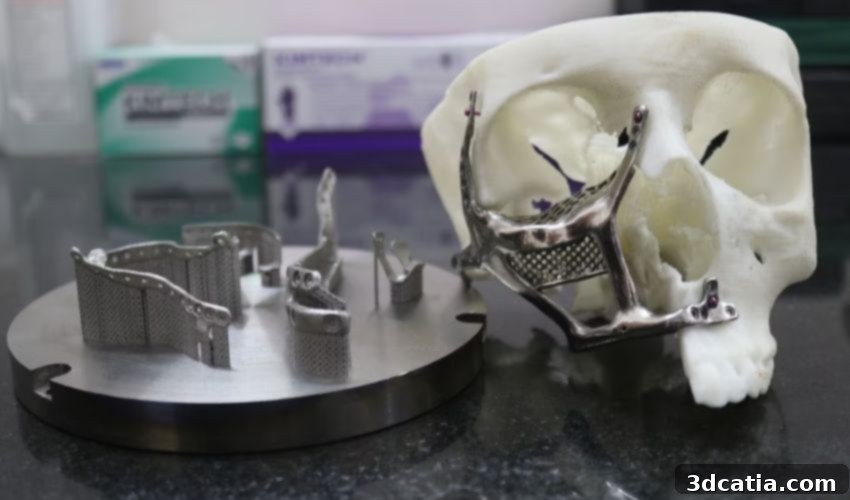
Revolutionizing Healthcare: How 3D Printing Delivers Life-Changing Facial Implants for Black Fungus Patients in India
Around the globe, additive manufacturing technologies have consistently demonstrated their immense potential and viability in the creation of advanced medical implants. This innovative approach is particularly impactful in regions facing economic challenges, where citizens often struggle with limited access to affordable, high-quality healthcare. In these areas, 3D printing is emerging as a transformative force, offering a sustainable and cost-effective method for producing customizable implants that can truly revolutionize patient care. A prime example of this pioneering work is currently unfolding in India, where a collaborative effort between researchers from the Indian Institute of Technology Madras (IIT Madras) and ZorioX Innovation Labs, a Chennai-based startup founded by dental surgeons, is focused on creating sophisticated 3D printed metal facial implants. These life-changing implants are specifically designed for patients suffering from the debilitating effects of black fungus disease, addressing a critical and growing healthcare need in the country.
Black fungus disease, officially known as Mucormycosis, is a severe yet relatively rare fungal infection. According to the U.S. Centers for Disease Control and Prevention (CDC), it is caused by a group of molds called mucormycetes, which are commonly found throughout the environment in soil and decaying organic matter such as leaves, compost piles, or rotten wood. Individuals typically contract the disease by coming into contact with these fungal spores, often by breathing them in. While ubiquitous, the CDC notes that these severe forms of mucormycosis primarily affect individuals with compromised immune systems or underlying health conditions that diminish the body’s ability to combat infections. Patients with uncontrolled diabetes, AIDS, or those undergoing certain medical treatments are particularly susceptible to developing this aggressive infection. The unique challenges posed by Mucormycosis necessitate rapid and effective treatment strategies, especially when it leads to extensive tissue damage.
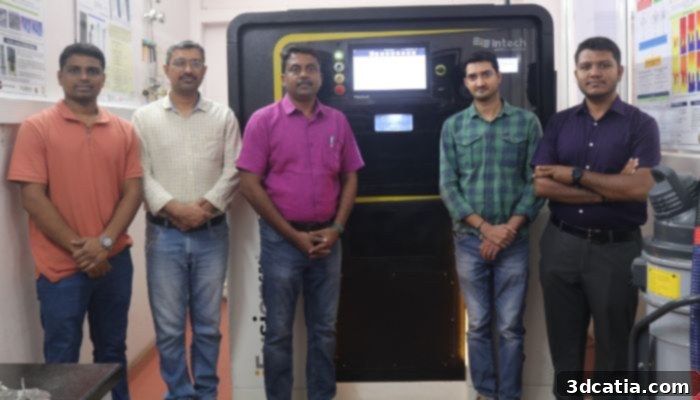
The IIT Madras team showcasing their advanced metal 3D printer, crucial for producing custom medical implants.
The situation escalated dramatically in India in the wake of the COVID-19 pandemic. Mucormycosis, previously considered an uncommon infection, saw an alarming resurgence starting in 2021, with approximately 60,000 cases registered across the country. This surge has been primarily linked to the immune suppression observed in many COVID-19 patients, particularly those treated with steroids, which can create a conducive environment for the fungus to thrive. The rapid increase in cases has led to an urgent and widespread demand for complex facial reconstruction surgeries, as the disease often causes severe disfigurement. The symptoms of black fungus can be devastating, impacting various parts of the body depending on the site of infection and requiring immediate medical intervention to prevent further complications and preserve patient health and quality of life.
While the specific symptoms of black fungus can vary based on where the infection manifests in the body, common indications include shortness of breath, chest pain, and sinus congestion. More critically for facial reconstruction, patients often present with swelling on one side of the face and develop characteristic black lesions on the nose and inside the mouth. Standard treatment protocols typically involve administering potent, prescription antifungal medications. However, if the disease is diagnosed late or progresses to a severe stage, surgical intervention becomes imperative. This often entails the aggressive removal of infected or necrotic tissues, which can tragically include the complete excision of parts of a patient’s nose, eyes, or other facial structures. Such radical procedures, while life-saving, invariably lead to significant disfigurement, necessitating extensive facial reconstruction. This is precisely where the innovative project from IIT Madras and ZorioX Innovation Labs steps in. Through their impactful #Right2Face movement, they are committed to providing these essential implants free of cost to patients who would otherwise be unable to afford the critical treatment, embodying a profound commitment to healthcare equity and access.
Dr. Karthik Balaji, CEO of ZorioX Innovation Labs, shed light on the critical need for this initiative, stating, “Post-Covid, there has been a significant increase in the number of black fungus cases. To save the lives of these patients, extensive removal of facial bones often becomes necessary. Many of these individuals are primary breadwinners for their families and now find themselves confined within their homes due to severe facial deformities. The #Right2Face movement is dedicated to assisting these needy patients, working in close collaboration with oral and maxillofacial surgeons to restore their faces and, more importantly, give them back their smiles and dignity.” This humanitarian effort underscores the profound impact of the disease not just physically, but also psychologically and socially. The initiative has already made substantial progress, with over 50 implants successfully fitted on patients from what a recent press release identifies as India’s economically weaker sections, demonstrating a tangible positive change in the lives of many vulnerable individuals. This ongoing success highlights the effectiveness of combining advanced medical technology with a strong social mission, setting a precedent for future healthcare interventions.
Leveraging 3D Printing for Patient-Specific Facial Implants in the Fight Against Black Fungus
The methodology behind creating these custom facial implants through 3D printing is both sophisticated and remarkably efficient, mirroring many successful implant and prosthesis initiatives seen globally. It particularly resonates with projects developed for rural areas or communities with limited access to advanced and affordable healthcare solutions. Dr. Murugaiyan Amirthalingam, Associate Professor in the Department of Metallurgical and Materials Engineering at IIT Madras, meticulously detailed the process: “Utilizing unique in-house developed algorithms, a patient’s MRI or CT scan data is precisely converted into a printable CAD (Computer-Aided Design) format. Subsequently, custom implants are fabricated from medical-grade titanium using an indigenously-built laser powder bed fusion facility housed at IIT Madras. This pioneering #Right2Face initiative is specifically designed to provide patient-specific custom maxillofacial implants to economically disadvantaged black fungus patients, ensuring they receive tailored treatment that would otherwise be out of reach.” This streamlined digital workflow ensures a perfect anatomical fit, which is crucial for both functional restoration and aesthetic outcomes in complex facial reconstruction cases.
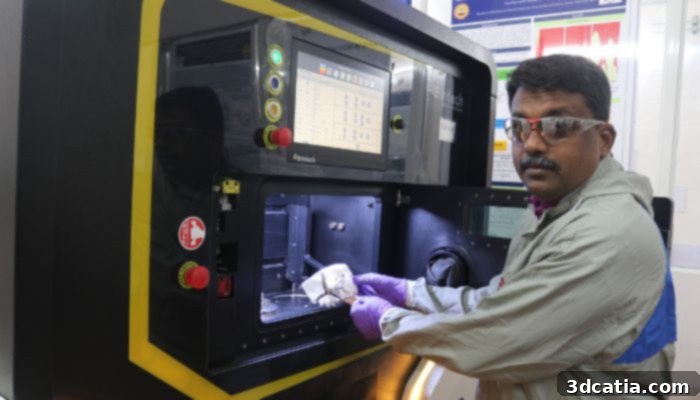
IIT Madras researchers meticulously craft each patient-specific facial implant using a cutting-edge metal laser powder bed fusion solution.
Dr. Amirthalingam further elaborated on the strategic decision to embrace 3D printing for this vital application, emphasizing its inherent advantages: “Additive manufacturing, commonly known as 3D printing, has rapidly established itself as a highly viable and cost-effective, net-shape manufacturing process. It is exceptionally well-suited for the low-volume production of complex body implants, especially those requiring specific custom-made designs to perfectly match patient anatomy. At IIT Madras, extensive research activities are continuously being conducted to further commercialize this transformative technology for printing an even wider range of patient-specific implants. Our current focus includes exploring various advanced biocompatible materials such as stainless steel, Ti-6Al-4V alloy, and Co-Cr-Mo alloys, alongside medical-grade titanium. This broad material capability allows for greater flexibility and customization, ensuring optimal outcomes for diverse medical requirements and patient needs in maxillofacial surgery and beyond.” The ability to precisely control the internal structure and external geometry of the implants is a game-changer for reconstructive surgery.
Given that the primary objective of this project is to provide a viable and accessible alternative to extensive traditional facial reconstructive surgery for lower-income populations, the cost-effectiveness and unprecedented personalization capabilities offered by 3D printing were paramount considerations for the IIT Madras researchers. The inherent advantages of additive manufacturing allow for the creation of intricate, custom-fit implants without the exorbitant costs associated with conventional manufacturing methods for bespoke medical devices. This affordability significantly broadens access to advanced medical solutions for those who need them most. Furthermore, the IIT Madras team is particularly enthusiastic about the ability to produce an implant that precisely matches a patient’s unique facial structure, restoring not just function but also a near-natural aesthetic appearance. This level of precision is critical for patient recovery and psychological well-being. For those interested in delving deeper into the specifics of this groundbreaking initiative, more detailed information can be found in the official press release from the Press Information Bureau for the Chennai region, accessible HERE. This project stands as a testament to how cutting-edge technology can be harnessed for profound humanitarian impact, setting new standards for accessible and personalized healthcare.
What are your thoughts on these innovative 3D printed facial implants and their role in assisting patients suffering from Black Fungus? We invite you to share your perspectives in the comments section below or join the conversation on our social media platforms, including LinkedIn, Facebook, and Twitter! Don’t miss out on the latest advancements and news in the additive manufacturing industry – subscribe to our free weekly Newsletter here, delivering the most important 3D printing updates directly to your inbox. Additionally, explore our extensive library of videos and insights on our YouTube channel for further learning and engagement.
*All Photo Credits: IIT Madras