
Revolutionizing Drug Development: How 3D-Printed Organ-on-a-Chip Technology is Phasing Out Animal Testing
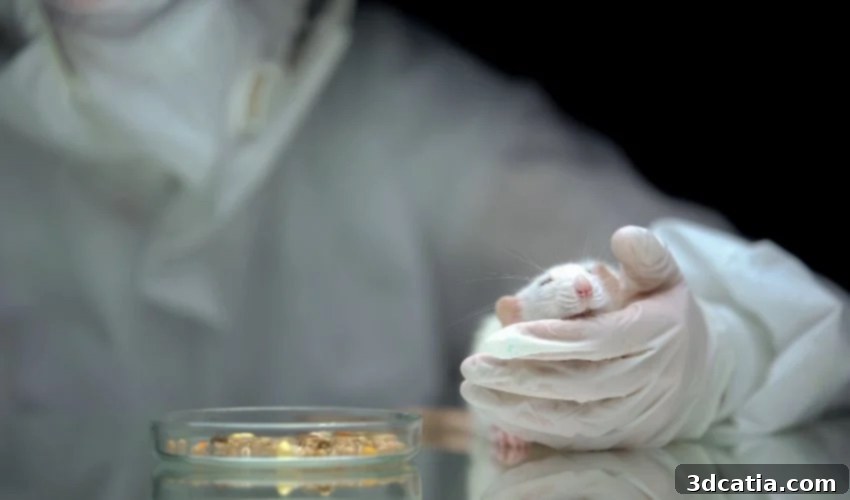
The journey from a promising scientific theory to a life-saving pharmaceutical drug is notoriously arduous, fraught with extensive testing, stringent regulatory hurdles, and significant financial investment. Within this complex process, a critical and often controversial stage involves preclinical drug testing, traditionally reliant on animal models before human trials can even commence. This long-standing practice has faced escalating criticism, not only for the profound ethical implications of sacrificing millions of animals annually but also for its scientific limitations. The physiological differences between species often lead to discrepancies in drug response, rendering animal test results unreliable predictors of human outcomes. Despite these concerns, current data reveals a staggering reality: over 110 million animals are still used in laboratories across the United States alone each year, underscoring an urgent need for more humane and effective alternatives.
However, a promising shift is on the horizon, signaling a potential paradigm change in pharmaceutical development. The National Institutes of Health (NIH) has recently awarded a substantial $1.8 million grant to an ambitious project designed to innovate solutions that could significantly reduce, and eventually eliminate, the reliance on animal testing. This groundbreaking initiative unites a formidable team of experts from prestigious institutions, including Georgia Tech, Virginia Tech, and Harvard Medical School. Spearheading this collaborative effort is Jeff Schultz, co-founder of Phase Inc., a pioneering company specializing in 3D-printed microfluidics. Their collective mission is to harness cutting-edge technology to create more accurate and ethically sound models for drug screening.
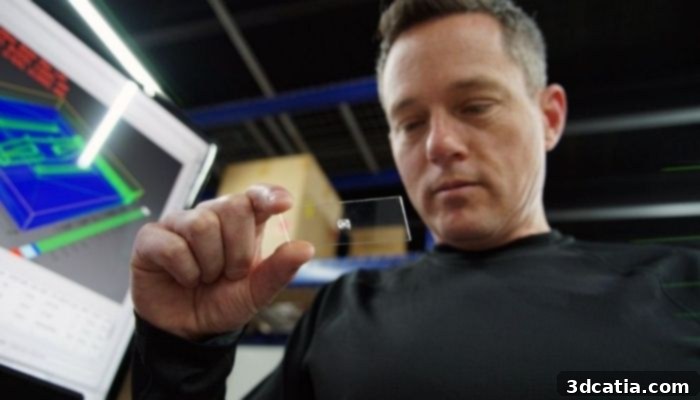
Jeff Schultz holding a 3D printed organ-on-a-chip (photo credits: Alex Parrish/Virginia Tech).
The Genesis and Evolution of Organ-on-a-Chip Technology
The concept of “organ-on-a-chip” isn’t entirely new; many of the team members have been at the forefront of this research for several years. The NIH grant now provides the impetus to consolidate and accelerate their efforts. Key researchers such as Rafael Davalos, Seemantini Nadkarni, Amrinder Nain, and Jeff Schultz are combining their diverse expertise, specifically leveraging Phase Inc.’s advanced 3D printing techniques, to overcome the persistent challenges that have hindered widespread adoption of these innovative models. At its core, organ-on-a-chip technology involves engineering miniature, physiologically relevant models of human organs. These devices, often no larger than a USB drive, incorporate living human cells cultured within microfluidic channels designed to mimic the intricate structure and dynamic functions of real organs. By precisely controlling fluid flow, mechanical forces, and biochemical gradients, these chips can replicate the cellular microenvironment and biological processes that occur within the human body, offering a level of realism far beyond traditional 2D cell cultures.
The beauty of this approach lies in its ability to provide a more accurate and reliable platform for drug testing. When drugs are introduced to these cell-based platforms, researchers can observe their effects in a controlled, human-relevant environment. This yields crucial data on drug efficacy, toxicity, and pharmacokinetics—how drugs are absorbed, distributed, metabolized, and excreted—that is far more indicative of how the drugs will perform in a living human being. This direct relevance is a significant improvement over animal models, where species-specific biological differences can often lead to misleading results and a high failure rate in subsequent human clinical trials.
Overcoming the Blood-Brain Barrier with 3D Printing
One of the most formidable obstacles in drug development, particularly for neurological disorders, is the blood-brain barrier (BBB). This highly selective physiological barrier, composed of tightly packed endothelial cells lining cerebral capillaries, acts as a vigilant gatekeeper. Its primary function is to protect the delicate brain tissue by permitting only essential substances, such as water, oxygen, and nutrients, to pass through from the bloodstream, while rigorously blocking harmful toxins, pathogens, and often, therapeutic drugs. Many promising compounds designed to treat brain diseases, from Alzheimer’s to glioblastoma, unfortunately fail in clinical trials not due to lack of efficacy at the target, but simply because they cannot effectively penetrate this formidable barrier.
Rafael Davalos, a pivotal member of the research team, articulates this critical challenge with clarity: “Therapeutics fail in clinical trials because they can’t cross the blood-brain barrier. The reality is that the devices that have been created in a lab don’t work and they allow too much to pass through. This gives false information that molecules can get through, and when you get into a clinical trial, the drugs fail because the human brain conditions haven’t been properly duplicated.” Previous attempts to model the BBB in vitro have largely fallen short, often overestimating permeability and providing misleading data that leads to costly failures in human trials. To surmount this, the team is leveraging Phase Inc.’s proprietary 3D printing methods. This advanced additive manufacturing technology allows for the creation of microfluidic devices with unprecedented precision and anatomical realism. By carefully designing and fabricating microchannels that mimic the exact architecture, cellular composition, and tight junctions of the human BBB, the researchers aim to develop a synthetic model that accurately reflects the barrier’s physiological selectivity. This breakthrough could revolutionize the screening of neurological drugs, ensuring that only compounds with genuine BBB permeability proceed to further development.
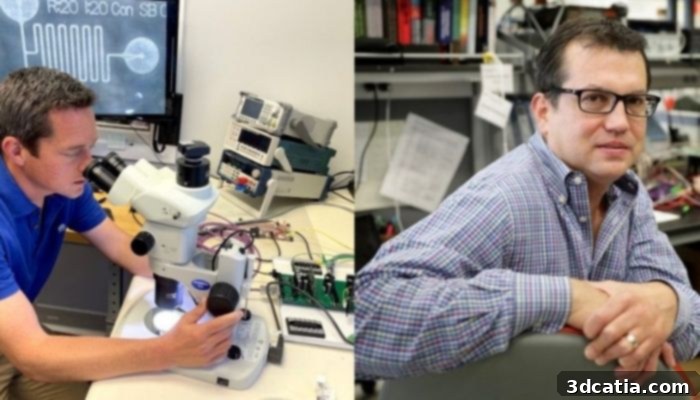
Jeff Schultz (left) and Rafael Dávalos (right) (photo credits: Phase Inc)
Mimicking Human Physiology with Unprecedented Precision
Jeff Schultz’s profound expertise in 3D printing has been absolutely instrumental in advancing this project. His unique ability to design and fabricate intricate microfluidic devices is central to replicating the complex, dynamic environment of the human body. Unlike traditional flat cell cultures in petri dishes, which fail to capture the three-dimensional nature and constant flow within biological systems, Schultz’s approach focuses on mimicking the exact curvature, size, and functional dynamics of human veins and capillaries. This meticulous attention to detail allows the creation of fluidic channels that mirror the geometry of physiological vasculature, providing a far more realistic microenvironment for cell growth and drug interaction.
Schultz elaborates on the transformative capabilities of 3D printing: “We’re building something that more realistically mimics the geometry of the body compared to other microfluidics. Harnessing the design freedom of 3D printing allows us to create devices that have the same curvature, size of veins, and functionality of the human body. We can put in valves similar to the heart that are accustomed to pulsating mechanical stresses. This gives us the opportunity to see results that are closer to real life than if the cells were laying flat in a dish, and is done in other conventional microfluidic devices, but has yet to be applied to the blood brain barrier.” The ability to incorporate dynamic elements, such as pulsating mechanical stresses mimicking blood flow or the rhythmic contractions of cardiac tissue, is a game-changer. These forces play a crucial role in cellular behavior, drug transport, and overall organ function, yet they are entirely absent in static 2D models. By introducing these biomechanical cues, the 3D-printed organ-on-a-chip models can provide data that is not only more accurate but also more predictive of drug performance in a living human body, drastically reducing the chances of failure in later clinical stages.
The Future of Ethical and Effective Drug Development
The successful development and widespread adoption of these synthetic, 3D-printed organ models promise to revolutionize the drug testing process on multiple fronts. Primarily, they offer a scientifically superior, ethically sound, and human-relevant alternative to animal testing. By moving away from animal models, the pharmaceutical industry can address long-standing ethical concerns while simultaneously obtaining more reliable data that directly pertains to human physiology. This shift is expected to accelerate drug discovery, reduce development costs by minimizing late-stage failures, and ultimately bring safer and more effective medications to patients much faster. The potential extends beyond just the blood-brain barrier; this technology could eventually be applied to model a vast array of human organs and complex biological systems, opening new avenues for personalized medicine and disease research.
This interdisciplinary collaboration, funded by the NIH and driven by innovative 3D printing techniques, represents a significant leap forward in biomedical science. It embodies the hope for a future where medical breakthroughs are achieved through cutting-edge technology that respects life, enhances scientific accuracy, and profoundly improves human health. The transition from traditional, animal-centric testing to sophisticated human-on-a-chip models marks not just a technological advancement, but a profound ethical evolution in how we develop the medicines of tomorrow.
What are your thoughts on the potential of 3D-printed organ-on-a-chip technology to replace animal testing in pharmaceutical research? Share your opinions in the comments below or join the conversation on our LinkedIn, Facebook, and Twitter pages! Don’t miss out on the latest advancements in additive manufacturing—sign up for our free weekly newsletter here for all the top 3D printing news delivered straight to your inbox! You can also explore our comprehensive video content on our YouTube channel.