
Pioneering Lunar Manufacturing: Incus and ESA Advance Metal 3D Printing in Space
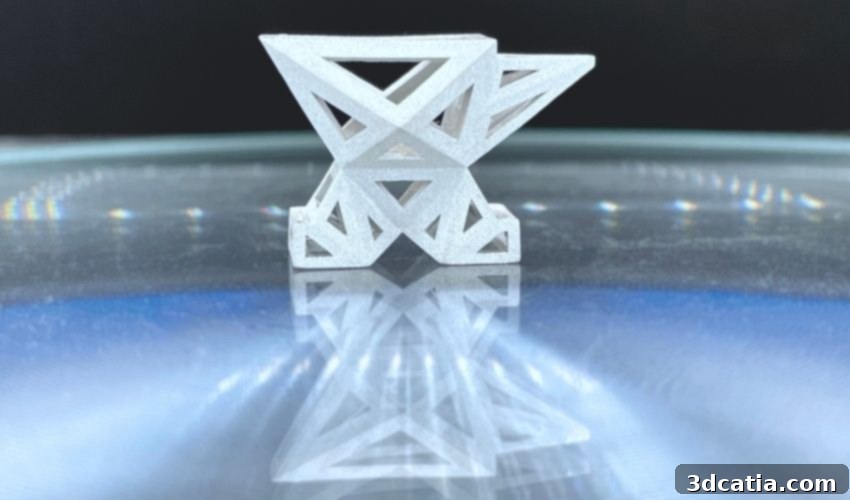
In a significant leap forward for sustainable space exploration, Incus, an innovative Austrian provider specializing in lithography-based Additive Manufacturing (AM) solutions, has officially announced a pivotal partnership. This collaborative venture brings together Incus with the esteemed European Space Agency (ESA), OHB System AG, and Lithoz GmbH. The joint project is set to leverage Incus’ proprietary Lithography-based Metal Manufacturing (LMM) process to conduct critical tests on 3D printing in a micro-gravity environment. At the core of this ambitious undertaking is the exploration of whether this advanced technology can enable the creation of essential materials and components directly at a future lunar base, utilizing readily available resources such as scrap metal or existing surface materials. Ultimately, the profound insights garnered from this research are anticipated to dramatically accelerate the realization of future lunar settlements by effectively addressing the monumental challenges associated with intricate supply chains and the constant acquisition of vital supplies from Earth. This initiative represents a cornerstone in the journey toward true self-sufficiency in space.
The Imperative of Sustainability for Future Space Missions
The concept of sustainability has emerged as a paramount concern for numerous space agencies across the globe, particularly as they envision and plan for the eventual establishment of permanent settlements on the Moon and, subsequently, other celestial bodies. The ability to autonomously reuse parts, components, and even waste materials that already exist on the lunar surface would fundamentally reduce a future station’s profound reliance on Earth. This self-sufficiency is not merely a convenience; it is a critical prerequisite for the success and longevity of any long-duration mission beyond Earth’s orbit. Maintaining a continuous and reliable supply of goods – encompassing everything from basic provisions and scientific research materials to specialized equipment and crucial spare parts – represents one of the most formidable logistical and financial challenges in the management of an extraterrestrial station. Without the capacity for on-site production, missions become exceedingly vulnerable to launch delays, astronomical transportation costs, and the inherent risks of deep-space travel. Thanks to the advanced capabilities of LMM processes, it becomes genuinely possible to manufacture these indispensable items and spare parts directly on board a lunar habitat or outpost, on demand, thereby fostering an unprecedented level of operational independence and resilience.
This shift from a “supply from Earth” model to an “in-situ manufacturing” paradigm is not just about convenience; it’s about making sustained human presence in space truly feasible. By minimizing the mass that needs to be launched from Earth – where every kilogram costs tens of thousands of dollars – the overall cost and complexity of lunar missions can be drastically reduced. Furthermore, the capacity to repair, replace, or even innovate new tools and structures using local resources empowers astronauts with greater autonomy and flexibility, essential for navigating unforeseen challenges in an unforgiving environment. A key aspect of long-term missions is that they should be truly self-sufficient. This strategy not only addresses the logistical nightmares of transporting everything from Earth but also significantly reduces the environmental footprint associated with space launches. LMM technology thus holds the key to unlocking true operational freedom for lunar explorers, allowing them to adapt, innovate, and thrive rather than merely survive, laying the groundwork for a genuine off-world economy.

Why Incus’ LMM Technology is Uniquely Suited for Space Manufacturing
The selection of LMM technology for this pioneering project is strategically ideal, owing to several distinct advantages that make it exceptionally well-suited for the unique challenges of manufacturing in micro-gravity and the lunar environment. Firstly, LMM boasts the crucial ability to produce high-quality spare parts from recycled metal waste, directly aligning with the project’s goal of resource utilization. Beyond this, in many critical aspects, LMM proves to be significantly less complicated and more robust to operate in micro-gravity conditions compared to alternative metal Additive Manufacturing processes. This fundamental difference stems from LMM’s operational methodology, which elegantly bypasses many of the difficulties inherent in other methods.
Unlike many conventional metal AM techniques that rely on lasers and necessitate the use of fine, gas-atomized metal powders and often complex support structures, LMM employs a stable paste or suspension. The presence of loose, highly reactive metal powders in a micro-gravity environment poses substantial challenges, including issues with containment, potential contamination of equipment and habitats, and the risk of explosion or inhalation, which are major safety concerns for astronauts. The specialized support structures often required by laser-based methods also add complexity to the post-processing phase, demanding additional equipment and manual labor that can be difficult to execute efficiently and safely in space. In contrast, LMM’s use of a paste or suspension effectively eliminates the need for handling loose powder, drastically simplifying the printing process and significantly enhancing operator safety. This characteristic makes it inherently easier and safer to process metal recovered from recycled parts found on the lunar surface, creating a more controlled and predictable manufacturing environment.
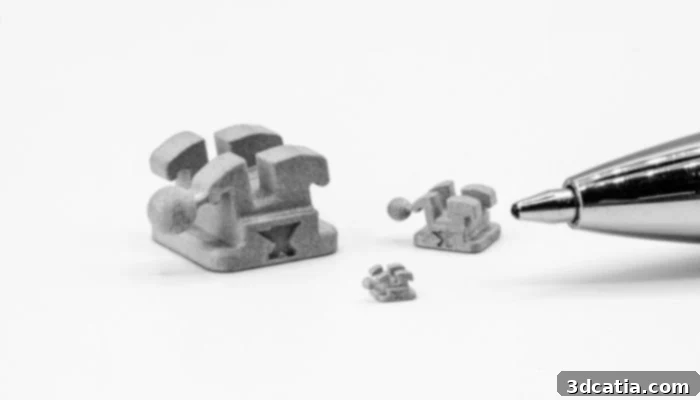
Furthermore, the LMM process inherently minimizes or completely eliminates the need for manual post-processing and reworking of parts, a significant advantage in a space environment where intricate manual labor is constrained by time, resources, and the cumbersome nature of space suits. The controlled and contained nature of the LMM process also contributes to a safer working environment for astronauts, reducing exposure to particulate matter. According to Incus, the technology is also renowned for its capacity to produce parts exhibiting excellent surface aesthetics and mechanical properties highly comparable to those achieved through metal injection molding (MIM). While MIM is frequently the process of choice for high-volume, precision metal parts on Earth, its inherent complexity, reliance on specific molds for each part design, and multi-stage nature make it prohibitively difficult and impractical for use in space. LMM, therefore, offers a viable and superior alternative, combining ease of use with high-quality output, making it an indispensable tool for future off-world manufacturing endeavors. Its ability to create dense, functionally robust parts with minimal post-processing makes it an ideal candidate for critical applications in space.
Project Scope: Testing Feasibility and Overcoming Lunar Challenges
This intensive 18-month project is meticulously designed to rigorously test the true feasibility of processing scrap metals originating from the Moon’s surface and subsequently transforming them into high-quality, functional final products utilizing Incus’ innovative zero-waste LMM process. The research will delve deeply into identifying and mitigating a range of potential limiting factors inherent to the lunar environment. A primary focus will be on the impact of potential contamination of metal powders or pastes with abrasive and pervasive lunar dust. Lunar dust, with its sharp, irregular particles and electrostatic properties, poses significant challenges, from machinery wear and tear to potential health risks for astronauts and interference with sensitive electronics. Understanding how to manage and prevent such contamination is paramount to successful and safe lunar manufacturing operations.
Moreover, a critical aspect of the project involves thoroughly evaluating whether the final 3D printed parts will exhibit the same level of optimization, reliability, and mechanical integrity as components manufactured under controlled conditions on Earth. This requires extensive material characterization and performance testing under simulated lunar conditions, including vacuum, extreme temperature fluctuations, and radiation exposure. The project will address fundamental questions such as: How do the unique properties of lunar-derived metals affect the printing process? What quality control mechanisms are needed to ensure mission-critical components meet stringent space-grade standards? And how can the LMM process be optimized to produce durable parts that can withstand the harsh realities of space for extended periods? These investigations are crucial for validating LMM as a reliable and indispensable technology for lunar resource utilization and sustainable space habitation, ultimately proving its readiness for practical application in future missions.
Driving Towards Sustainable Lunar Settlements: Expert Insights
Antonella Sgambati, a distinguished Human Spaceflight System Engineer at OHB System AG, powerfully summarized the long-term vision and profound implications of this project: “The possibility of reducing our dependency on Earth by utilizing existing lunar surface materials and recycling lunar base scrap metal represents the only viable solution to guarantee a sustainable settlement. This project and this novel LMM process will be important steps in making such a settlement a reality due to the fact that this technology could have a chance to operate successfully in space.” This statement underscores the strategic importance of in-situ resource utilization (ISRU) and advanced manufacturing techniques like LMM. It highlights that true self-sufficiency, rather than continuous resupply, is the ultimate goal for any enduring human presence beyond Earth. By enabling astronauts to ‘live off the land’ and recycle their own waste, the project is directly contributing to a circular economy in space, drastically cutting down the costs, risks, and logistical complexities associated with traditional space missions. This partnership is not just about printing parts; it’s about fundamentally altering the paradigm of space exploration from transient visits to permanent habitation. Such capabilities are essential for pushing the boundaries of human presence further into the solar system. You can find out more about the project in Incus’ press release HERE.
The Future of Off-World Manufacturing and Exploration
The collaborative efforts of Incus, ESA, OHB System AG, and Lithoz GmbH mark a pivotal moment in the history of space exploration and manufacturing. Should the LMM process prove successful in processing lunar materials and creating high-quality components in micro-gravity, its implications extend far beyond just lunar settlements. This technology could serve as a blueprint for establishing similar manufacturing capabilities on Mars, during asteroid mining operations, or even for repairing spacecraft in deep space. The ability to locally source and produce essential items transforms space missions from costly, high-risk endeavors into more self-reliant, sustainable, and expandable enterprises, ultimately making interstellar travel a more tangible reality.
Imagine a future where astronauts can print custom tools, repair habitat modules, or even construct entire new structures using resources already available at their destination. This drastically reduces the need to launch every single item from Earth, liberating missions from the constraints of payload capacity and launch windows. Furthermore, by fostering a circular economy on the Moon, the project champions environmental stewardship even beyond our planet, minimizing waste and maximizing resource efficiency. This initiative is a testament to the ingenuity of modern additive manufacturing and its potential to revolutionize how humanity explores, lives, and works in space, bringing us closer to a truly multi-planetary future where human ingenuity overcomes geographical and cosmic distances with unprecedented autonomy and efficiency.
What do you think about this groundbreaking joint project with Incus and the European Space Agency (ESA)? We invite you to share your thoughts and perspectives in a comment below or join the conversation on our Facebook and Twitter pages. Don’t forget to sign up for our free weekly newsletter, to receive all the latest news and innovations in 3D printing delivered straight to your inbox!
*All Image Credits: Incus