Revolutionizing Construction: QOROX and the Future of 3D Printing Technology
The global construction industry is at the precipice of a monumental transformation, largely driven by the rapid advancements in additive manufacturing, more commonly known as 3D printing. This innovative technology is reshaping how we conceive, design, and build structures, moving far beyond traditional methods that have dominated for centuries. From intricate architectural designs for large-scale residential homes and commercial centers to specialized applications like marine vessels and public infrastructure, 3D printing offers a compelling array of solutions to pressing industry challenges. Escalating material costs, persistent labor shortages, and an ever-increasing global demand for new construction are just a few of the hurdles that conventional building practices struggle to overcome. In this dynamic landscape, companies like QOROX are emerging as pioneers, leveraging the full potential of 3D printing to deliver groundbreaking projects and redefine what’s possible in construction. Their commitment to innovation and sustainability positions them at the forefront of this technological revolution. To gain deeper insights into the transformative impact of this technology, we had the privilege of speaking with Wafaey Swelim, the visionary director of QOROX, who shared his profound expertise and practical experiences with 3D-printed structures.
QOROX: Pioneering Sustainable Additive Manufacturing in Construction
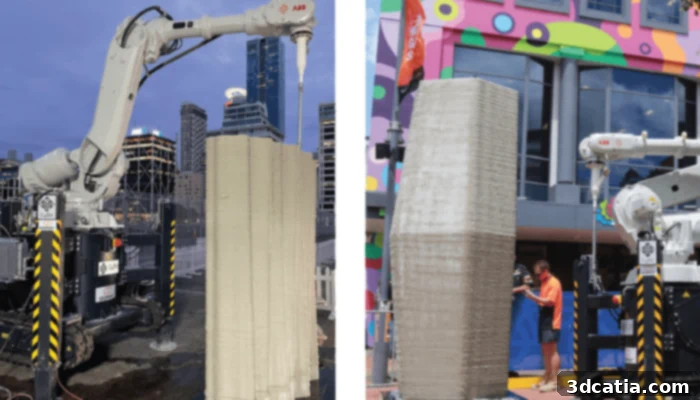
QOROX stands as a beacon of innovation in the construction sector. As a dedicated construction printing company, our core mission revolves around fundamentally transforming traditional building methodologies. We achieve this by harnessing the power of additive manufacturing to print diverse structures, utilizing cutting-edge, low-carbon inks. This commitment to sustainable practices isn’t merely a trend for us; it’s ingrained in our operational philosophy, ensuring that every project we undertake not only meets but often exceeds the demands of modern, eco-conscious construction. By integrating advanced 3D printing technology with environmentally friendly materials, QOROX is setting new benchmarks for efficiency, cost-effectiveness, and ecological responsibility in the industry. Our vision extends beyond mere construction; it encompasses creating resilient, sustainable, and innovative living and working spaces for the future.
The Genesis of a Revolution: Why QOROX Embraced 3D Printing
My journey towards embracing 3D printing in construction was catalyzed by years of observing persistent and pervasive issues across global construction sites. Time and again, I encountered the same critical challenges: a severe and worsening labor shortage, relentlessly rising material costs, and an ever-growing demand for new housing and infrastructure that traditional methods simply cannot meet. These recurring problems highlighted a fundamental flaw in the existing construction paradigm. It became abundantly clear that to make homes and buildings more affordable, accessible, and adaptable, a radical shift in approach was imperative. We needed to drastically improve productivity and operational efficiency. Simultaneously, there was an undeniable need to adopt more sustainable practices, not just as an option, but as a necessity, given the undeniable impact of climate change. 3D printing emerged as the most viable, transformative solution capable of addressing these multi-faceted challenges head-on. It promised a future where construction is faster, more cost-effective, more adaptable, and significantly more sustainable, directly contributing to solutions for a global housing crisis and infrastructure deficit while mitigating environmental impact.
Unleashing Versatility: The Diverse World of 3D Printed Structures by QOROX
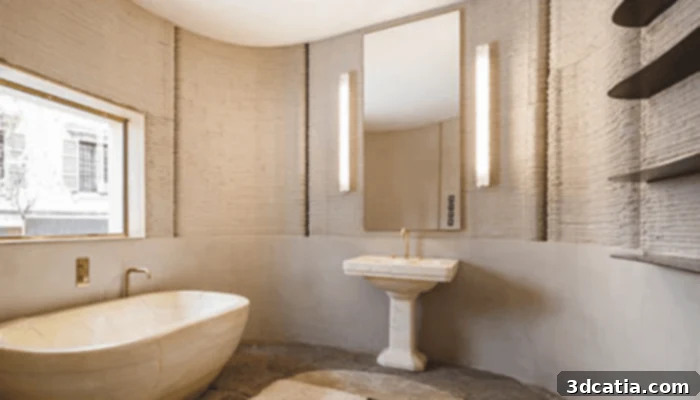
The adaptability of 3D printing in construction is truly remarkable, and at QOROX, we have extensively explored its potential across a wide spectrum of projects. Our expertise extends to creating a diverse array of structures that push the boundaries of conventional building. We have successfully utilized 3D printing to construct complete residential homes, offering unparalleled design freedom and rapid build times, alongside innovative commercial buildings that feature unique architectural elements previously deemed too complex or costly. Beyond traditional edifices, our work encompasses intricate landscaping features, where customized designs can be brought to life with precision and efficiency. We’ve even ventured into specialized community projects, such as designing and constructing durable skate parks that offer complex, organic shapes not easily achievable with standard concrete methods. Furthermore, our commitment to environmental solutions led us to utilize 3D printing for the creation of artificial coral reefs, aiding marine ecosystem restoration. The precision and speed of additive manufacturing allow for the creation of structures that can quickly integrate into existing ecosystems. Our portfolio also includes a robust pipeline of critical infrastructure projects. This includes innovative solutions for traffic management systems, advanced stormwater harvesting systems designed for efficiency and environmental benefit, proactive flood prevention structures to protect communities, and resilient seawall constructions that offer superior erosion control and coastal protection. These projects underscore the immense versatility and practical applicability of 3D printing, demonstrating its capacity to not only build homes and commercial spaces but also to address complex urban and environmental challenges with unprecedented efficiency and design flexibility.
Innovative Materials and Strategic Partnerships: The QOROX Technological Edge
At the core of QOROX’s sustainable construction model lies our proprietary printing material, known as Q-Ink. This advanced “Open Think ink” is meticulously formulated, utilizing approximately 80% local resources. This not only supports local economies but also significantly reduces the environmental footprint associated with material transportation. More impressively, Q-Ink achieves a remarkable 30% reduction in CO2 emissions compared to traditional cement, making it a cornerstone of our commitment to eco-friendly building practices. This material is designed not just for sustainability but also for superior performance, offering durability and versatility required for diverse structural applications. Complementing our material innovation, strategic partnerships are crucial to our operational success. In 2019, we forged a pivotal partnership with CyBe, a globally recognized leader in 3D concrete printing technology. This collaboration led to QOROX becoming CyBe’s exclusive regional partner for Australia and New Zealand. This alliance grants us access to CyBe’s state-of-the-art printer technology and deep expertise, enabling us to implement the most advanced additive manufacturing processes in our projects. This combination of innovative, sustainable materials and robust, cutting-edge printing technology, bolstered by strategic partnerships, positions QOROX at the vanguard of the modern construction industry, capable of delivering projects with exceptional efficiency, sustainability, and quality.
Landmark Projects: Showcasing the Power of 3D Printing in Action
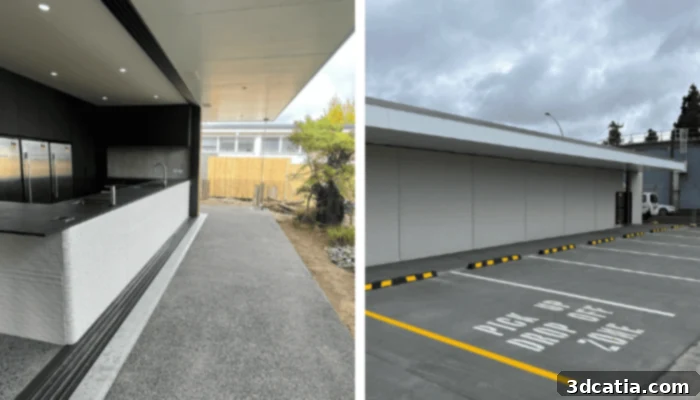
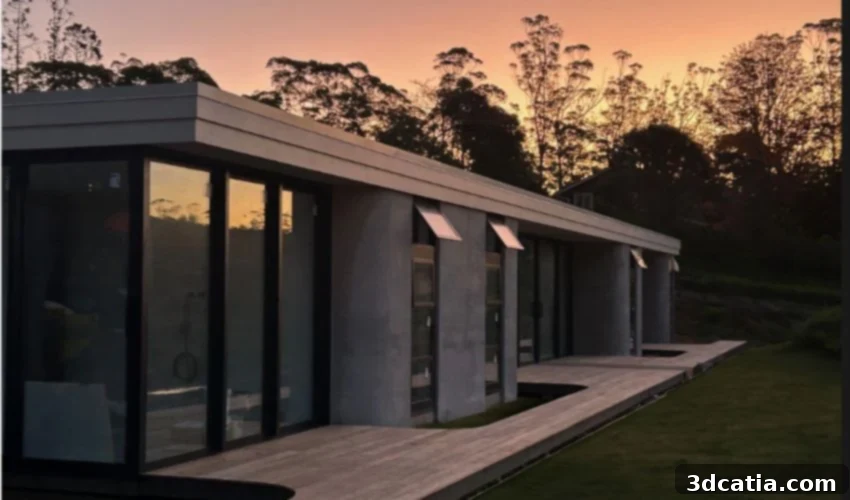
QOROX takes immense pride in a portfolio of completed projects that not only demonstrate the practical application of 3D printing but also push the boundaries of what’s achievable in construction. Among our most significant accomplishments is the construction of the world’s first passive solar house featuring 3D printed walls. This groundbreaking residential project exemplifies energy efficiency and sustainable living, showcasing how additive manufacturing can contribute to highly performant, environmentally conscious architecture. The precise layering capabilities of 3D printing allowed for optimized thermal insulation and integrated design elements crucial for passive solar performance. We also completed one of the largest 3D printed houses to date, covering an impressive area of 252 square meters. This project stands as a testament to the scalability of our technology, proving that 3D printing is not just for small-scale prototypes but can deliver substantial, fully functional living spaces rapidly and efficiently. Beyond residential, our innovation extends to commercial sectors, including the successful design and construction of a commercial building intended for a daycare center, demonstrating the technology’s suitability for public and community-focused infrastructure. Furthermore, our collaboration with local authorities, such as the Auckland City Council, has yielded unique community assets like a state-of-the-art skate park, celebrated for its intricate, custom-designed features and durability. In a pioneering move for environmental conservation, we have also actively participated in creating artificial coral reefs, contributing to marine habitat restoration efforts through precise and complex 3D printed structures. These diverse initiatives represent just a few examples of QOROX’s continuous commitment to advancing 3D printing technology and demonstrating its transformative potential across various facets of the built environment, delivering both innovation and tangible benefits to communities and ecosystems.
The Future is Automated: Wafaey Swelim’s Vision for 3D Printing in Construction
Looking ahead, I am profoundly confident that 3D printers will cease to be niche tools and will instead become fully integrated, indispensable components of every construction team. They are destined to evolve into an essential piece of equipment on job sites, standing alongside traditional machinery like excavators, cranes, and bulldozers. This widespread adoption will mark a significant paradigm shift, fundamentally enhancing operational capabilities across the industry. The seamless integration of 3D printers will dramatically contribute to improving overall productivity, enabling faster project completion times that can address urgent housing and infrastructure demands more effectively. Furthermore, this technological advancement will play a crucial role in better controlling and significantly reducing associated construction costs. By automating repetitive tasks, optimizing material usage, and minimizing human error, 3D printing offers a path to more predictable budgets and higher returns on investment. This vision points towards a future where construction sites are more efficient, safer, and capable of delivering higher quality structures at an unprecedented pace, truly revolutionizing how we build and interact with our built environment.
A Call to Action: Redefining Construction for a Sustainable Tomorrow
The existing operational model within the global construction industry is, unequivocally, unsustainable in the long term. The persistent reliance on outdated methods, coupled with escalating challenges like resource depletion, environmental impact, and labor shortages, paints a clear picture: continuing to apply the same solutions and expecting a different, improved result is simply counterproductive. It is a formula for stagnation, not progress. I firmly believe that 3D printing represents far more than just a technological upgrade; it is a profound revolution poised to fundamentally transform our entire approach to construction. This innovative technology holds the key to greater automation of processes, significantly alleviating the pervasive pressures that plague our sector, from skilled labor scarcity to inefficient material use and lengthy project timelines. By embracing additive manufacturing, we can move beyond incremental improvements to a truly disruptive transformation. This development promises to fundamentally reshape the way we plan, design, and build structures, paving the way for exponentially more efficient, more sustainable, and radically innovative methods that are desperately needed to meet the demands of the 21st century and beyond. The time for change is not just opportune; it is imperative.