
NOVUM Project: Pioneering Sustainable 3D Printing with Cellulose for a Circular Economy
The NOVUM project stands at the forefront of sustainable innovation, dedicated to developing a groundbreaking 3D printing system that utilizes cellulose as its primary raw material. This ambitious initiative is spearheaded by a consortium of 10 distinguished European partners, uniting expertise from various sectors to address critical environmental and industrial challenges. Cellulose, a naturally abundant biopolymer that forms the structural integrity of plant cell walls – most notably wood – offers a wealth of advantages. Its widespread availability makes it an exceptionally promising alternative to traditional, often resource-intensive, materials.
The concept of leveraging cellulose to produce diverse components is inherently appealing. However, conventional manufacturing methods, which typically involve creating intricate molds, present significant hurdles. These processes are characterized by multiple complex steps, demanding substantial investments in time and energy. Furthermore, they necessitate a higher demand for manual labor and generate considerable waste, leading to a detrimental environmental footprint. This is precisely where the NOVUM project introduces a transformative solution: additive manufacturing. By harnessing the power of 3D printing, the consortium aims to simplify the production of a vast array of components, completely eliminating the need for molds. This shift not only streamlines the manufacturing process but also drastically reduces material waste and energy consumption. While the potential applications are broad, the NOVUM consortium is particularly focused on developing sustainable solutions for electrical insulation components, a sector where the unique properties of cellulose can be optimally exploited.
The Global Imperative: Embracing Sustainability and the Circular Economy
In an era marked by growing environmental consciousness, manufacturers worldwide are increasingly recognizing the finite nature of our planet’s resources. This realization is driving a decisive shift towards alternative solutions that can effectively replace materials derived from fossil fuels. This trend is a microcosm of a broader, logical development towards a circular economy – a paradigm where the core philosophy revolves around minimizing waste and maximizing resource utilization. The fundamental idea is to tirelessly reuse, recycle, or upcycle waste materials, transforming them into valuable new products. This approach finds a powerful ally in additive manufacturing, a technology inherently designed for efficiency. By precisely depositing material layer by layer, 3D printing ensures that only the essential amount of material is used, thereby minimizing waste and optimizing resource allocation for parts of varying complexity.
Within this burgeoning framework of sustainability, cellulose emerges as a material with unparalleled potential. As a natural, durable, non-toxic, and incredibly abundant resource, it is perfectly positioned to play a pivotal role. Indeed, cellulose is not just present; it is the most prevalent organic matter on Earth, constituting over 50% of the planet’s total biomass. Its renewable nature and biodegradable characteristics make it an ideal candidate for environmentally responsible manufacturing. However, despite these compelling attributes, the widespread adoption of cellulose as a 3D printing material has historically faced considerable challenges. The primary question that the NOVUM project seeks to answer is: “Why has this incredibly abundant resource not been fully utilized in additive manufacturing, and what technical and processing hurdles need to be overcome to unlock its full potential?” Addressing these challenges is central to the project’s mission, paving the way for a truly green industrial revolution.
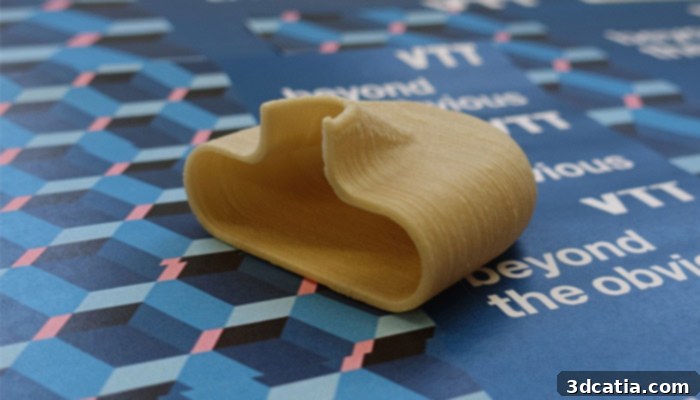
Prototype of a 3D printed electrical insulation component from cellulose (photo credits: NOVUM)
NOVUM’s Vision: Driving Innovation Across Key Industries
It is precisely within this vital context of global sustainability and technological advancement that the NOVUM project was conceived and launched. As a prestigious initiative funded by the European Union, NOVUM embodies the collaborative spirit and innovative drive necessary to tackle complex industrial challenges. The consortium behind NOVUM is robust and diverse, comprising eight dynamic companies of varying sizes alongside two dedicated research partners. This unique blend of industrial expertise and academic rigor creates a powerful synergy, enabling comprehensive research and development efforts.
Together, these partners are meticulously working to develop a commercially viable 3D printable solution derived from cellulose, specifically engineered to design and produce high-performance components for the maritime, automotive, and electrical insulation industries. The potential impact on these sectors is profound. In the maritime industry, for instance, NOVUM’s technology promises to revolutionize the production of on-demand exterior decorative elements for cruise ships. This capability represents an entirely new frontier, offering unprecedented customization, rapid prototyping, and localized manufacturing, which can significantly reduce logistical complexities and costs. For the automotive sector, the primary potential lies in facilitating a critical transition: replacing conventional materials of fossil origin with sustainable, biologically derived alternatives. This shift not only contributes significantly to reducing the carbon footprint of vehicles but also enhances their overall sustainability, aligning with stringent environmental regulations and consumer demand for greener products. Furthermore, in the electrical insulation industry, cellulose’s inherent non-conductive properties make it an ideal candidate for producing robust and eco-friendly insulating components, further underscoring NOVUM’s commitment to industrial innovation and environmental stewardship.
Developing Advanced Cellulose-Based Materials for Additive Manufacturing
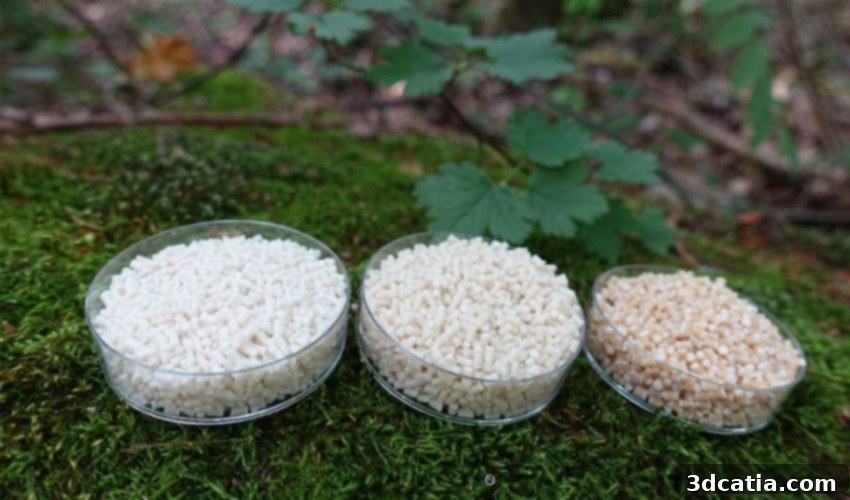
A cornerstone of the NOVUM project’s success lies in its sophisticated material development. The consortium has achieved a significant breakthrough by formulating thermoplastic materials compatible with widely used FDM (Fused Deposition Modeling) machines. This achievement involved extensive research and experimentation with cellulose derivatives, cellulose powder, and carefully selected plasticizers of biological origin. The integration of these components was crucial for transforming raw cellulose into a material suitable for extrusion-based 3D printing. FDM, known for its versatility and cost-effectiveness, relies on heating and extruding thermoplastic filaments, making the development of a cellulose-based thermoplastic a vital step towards broader adoption.
The Science Behind NOVUM’s Breakthrough Material
According to the NOVUM partners, the newly developed material boasts an impressive cellulose content of 60%. This figure is notably higher than what is typically found in similar bio-based composites currently available on the market, signifying a major leap in material sustainability and performance. The high cellulose concentration not only enhances the eco-friendliness of the material but also contributes to its superior mechanical properties. The consortium reports that their cellulose-based filament exhibits excellent characteristics in terms of strength, weight, and surface finish. Such properties are critical for manufacturing components that require structural integrity without adding unnecessary mass, while also ensuring a smooth and aesthetically pleasing appearance. Furthermore, the material is described as “very easily printable,” indicating that the formulation has successfully addressed common challenges associated with bio-based filaments, such as warping, clogging, and inconsistent extrusion.
A key advantage highlighted by the NOVUM consortium is the flexibility of their material formulation. They assert that the composition can be modified to meet a diverse range of specific application needs. This adaptability means that the material can be tailored for various performance requirements, whether it’s increased rigidity for structural parts, enhanced flexibility for compliant mechanisms, or specific electrical insulation properties. This ability to diversify applications by adjusting the formulation ensures that the NOVUM material is not a one-size-fits-all solution but rather a versatile platform for sustainable manufacturing across multiple industrial sectors, further broadening its market potential and environmental impact.
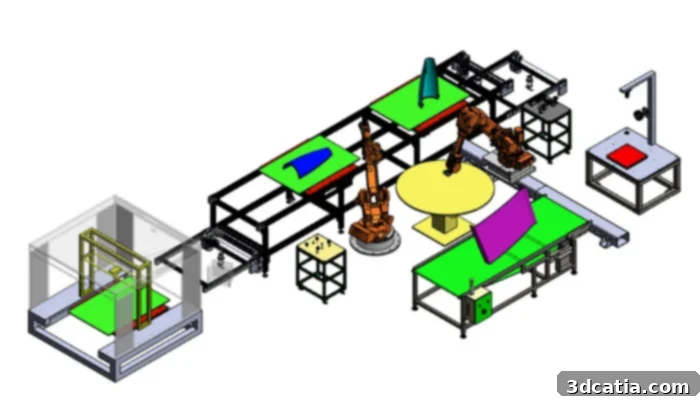
The production line imagined by the consortium (photo credits: NOVUM)
The Future of Manufacturing: An Automated Pilot Line and Tangible Benefits
The ultimate ambition of the NOVUM project extends beyond material development; it aims to establish a fully functional, automated pilot manufacturing line. This state-of-the-art facility will serve as a demonstration of the integrated system, capable of designing and producing a variety of parts with unprecedented efficiency. The automation of the entire production chain is a critical element, ensuring consistent quality, scalability, and reduced human intervention. This pilot line represents a blueprint for future industrial adoption, showcasing how cellulose-based 3D printing can be seamlessly integrated into modern manufacturing processes. The consortium projects that this innovative production line could yield substantial benefits across several key performance indicators.
Specifically, NOVUM anticipates a remarkable reduction of working time by 40%, significantly boosting productivity and optimizing labor resources. This efficiency gain translates directly into economic advantages, with projected cost reductions of up to 40%. Such substantial savings would make cellulose-based 3D printed components highly competitive in various markets. Perhaps even more impactful from an environmental perspective, the project forecasts a drastic reduction in waste production by an impressive 60%. This achievement directly aligns with the principles of a circular economy, demonstrating a tangible path towards zero-waste manufacturing. While the project was originally scheduled to finish in March 2022, the foundational work laid by the consortium continues to inspire and inform ongoing research and industrial application. The hope was, and remains, that by demonstrating a viable and scalable solution, the partners would pave the way for a new era of sustainable additive manufacturing, transforming how industries approach material selection and production. The insights and technologies developed by NOVUM are poised to have a lasting impact on industrial sustainability and the global shift towards greener manufacturing practices.
Conclusion: Paving the Way for a Greener Industrial Future
The NOVUM project represents a pivotal step in the evolution of sustainable manufacturing. By successfully developing a 3D printable, cellulose-based material and demonstrating an efficient automated production line, the consortium has not only addressed critical environmental concerns but also opened new avenues for industrial innovation. The transition away from fossil-based resources towards renewable biopolymers like cellulose is not merely an option but a necessity for building a resilient and sustainable future. NOVUM’s work exemplifies how collaborative research and development can overcome complex technical challenges to deliver tangible economic and ecological benefits across diverse sectors, from maritime to automotive and electrical insulation. The project’s commitment to reducing waste, energy consumption, and production costs while enhancing material properties underscores its profound potential to reshape the manufacturing landscape.
What are your thoughts on the groundbreaking NOVUM project and its potential to revolutionize sustainable manufacturing? Let us know in a comment below or join the conversation on our Facebook, Twitter and LinkedIn pages! Don’t miss out on the latest advancements in additive manufacturing – sign up for our free weekly Newsletter here and get the freshest 3D printing news delivered straight to your inbox!