
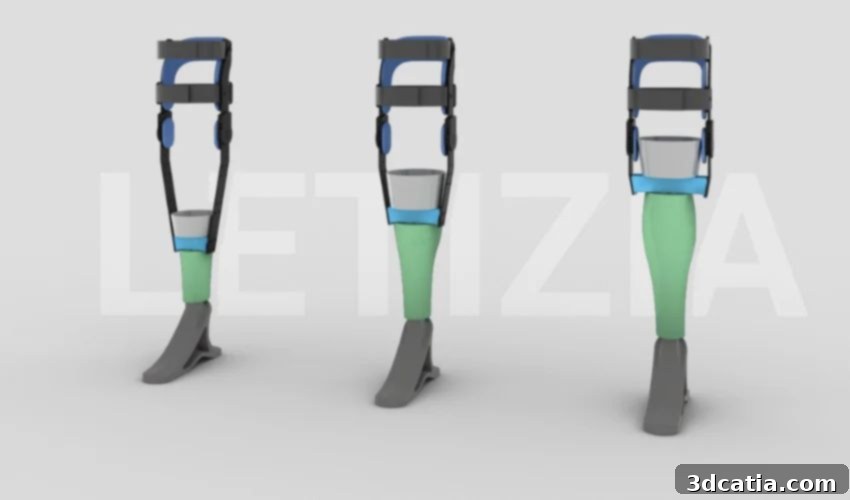
Revolutionizing Humanitarian Aid: Isinnova’s 3D Printed Prosthetics for Ukrainian War Victims
The ongoing conflict in Ukraine has left an indelible mark on countless lives, with the grim reality of war manifesting in a devastating increase in civilian and military casualties. Beyond the tragic loss of life, a significant number of individuals have sustained severe injuries, frequently necessitating limb amputations. In the face of such profound humanitarian challenges, innovative solutions are more critical than ever. Additive manufacturing, commonly known as 3D printing, is emerging as a powerful tool to address these urgent needs, particularly in providing accessible and affordable prosthetics. An exemplary initiative comes from Isinnova, an Italian company renowned for its agility and commitment to social responsibility, which is once again stepping up to offer crucial aid to those affected by the war in Ukraine.
Addressing a Critical Need: The Humanitarian Crisis in Ukraine
The conflict has created a complex and rapidly evolving humanitarian crisis. Hospitals and medical facilities in Ukraine are overwhelmed, struggling to cope with the sheer volume of trauma cases, many of which result in severe injuries, including the loss of limbs. The physical and psychological toll on individuals who have undergone amputations is immense, demanding long-term support and access to appropriate prosthetic devices. Traditional prosthetic manufacturing methods are often slow, costly, and lack the flexibility required to meet such widespread and urgent demand. Furthermore, the economic strain on war-torn regions makes high-cost medical equipment largely unattainable for the majority of affected individuals. This critical gap in affordable and timely prosthetic care highlights the urgent need for innovative, scalable, and cost-effective solutions that can bring relief and restore hope.
Isinnova: A Legacy of Innovation in Times of Crisis
Isinnova, based in Brescia, Lombardy, Italy, is no stranger to responding swiftly to global emergencies with inventive solutions. The company gained international recognition during the Covid-19 pandemic when it mobilized its 3D printing capabilities to produce vital valves for Intensive Care Unit (ICU) patients, effectively alleviating critical shortages in hospitals. This demonstrated not only Isinnova’s technical prowess in additive manufacturing but also its profound humanitarian ethos and its ability to act decisively in times of great need. Building on this legacy of rapid, impactful innovation, Isinnova, under the leadership of CEO Cristian Fracassi, has once again turned its expertise towards a pressing humanitarian crisis: providing life-changing prosthetics to Ukrainian war victims.
The current initiative, dubbed “Project Letizia,” was launched in direct response to an urgent appeal from an NGO comprised of doctors working on the ground in Ukraine. This organization sought assistance for over 3,000 people who had tragically lost limbs due to the relentless conflict. The call for help underscored the profound and widespread need for prosthetic limbs, particularly for individuals who had suffered amputations as a direct result of the war’s violence. While other admirable projects have emerged to support Ukraine, such as Unlimited Tomorrow’s provision of prosthetic arms, Isinnova’s “Letizia” project focuses specifically on manufacturing 3D printed leg prostheses, addressing a crucial and widespread requirement for mobility and independence.
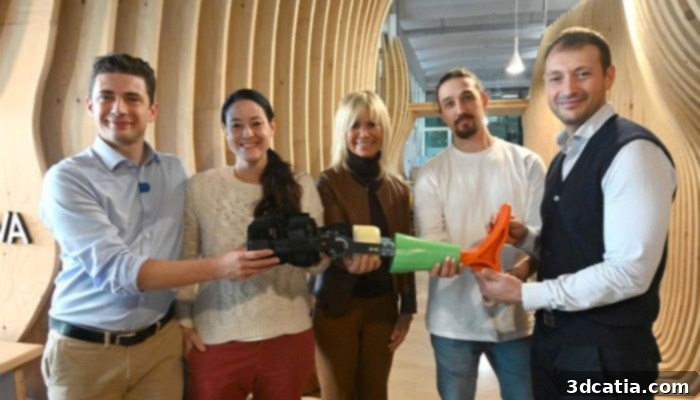
Presentation of the “Letizia” 3D printed prosthesis, a humanitarian project by Isinnova. (Photo credit: Gabriele Strada, Giornale di Brescia)
Project Letizia: Harnessing 3D Printing for Accessible Prosthetics
The choice of 3D printing for the production of the “Letizia” prostheses was a deliberate and strategic one, driven by several compelling advantages that additive manufacturing offers over traditional production methods. These benefits are particularly pertinent in a humanitarian context where speed, cost-effectiveness, and customization are paramount, enabling a more rapid and personalized response to widespread trauma and injury.
Why 3D Printing? Cost Reduction, Customization, and Enhanced Comfort
One of the most significant advantages of employing 3D printing in prosthetic production is the drastic reduction in cost. Traditionally manufactured prostheses can command prices exceeding €5,000, placing them far out of reach for many individuals, especially in economically distressed regions or those affected by conflict. Thanks to Isinnova’s innovative use of 3D printing technologies and optimized material usage, the cost of a “Letizia” prosthesis has been dramatically cut to approximately €500. This remarkable ten-fold reduction makes high-quality, functional prostheses significantly more accessible to a wider population, democratizing access to essential medical devices and offering a beacon of hope to those who have lost limbs and face financial hardship.
Beyond affordability, 3D printing excels in its unparalleled capacity for customization. Each individual’s amputation is unique, requiring a prosthesis that is precisely tailored to their specific anatomy, residual limb, and lifestyle needs for optimal fit, function, and comfort. Traditional methods often involve complex and time-consuming molding processes that are difficult to scale. In contrast, 3D printing allows for rapid iteration and personalization of the design based on digital scans and patient data. The “Letizia” prostheses can be precisely adapted to the patient’s measurements, ensuring a snug and comfortable fit that minimizes discomfort, prevents skin irritation, and maximizes mobility and functional independence. Furthermore, the design incorporates the option for a specialized aesthetic cover. This cover not only improves the visual appearance of the prosthesis, helping patients feel more confident, but also serves practical purposes: it protects the internal components from environmental factors like dust and damage, enhances hygiene, and, crucially, increases the patient’s overall comfort by facilitating easier adaptation to the device. This level of personalized care and attention to detail is often cost-prohibitive with conventional manufacturing techniques.
Open-Source Innovation: Empowering Global Accessibility and Adaptation
Adding another layer of revolutionary impact, the “Letizia” project is entirely “open source.” This strategic decision means that the design files, detailed specifications, and comprehensive instructions for manufacturing these prostheses are freely available online. The open-source model fosters a collaborative and decentralized approach to humanitarian aid, allowing anyone, anywhere in the world, with access to 3D printing technology, to download and utilize these files. This is particularly transformative for regions with limited resources, underdeveloped medical infrastructure, or those isolated by conflict, where traditional supply chains are often disrupted or non-existent. The ability to locally produce essential medical devices empowers communities and significantly reduces dependency on external aid.
The open-source nature also provides remarkable flexibility in production. Depending on the specific level of amputation and the individual needs of the patient, users can download the relevant reference file and simply stop the printing process once the required height or configuration for the prosthetic limb is achieved. This adaptability allows for a range of models to be produced quickly and efficiently, catering to diverse patient requirements and different types of amputations without needing to develop entirely new designs for each scenario. Isinnova has designed the “Letizia” leg prosthesis to be remarkably versatile and robust, adaptable to various common amputation levels. This includes trans-femoral amputations (above the knee), knee disarticulations (through the knee joint), trans-tibial amputations (below the knee), and foot amputations. This broad adaptability ensures that a single core design can be modified to assist a significant portion of individuals requiring lower limb prosthetics, simplifying distribution and manufacturing efforts in critical situations. The open-source model not only promotes widespread adoption but also actively encourages further innovation and improvement from the global 3D printing community, potentially leading to even more advanced and specialized versions of the prosthesis in the future, driven by collective intelligence.
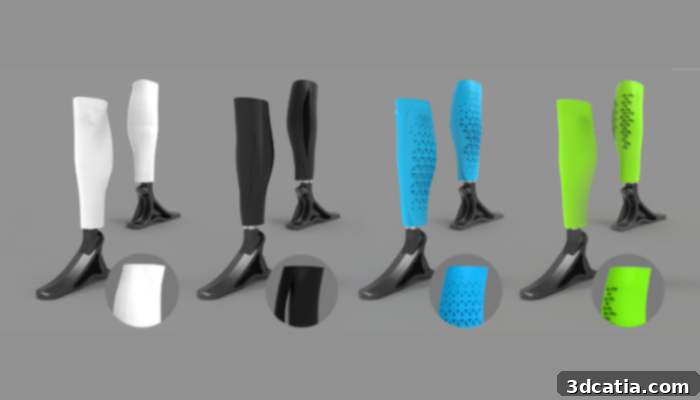
3D modeling demonstrates the customization capabilities of the “Letizia” prosthesis. (Photo credit: Isinnova)
To date, an impressive 101 leg prostheses have already been successfully donated and distributed, offering tangible relief and renewed mobility to recipients in Ukraine. These prostheses are thoughtfully composed of different materials, each chosen for optimal performance, durability, and patient comfort. The foot component is crafted from resilient polyurethane, providing necessary flexibility, shock absorption, and ground contact stability. The internal frame, responsible for structural integrity and supporting the patient’s weight, is made from lightweight yet strong aluminum, ensuring robustness without unnecessary bulk. The external covering, which contributes to both aesthetics and protection of the internal mechanisms, is produced using 3D printed plastic, allowing for complex geometries and personalized finishes that can be easily cleaned and maintained. This multi-material approach ensures a sophisticated balance of strength, comfort, and affordability, making the “Letizia” prosthesis a truly comprehensive solution.
The Heart Behind the Name: The Story of Letizia
The “Letizia” project carries a name imbued with deep personal significance and empathy, reflecting Isinnova’s human-centered approach to innovation. The project is named after Letizia Bonomi, a courageous young woman from Lumezzane who, as a child, tragically lost a leg. Her invaluable personal experience and insights were instrumental in the design process of the prosthesis. Letizia Bonomi actively collaborated with Isinnova’s engineers and designers, providing crucial feedback and advice on how to make the prosthesis more functional, comfortable, and intuitive for users. Her lived experience ensured that the design was not merely technically proficient but also deeply empathetic to the real-world challenges and needs of individuals navigating life with an amputation, making the “Letizia” truly user-centric.
Furthermore, the name “Letizia” holds an additional profound personal connection for Cristian Fracassi, Isinnova’s visionary CEO, as it is also the name of his mother. This echoes a previous impactful humanitarian project by Isinnova during the initial phase of the Covid-19 pandemic, where the rapidly 3D printed ventilator valve that saved countless lives was named “Charlotte,” after his wife. These naming conventions beautifully underscore a profound personal commitment from Fracassi and his dedicated team, transforming technological innovation into deeply personal acts of humanitarian aid. It highlights a philosophy where ingenuity is inextricably linked with compassion, creating solutions that not only address immediate needs but also truly resonate with the human spirit, offering dignity and hope. For those interested in delving deeper into this remarkable initiative and the full scope of its impact, more comprehensive information on Project Letizia can be found by clicking HERE.
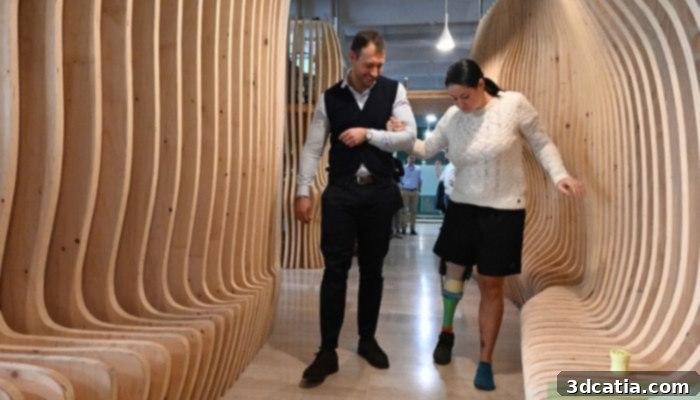
A detailed view of the 3D printed “Letizia” prosthesis by Isinnova. (Photo credit: Gabriele Strada, Giornale di Brescia)
Looking Ahead: The Future of Additive Manufacturing in Humanitarian Efforts
Isinnova’s “Project Letizia” serves as a powerful testament to the transformative potential of additive manufacturing in humanitarian aid. This initiative demonstrates how advanced technologies, when combined with a compassionate and innovative spirit, can provide rapid, affordable, and customizable solutions to some of the world’s most pressing challenges. The open-source model, in particular, holds immense promise for future humanitarian endeavors, enabling localized production, reducing logistical complexities, and empowering communities with the tools and knowledge to address their own needs directly. As global conflicts, natural disasters, and health crises continue to emerge, the inherent agility, cost-effectiveness, and customization capabilities of 3D printing will undoubtedly play an increasingly vital role in delivering essential aid and fostering resilience in affected populations.
The success of the “Letizia” project not only offers immediate, tangible relief to Ukrainian war victims but also sets a significant precedent for how innovation can bridge critical gaps in conventional aid delivery mechanisms. It highlights the indispensable importance of collaborative efforts between non-governmental organizations (NGOs), medical professionals, technology companies, and the global maker community to create sustainable, scalable, and impactful solutions. Isinnova’s unwavering commitment to leveraging cutting-edge technology for social good solidifies its position as a pioneer in this rapidly evolving field, inspiring other organizations to explore and expand the vast potential of 3D printing for humanitarian applications worldwide. The profound impact of initiatives like “Letizia” extends far beyond the physical provision of prostheses; it restores dignity, independence, and hope to individuals who have faced unimaginable hardship, enabling them to rebuild their lives, reintegrate into society, and contribute to their communities once more.
What are your thoughts on the groundbreaking “Letizia” 3D printed prosthetic and the pivotal role of additive manufacturing in humanitarian efforts? We invite you to share your insights in a comment below or join the conversation on our LinkedIn, Facebook, and Twitter pages! Don’t miss out on the latest advancements and news in the 3D printing world—sign up for our free weekly Newsletter here to have updates delivered straight to your inbox. You can also discover more about innovative 3D printing applications by exploring all our videos on our YouTube channel.