
Mastering Metal 3D Printing: A Comprehensive Guide to Laser Powder Bed Fusion (LPBF) and DMLS Technology
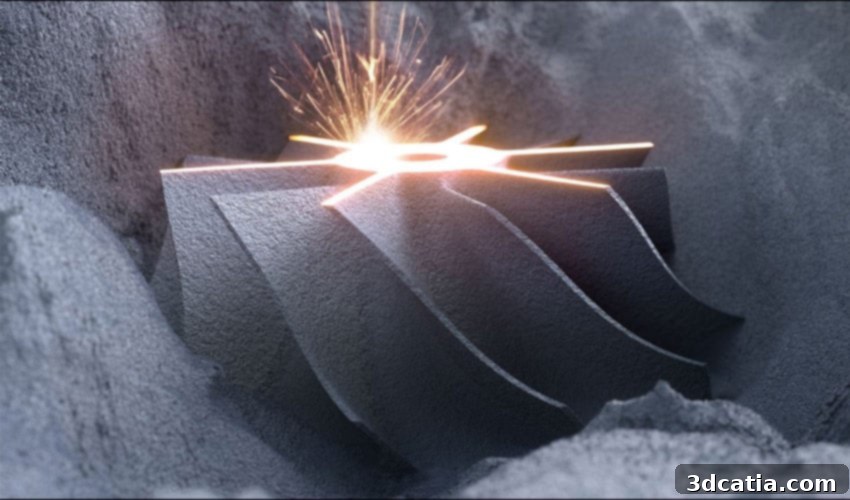
Laser Powder Bed Fusion (LPBF) stands as a foundational technology within the realm of metal additive manufacturing. As its name implies, LPBF utilizes a high-powered laser to selectively melt and fuse metallic powder particles together, layer by layer, within a precisely controlled powder bed. This advanced manufacturing process encompasses several specific techniques, most notably Direct Metal Laser Sintering (DMLS) and Selective Laser Melting (SLM). DMLS, a prominent metal 3D printing method, is particularly celebrated for its unparalleled ability to produce complex, high-performance metal parts with exceptional precision and mechanical integrity. In this in-depth article, we will embark on a comprehensive exploration of Laser Powder Bed Fusion, with a special focus on DMLS. We’ll delve into its fascinating history and developmental milestones, meticulously explain the intricate workings of the process, highlight its significant benefits, detail the essential post-processing steps, and analyze its profound impact on the dynamic 3D printing market and various industrial sectors. Join us as we uncover the transformative potential of this cutting-edge technology.
The Genesis and Evolution of DMLS and Laser Powder Bed Fusion
The roots of Direct Metal Laser Sintering (DMLS) can be traced back to the early 1990s, a pivotal period when the German company EOS GmbH patented the process, marking a significant step forward in metal additive manufacturing. Concurrently, in 1995, the prestigious Fraunhofer Institute for Laser Technology (ILT) introduced the term Selective Laser Melting (SLM) to describe a remarkably similar technology. Although these two terms, DMLS and SLM, emerged from different research and commercial entities, the fundamental principles and operational mechanisms they represent are, in essence, highly alike. To mitigate potential confusion arising from these distinct terminologies, the broader term “Laser Powder Bed Fusion” (LPBF) has gained widespread acceptance as an umbrella term encompassing both DMLS and SLM. This collective designation accurately reflects the core process: the fusion of metal powder using a laser within a carefully controlled powder bed. It’s crucial to clarify that, despite the “sintering” in DMLS, these processes fundamentally involve the complete melting of metal particles, not merely their agglomeration, a distinction that has profound implications for the final part’s properties.
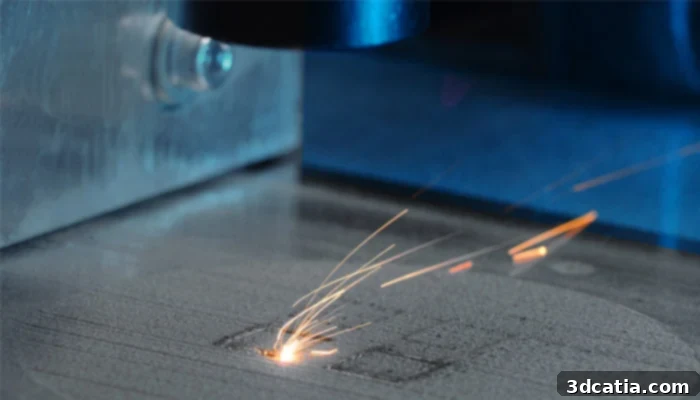
Photo Credits: Fraunhofer ILT, Aachen, Germany
Melting vs. Sintering: A Key Distinction in LPBF
Understanding the difference between melting and sintering is fundamental to appreciating the capabilities of DMLS and SLM. Melting is a phase transition where a material, subjected to sufficient heat, transitions from a solid to a liquid state. In LPBF processes, the high-power laser delivers enough energy to fully melt the metal powder particles. These molten particles then rapidly cool and solidify, creating a dense, fully metallurgical bond. This results in parts with excellent mechanical properties, minimal porosity, and high structural integrity.
Sintering, conversely, involves heating a powdered material to a temperature below its melting point. At this temperature, the particles bond together through atomic diffusion, but they do not fully liquefy. This process leaves voids and porous spaces between the agglomerated particles. To draw a simple analogy, imagine stacking apples: there will always be gaps between the individual fruits. Parts produced purely by sintering, without full melting, exhibit significantly lower density and consequently inferior mechanical strength compared to parts created through full fusion processes like DMLS or SLM. The ability of LPBF to achieve complete melting and subsequent solidification is paramount to producing robust, high-performance metal components that can withstand demanding applications.
The Intricate Process of DMLS 3D Printing
The Direct Metal Laser Sintering (DMLS) process, a quintessential form of Laser Powder Bed Fusion, is a sophisticated, multi-stage operation meticulously controlled to ensure the production of high-quality metal parts. It begins with careful preparation and then proceeds layer by layer, driven by precise laser optics and advanced software. Understanding each step is key to appreciating the technology’s capabilities.
Step-by-Step Breakdown of DMLS Operation:
- 1. Material Preparation: The foundational element of DMLS is the ultrafine metal powder, which is typically spherical and ranges in particle size from 15 to 60 microns. These powders are often specially formulated alloys tailored for specific applications. Before printing commences, the powder is carefully loaded into a hopper within the DMLS machine. The quality, consistency, and flowability of this powder are critical for the success of the printing process.
- 2. Preheating and Inert Atmosphere: To ensure optimal printing conditions and prevent oxidation, the DMLS printer chamber is purged with an inert gas, such as argon or nitrogen, creating a precisely controlled, oxygen-free environment. Simultaneously, the build plate and the powder bed are preheated to a temperature just below the metal’s melting point. This preheating minimizes thermal stresses, reduces warping, and promotes rapid solidification after the laser has passed, leading to denser parts with superior mechanical properties.
- 3. Powder Layer Application: For each successive layer of the part, a thin, uniform film of metal powder, typically between 20 and 60 microns thick, is precisely spread across the build plate. This is achieved using a recoater blade or roller that levels the powder from the material hopper. The consistent thickness and density of this powder layer are vital for accurate part geometry and metallurgical integrity.
- 4. Laser Fusion: This is the core of the LPBF process. A high-power fiber-optic laser, guided by a system of mirrors (galvanometers), accurately scans the cross-section of the part’s current layer according to the 3D CAD model. The laser’s intense energy melts the metal particles along its path, fusing them to the previous layer. The molten metal rapidly cools and solidifies, creating a strong metallurgical bond. This precise, localized melting ensures that only the desired areas are consolidated.
- 5. Layer-by-Layer Construction: Once a layer’s cross-section is complete, the build plate precisely descends by one layer thickness. A new layer of fresh powder is then applied by the recoater. This sequence of powder deposition and laser scanning is meticulously repeated thousands of times, building the object upward, layer by layer, until the final three-dimensional metal component is fully formed within the powder bed.
In essence, DMLS transforms a digital 3D model into a physical metal object through a highly controlled, additive process of melting and solidifying metal powder, driven by sophisticated laser technology.
Key Advantages of Laser Powder Bed Fusion Technology
Laser Powder Bed Fusion (LPBF) processes, including DMLS and SLM, have revolutionized metal manufacturing by offering a suite of advantages that are often unattainable with conventional fabrication techniques. These benefits make LPBF an invaluable tool for innovation across numerous industries.
- Geometric Complexity and Design Freedom: One of LPBF’s most compelling advantages is its ability to produce parts with astonishing geometric complexity. Unlike subtractive manufacturing (like CNC machining) which is limited by tool access and removal, LPBF builds parts layer by layer, allowing for intricate internal channels, lattice structures, organic shapes, and highly customized designs that were previously impossible to manufacture. This design freedom opens doors for groundbreaking product innovation and performance optimization.
- Reduced Weight and Part Consolidation: Leveraging advanced design techniques such as topological optimization, LPBF enables engineers to create parts that are significantly lighter while maintaining or even improving their structural integrity. By designing parts with optimized material distribution, often incorporating complex internal lattice structures, material usage can be drastically minimized. Furthermore, LPBF can consolidate multiple components of an assembly into a single, integrated part, leading to reduced assembly time, lower manufacturing costs, and enhanced reliability.
- Exceptional Mechanical Strength and Performance: Parts produced using DMLS and other LPBF methods boast mechanical properties comparable to, and often exceeding, those manufactured through traditional techniques like forging or casting. The full melting and rapid solidification of the metal powder create a dense, void-free microstructure with strong metallurgical bonds. This results in components with high tensile strength, excellent fatigue resistance, and superior durability, making them suitable for critical, high-stress applications.
- Material Versatility: LPBF can process a wide range of high-performance metal alloys, including those that are difficult or impossible to machine or cast conventionally. This expands the material palette available to designers and engineers, enabling them to select the optimal material for specific functional requirements.
- Reduced Material Waste: As an additive process, LPBF only uses the material necessary to build the part. Unfused powder can often be collected and recycled, leading to significantly less material waste compared to subtractive manufacturing processes that generate considerable scrap. This makes LPBF a more sustainable manufacturing method.
- Customization and Prototyping: The layer-by-layer nature and digital workflow of LPBF make it ideal for producing highly customized, one-off parts or for rapid prototyping. Design iterations can be quickly manufactured and tested, significantly accelerating product development cycles.
Materials Used in Laser Powder Bed Fusion
The versatility of Laser Powder Bed Fusion extends to its compatibility with a diverse array of high-performance metal alloys, each offering unique properties suitable for specific industrial demands. The choice of material is crucial for achieving the desired mechanical, thermal, and chemical characteristics of the final component.
Common LPBF Materials and Their Applications:
- Aluminum Alloys (e.g., AlSi10Mg): Known for their excellent strength-to-weight ratio, good thermal conductivity, and corrosion resistance. LPBF aluminum parts are widely used in aerospace for lightweight components, automotive for performance parts (like brake calipers or heat exchangers), and consumer goods where weight reduction is critical.
- Titanium Alloys (e.g., Ti6Al4V): Titanium is highly valued for its exceptional strength, low density, outstanding corrosion resistance, and remarkable biocompatibility. These properties make titanium alloys indispensable in the medical sector for implants (dental, orthopedic), prosthetics, and surgical instruments. In aerospace, they are used for structural components, engine parts, and airframe elements where high performance under extreme conditions is required.
- Inconel (Nickel-based Superalloys, e.g., Inconel 718, Inconel 625): These superalloys are renowned for their incredible strength and creep resistance at high temperatures, as well as excellent corrosion resistance. LPBF-processed Inconel parts are critical for aerospace applications like jet engine components (turbine blades, nozzles), rocket propulsion systems, and in the energy sector for parts exposed to extreme heat and corrosive environments.
- Stainless Steel (e.g., 316L, 17-4PH): Stainless steels are a cost-effective and versatile option, offering good mechanical properties, corrosion resistance, and polishability. They are frequently used for tooling, jigs and fixtures, industrial components, surgical instruments, and in the food processing industry. 316L is particularly popular for medical applications due to its biocompatibility and corrosion resistance.
- Cobalt-Chromium Alloys (e.g., CoCrMo): These alloys are celebrated for their excellent wear resistance, high strength, and biocompatibility. Cobalt-chromium is a preferred material for dental prosthetics, medical implants (hip and knee replacements), and high-wear components in industrial machinery due to its durability and resistance to harsh bodily environments.
The continuous development of new metal powders and optimization of LPBF parameters are further expanding the material palette, pushing the boundaries of what can be achieved with metal additive manufacturing.
Essential Post-Processing Steps in LPBF
The journey of an LPBF part doesn’t end when the laser finishes its final pass. A series of critical post-processing steps are required to transform the raw, “green” part into a functional, high-performance component, meeting specific mechanical, dimensional, and surface quality requirements. These steps are integral to the overall manufacturing workflow and significantly impact the final product’s properties.
Detailed Post-Processing Stages:
- 1. Cooling and Unfused Powder Removal: After the printing process is complete, the build chamber must cool down to a safe temperature. Once cooled, the build plate, with the printed parts embedded in a “cake” of unfused powder, is removed from the machine. The excess, unfused metal powder is then meticulously removed from around and within the printed parts. This is often done manually using brushes and compressed air, or automatically via suction systems. This recovered powder is typically sieved and can be recycled for future builds, contributing to material efficiency.
- 2. Support Structure Removal: Unlike some other additive manufacturing processes, DMLS commonly requires the use of support structures. These supports are crucial to anchor the part to the build plate, dissipate heat efficiently during printing to minimize thermal distortion (warping), and support overhanging features. After the part is cleaned of loose powder, these supports must be removed. Common methods include manual cutting, grinding, machining, or advanced techniques like wire Electrical Discharge Machining (EDM) for intricate or hard-to-reach supports.
- 3. Heat Treatment (Stress Relief and Property Enhancement): Due to the rapid heating and cooling cycles inherent in LPBF, residual stresses can build up within the printed part. To alleviate these stresses and improve mechanical properties (such as ductility, hardness, or fatigue strength), heat treatment is almost always a necessary step. This can involve stress relief annealing in a furnace, solution annealing, or even Hot Isostatic Pressing (HIP). HIP applies high pressure and temperature simultaneously to further reduce internal porosity and enhance the part’s density and mechanical integrity, bringing it closer to wrought material properties.
- 4. Surface Finishing: LPBF parts typically have a relatively rough surface finish directly from the printer. Depending on the application’s requirements, various surface finishing techniques may be employed. These can include:
- Machining: For critical dimensional tolerances or smoother functional surfaces, CNC machining can be used to achieve precise features.
- Grinding and Polishing: To improve aesthetic appearance, reduce friction, or enhance fatigue life, parts can be ground and polished to a desired surface roughness.
- Shot Peening/Blasting: This process can improve fatigue resistance by introducing compressive residual stress on the surface and also provides a uniform matte finish.
- Coating: For specific functional enhancements like increased hardness, corrosion resistance, or wear resistance, various coatings can be applied.
- 5. Quality Control and Inspection: Throughout and after post-processing, thorough quality control and inspection are vital. This includes dimensional verification using CMMs (Coordinate Measuring Machines), surface roughness measurements, and non-destructive testing (NDT) methods such as X-ray computed tomography (CT scanning) to inspect for internal defects, porosity, or micro-cracks. Mechanical testing (tensile, fatigue, hardness) is also often performed to ensure the part meets performance specifications.
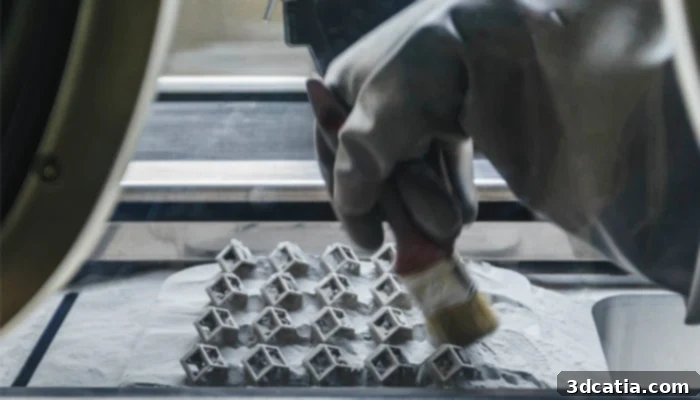
Post-processing steps vary in importance depending on the application and desired part properties.
The Impact and Market of Laser Powder Bed Fusion 3D Printing
The Laser Powder Bed Fusion (LPBF) 3D printing market is experiencing robust growth and continues to expand its footprint across an increasing number of critical industries. Its ability to produce high-performance, complex metal parts has positioned it as a transformative technology, enabling new designs, improving functionality, and streamlining supply chains.
Key Applications Across Industries:
- Aerospace and Defense: LPBF is a cornerstone in aerospace for manufacturing lightweight yet incredibly strong components for jet engines (e.g., fuel nozzles, turbine blades), airframes, and complex ducting. The technology allows for topology optimization to reduce weight, leading to improved fuel efficiency and performance. It also facilitates the production of spare parts on demand, reducing lead times and inventory costs.
- Automotive: In the automotive sector, LPBF is utilized for producing high-performance components such as brake calipers, pistons, and intricate cooling channels in engine blocks, particularly for racing or luxury vehicles where customization and peak performance are paramount. It’s also increasingly used for rapid prototyping of complex automotive parts and for low-volume specialty production.
- Medical and Dental: The medical industry has embraced LPBF for its capacity to create patient-specific implants (e.g., hip, knee, and spinal implants), surgical instruments, and custom dental prosthetics. The biocompatibility of materials like titanium and cobalt-chromium, combined with the ability to create porous structures that encourage bone ingrowth, makes LPBF an ideal solution for personalized healthcare.
- Tooling and Manufacturing: LPBF is gaining traction in manufacturing for producing highly customized tools, molds, and dies with integrated conformal cooling channels. These channels significantly improve tool performance and lifespan by optimizing heat dissipation, leading to faster cycle times and better product quality.
- Energy Sector: For industries like oil and gas, and power generation, LPBF is used to create robust components that can withstand extreme temperatures, pressures, and corrosive environments, such as specialized impellers, valves, and heat exchangers.
Major Players in the LPBF Market:
The LPBF market is characterized by a dynamic ecosystem of established players and innovative newcomers, each contributing to the advancement of the technology. Key industry leaders include:
- EOS: A pioneer in the field, EOS is renowned for its DMLS systems and a wide range of metal materials, serving diverse industrial applications.
- 3D Systems: A global leader in additive manufacturing, offering a comprehensive portfolio of metal AM solutions, including DMLS.
- SLM Solutions: Specializing in Selective Laser Melting (SLM) machines, SLM Solutions is known for its multi-laser systems designed for high productivity.
- Trumpf: A prominent machine tool manufacturer, Trumpf offers integrated LPBF solutions, leveraging its expertise in laser technology.
- Renishaw: Known for its high-quality LPBF systems and expertise in metrology, Renishaw serves applications requiring precision and repeatability.
- AddUp: A joint venture between Michelin and Fives, AddUp provides robust industrial LPBF machines and services.
- General Electric Additive (GE Additive): A major force in the market, GE Additive has significantly invested in LPBF technology, particularly through its Arcam EBM and Concept Laser acquisitions, pushing boundaries in aerospace and other critical sectors.
- Sisma: An Italian manufacturer offering compact and precise LPBF machines, particularly popular in medical and jewelry applications.
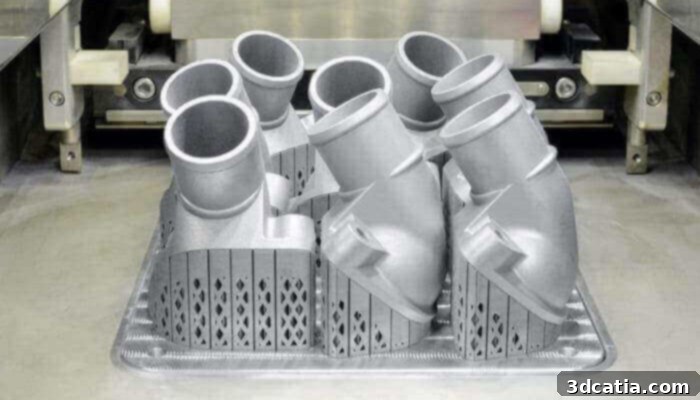
Photo Credits: Mercedes-Benz
The future of LPBF is promising, with ongoing advancements in machine capabilities (e.g., larger build volumes, multiple lasers), material science, and software optimization. As the technology matures and becomes more accessible, it is poised to further reshape traditional manufacturing paradigms and drive innovation across an even broader spectrum of industries globally.
Are you currently utilizing Laser Powder Bed Fusion in your projects or business? We’d love to hear about your experiences and insights! Let us know in a comment below or connect with us on our LinkedIn, Facebook, and Twitter pages! Don’t forget to sign up for our free weekly newsletter here to receive the latest 3D printing news straight to your inbox! You can also find all our engaging videos and educational content on our YouTube channel.
*Cover Photo Credits: DMG Mori