
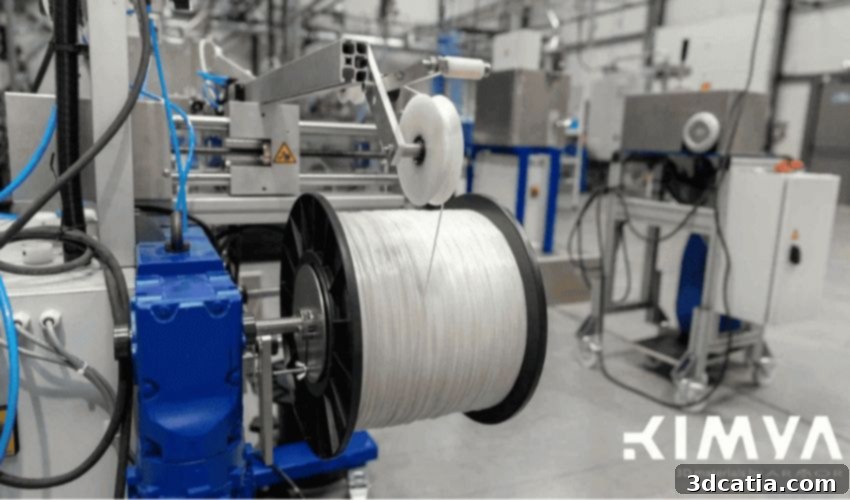
KIMYA’s Closure Signals Broader Challenges for Polymer Material Manufacturers in Additive Manufacturing
The recent announcement by KIMYA, a French company and a prominent subsidiary of the ARMOR GROUP, regarding the closure of its production site in Les Sorinières, Loire-Atlantique, France, and the subsequent sale of its business, marks a significant moment for the additive manufacturing industry. This strategic decision, which regrettably impacts around fifteen employees, underscores the persistent and often underestimated difficulties faced by manufacturers specializing in polymer materials for additive manufacturing. Founded in 2017, KIMYA initially entered what was perceived as a rapidly expanding market, crafting a robust strategy aimed at empowering manufacturers to seamlessly integrate additive manufacturing into their operations. The company’s journey began with a focus on sustainable practices, utilizing recycled materials derived from everyday items like yogurt pots and used cartridges. However, as the market evolved, KIMYA swiftly pivoted its focus towards professional industrial users, dedicating its expertise to developing more sophisticated and technically advanced polymer materials. Unfortunately, despite its innovative approach and a clear vision for the future, the prevailing economic climate proved too challenging for the French company to sustain its ambitious venture, leading to this difficult and ultimately unavoidable conclusion.
The global economic landscape presented formidable obstacles to KIMYA’s growth trajectory. A sharp downturn in new machine sales, a critical indicator for the health of the industrial 3D printing sector, was exacerbated by a series of interconnected crises. The initial shock of the COVID-19 pandemic rippled through global supply chains and dampened industrial investment, swiftly followed by the geopolitical instability caused by the conflict in Ukraine. These events collectively intensified disruption across various sectors, creating an overwhelmingly unfavorable economic context that severely constrained potential growth opportunities for companies like KIMYA. Moreover, the absence of clear medium-term recovery prospects further compounded the uncertainty, making strategic planning and sustained investment in emerging technologies exceptionally challenging. Companies operating within the nascent industrial additive manufacturing space found themselves navigating an environment where capital was scarce, demand was fluctuating, and the path to profitability became increasingly elusive. This confluence of factors painted a grim picture for businesses relying on capital expenditure and rapid adoption of new industrial processes.
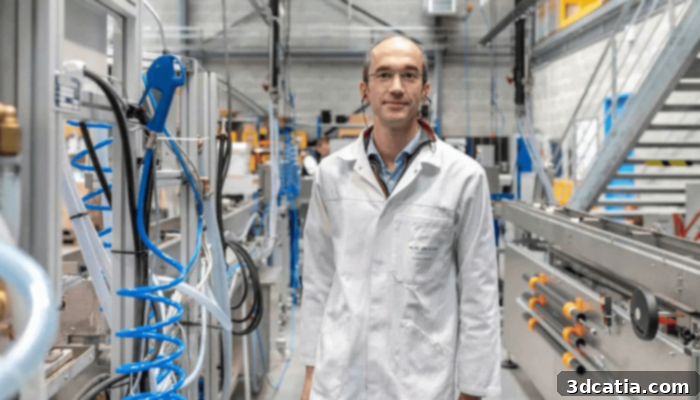
KIMYA has announced that it will be closing its doors, reflecting wider struggles in the additive manufacturing polymer sector.
KIMYA’s Comprehensive Approach to Additive Manufacturing: A Deep Dive into its Offerings
KIMYA’s strategic vision was to offer a holistic and complete solution for industrial 3D printing, meticulously structured around three core pillars. Each pillar was designed to address distinct facets of the additive manufacturing ecosystem, from material development to part production. The first, **KIMYA Materials**, focused on the fundamental building blocks of 3D printing: producing a diverse range of ready-to-use granules and filaments. These materials were not only developed with performance in mind but also often incorporated sustainable elements, reflecting the company’s initial commitment to environmental responsibility. This division aimed to provide off-the-shelf solutions for various industrial applications, ensuring reliability and consistency for users. The second pillar, **KIMYA Lab**, represented the company’s commitment to innovation and bespoke solutions. This specialized division was dedicated to developing tailor-made materials, working closely with customers to meet their unique and often highly specific technical requirements. This collaborative approach allowed KIMYA to push the boundaries of polymer science, crafting materials with properties optimized for particular industrial challenges, whether for extreme temperatures, specific mechanical strengths, or unique chemical resistances. Finally, **KIMYA Factory** completed the ecosystem by producing finished parts for manufacturers across a multitude of sectors. This meant KIMYA was not just a material supplier but also a service provider, leveraging its expertise to help clients move from prototyping to final part production using additive manufacturing techniques. This integrated strategy aimed to reduce barriers to adoption and offer a full-spectrum partnership to companies looking to implement 3D printing. However, despite the comprehensive nature of this strategy and the considerable investment in R&D and production capabilities, the company ultimately found itself unable to navigate the prevailing market headwinds, leading to the unfortunate decision to cease operations.
Economic Realities and the “Prototyping-Only” Stigma in Industrial 3D Printing
The challenges faced by KIMYA are not isolated incidents but rather symptomatic of broader issues within the global additive manufacturing market. Benoît Stoeux, Managing Director of KIMYA, articulated this stark reality: “After the COVID-19 crisis, the concepts of ‘reindustrialization’ and ‘local production’ seemed to offer a promising future for our business. However, the market—worldwide, in Europe and in France—has been confronted with numerous obstacles, including weak demand and increasingly strong foreign competition.” This statement highlights a crucial paradox. While the pandemic spurred discussions around resilient supply chains and localized manufacturing, boosting the appeal of technologies like 3D printing, the actual economic recovery and sustained investment did not materialize as anticipated. The promise of reindustrialization, a narrative that suggested a resurgence of domestic manufacturing driven by advanced technologies, collided with the harsh realities of weak industrial demand and intense global competition, especially from regions with lower production costs or more mature industrial ecosystems. The market’s inability to stabilize has created a climate of profound uncertainty, affecting not only material manufacturers like KIMYA but also printer manufacturers and end-users who hesitate to commit significant capital to new, unproven production methods. This hesitation is further compounded by a lingering perception issue, as Stoeux further explains: “Industrial 3D printing still suffers from an image of ‘prototyping-only technology,’ which is a major obstacle to its widespread adoption.” This “prototyping-only” stigma is a critical hurdle, preventing additive manufacturing from being fully embraced as a viable solution for mass production or critical functional parts in many industries. Overcoming this perception requires not just technological advancements, but also significant educational efforts and demonstrated success stories proving the reliability, scalability, and cost-effectiveness of 3D printing for true industrial applications.
ARMOR GROUP’s Support and the Inevitable Decision
The decision to wind down KIMYA’s operations was not taken lightly, especially given the unwavering support from its parent company, ARMOR GROUP. Despite the considerable resources, strategic guidance, and financial backing provided by ARMOR GROUP, KIMYA continued to incur losses in what was described as a particularly difficult market environment. The global economic downturn had a disproportionate impact on emerging technologies and businesses requiring substantial upfront investment and a long runway to profitability. For weeks, various investment opportunities and alternative strategies were meticulously explored, demonstrating ARMOR GROUP’s commitment to finding a sustainable path forward for KIMYA. However, after an exhaustive assessment of all available options and a realistic appraisal of market conditions and recovery prospects, the painful decision was made to commence the winding down of the business. Hubert de Boisredon, Chairman and CEO of ARMOR GROUP, encapsulated the gravity of the situation, describing it as “A difficult but inevitable decision.” This statement underscores the profound challenges faced even by well-supported ventures in the additive manufacturing space when confronted with systemic economic pressures, weak industrial demand, and the entrenched perception barriers that still plague the widespread adoption of industrial 3D printing. The closure serves as a poignant reminder that even with strong backing and innovative offerings, the path to commercial success in complex and evolving markets is fraught with risks.
Broader Implications for the Additive Manufacturing Industry
KIMYA’s closure is more than just the end of one company’s journey; it acts as a significant bellwether for the entire polymer additive manufacturing sector. It forces a critical examination of the industry’s maturity, its economic resilience, and its ability to transition from niche applications to widespread industrial adoption. The challenges KIMYA faced—weak demand, intense competition, and the lingering “prototyping-only” perception—are systemic issues that many other material suppliers and 3D printer manufacturers are also grappling with. This event highlights the urgent need for the industry to collectively address these barriers. For material producers, it underscores the importance of not just developing innovative polymers but also proving their economic viability, scalability, and performance consistency in demanding industrial environments. The market is increasingly demanding standardized, certified materials with comprehensive data sheets, which requires significant investment in testing and validation. For printer manufacturers, the implication is a heightened need to develop machines that offer lower total cost of ownership, increased reliability, and greater throughput to justify the capital investment for end-users. Furthermore, the industry must redouble its efforts to educate potential industrial adopters about the true capabilities of additive manufacturing beyond mere prototyping. This involves showcasing real-world applications where 3D printing offers tangible benefits in terms of design freedom, supply chain resilience, customization, and cost reduction for serial production. Without a concerted effort to demonstrate clear return on investment (ROI) and address the technological and economic hurdles, the industrial 3D printing market may continue to experience consolidation and struggles among its players. KIMYA’s story serves as a stark reminder that while the potential of additive manufacturing is immense, its full realization requires overcoming substantial commercial and perceptual obstacles.
The Future Outlook for Polymer 3D Printing Materials
Despite the challenges highlighted by KIMYA’s closure, the future of polymer 3D printing materials remains bright, albeit with a necessary shift in strategy and focus across the industry. This event should serve as a catalyst for innovation that is more closely aligned with industrial needs and economic realities. The demand for advanced polymer materials that offer superior mechanical properties, chemical resistance, thermal stability, and sustainability will continue to grow as industries seek lighter, stronger, and more customizable solutions. However, the path forward for material manufacturers must involve a greater emphasis on cost-effectiveness, scalability, and adherence to industry standards. This means developing materials that can be processed efficiently on a wider range of industrial 3D printers, reducing material waste, and offering clear, demonstrable value propositions that go beyond mere technological novelty. Furthermore, collaboration between material developers, printer manufacturers, and end-users will be paramount. By fostering closer partnerships, the industry can co-create solutions that precisely address specific application requirements, accelerating the adoption of 3D printing for functional parts and end-use applications. Investment in research and development will need to focus on next-generation materials, including high-performance thermoplastics, thermosets, and composites, as well as bio-based and recycled polymers, to meet growing sustainability demands. Education and workforce development will also play a critical role in overcoming the “prototyping-only” stigma, ensuring that engineers, designers, and production managers understand the full capabilities and economic advantages of integrating additive manufacturing into their processes. The closure of KIMYA, while unfortunate, offers valuable lessons that can guide the strategic direction of the polymer 3D printing materials market towards a more resilient, mature, and ultimately successful future, one that prioritizes industrial application and economic value alongside technological advancement.
What’s your opinion on KIMYA’s closure and its implications for the broader additive manufacturing industry? We invite you to share your insights and engage in the discussion by leaving a comment below or by connecting with us on ourLinkedIn,Facebook, andTwitter pages! Don’t miss out on the latest developments and breakthroughs in 3D printing; remember to sign up for our free weeklyNewsletter here, delivering the most relevant 3D printing news straight to your inbox! You can also find all our compelling videos and industry insights on our dedicatedYouTube channel.
*All Photo Credits: KIMYA