
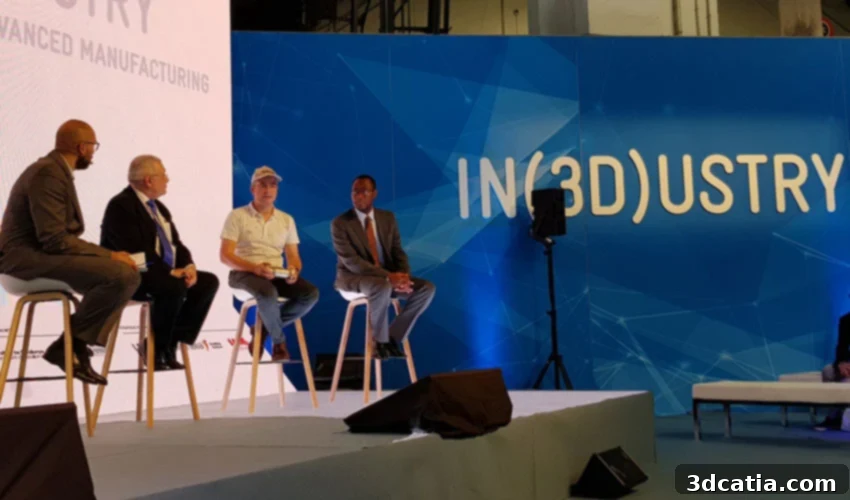
In3Dustry 2018: Driving Innovation in Additive Manufacturing and Industry 4.0
The third edition of In3Dustry, held in 2018, concluded with resounding success, firmly cementing its reputation as a cornerstone event for additive manufacturing in Europe. This impactful exhibition was once again a vital component of the larger Barcelona Industry Week, a massive convergence of industrial innovation. The 2018 iteration boasted an impressive scale, bringing together more than 550 pioneering companies, 700 insightful speakers, and an astounding 25,000 professionals. The overarching objective of In3Dustry remained consistent: to continuously attract a diverse range of stakeholders, from leading brands to specialized professionals, encouraging them to explore and embrace the transformative potential of additive manufacturing technologies across a multitude of industrial sectors. From the myriad of innovations on display, the event lived up to its guiding principle: “From Needs to Solutions.”
Following the event’s successful conclusion, Salvador Tasqué, Director of Own Business at Fira Barcelona, offered an insightful reflection: “This edition has been marked by a high level of interaction and great activity, clearly demonstrating that the digital transformation is no longer a distant futuristic concept but a tangible, present reality.” His comments underscored the dynamic energy that permeated the exhibition halls, highlighting the accelerating pace at which industries are adopting advanced digital solutions. This digital shift, powered significantly by advancements in 3D printing and related technologies, is fundamentally reshaping manufacturing paradigms, supply chains, and product development cycles. Companies are increasingly recognizing that integrating these technologies is not merely an option but a strategic imperative for future competitiveness and innovation.
In response to this growing momentum, numerous companies seized the unparalleled opportunity at In3Dustry 2018 to connect with some of the most influential figures and organizations in the 3D printing landscape. They showcased their latest technological innovations, unveiled groundbreaking projects under development, and forged critical partnerships. To provide a comprehensive overview of the significant advancements that are poised to shape the additive manufacturing industry in the coming months and years, we have compiled a detailed summary of the main highlights and key developments from this pivotal event.
The Main Highlights of In3Dustry 2018: Pioneering the Future of Additive Manufacturing
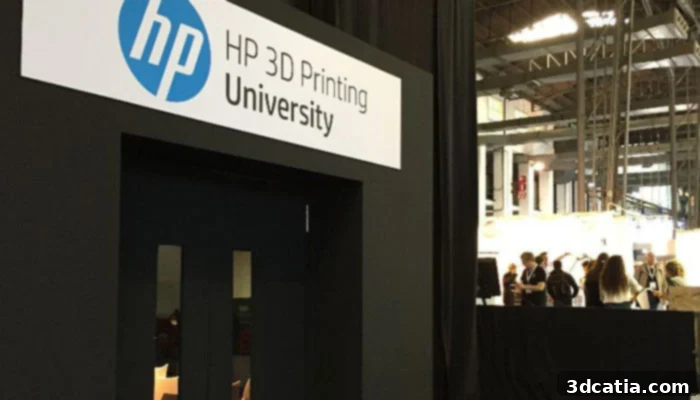
HP University: Cultivating Expertise in 3D Printing
A notable first for In3Dustry 2018 was the introduction of HP University, a significant initiative by the American technology giant, HP. This innovative program marked HP’s proactive engagement with the crucial subject of education and training in 3D printing. HP University emerged as one of the event’s standout novelties, providing a dedicated informative space where experts from the brand delivered in-depth presentations on HP’s latest developments in additive manufacturing. Crucially, these sessions also elucidated the myriad benefits and strategic advantages of the digital transformation sweeping across various industries. The establishment of HP University highlighted a critical industry need: bridging the skill gap and empowering professionals with the knowledge required to leverage advanced 3D printing technologies effectively.
“We want to present real cases and practical guides so that companies can take advantage of the potential of this new way of manufacturing,” emphasized Jaume Homs, Sales Director of HP’s 3D Printing department for Spain and Portugal. This statement encapsulates the pragmatic approach of HP University, which aimed to move beyond theoretical concepts and provide actionable insights. The curriculum for this inaugural project was meticulously designed to cover a broad spectrum of topics essential for current and future professionals in additive manufacturing. It included comprehensive presentations on the diverse possibilities offered by additive manufacturing across different sectors, detailed analyses of cutting-edge new printing materials entering the market, and discussions on the integration of 3D technologies within robotics to enhance automation and efficiency. Furthermore, recognizing the importance of nurturing future talent, a particularly engaging segment focused on teaching young individuals the fundamentals and advanced techniques of 3D design within the rapidly evolving 3D printing sector. This holistic approach ensures that participants gain not only theoretical understanding but also practical skills, positioning them at the forefront of the industry’s digital evolution.
3D Factory Incubator and DFactory 4.0: Catalyzing Industrial Transformation
During In3Dustry 2018, the Consorci de la Zona Franca de Barcelona (CZFB) unveiled two ambitious and pivotal projects designed to significantly propel the additive manufacturing industry forward and cement Barcelona’s position as a global innovation hub. The first of these initiatives is the 3DFactory Incubator, a groundbreaking European incubator specifically tailored for additive manufacturing projects. This state-of-the-art facility spans over 600m², offering extensive areas for co-working, specialized training programs, and fully equipped laboratories featuring the latest 3D printers. The primary objective of the 3DFactory Incubator is to accelerate the digital transformation of small and medium-sized enterprises (SMEs), guiding them seamlessly into the paradigm of Industry 4.0. Through access to advanced technology, expert mentorship, and a collaborative environment, the incubator aims to foster innovation and help these companies integrate additive manufacturing into their core operations. Over a five-year period, this strategic project is anticipated to benefit more than 100 companies, driving economic growth and technological advancement within the region and beyond.
The second transformative project introduced by the CZFB was DFactory 4.0. This visionary hub area is strategically designed to cultivate a vibrant ecosystem of industrial companies that are leaders in advanced digital technology. DFactory 4.0 aims to be a nexus where cutting-edge research, development, and application converge, fostering collaboration and synergistic growth among participating enterprises. The development of these advanced facilities within the Zona Franca underscores a clear commitment to supporting the “economy 4.0,” which relies heavily on automation, data exchange, and smart manufacturing processes. With ambitious plans to dedicate an expansive 71,000 m² of space to this future-oriented economic model, DFactory 4.0 represents a monumental step towards establishing Barcelona as a central node in the global network of advanced manufacturing and industrial digitalization. Both the 3DFactory Incubator and DFactory 4.0 collectively illustrate a comprehensive strategy to not only adopt but also lead in the evolving landscape of industrial innovation, making Barcelona a beacon for the future of manufacturing.
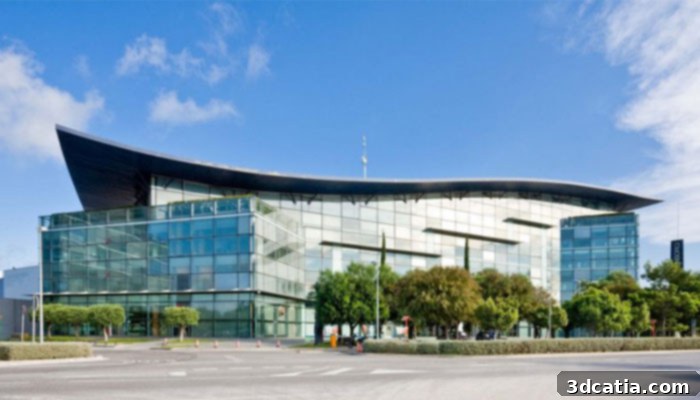
The DFactory 4.0 project is expected to be developed in the Free Zone of Barcelona, fostering a robust Industry 4.0 ecosystem.
Eurecat: Advancing 3D Printing Technologies Across Sectors
Eurecat, the esteemed Technological Center of Catalonia, captivated attendees at In3Dustry 2018 with the unveiling of three groundbreaking new 3D printing technologies, each poised to make a significant impact across diverse industries. The first innovation is meticulously engineered for the biomedical sector, addressing a critical need for highly customized medical devices. This technology facilitates the precise realization of personalized prostheses, utilizing silicone as a primary raw material. The advantages of silicone, such as its biocompatibility, flexibility, and patient comfort, make it an ideal choice for medical applications. By enabling on-demand, patient-specific prostheses, this technology promises to revolutionize rehabilitative care and significantly improve patient outcomes and quality of life.
The other two advanced technologies presented by Eurecat focus on developing intricate models through a novel sheet metal deformation process, applied layer by layer. This sophisticated approach integrates advanced computational analysis, allowing for the precise calculation of the structural behavior of each piece during and after its formation. This analytical capability is crucial for determining the optimal material selection and manufacturing process for a wide array of components. By understanding how a part will perform under various stresses and conditions, engineers can make informed decisions that enhance durability, reduce material waste, and optimize performance across industrial applications. These innovations exemplify Eurecat’s commitment to pushing the boundaries of material science and manufacturing processes.
Myriam García-Berro, Eurecat’s Director of Technology and Transfer, eloquently summarized the strategic importance of these developments: “The three technologies are registered in the so-called Industry 4.0, because they allow the control of production and quality and the viewing of the pieces during production, as well as the production of small and customized series, with materials as different as silicone, the steel sheet and the polymers.” Her statement underscores how these technologies align perfectly with the core tenets of Industry 4.0 – digitalization, automation, and real-time data exchange. The ability to control production parameters, monitor quality continuously, and visualize components throughout the manufacturing process ensures unprecedented precision and efficiency. Furthermore, the capacity to produce small, highly customized series using a diverse range of materials—from flexible silicone to robust steel sheets and versatile polymers—demonstrates a remarkable adaptability that is essential for modern, agile manufacturing environments. This versatility allows manufacturers to tailor solutions precisely to market demands, offering unparalleled customization.
A particular highlight was the 3D printer developed specifically for silicone, hailed as a pioneer in the field. This advanced system is capable of printing both monocomponent and biocomponent silicone structures, offering an unprecedented level of material control and adaptability. The ability to precisely combine or layer different silicone formulations means that the material properties can be finely tuned to meet the specific requirements of each unique project, opening new frontiers for applications in prosthetics, medical devices, flexible electronics, and custom seals. Eurecat’s contributions at In3Dustry 2018 solidified its reputation as a leader in applied research and technological innovation within the additive manufacturing landscape.
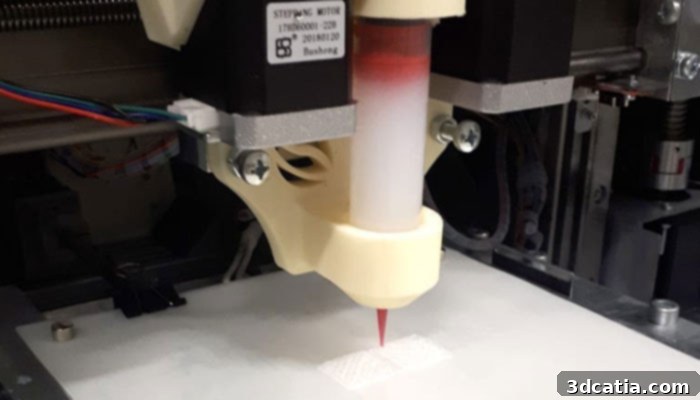
Eurecat showcased pioneering 3D printing technology based on silicone, ideal for advanced biomedical applications.
Avinent: Revolutionizing Implantology with Additive Manufacturing
Avinent emerged as one of the most prominent and impactful exhibitors at In3Dustry 2018, showcasing truly outstanding novelties that highlighted the profound impact of additive manufacturing on specialized medical fields. As a company renowned for its expertise in implantology, Avinent has undergone a remarkable transformation by integrating advanced additive manufacturing technologies into its production workflows. For them, the adoption of 3D printing represented a pivotal shift, marking a clear “before and after” in their operational capabilities and product offerings. This strategic embrace of 3D printing has enabled Avinent to achieve unparalleled levels of customization, precision, and efficiency in producing complex medical devices.
At this latest edition of the fair, Avinent unveiled its groundbreaking new multi-material system, developed in close collaboration with Stratasys, a global leader in 3D printing solutions. This innovative system is designed for the meticulous development of highly accurate anatomical medical models. These models, crafted with incredible detail and material fidelity, will allow surgeons and medical professionals to meticulously plan complex surgeries well in advance of their actual realization. The benefits of such detailed pre-surgical planning are immense: reduced operating times, enhanced surgical precision, minimized risks, and ultimately, improved patient outcomes. Furthermore, these patient-specific models serve as invaluable tools for patient education, allowing individuals to better understand their procedures.
During his various insightful talks at the event, Albert Giralt, CEO of Avinent, placed significant emphasis on the critical importance of incorporating additive manufacturing within hospitals and clinical centers. He passionately argued that integrating 3D printing directly into healthcare environments could unlock a new era of personalized medicine. To lend substantial weight and credibility to his compelling statements, Avinent collaborated with the Althaia Foundation to present an impressive portfolio of 12 compelling success stories detailing the effective and transformative use of 3D printing within the medical sector. These case studies spanned a range of applications, from creating custom surgical guides and patient-specific implants to developing highly realistic training models for medical students. Each story served as a powerful testament to the tangible benefits and life-changing potential that additive manufacturing brings to clinical practice, solidifying Avinent’s position as a visionary leader in medical 3D printing.
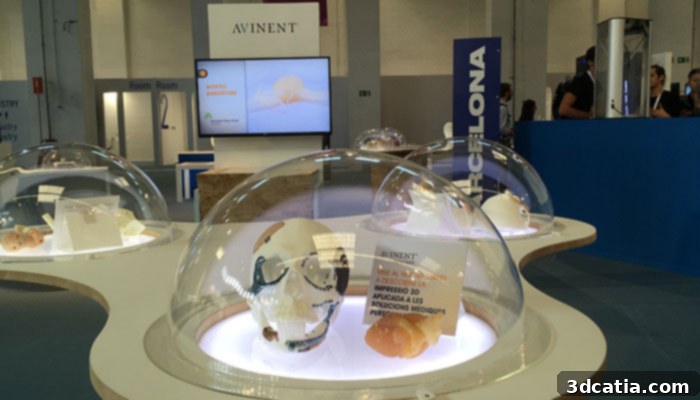
Avinent showcased the profound importance and impact of 3D printing in advancing the medical sector at In3Dustry 2018.
In3Dustry 2018 truly underscored the rapid evolution and growing influence of additive manufacturing across a myriad of industries. From pioneering educational initiatives like HP University to the foundational infrastructure projects of the CZFB, and from Eurecat’s material innovations to Avinent’s transformative applications in implantology, the event painted a vivid picture of a future shaped by digital manufacturing. These developments not only highlight technological progress but also emphasize the collaborative spirit and strategic vision driving the adoption of Industry 4.0 principles. The advancements showcased promise a future of greater customization, efficiency, and breakthrough solutions across sectors, from biomedical engineering to advanced industrial production.
What are your thoughts on the groundbreaking innovations and strategic initiatives presented at In3Dustry 2018? We invite you to share your insights and opinions on the impact of these developments in the comments section below. Join the conversation and connect with us on our Facebook and Twitter pages to discuss the future of additive manufacturing! And for continuous updates on all the latest news, breakthroughs, and trends in the dynamic world of 3D printing, remember to sign up for our free weekly Newsletter, delivered straight to your inbox!