
F-elia: Revolutionizing Eyewear with 3D Printed Optical Jewelry and Sandrine Henry’s Vision
The world of eyewear is undergoing a significant transformation, driven by innovative design and cutting-edge manufacturing technologies. At the forefront of this evolution is F-elia, a dynamic young French brand that is expertly giving a second life to spectacles through its exquisite collection of 3D printed optical jewelry. These unique accessories seamlessly blend sophisticated aesthetics with unparalleled practicality, all while leveraging the power of new technologies. The integration of advanced 3D printing into the creative process allows F-elia to produce original, complex, and truly unique shapes, showcasing the immense potential of additive manufacturing in the design sector, particularly for personalized jewelry and eyewear. This method is gaining considerable traction among eyewear manufacturers, as highlighted by the latest SmarTech Analysis report, which projects this market to surge to an impressive $3.4 billion by 2028. To delve deeper into this exciting convergence of fashion, technology, and design, we had the distinct pleasure of meeting Sandrine Henry, the visionary founder of the F-elia brand. Our discussion aimed to uncover the intricate manufacturing process behind these remarkable optical jewels and to understand how 3D printing is making such a profound impact on the industry, enabling unprecedented levels of customization and innovation.
The Visionary Behind F-elia: Sandrine Henry’s Journey into 3D Printed Eyewear
3DN: Can you introduce yourself and your link to 3D printing?
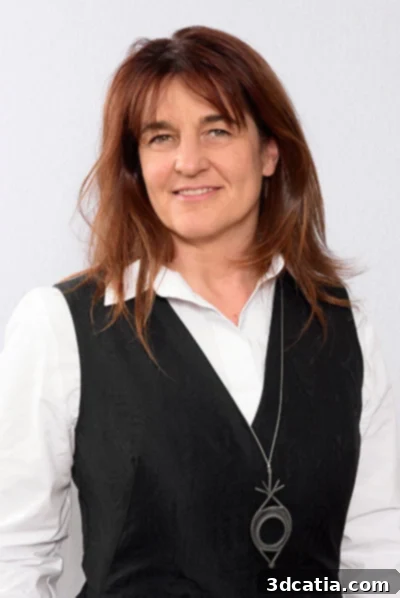
Sandrine Henry
My name is Sandrine Henry, and I have dedicated over two decades to the intricate world of product design, with a specialized focus on optical and solar eyewear. My journey began after completing my industrial design studies at the prestigious Nantes school. I launched my professional career at a prominent French eyewear group located in the Jura region, where I contributed to designing for renowned licenses such as Nina Ricci and Chevignon. Subsequently, I assumed the role of design manager for a French manufacturer, specializing in luxury frames for esteemed brands like Boucheron and the Henry Jullien Collection. Enriched by these invaluable experiences, I decided to establish my own venture. In 2011, I founded Eiffelia Design near Paris, in Garenne Colombes. My agency provides a comprehensive, global approach to design, encompassing everything from the initial creation of frames to the development of cases and the entire product environment for sports, fashion, and designer eyewear. This extensive background in traditional eyewear design laid a crucial foundation for my subsequent venture into innovative technologies.
In 2019, I realized a long-held ambition by creating the F-elia brand, and I am incredibly proud to have just launched my inaugural collection of 3D printed optical jewelry. My initial foray into 3D printing technology, or additive manufacturing as it’s often called, actually began approximately a decade ago. I was working with a Chinese manufacturer specializing in packaging. They had an innovative vision: to develop their own distinct range of cases using a more advanced approach to stand out from their competitors. To achieve this, I was tasked with developing various concepts. It was imperative to quickly validate both the technical feasibility and the aesthetic appeal of these products. This is where 3D printing proved invaluable. By utilizing 3D files, we were able to rapidly print functional prototypes, allowing for immediate assessment and iterative design improvements. This early exposure to the speed, precision, and design freedom offered by 3D printing profoundly influenced my understanding of its potential, eventually leading me to integrate it into the core of F-elia’s innovative optical jewelry line.
Crafting Innovation: The Birth of F-elia’s Optical Jewelry Concept
3DN: How did you come up with the idea of creating a range of optical jewelry?
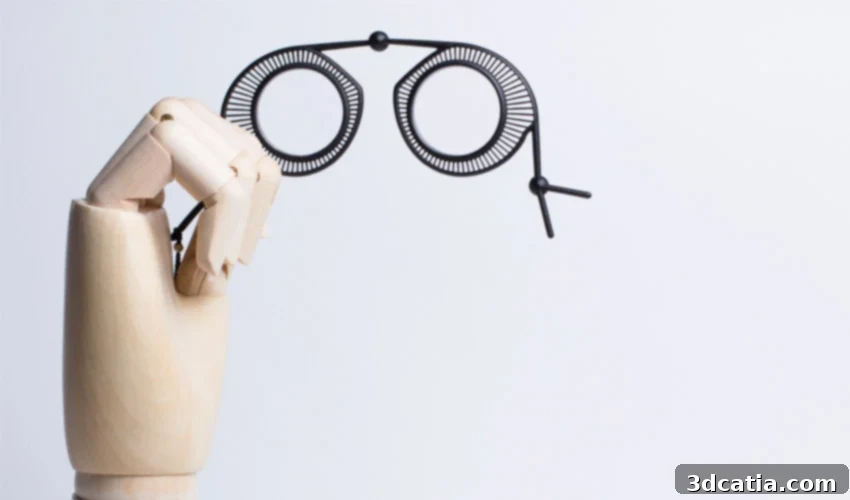
The inspiration behind F-elia’s optical jewelry line emerged from a confluence of observations and a deep dive into the historical context of spectacles. On one hand, my extensive career in eyewear design provided me with keen insights into the habits and attitudes of spectacle wearers, particularly presbyopic women. I noticed a common dilemma: while reading glasses become indispensable as presbyopia sets in around age 45, affecting near vision, they are not needed constantly. The initial tell-tale sign—extending one’s arm to read a document—quickly evolves into the necessity of corrective lenses. However, these glasses are often left behind at the office, at home, or misplaced, leading to frustration and inconvenience. This common scenario formed a core element upon which the first collection of F-elia optical jewelry was conceived. The brand’s innovative concept addresses this practical need by offering a surprising 3D printed jewel that ingeniously combines the past and future of eyewear. It bridges the gap between functional necessity and aesthetic desire, transforming a mere accessory into a statement piece. The jewel is not just decorative; it cleverly transforms into a hand-held magnifying glass, always within reach, perfect for reading a metro map, a restaurant menu, or any small print on the go. This blend of elegance and utility is central to F-elia’s appeal.
On the other hand, my creative process involved revisiting the origins of spectacles themselves, particularly the “hand side” versions and the simple magnifying glass. This historical perspective, combined with an understanding of contemporary needs, fueled the development of a truly novel product. F-elia’s collections are designed to be accessible and are available for sale through our dedicated online shop, as well as a growing network of optical stores. We are also planning to expand our reach through various ephemeral places and pop-up shops in Paris and other provinces, bringing these unique pieces closer to our customers. For the record, the names F-elia and Eiffelia are derived from my profound admiration for the legendary French architect and engineer Gustave Eiffel. His monumental work, particularly the Eiffel Tower, epitomizes innovation and French originality in my eyes. The Eiffel Tower stands as a magnificent industrial lace, exuding an incredible sense of poetry and engineering brilliance. It is precisely these qualities—lace and poetry—that I believe perfectly define the intricate and elegant designs found within the F-elia collections, embodying a blend of structural beauty and artistic expression through 3D printing.
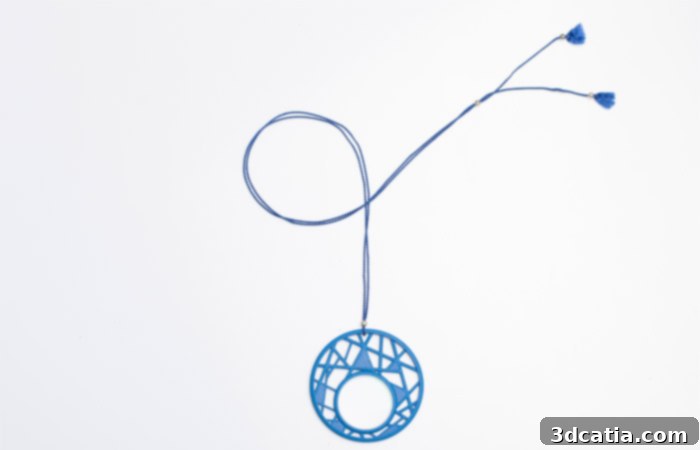
Photo credits: F-elia
The Technology and Materials Driving F-elia’s Innovative Creations
3DN: What 3D printing technology and materials did you use to manufacture them?
For F-elia’s inaugural collection, our focus on innovation primarily centered on the glass support component, which is meticulously crafted using advanced 3D printing technologies. Specifically, we employ either powder sintering (SLS – Selective Laser Sintering) or MultiJet Fusion processes. These additive manufacturing techniques allow for exceptional precision and the creation of highly complex geometries that would be challenging, if not impossible, with traditional manufacturing methods. The material of choice for this collection is polyamide. We selected polyamide for several compelling reasons: its outstanding strength ensures durability, its inherent flexibility provides comfort, and its remarkable lightness makes the optical jewelry comfortable for extended wear. Furthermore, polyamide offers excellent possibilities for vibrant coloring and sophisticated finishing, allowing us to achieve a wide range of aesthetic effects that enhance the appeal of each piece. We are continuously exploring and studying other innovative materials for future collections, aiming to further expand our design possibilities and enhance product performance.
Currently, the F-elia collection features three distinct models: DORA, LUNA, and GALA. Each model is available in a carefully curated palette of four sophisticated shades: Darth (a deep, elegant black), Azure (a vivid blue), Rosso (a rich red), and Granite (a unique, raw finish). The parts are either meticulously polished and tinted to achieve a smooth, vibrant appearance, or they are presented in their raw form, as exemplified by the “granite” reference, which boasts a magnificent and tactile stone-like texture. This variety allows our customers to choose a piece that perfectly matches their personal style. To complement the advanced 3D printed components, our jewelry also incorporates more traditional, exquisite materials. The 3D printed elements are elegantly mounted on high-quality silk cords and are tastefully adorned with finely crafted 925 thousandths silver beads, adding a touch of classic luxury. The plastic lenses integrated into our optical jewelry are of superior quality; they are hardened and specially treated to be scratch-resistant, ensuring clarity and longevity. Every aspect of F-elia’s creations, from design and drawing to manufacturing, is proudly carried out in France, with the 3D printing processes specifically executed in the bustling Paris region, reinforcing our commitment to French craftsmanship and innovation.
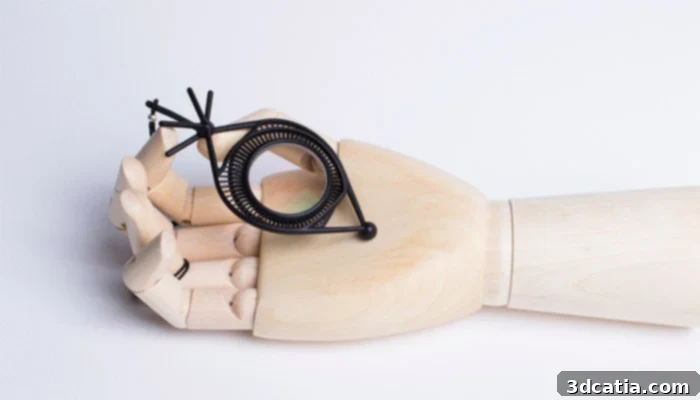
Photo credits: F-elia
The Unparalleled Advantages of 3D Printing in Eyewear Design
3DN: Why did you use 3D printing? What are the associated benefits?
The decision to embrace 3D printing for F-elia’s optical jewelry was driven by the technology’s inherent ability to overcome many of the constraints typically associated with traditional manufacturing methods. This transformative technology empowers designers to conceptualize and bring to life exceptionally complex shapes and intricate technical parts that would be either prohibitively expensive or simply impossible to produce otherwise. The creative freedom offered by 3D printing is unparalleled, allowing for the exploration of innovative geometries and intricate details that define F-elia’s unique aesthetic.
Beyond design complexity, 3D printing introduces remarkable versatility into the production process. With this technology, it is incredibly straightforward to scale from producing a single, customized piece to manufacturing an entire series, all while maintaining consistent quality. This flexibility is a game-changer for businesses seeking agile production solutions. Furthermore, 3D printing facilitates effortless modification and personalization of design elements, empowering both designers and consumers to tailor products to specific preferences. The ability to rapidly prototype and test different materials, finishes, and colors with minimal lead time allows for iterative design improvements and quick market responsiveness. From an environmental and operational perspective, 3D printing offers significant advantages. Material consumption is precisely controlled, leading to virtually no waste compared to subtractive manufacturing processes. This inherent efficiency not only contributes to a more sustainable production model but also optimizes stock management by enabling on-demand manufacturing, thereby reducing the need for large inventories and minimizing associated costs and risks. The combination of design freedom, production versatility, rapid iteration, and sustainable practices makes 3D printing an indispensable tool for F-elia, allowing us to innovate and deliver unique, high-quality optical jewelry to our customers.
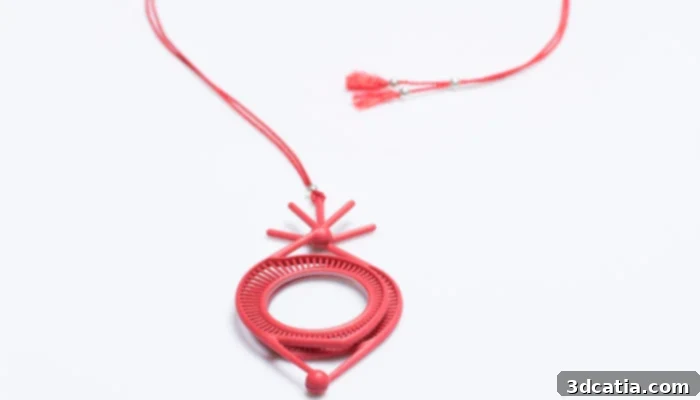
Photo credits: F-elia
The Future Landscape: 3D Printing’s Transformative Role in Design
3DN: In your opinion, what is the future of 3D printing in the design sector?
In my strong opinion, 3D printing represents an undeniable and truly revolutionary force across virtually all sectors of activity, profoundly reshaping how products are designed, developed, and manufactured. Designers worldwide are already leveraging this transformative technology in diverse fields, from innovative food creation and bespoke furniture production to advanced automotive components, specialized leisure items, cutting-edge fashion accessories, and life-changing medical designs. The versatility and adaptability of additive manufacturing are constantly expanding its applications, pushing the boundaries of what is creatively and functionally possible.
A critical driving force behind the continued evolution of this technology will be the material manufacturers. Their role in developing next-generation materials is paramount. We can anticipate significant advancements, with new materials emerging that are even more environmentally friendly, offering enhanced sustainability through biodegradability or recyclability. Furthermore, the development of advanced biocompatible materials will unlock new opportunities in medical and wearable applications. An exciting prospect is the innovation in materials derived from the recycling of waste into re-printable substances, contributing to a truly circular economy. These new materials will not only be more versatile but also capable of being combined with each other in novel ways, opening up unprecedented design horizons. As a designer, this future perspective is immensely gratifying. It promises an endless source of innovative ideas for novel uses, enabling the creation of truly tailor-made products that perfectly meet individual needs and preferences. The ability to design with such freedom, while also contributing to more sustainable practices, positions 3D printing as not just a manufacturing tool, but a catalyst for imaginative and responsible design for decades to come. This fusion of technological capability and creative vision ensures that 3D printing will continue to be at the heart of design innovation, shaping our future products and experiences.
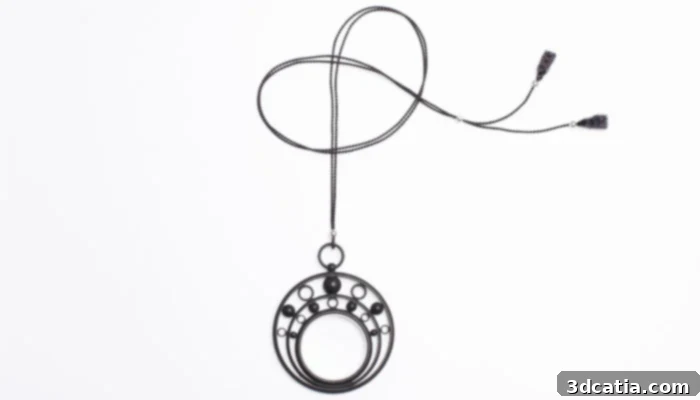
Photo credits: F-elia
Explore F-elia’s Collections and Join the Conversation
3DN: Any last words for our readers?
I sincerely invite all our readers to explore the innovative and elegant F-elia collections firsthand by visiting our website at www.f-elia.com. Discover how 3D printing is transforming the world of optical jewelry, blending aesthetics with functionality in a truly unique way. Please do not hesitate to share your thoughts and comments with us; your feedback is incredibly valuable as we continue to push the boundaries of design and technology.
What are your thoughts on the F-elia brand and its groundbreaking approach to optical jewelry? We’d love to hear your perspective! Let us know in a comment below or engage with us on our vibrant social media platforms, including our Facebook and Twitter pages. Stay informed about the latest developments and innovations in the rapidly evolving world of 3D printing by signing up for our free weekly Newsletter, delivered directly to your inbox. Thank you for your interest in F-elia and the future of additive manufacturing in design!