
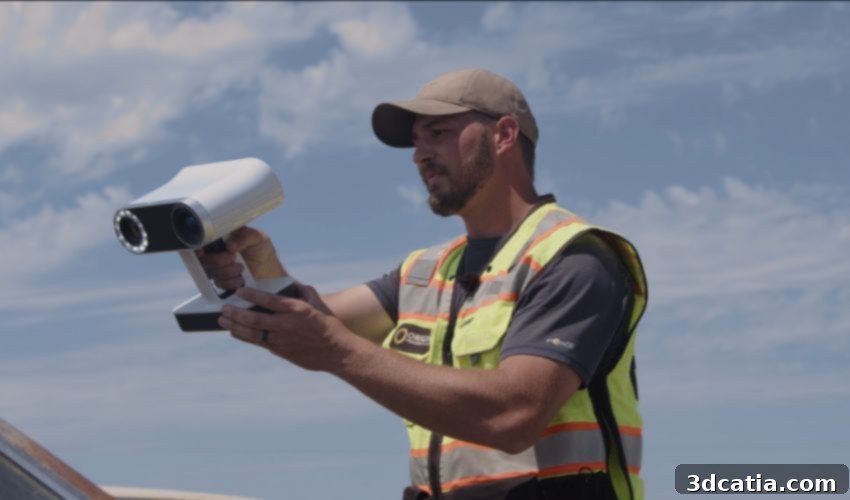
3D Scanning for Justice: Artec 3D Empowers Ukrainian Police to Document War Crimes
The ongoing conflict in Ukraine has transcended the six-month mark, leaving an indelible scar on the nation and its people. The harrowing reality includes a staggering loss of over 5,500 lives and more than 8,000 injuries, primarily due to Russia’s relentless attacks on civilian populations. Beyond the tragic human toll, Ukraine’s critical infrastructure has been subjected to widespread devastation from bombardments. In the wake of these atrocities, the National Police of Ukraine is working tirelessly to record every incident, every act of violence, and every instance of destruction. However, the chaotic and dynamic nature of armed conflict poses immense challenges to evidence preservation. As authorities undertake crucial cleanup and recovery efforts in affected cities, there’s a constant risk that vital evidence could be lost, contaminated, or even inadvertently destroyed, jeopardizing future efforts to hold perpetrators accountable.
In a pivotal move to counter these challenges, Artec 3D, a globally recognized leader in the development and manufacturing of professional 3D scanners and associated software, has stepped forward to offer crucial support. The company proudly announced its partnership with the Human Rights Conduct Department of the National Police of Ukraine. This strategic collaboration aims to equip Ukrainian law enforcement with state-of-the-art 3D scanning solutions, specifically designed for the meticulous forensic documentation of evidence. This advanced technology will be deployed across Ukraine to gather irrefutable proof against a wide spectrum of international crimes, including war crimes, crimes against humanity, and acts of genocide. This initiative underscores the growing importance of technological innovation in the pursuit of international justice and human rights.
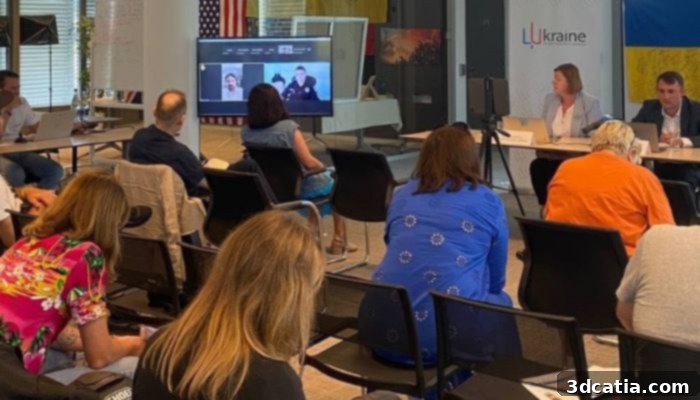
Artec 3D CEO Artyom Yukhin (on screen, left) and head of Human Rights of the National Police of Ukraine Ruslan Horyachenko (on screen, right), at a press conference announcing the partnership (photo credits: Artec 3D)
Ruslan Horyachenko, the esteemed head of the Human Rights Department of the National Police of Ukraine, articulated the profound necessity and strategic rationale behind this groundbreaking partnership. He commented, “Since the very outset of the war, the National Police of Ukraine has initiated an astonishing more than 89,500 criminal proceedings based on documented facts of crimes committed under martial law. Every single day, the National Police of Ukraine diligently collects evidence. In this challenging environment, new documentation technologies, particularly 3D technology, prove invaluable. Recognizing this critical need, we made the decisive choice to embark on this significant cooperation with the Luxembourg-based company Artec 3D.” His words highlight the sheer scale of the investigative effort required and the urgent demand for advanced, reliable tools to ensure that justice can ultimately prevail. The traditional methods of evidence collection often fall short in the face of widespread destruction and the urgency of the situation, making 3D scanning a transformative solution.
Leveraging Advanced 3D Scanning for Indisputable Evidence in Ukraine
The versatility of 3D scanners proves to be an indispensable asset in aiding the ongoing conflict and the subsequent pursuit of justice. These sophisticated tools can be deployed in a myriad of critical ways. On one hand, they are instrumental in meticulously documenting evidence pertaining to alleged war crimes, capturing every detail of crime scenes, weapon fragments, and impact zones. On the other, they offer a powerful capability for forensic facial reconstruction of victims, providing crucial information for identification and offering a measure of dignity. Beyond human identification, the technology is exceptionally well-suited for the sensitive documentation of human remains, ensuring precise digital records. Furthermore, 3D scanning excels at preserving irrefutable evidence of damage inflicted upon homes, civilian vehicles, and vital infrastructure. What sets this technology apart is its unparalleled speed and accuracy. It enables the rapid capture and secure storage of comprehensive digital evidence, circumventing the risk of loss or destruction that often accompanies the urgent evacuation and cleanup operations in war-torn cities. This ensures that crucial data remains available for future legal proceedings, providing an objective and detailed account of the damage and violations.
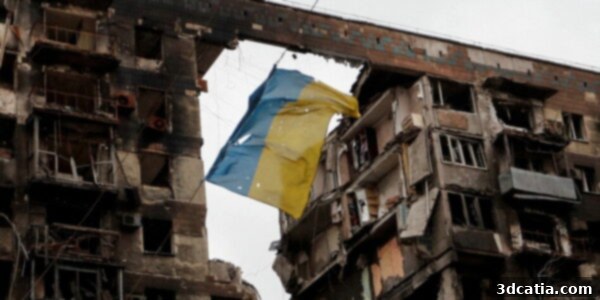
Destruction in Ukraine (photo credits: Alexander Ermochenko)
At the forefront of this crucial initiative is the Artec Leo 3D scanner, a cutting-edge device specifically chosen for its exceptional capabilities in scanning evidence and entire crime scenes. Whether operating indoors or outdoors, the Artec Leo can capture highly detailed 3D data with remarkable speed and efficiency, requiring virtually no prior specialized knowledge from the user. This ease of use is paramount in high-pressure, often dangerous, conflict zones. Its entirely wireless and portable design makes it perfectly adaptable for deployment in areas where infrastructure has been severely damaged or completely destroyed, providing unparalleled operational flexibility. Once the data is collected, forensic experts can immediately analyze these comprehensive 3D renderings in true-to-life color, gaining unprecedented insights into the events that transpired. This capability allows for a more thorough and objective assessment than traditional methods, laying a robust foundation for legal investigation.
Beyond the immediate capture of data, the Artec 3D solution integrates a critical component: the swift and secure upload of all collected 3D evidence to cloud storage. This feature is revolutionary, enabling investigators, as well as authorized agencies and international criminal courts, to access and process this vital data from virtually anywhere in the world. This global accessibility ensures that collaboration and judicial processes are not hindered by geographical barriers, facilitating prompt review and analysis by legal experts. The captured 3D evidence, characterized by its lifelike fidelity, serves as an indisputable digital replica of the crime scene or object, offering a powerful visual and measurable resource for legal proceedings. Such comprehensive and tamper-proof digital records are invaluable in establishing facts, presenting arguments, and ultimately securing convictions. Artyom Yukhin, CEO and President of Artec 3D, encapsulated the profound significance of this collaboration, concluding, “We are truly honored to be able to work hand-in-hand with the Ukrainian police, and we are incredibly glad that our advanced technologies can be put towards such a critically important application – one that directly contributes to justice and accountability during these challenging times.” This partnership is not just about providing tools; it’s about empowering the pursuit of truth and ensuring that crimes do not go unpunished.
The implementation of advanced 3D scanning technology in conflict zones like Ukraine represents a paradigm shift in forensic investigation. It moves beyond the limitations of traditional photography and manual measurements, offering an immersive, measurable, and highly accurate digital twin of critical evidence. This digital transformation strengthens the credibility of gathered information, streamlines investigative processes, and provides international courts with robust evidence that can withstand rigorous scrutiny. The ability to document minute details, reconstruct complex scenes, and identify victims with unprecedented precision will be pivotal in building compelling cases for war crimes and human rights violations. This collaboration between Artec 3D and the National Police of Ukraine sets a new standard for evidence collection in the modern era, underscoring the critical role technology plays in upholding international law and ensuring justice for those impacted by conflict. It is a beacon of hope that amidst destruction, innovation can pave the way for accountability and future peace.
What are your thoughts on the transformative use of Artec 3D scanning technology in documenting war crimes in Ukraine? We encourage you to share your insights in a comment below or join the conversation on ourLinkedIn,Facebook, andTwitter pages! Don’t miss out on the latest advancements in 3D printing and related technologies; sign up for our free weeklyNewsletter here, delivering the most recent news straight to your inbox! You can also find all our compelling videos and demonstrations on our dedicatedYouTube channel.
*Cover Photo Credits: Artec 3D