
Revolutionizing Nuclear Infrastructure: How 3D Printing is Transforming Reactor Construction
The University of Maine (UMaine) is demonstrating the groundbreaking potential of large-scale 3D printing in modern infrastructure development. Their work with Kairos Power on the Hermes nuclear reactor project in Tennessee showcases how additive manufacturing can overcome the limitations of traditional construction methods, offering faster, more flexible, and cost-effective solutions.
Kairos Power faced a common challenge in nuclear construction: traditional methods were too slow, too inflexible, and too expensive to meet their project timeline. UMaine’s Advanced Structures and Composites Center (ASCC), home to one of the world’s largest polymer 3D printers, provided the innovative solution.
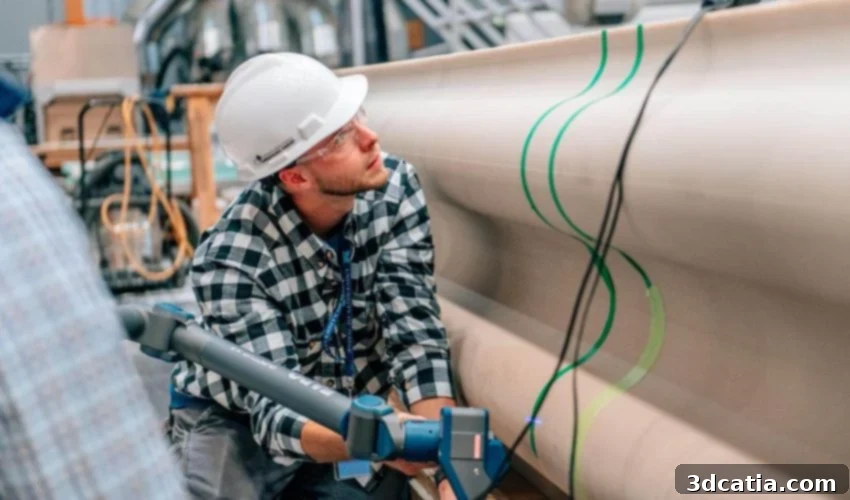
The Hermes reactor design required massive concrete form liners with a precise sinusoidal curve. Each wall section, measuring three feet thick and twenty-seven feet tall, demanded millimeter accuracy. Traditional approaches would have involved complex machining and lengthy fabrication processes. Instead, UMaine researchers utilized their large-scale polymer 3D printer to create the longest forms the center had ever produced. These custom-printed forms, based on digital models, were designed for precise alignment with Kairos Power’s reactor geometry.
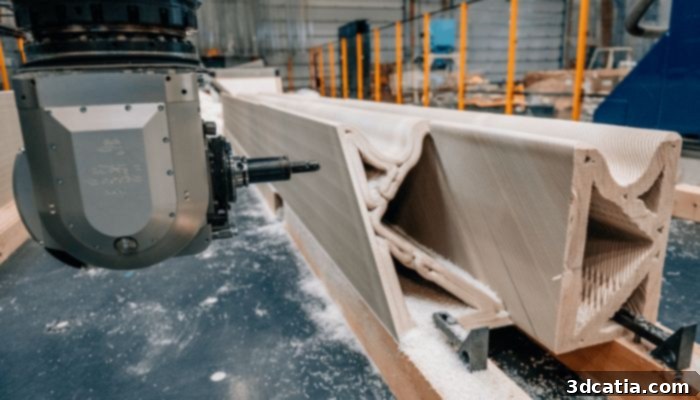
Following the printing process, the structures underwent precision machining and inspection by UMaine’s metrology specialists. Every curve and angled surface was meticulously scanned and compared to the digital blueprint. Susan MacKay, ASCC chief sustainable materials officer, emphasized the project’s stringent requirements, stating that there was “no room for deviations.” The team successfully achieved commercial-grade accuracy within a rapid timeframe, marking a significant achievement for an academic center operating at the pace of industry.
This collaboration resulted in a hybrid casting system that significantly reduced costs and accelerated the overall construction timeline. By substituting traditional fabrication with additive manufacturing, the team shortened production cycles without sacrificing quality. This enabled Kairos Power to remain on schedule with its reactor construction. Furthermore, the approach minimized material waste and established a repeatable process suitable for future reactor projects.
This project is a part of the Specialized Materials and Manufacturing Alliance for Resilient Technologies (SM²ART), a collaborative effort involving UMaine and the Department of Energy’s Oak Ridge National Laboratory. Ryan Dehoff, director of the DOE Manufacturing Demonstration Facility, highlighted the project as an example of how universities and national labs can provide industry with direct access to cutting-edge tools and expertise crucial for the next generation of energy infrastructure.

Beyond the physical components, UMaine researchers are also making strides in digital assurance through the Material Process Property Warehouse. This AI-powered system meticulously tracks each step of the additive manufacturing process, creating a comprehensive digital thread that enables “born certified” components. This approach aims to expedite regulatory approvals and enhance reliability in critical sectors such as nuclear power and defense.
The implications of UMaine’s work with Kairos Power are far-reaching. As the nuclear industry seeks safer, faster, and more affordable reactor construction methods, this partnership serves as a model for how large-format 3D printing can revolutionize heavy construction. With the Hermes project well underway, UMaine has proven that additive manufacturing is no longer a futuristic concept for nuclear infrastructure; it is a present-day reality.
The successful implementation of 3D printing in the Hermes project opens up a new era of possibilities for the nuclear industry. The ability to create complex geometries with precision and speed allows for innovative designs and optimized performance. This technology can also be applied to the manufacturing of other critical components in nuclear reactors, further enhancing efficiency and safety.
One of the key advantages of 3D printing is its ability to reduce material waste. Traditional manufacturing processes often involve subtractive methods, where material is removed to create the desired shape. This can result in significant waste, which not only increases costs but also has environmental implications. Additive manufacturing, on the other hand, only uses the material needed to build the component, minimizing waste and promoting sustainability.
The speed and flexibility of 3D printing also offer significant advantages in terms of project timelines. Traditional construction methods can be time-consuming and require extensive lead times for component fabrication. 3D printing allows for on-demand manufacturing, reducing lead times and accelerating project completion. This can be particularly beneficial in the nuclear industry, where projects often face strict deadlines and regulatory requirements.
Furthermore, 3D printing enables the creation of customized components tailored to specific project needs. This level of customization is difficult to achieve with traditional manufacturing methods. The ability to create bespoke components allows for optimized performance and improved efficiency. In the nuclear industry, where safety and reliability are paramount, the ability to customize components to meet specific requirements is invaluable.
The University of Maine’s work with Kairos Power is not only transforming the nuclear industry but also paving the way for the adoption of 3D printing in other sectors. The lessons learned from this project can be applied to a wide range of infrastructure development projects, from bridges and buildings to pipelines and renewable energy systems.
The Material Process Property Warehouse, developed by UMaine researchers, is a significant advancement in digital assurance. This AI-powered system provides a comprehensive digital thread that tracks every step of the additive manufacturing process, ensuring the quality and reliability of the final product. This level of digital traceability is essential for critical applications in industries such as nuclear power and defense, where safety and performance are paramount.
The success of the Hermes project demonstrates the potential of collaboration between universities, national labs, and industry. By combining the expertise of researchers, engineers, and manufacturers, it is possible to develop innovative solutions to complex challenges. This collaborative approach is essential for driving innovation and accelerating the adoption of new technologies.
As 3D printing technology continues to evolve, its potential to transform the nuclear industry and other sectors will only grow. The University of Maine’s work with Kairos Power is a testament to the power of innovation and collaboration. By embracing new technologies and working together, we can build a safer, more sustainable, and more efficient future.
The advancements made by UMaine in large-scale 3D printing are not just limited to the nuclear industry. They have broader implications for other sectors facing similar challenges in construction and manufacturing. The ability to create complex structures with precision, speed, and reduced material waste opens up new possibilities for innovation and sustainability across various industries.
The digital assurance system developed by UMaine also has significant potential for other applications. The ability to track every step of the manufacturing process and ensure the quality and reliability of the final product is crucial for any industry where safety and performance are paramount. This technology can be adapted to various manufacturing processes and materials, providing a comprehensive solution for quality control and traceability.
The collaborative approach adopted by UMaine, Kairos Power, and Oak Ridge National Laboratory is a model for future partnerships between academia, government, and industry. By bringing together diverse expertise and resources, it is possible to accelerate innovation and address complex challenges more effectively. This collaborative model can be applied to various sectors, fostering innovation and driving economic growth.
In conclusion, the University of Maine’s work with Kairos Power on the Hermes nuclear reactor project is a groundbreaking achievement that demonstrates the transformative potential of 3D printing in modern infrastructure development. This project showcases the ability of additive manufacturing to overcome the limitations of traditional construction methods, offering faster, more flexible, and cost-effective solutions. The advancements made by UMaine have broader implications for other sectors and pave the way for a more sustainable and efficient future.
Are mega-format 3D printers the breakthrough the nuclear sector has been waiting for? Let us know in a comment below or on our LinkedIn or Facebook pages! Plus, don’t forget to sign up for our free weekly Newsletter to get the latest 3D printing news straight to your inbox. You can also find all our videos on our YouTube channel.
*All Photo Credits: University of Maine / UMaine Advanced Structures and Composites Center