
Unlocking Future Growth: The UK’s Ambitious Strategy for Additive Manufacturing Leadership by 2025
Amidst a period of significant economic introspection and uncertainty following its departure from the European Union, the United Kingdom finds itself at a pivotal juncture. While the broader economic narrative often centers on the complexities of trade agreements and future planning, a beacon of optimism has emerged from the UK Government. It has publicly declared an ambitious plan to position the nation as a global leader in the transformative additive manufacturing sector by the year 2025. This strategic move signals a proactive approach to fostering innovation, boosting industrial competitiveness, and securing a robust economic future for the UK on the global stage.
Additive manufacturing, commonly known as 3D printing, represents a paradigm shift in industrial production. Unlike traditional subtractive methods that remove material to create an object, additive processes build objects layer by layer from a digital design. This technology offers unprecedented capabilities for rapid prototyping, complex geometries, customized products, and on-demand manufacturing, holding immense potential across a diverse range of industries from aerospace and automotive to healthcare and consumer goods. The UK’s commitment to this sector is not merely a hopeful aspiration but a strategic investment in a technology poised to redefine the industrial landscape.
The Vision: Charting the Course for UK Additive Manufacturing Excellence
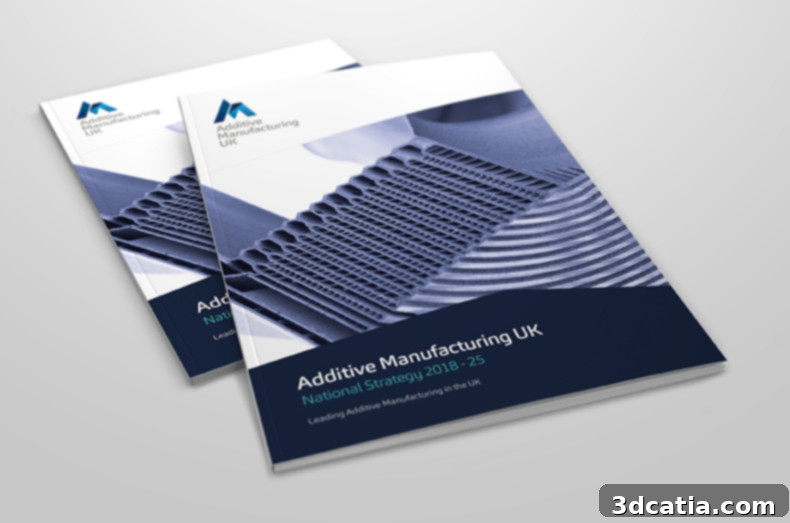
The blueprint for this ambitious undertaking is encapsulated within the “Additive Manufacturing UK National Strategy 2018-25,” developed by AM UK. This comprehensive document outlines a clear pathway for the nation to achieve its goal of global leadership. The UK is not starting from scratch; it already boasts a formidable presence in the European additive manufacturing landscape, ranking second only to Germany in terms of its manufacturing capacity and innovation. This existing strength provides a solid foundation upon which to build, leveraging established expertise and infrastructure to accelerate progress.
Europe, as a continent, is a vibrant hub for 3D printing, hosting numerous innovative manufacturers like Ultimaker, renowned for its desktop 3D printers, and online service providers such as Shapeways, which democratizes access to additive manufacturing for designers and businesses alike. The UK’s strategy is designed to ensure it not only keeps pace with these regional leaders but also carves out its unique competitive edge globally. The core tenets of the strategy revolve around fostering unprecedented collaboration and investment across critical sectors.
A central recommendation of the AM UK report is the establishment of a unified ecosystem where government bodies, industrial enterprises, and academic institutions converge. The aim is to “provide a single ‘go-to’ place to access independent information and latest research.” This centralized resource would serve as a crucial nexus for knowledge exchange, innovation dissemination, and strategic guidance, ensuring that all stakeholders have access to the most current data and insights in additive manufacturing. Such a collaborative framework is essential for accelerating research and development, standardizing best practices, and driving market adoption. By breaking down silos between these traditionally disparate entities, the strategy aims to create a cohesive national effort that can respond dynamically to technological advancements and market demands.
Beyond information sharing, the strategy places significant emphasis on human capital development. It strongly advocates for “upskilling” the existing workforce and increasing the availability of specialized training programs across the UK. The rapid evolution of additive manufacturing necessitates a highly skilled workforce proficient in areas such as advanced CAD/CAM software, materials science, machine operation and maintenance, and quality assurance. Investing in continuous professional development ensures that British workers are equipped with the competencies required to operate, innovate, and lead in this sophisticated technological domain. Furthermore, the report stresses the importance of increasing the number of places with access to additive manufacturing facilities and expertise throughout the UK. This could involve expanding university programs, establishing regional innovation hubs, or providing grants for small and medium-sized enterprises (SMEs) to invest in AM technology, thereby broadening the reach and impact of this innovative sector.
Dr. Paul Unwin, Chairman of AM UK, has been a vocal proponent of this national strategy, underscoring the UK’s intrinsic capabilities. He stated, “the UK is amongst the global leaders in knowledge and successful application of additive manufacturing and AM UK has been at the forefront of developing its vast capabilities.” His insights highlight the nation’s strong academic and research base, which has consistently pushed the boundaries of AM technology. Dr. Unwin further emphasized the far-reaching implications of this technology, noting that “AM has the potential to transform how and where manufacturing is done across a wide range of industrial sectors and global markets.” This transformative potential is a key driver behind the UK’s strategic pivot. With analysts predicting the additive manufacturing and 3D printing industry to experience exponential growth, becoming a huge global market, being ahead of the curve could yield significant economic dividends, securing long-term prosperity and industrial resilience.
The Economic Imperative: UK’s Ambitions and Investments in Additive Manufacturing
The UK’s foray into aggressive additive manufacturing growth is underpinned by clear economic objectives and substantial prior investments. Currently, the UK commands approximately a 5% share of the global 3D printing market. While respectable, the AM UK National Strategy sets an ambitious target to significantly increase this to 8%, a market share projected to be worth an estimated $6.5 billion. Achieving this substantial increase would inject significant capital into the UK economy, creating a ripple effect of benefits.
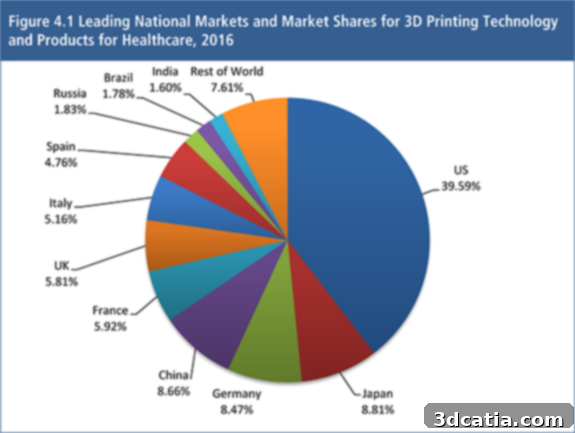
The UK has a 5.81% share in 3D printing in the healthcare market
According to the report, this influx of “extra cash” will be instrumental in both protecting existing jobs within the manufacturing sector and, crucially, creating new, high-skilled employment opportunities. The nature of additive manufacturing demands expertise in areas such as advanced design, materials engineering, software development, and precision machine operation, fostering a workforce equipped for the demands of the 21st-century economy. Moreover, gaining a significant head start in what is undeniably a very disruptive technology will substantially enhance the UK’s industrial competitiveness on a worldwide scale. This competitive advantage is not just about market share; it’s about pioneering innovation, attracting foreign investment, and establishing the UK as a destination for cutting-edge manufacturing solutions.
The UK’s commitment to this sector is further evidenced by its historical investment. Over the last five years, the nation has already channeled more than £200 million into additive manufacturing research, development, and infrastructure. This substantial figure represents a strategic gamble on the future of manufacturing, a calculated risk that is now expected to yield a significant return on investment. This funding has likely supported various initiatives, from academic research projects and the establishment of advanced manufacturing centers to grants for industrial adoption and workforce training programs. Such sustained investment underscores the long-term vision and commitment behind the current strategy, aiming to transform the UK into a formidable force in the global AM arena.
Addressing the Challenges: Fortifying the Supply Chain and Developing a Future-Ready Workforce
While the UK’s aspirations are high, the AM UK report candidly acknowledges existing hurdles that must be overcome. A critical issue identified is the current inadequacy of the UK’s additive manufacturing supply chain. Dr. Unwin elaborated on this challenge, explaining, “although UK research and innovation in this technology is absolutely top flight, we haven’t had the supply chain, so many designers have found solutions abroad.” This deficiency means that despite pioneering advancements in research and development, the practical application and commercialization of these innovations have often been constrained by a fragmented or insufficient domestic supply chain, forcing businesses to look overseas for essential components, materials, or specialized services. This not only leads to capital leakage but also hinders the overall growth and resilience of the local AM ecosystem.
The “AM UK National Strategy” directly confronts this issue, with a clear aim to “enable more to be done here.” The strategy is holistic, considering the entire additive manufacturing supply chain, from raw material providers and equipment manufacturers to post-processing specialists and certification bodies. Efforts are explicitly focused on producing the most effective outcome that will see a transformation in the way businesses operate, making it more feasible and attractive for designers and manufacturers to source their AM needs domestically. This involves fostering local material development, encouraging investment in advanced post-processing capabilities, and developing robust quality assurance frameworks specific to additive manufacturing. By strengthening each link in the chain, the UK aims to create a self-sufficient and globally competitive AM ecosystem.
Another significant challenge, frequently encountered with the introduction of new technologies, is the development of a skilled workforce capable of operating and maintaining advanced equipment. The AM UK strategy has proactively addressed this concern, committing to train British workers to operate this sophisticated equipment. This comprehensive training will encompass a wide array of skills, including expertise in 3D design software (such as CAD/CAM), the intricate processes of operating various types of 3D printers, and the critical maintenance required to ensure their longevity and efficiency. This commitment to workforce development is crucial, as the most advanced technology is only as effective as the hands that wield it.
Fortunately, groundwork for achieving this upskilling is already well underway through initiatives such as the High Value Manufacturing Catapults. These world-class innovation centers, strategically located across the UK, are designed to bridge the gap between academia and industry. They play a vital role in implementing 3D printing technologies by providing hands-on training, conducting collaborative research, and facilitating knowledge transfer to workers and businesses. Through these Catapults, individuals gain invaluable practical skills and a deeper understanding of additive manufacturing processes, directly enabling the upskilling of the UK workforce and ensuring a steady pipeline of talent for the burgeoning AM sector. This integrated approach, addressing both supply chain weaknesses and human capital development, positions the UK to effectively capitalize on its AM ambitions.
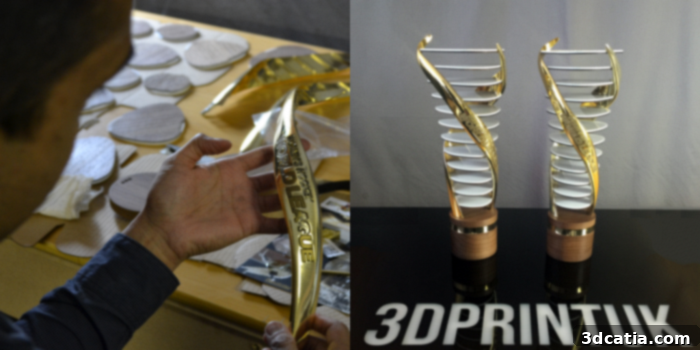
3DPRINTUK is a major UK 3D printing company
Beyond Brexit: A New Horizon for the UK Economy
In a period frequently overshadowed by the complexities and economic ramifications of Brexit, the UK’s resolute commitment to becoming a world leader in additive manufacturing stands out as a rare and significant piece of positive news. This strategic initiative transcends the immediate challenges of trade agreements and economic restructuring, offering a long-term vision for industrial growth and innovation. Dr. Unwin rightly believes that this sector could be decisive in rebuilding and strengthening the UK economy. He asserts, “as we head into Brexit, additive manufacturing can make a real change in the UK and we will be devising the training and education programs needed to provide the additive manufacturing engineers of the future.” This statement encapsulates the profound impact additive manufacturing could have: not just as an industrial sector, but as a catalyst for economic regeneration and a creator of future-proof jobs.
The success of this strategy hinges on a continuous and dedicated effort from all stakeholders. If the UK effectively implements its plans for supply chain optimization, workforce upskilling, and collaborative innovation, it stands a strong chance of repairing any economic damage incurred and regaining a competitive edge on the global stage. The ability of additive manufacturing to enable localized production, reduce reliance on lengthy global supply chains, and foster customized, high-value products makes it particularly appealing for an economy seeking resilience and agility.
The question of whether 3D printing truly offers a lifeline to the British economy remains a subject for future assessment. The ambitious target of an 8% market share by 2025 will serve as a crucial benchmark for evaluating the strategy’s effectiveness. We will undoubtedly need to revisit this conversation in 2025 to meticulously check the UK’s progress and determine how successfully it has navigated this transformative journey. For now, however, in an environment of ongoing economic uncertainty, many in the UK would simply be content with the absence of further economic instability over the next twelve months, viewing the additive manufacturing strategy as a promising, proactive step towards a more secure future.
For a deeper understanding of the strategy, you can read the full report here.
Do you have an opinion on the UK’s additive manufacturing ambitions? Share your thoughts by leaving a comment below or engaging with us on our Facebook and Twitter pages! Don’t miss out on the latest 3D printing news – sign up for our free weekly Newsletter here, delivered straight to your inbox!