
Navigating the 3D Printing Crowdfunding Landscape: Successes, Pitfalls, and Smart Backing
3D printing stands as a truly transformative technology, offering its users boundless opportunities to manifest creative visions and providing the impetus needed to revolutionize entire industries. From rapid prototyping and customized manufacturing to accessible educational tools and personal fabrication, the potential applications are incredibly vast. Given these far-reaching possibilities, it’s hardly surprising that a multitude of companies are striving to establish themselves within this disruptive market. This ambition has fueled an undeniable trend, with numerous innovators seeking to accelerate the future of additive manufacturing.
The rapid adoption of 3D printing technology is clearly reflected in market analytics. According to the Wohlers Report for 2016, the industry recorded an impressive total sale of 278,000 desktop 3D printers. These figures serve as compelling evidence of the strong gravitational pull that many sectors feel towards integrating this innovative technology. Industries, both established and nascent, are increasingly eager to immerse themselves in its capabilities. More often than not, this leap has been led by agile 3D printing startups, keen to capitalize on the burgeoning market while the opportunity is ripe. While the specific objectives among these pioneering companies may vary, their collective efforts have consistently introduced novel projects and products to the market, frequently offering more affordable and cost-effective solutions than previously available.
The Crowdfunding Catalyst for 3D Printing Innovation
A significant enabler and accelerator for many of these ambitious 3D printing projects has been the emergence and widespread adoption of crowdfunding platforms. These platforms provide a unique ecosystem where innovative ideas can gain visibility and secure vital funding. Their popularity within the 3D printing sector stems from their unparalleled ability to directly connect creators with a global community of individuals inherently interested in cutting-edge technologies. This direct engagement empowers startups to simultaneously promote their groundbreaking concepts and secure the necessary financial backing, all within a single, integrated platform. To truly grasp the profound impact that crowdfunding has had on this technological advancement, one only needs to examine the raw numbers. In 2016 alone, the two largest crowdfunding websites, Indiegogo and Kickstarter, facilitated the raising of over $800 million, contributed by approximately 5.6 million backers. With a vast audience actively seeking to support innovative ventures and possessing the capital to do so, crowdfunding has become a magnet for ‘makers’ and forward-thinking individuals dedicated to transforming their ambitious 3D printing aspirations into tangible realities.
Despite the myriad positive attributes associated with crowdfunding platforms, it is crucial to acknowledge that there is also a discernible downside, particularly evident within the domain of 3D printing projects. Over recent years, we have observed a notable influx of 3D printer campaigns on prominent sites like Kickstarter and Indiegogo that have ultimately failed to deliver on their initial promises or have repeatedly postponed the anticipated delivery of their printers. This recurring pattern has naturally led to questions regarding this trend of unsuccessful 3D printer projects: what drives their occurrence, and what underlying factors contribute to their unfortunate outcomes? Understanding these failures is key to both creators and backers in navigating the complex world of hardware development through crowdfunding.
The Peril of Unrealistic Promises: Lessons from Failed Campaigns
Don’t Make a Promise You Can’t Keep: The NexD1 Case Study
Many crowdfunding projects captivate potential backers with alluring promises, often boasting revolutionary tools poised to fundamentally alter lives. However, it is frequently these very ambitious promises that projects ultimately prove incapable of keeping. A prime example that readily comes to mind is the NexD1 printer from Next Dynamics. The company developed its initial prototype for a jetting printer in 2015 and subsequently launched its crowdfunding campaign in December 2016. The printer itself was advertised at an exceptionally attractive price point, ranging between €2,348 and €4,227, a proposition that indeed resonated strongly with early adopters. It was largely thanks to this aggressive pricing strategy that the company rapidly amassed an impressive €500,000 in funding.
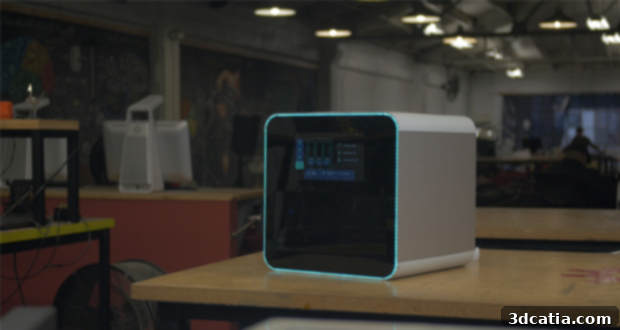
The NexD1 by Next Dynamics
During the active phase of the campaign, a backer specifically requested to view a working prototype of the printer. While the company provided numerous reassuring responses, a verifiable demonstration of the NexD1 in action never materialized. Instead, the team could only offer vague, often doubtful pictures and videos, which did little to quell growing skepticism. This crucial lack of tangible proof for a functional printer soon led to a significant decline in investor confidence, causing their comfortably raised €500,000 to dwindle to €360,000. Ultimately, the campaign was officially suspended by Kickstarter in January 2017. This was swiftly followed by an announcement from the company’s CEO on their website, stating their decision to abandon the NexD1 project and redirect their focus towards “Bigger and better things.” The fundamental cause of this failure was clear: the printer was not in the advanced state of development that had been promised. Despite the team’s apparent belief in their ultimate success, they critically failed to provide sufficient, credible evidence to their increasingly wary backer community, undermining trust and leading to the project’s demise. This highlights the vital importance of transparency and demonstrable progress in hardware crowdfunding.
Low Prices Attract Too Many Customers: The TIKO, NEA3D, and Buccaneer Examples
The TIKO 3D printer was launched with the audacious promise of being one of the most affordable 3D printers on the market, with an enticing price point ranging from just $99 to $179. While its Kickstarter campaign proved to be an overwhelming success in terms of initial funding, the originally planned delivery date of November 2015 was repeatedly postponed, eventually being pushed back a full year to November 2016. Despite delivering approximately 4,100 printers to its earliest backers, the project ultimately reached its breaking point. This catastrophic failure was attributed to a complex combination of factors, including critical software malfunctions that hindered printer functionality and, crucially, a severe lack of operational funds needed to sustain production and development. In February 2017, TIKO openly acknowledged its failure and, heartbreakingly for its supporters, announced that backers would not receive refunds, controversially stating, “If we can’t refund everyone, it’s unfair to refund anyone.” As of now, their project remains on hold, with the company expressing a desire to fulfill its remaining Kickstarter orders should it ever find a viable pathway to do so. This case starkly illustrates the dangers of underpricing a complex hardware product, leading to unsustainable demand and inadequate financial reserves for unforeseen challenges.
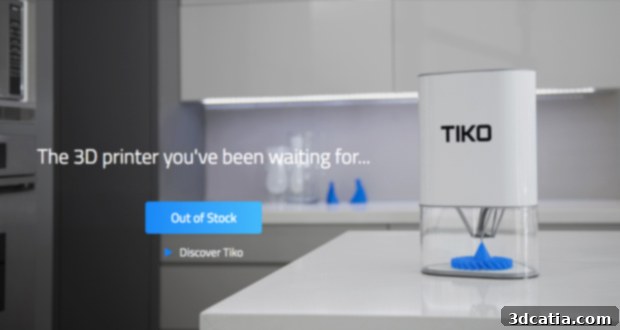
The official Website of Tiko3D says: “Out of Stock”
Just a few years prior to TIKO’s struggles, another company named NEA3D encountered a remarkably similar fate. Offering their 3D printers with pledge amounts between $2,000 and $2,800, their campaign quickly gained traction, becoming a highly popular choice for backers seeking a new 3D printing solution. Unfortunately for both the creators and their eager supporters, a mere nine months after the campaign’s launch, NEA3D made the disheartening announcement of its project’s failure and began the difficult process of offering refunds. The primary reasons cited for their collapse were significant financing difficulties and intractable issues related to the escalating costs of manufacturing their 3D printer. NEA3D issued a stark, yet honest, statement shortly thereafter, conceding that “Building a 3D printer is not cheap.” As of May 2017, the company managed to successfully refund 100% of its backers, a commendable effort despite the project’s overall failure. This case underscores the often-underestimated complexity and capital intensity involved in bringing a sophisticated hardware product like a 3D printer from concept to mass production.
The Buccaneer represents another infamous example of a highly anticipated, low-cost printer launched via a crowdfunding campaign. Its journey began with astonishing speed, raising an incredible $100,000 in less than 10 minutes. This initial surge propelled it to successfully raise a grand total of $1.5 million, marking it as one of the most successful Kickstarter campaigns of its time. Beyond the crowdfunding success, the project also secured an additional $2 million from private investors, signaling strong confidence in its potential. However, despite this substantial financial backing, many were taken aback when the Buccaneer campaign became embroiled in severe financial problems, largely as a consequence of unsustainable spending and poor fiscal management. Left without the means to fulfill a significant portion of their Kickstarter orders, the company made the controversial decision to sell its printers directly on its own website, a move that understandably enraged its loyal backers who had supported the project from the outset. By October 2015, a staggering 60% of their orders remained unfulfilled, prompting Pirate3D, the company behind the Buccaneer, to admit that their project was a failure and to officially announce that it had been “Thrown out of the window.” This saga serves as a cautionary tale about the critical importance of financial prudence and transparent execution, even for projects that achieve immense initial funding success.
Too Good to be True: The Peachy Printer Scandal
The Peachy Printer captivated the 3D printing community as an SLA 3D printer initially offered for an unprecedented $100 – a price point previously unheard of in the market for such technology. Launching its campaign on Kickstarter in September 2013, it quickly surpassed its original funding goal, ultimately raising an astounding $650,000, far exceeding expectations and demonstrating immense public interest.
In the early stages, creators Ryan Grayston and David Boe diligently provided regular updates and the latest news regarding the Peachy Printer’s development, maintaining strong engagement with their supportive community. However, over time, the frequency of these updates gradually diminished, eventually leading to a complete silence. Concerned supporters of the Peachy Printer began to worry, and as more time elapsed, a shocking discovery was made: Grayston uncovered that his business partner, Boe, had illicitly diverted $320,000 of the campaign funds towards the construction of his personal house. Following this devastating revelation, Grayston released a series of videos, including one featuring his former business partner apologizing and confessing to his egregious actions. Despite the apology, the project was rendered unviable, with only half of the original funds remaining. Unable to proceed, Grayston made the difficult decision to publish all project files and repositories on GitHub, including component data and software source codes, allowing the community to potentially salvage or learn from the project’s technical aspects. This unfortunate incident stands as a stark reminder of the critical importance of trust and integrity in crowdfunding, and the potential for devastating outcomes when these principles are violated.
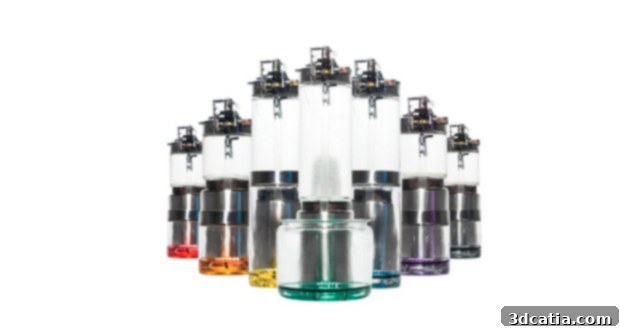
The Peachy 3D printer
Beyond cases of project mismanagement or unforeseen technical difficulties, another deeply concerning phenomenon that has unfortunately been a continuous occurrence in the crowdfunding space is the exploitation of backers through fraudulent campaigns. These instances typically involve malicious actors taking advantage of the crowdfunding model to illicitly obtain funds. Such fraudulent activities often manifest as “copycat” projects, mimicking the superficial appeal of legitimate ventures like NEA3D. These deceptive campaigns create the illusion that backers will receive a promised product, such as a 3D printer, when in reality, the true objective of the project is for the creators to quickly raise a few thousand dollars and then vanish with the money, leaving supporters empty-handed and disillusioned. While crowdfunding platforms employ measures to combat such fraud, the vigilance of both the platforms and individual backers remains paramount to mitigate these risks.
Crowdfunding Platforms’ Response to Challenges and Ensuring Trust
Setting aside the outright fraudulent campaigns, many of the projects that ultimately failed could potentially have achieved better outcomes had they been subjected to more rigorous vetting processes and ongoing oversight. To gain a clearer understanding of the review processes employed by major crowdfunding platforms and to determine what actions backers can take to safeguard their investments, we directly consulted with both Kickstarter and Indiegogo, currently two of the largest and most influential crowdfunding websites operating today.
David Gallagher, Director of Communications at Kickstarter, elucidated their stringent requirements, explaining that a project must meet several specific terms of use and a comprehensive set of rules before it can be published on their platform. Crucially, this includes the requirement for a functional prototype; in the context of a 3D printer, it must demonstrate its ability to print something tangible. Beyond this foundational requirement, Kickstarter generally refrains from evaluating the more ambitious claims made by project creators, emphasizing that their role is to facilitate, not to validate every promise. Indiegogo, on the other hand, operates with a slightly different philosophy; they do not mandate a working prototype. Instead, their focus is more on fostering the realization of innovative ideas, thereby placing the onus on the individual contributor to assess a project’s potential and determine its credibility before backing. Despite these differing approaches to initial vetting, a critical shared connection between both websites is their commitment to maintaining trust and safety. Both platforms employ dedicated Trust and Safety teams specifically tasked with investigating concerns and red flags raised within their respective communities, acting as a crucial line of defense against potential issues.
In a significant number of cases, the ultimate reason for a project’s failure is frequently linked to unforeseen obstacles encountered during the complex manufacturing phase of the product. Elena Ginebreda-Fredel, Associate Manager of Communications at Indiegogo, elaborates on this point: “Building a business is hard and always presents unexpected challenges. Very often, there are unforeseen costs and delays from manufacturers, which are difficult to be prepared for.” These challenges can range from supply chain disruptions, quality control issues at scale, and unexpected component price hikes to logistical nightmares in distribution. Recognizing the inherent difficulties in hardware development, Kickstarter has proactively tried to mitigate these problems with its recently announced Hardware Studio. This initiative provides creators with access to free educational materials, invaluable resources, and personalized advice from well-established companies with proven track records in hardware manufacturing, aiming to better prepare project teams for the realities of production. This strategic move highlights an evolving understanding within crowdfunding platforms about the unique risks associated with hardware projects and their commitment to supporting creators beyond just initial funding.
Challenges often arise during the manufacturing process – picture via The Rockpointe Group
The differing outcomes for backers in various failed campaigns underscore the importance of platform intervention and the timing of such actions. In the case of the NexD1, Kickstarter prudently realized early on that the project was violating its terms of use by failing to provide sufficient evidence of a working prototype. Fortunately for the backers, Kickstarter took swift action and suspended the campaign *before* any funds were charged, effectively protecting them from financial loss. In contrast, for projects like TIKO3D and NEA3D, backers did not experience the same good fortune. By the time these projects officially acknowledged their failures, their respective campaigns had already concluded, and funds had been fully transferred to the creators. This meant that any recourse for refunds or compensation became significantly more complex and, in TIKO’s case, ultimately unattainable for many. This distinction highlights a crucial difference in how platforms manage risk at various stages of a campaign.
Ultimately, both Kickstarter and Indiegogo, despite their nuanced differences, advocate for the same fundamental considerations when it comes to managing projects: clear, consistent, and honest communication. Creators who encounter insurmountable obstacles and cannot fulfill their initial goals are expected to transparently inform their supporters about how the raised money was utilized and the specific strategies they are employing to bring the project to the best possible conclusion, even if that means a revised or limited outcome. Recognizing that a full refund is not always financially feasible for struggling projects, a campaign can also explore offering partial refunds or providing an alternative product if they possess the capacity to do so. This approach prioritizes transparency and responsible stewardship of backer funds, aiming to maintain trust even in the face of adversity.
The Case for Success: Formlabs and Best Practices
The majority of contributors to crowdfunding projects are inherently aware of the risks involved in supporting an early-stage venture. Yet, it is precisely because of these visionary backers that truly innovative products like the 3Doodler, the M3D, or the Formlabs Form 1 were able to transition from concept to reality. Formlabs, in particular, has emerged as a significant success story, evolving from a Kickstarter project into a prominent, international business. To glean insights into their journey, we sought to understand the specific challenges and obstacles Formlabs had to overcome to transform their ambitious project into a tangible, commercial success.
Back in 2012, Formlabs made a significant splash in the additive manufacturing market with the introduction of the Form 1, pioneering the first truly affordable professional-grade SLA machine. This desktop stereolithography (SLA) printer quickly garnered immense attention, raising nearly $3 million in pre-orders through its crowdfunding campaign and cementing its status as one of the most successful crowdfunding ventures of its time. Today, Formlabs has considerably expanded its portfolio, introducing several other groundbreaking machines, including the selective laser sintering (SLS) 3D printer Fuse 1 and the innovative robotic solution Form Cell. The company has grown into a formidable enterprise, employing 250 individuals across three different countries and operating with a robust global distribution network, a testament to its sustained innovation and strategic execution far beyond its crowdfunding origins.
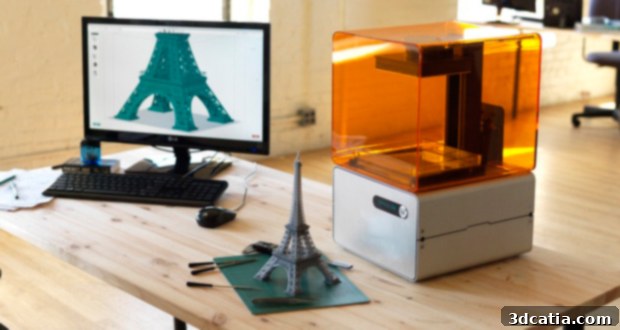
The beginning of Formlabs’ success story: The Form 1 – Picture via Kickstarter
Michael Sorkin, General Manager of Formlabs EU, succinctly articulates the inherent difficulties in their field: “Building Hardware is hard, and building 3D printers is even harder: you need to bring together a full ecosystem – hardware, software and a great customer service.” He further elaborated on the extensive range of challenges faced, which typically encompass intricate logistics, establishing efficient distribution channels, and managing complex manufacturing processes at scale. These insights underscore that even with a groundbreaking product and successful funding, the journey from concept to market is fraught with multifaceted operational hurdles that demand exceptional planning and execution.
According to Formlabs, transparency is an absolutely paramount principle. When inevitable delays, technical problems, or unforeseen setbacks occur – and they almost always do in hardware development – maintaining open and honest communication with your community is not just beneficial, it is vital. Supporters are far more likely to understand and accept difficulties if creators are upfront and transparent about the challenges they face. However, creators are not the sole arbiters of a project’s outcome; contributors also bear a significant responsibility in shaping its trajectory. Regardless of the monetary investment, a backer’s thoughtful feedback and critical input are immensely valuable. This dynamic, collaborative exchange between creators and their community is, arguably, the very essence of what makes crowdfunding a powerful and unique model for innovation.
What Can a Supporter Do to Make Informed Decisions?
Before committing your hard-earned money and potentially facing disappointment, there are several proactive steps you can take to protect yourself and make more informed decisions when backing a crowdfunding project. Firstly, always review the advice and guidelines that the crowdfunding website itself provides to backers seeking more information about a project and its potential outcomes. Beyond this, if you are considering supporting a new idea or product, you can effectively evaluate its viability and trustworthiness based on the following critical points:
- **Team Qualifications and Expertise:** Does the core team possess the necessary interdisciplinary qualifications and experience? This typically includes strong backgrounds in engineering (mechanical, electrical, software), project management, supply chain logistics, and marketing. A well-rounded team significantly increases the likelihood of successfully navigating the complexities of product development and delivery.
- **Manufacturing Capacity and Strategy:** Can the creator or startup realistically scale production to meet the demand generated by the campaign? Do they have a clear and competent manufacturing strategy in place, including established partnerships with reliable suppliers and manufacturers, or a proven in-house capability? Lack of a solid manufacturing plan is a common pitfall.
- **Project Feasibility and Realistic Pricing:** Is the project’s ambition technically feasible given the current state of technology and the timeline proposed? Is the advertised pricing reasonable, or does it seem suspiciously low compared to similar products already on the market? Unrealistic price points can be a major red flag, often indicating overlooked costs or an unsustainable business model.
- **Trustworthiness and Transparency:** How transparent is the project team about its progress, challenges, and future plans? Are they responsive to questions from the community, providing detailed and credible answers? Look for concrete evidence of progress, such as videos of working prototypes, not just rendered images. A lack of transparency can be a strong indicator of potential issues.
- **Community Engagement and Creator Responsiveness:** How active and engaged is the project team with its backer community? Do they regularly post updates, address concerns, and interact with comments and questions? A highly responsive and engaged team generally signals dedication and a commitment to their supporters.
By carefully considering these vital aspects and conducting a little independent research, you can significantly mitigate potential risks, safeguard your investment, and ultimately preserve the excitement and positive spirit that defines the crowdfunding experience. Due diligence is your best ally in this innovative landscape.

Considering a few aspects of the projects can keep you from frustration – picture via gizmodo
When thoughtfully factoring out the potential mishaps that can occur when backing a project, supporters should not allow fear to overly deter them from embracing promising innovations. According to a study conducted by Kickstarter itself, only a modest 9% of all projects ultimately fail to deliver rewards. This figure is remarkably low, especially when juxtaposed against the vast number of projects that have been successfully brought to fruition through crowdfunding. While it is always prudent to acknowledge and be aware of an inherent level of risk associated with any early-stage investment, the opportunity to be one of the first individuals to receive a groundbreaking new 3D printer, or any other innovative product, is precisely what imbues the adventure of backing a project with such profound excitement and satisfaction. It’s a chance to be part of something new, to help creators realize their dreams, and to shape the future of technology.
As previously articulated, crowdfunding platforms possess immense power to act as potent accelerators for a startup, a visionary product, or a nascent idea. However, for a creator to truly see their project through to successful completion, it is absolutely essential that they possess the necessary qualifications across various disciplines and, equally important, that they approach every single aspect of the project with utmost seriousness and meticulous planning. The initial motivation that inspired them to launch a campaign should also be leveraged as a powerful guiding force: their supporters. As a creator, it is paramount to ensure that the project is being undertaken for the benefit of these loyal backers, which entails actively listening to their feedback, concerns, and suggestions. Furthermore, maintaining open, honest, and consistent communication with supporters throughout the entire duration of the campaign, detailing both progress and inevitable setbacks, is crucial. This level of transparency not only fosters greater understanding but also actively builds the trust that is indispensable between backers and the campaign team. When both parties actively engage, fulfill their respective responsibilities, and operate with mutual respect, they are already more than halfway towards achieving a shared success.