
Revolutionizing Affordable Housing: The Inhabited 3D Printed Home in Nantes, France
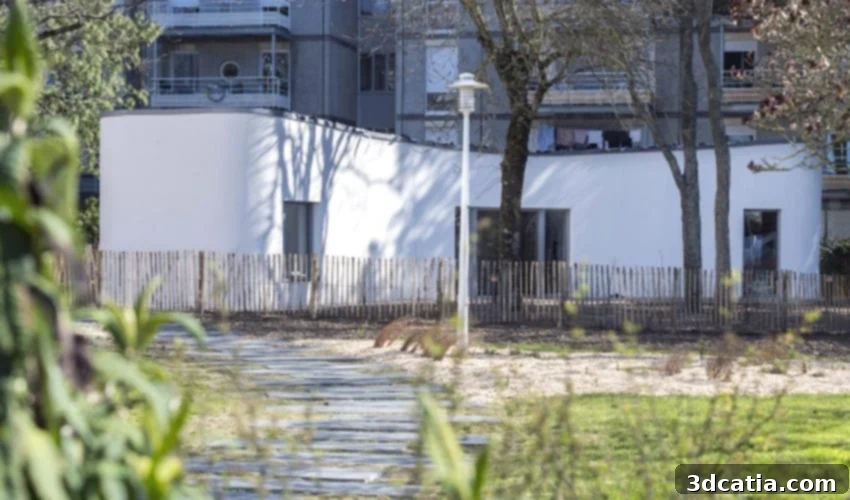
The landscape of modern construction is undergoing a significant transformation, with 3D printing in construction emerging as a groundbreaking technology. Over the past few years, this innovative approach has steadily gained popularity, showcasing its immense potential to address some of the most pressing challenges in urban development and housing. A prime example of this paradigm shift is the Yhnova project, launched a couple of years ago, which set out to demonstrate how advanced 3D technologies could be harnessed to create affordable and sustainable housing solutions. Today, this visionary project has reached a monumental milestone: the pioneering 3D printed house in Nantes, France, is now officially inhabited, as a family has recently moved into this remarkable piece of social housing innovation. This event marks a crucial step forward, transforming theoretical possibilities into tangible realities for everyday people.
Increasingly, 3D printing is being recognized as a viable and transformative solution within the construction sector. Numerous initiatives are actively demonstrating its capacity to offer a powerful response to the global housing crisis. The Yhnova project stands out as an exemplary model, driven by the core objective of providing accessible and affordable social housing to families in Nantes. Franky Trichet, the deputy mayor of Nantes, articulated the city’s forward-looking perspective on the project: “The future of the project from the point of view of the city is twofold. The first is to see if we can integrate this type of construction into our standard urban planning and development. The second objective for us is to evaluate the applicability of these construction principles for other types of public buildings – such as sports halls, community centers, or various communal infrastructure projects.” This strategic vision underscores the potential for 3D printing to move beyond residential applications and influence broader public infrastructure development, fostering a more efficient and sustainable approach to construction across the board.
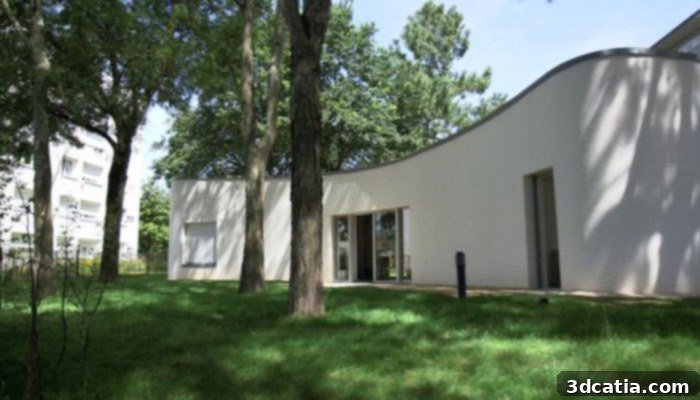
Photo credits: BBC
Pioneering Sustainability and Economic Efficiency in Construction
More Economical and Sustainable Construction through 3D Printing
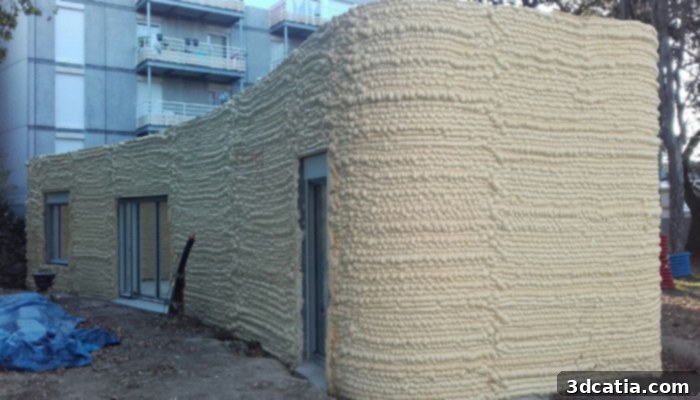
Following its official inauguration last March, the 95-square-meter 3D printed house is now home to a family comprising three children and their parents. This innovative four-room residence was meticulously constructed using the BatiPrint3D process, a cutting-edge 3D printing technology specifically developed by dedicated researchers at the University of Nantes. The BatiPrint3D system leverages a sophisticated robotic arm, measuring four meters in length, which is precisely guided by an advanced laser system. This robotic arm systematically deposits successive layers of carefully selected materials to construct the walls of the house. The process involves laying down an initial layer of formwork, followed by a layer of a foam-like material specifically chosen for its superior insulation properties. Finally, a robust layer of a specialized concrete mixture is applied. This multi-layered approach ensures that the resulting walls are not only structurally thick and durable but also exceptionally well-insulated, contributing significantly to the home’s energy efficiency and long-term sustainability. This method drastically reduces material waste, optimizes construction time, and offers a level of precision that is challenging to achieve with traditional building techniques.
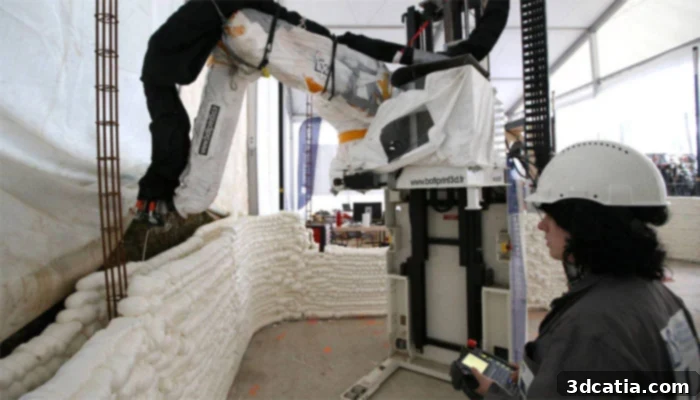
The robotic arm of the BatiPrint3D process
The sheer speed of construction achieved through 3D printing is one of its most compelling advantages. The initial 3D printing phase of the house in Nantes, which involved fabricating the walls and core structure, took an astonishingly mere 54 hours. Following this rapid printing process, the subsequent installation of essential elements such as windows, doors, and the roof required approximately four additional months to complete the entire structure. This expedited timeline significantly compresses the overall construction period compared to conventional building methods. Furthermore, the financial implications are equally impressive. The total construction cost for this pioneering home is estimated at €200,000. According to the project stakeholders, this figure represents a remarkable 20% reduction in cost when compared to traditional construction techniques for a similar dwelling. They even express optimism that future iterations of this technology could potentially reduce the printing time even further, aiming for an incredible 33 hours for the structural printing phase, promising even greater efficiency and cost savings. This blend of speed and affordability positions 3D printing as a genuine game-changer for accessible housing initiatives globally.
A New Chapter for Families: The Human Impact of 3D Printed Homes
The true success of the Yhnova project is best encapsulated in the experience of the Ramdani family, who have now settled into their innovative new home. As the family unpacked their belongings and began their new life, the father shared his heartfelt sentiments: “It is a great honor to be part of this project. For years, we lived in a neighborhood of social housing that dated back to the 1960s, which, while it served its purpose, was showing its age and limitations. So, this move represents a monumental change for us, a profound improvement in our quality of life. Here, we have not just a house, but a proper home with a beautiful garden, offering space, comfort, and a sense of permanence that was previously out of reach. It’s truly something else entirely!” His words eloquently convey the significant positive impact of this project on a real family, transforming their living situation and offering them a brighter, more stable future. This testimony highlights how technological innovation can directly translate into enhanced human dignity and well-being, proving that advanced construction methods can profoundly improve the lives of those in need of quality social housing.
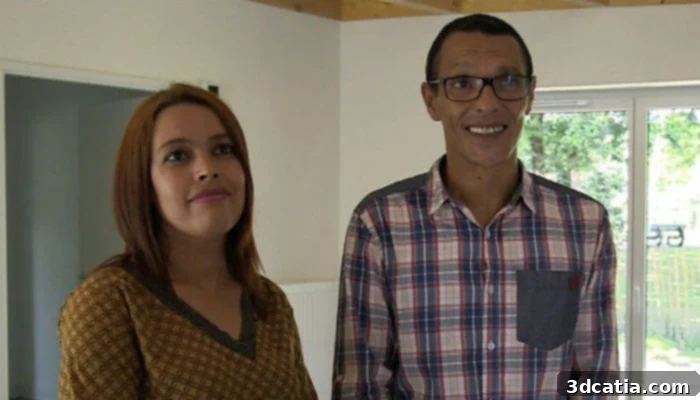
The parents of the Ramdani family (photo credits: BBC)
Francky Trichet, a driving force behind this innovative endeavor, passionately remarked, “For 2,000 years, there has been no fundamental change in the paradigm of the construction process. We wanted to fundamentally disrupt and sweep away this entire stagnant process. That’s why I assert that we are merely at the beginning of an epic new story in construction. We have just penned the opening lines: ‘Once upon a time.’ And this pioneering work, this bold first step, will inevitably ‘force’ private construction companies to ‘take the pen’ and eagerly continue with this transformative narrative, pushing the boundaries of what is possible.” This profound statement underscores the project’s ambition to not just build a house, but to ignite a widespread revolution within the construction industry, inspiring wider adoption of advanced manufacturing techniques.
Smart Living and Future Implications of 3D Printed Architecture
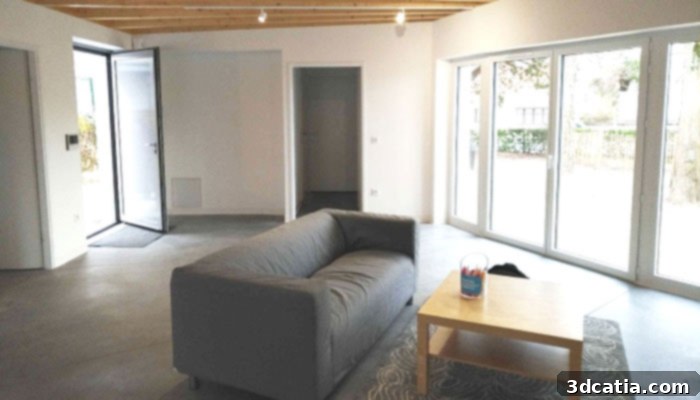
This experimental home is not just a testament to efficient construction; it is also a living laboratory of smart technology. It has been meticulously equipped with a comprehensive suite of sensors and advanced monitoring systems, designed to continuously track vital environmental parameters within the house, including air quality, humidity levels, and internal temperature. This integration transforms the dwelling into a “smart home,” offering significant advantages, particularly in optimizing energy consumption. By providing real-time data, these systems facilitate intelligent adjustments, leading to a noticeable reduction in energy costs for the inhabitants, making the home both environmentally friendly and economically beneficial. Furthermore, demonstrating a commitment to universal design, the house was thoughtfully conceived to be fully accessible for individuals with disabilities. It features seamless wheelchair access throughout its layout and incorporates the groundbreaking ability to control various home functions directly from a smartphone, enhancing comfort, independence, and convenience for all residents. This forward-thinking design exemplifies how 3D printing can be combined with smart technology to create homes that are not only affordable and sustainable but also highly functional and inclusive. This paves the way for a new generation of adaptable and intelligent living spaces, promising a brighter future for personalized housing solutions.
Benoit Furet from the University of Nantes emphasizes that the Yhnova project is merely the precursor to a much larger movement. He confidently explains that this groundbreaking endeavor represents just the beginning of what 3D printing can achieve in the construction industry. Indeed, Furet is currently immersed in ambitious follow-up projects, including the development of 18 new 3D printed houses in the northern region of Paris, aimed at further scaling this technology for residential use. Beyond housing, he is also spearheading the construction of a substantial 700-square-meter shopping center, demonstrating the versatility and scalability of 3D printing for commercial and public infrastructure. These ongoing projects underscore the rapid advancements and increasing adoption of construction 3D printing beyond initial experimental phases. The success of the Nantes house serves as a powerful proof of concept, inspiring further investment and research into this exciting field. It will certainly be fascinating to closely follow these developments as they unfold, watching how 3D printing continues to reshape our built environment. In the interim, for those eager to delve deeper into the technical specifics and innovations behind this transformative technology, comprehensive information is available on the project’s official website.
The Yhnova project in Nantes stands as a powerful testament to the transformative potential of 3D printing in addressing critical housing challenges, offering a blueprint for future developments that are both innovative and socially responsible. It demonstrates that advanced technology can be harnessed to create living spaces that are not only more economical and sustainable but also enhance the quality of life for families. What are your thoughts on the future and impact of social 3D printed houses? We invite you to share your perspectives and engage in the conversation by leaving a comment below, or by connecting with us on our Facebook and Twitter pages! Don’t forget to sign up for our free weekly Newsletter to receive all the latest news, updates, and groundbreaking innovations in the dynamic world of 3D printing directly in your inbox. Join our community and stay informed about the future of construction!