

The Future of Bionic Limbs: Open Bionics’ 3D Printed Hero Arm Arrives in the US
In a significant leap forward for assistive technology, Open Bionics, a pioneering UK-based company, has been at the forefront of revolutionizing the prosthetics industry. Back in January 2019, the company garnered substantial attention by announcing it had successfully raised approximately £5 million from a diverse group of investors. This crucial funding was earmarked not just for the continued development of advanced 3D printed prosthetics but specifically for sophisticated bionic devices that promise to redefine life for amputees globally. Last year marked a pivotal moment when Open Bionics proudly released its first 3D printed bionic arm, achieving official medical approval – a testament to its innovation and rigorous standards. This groundbreaking prosthetic device is priced around £10,000 (approximately $13,060), representing a dramatic reduction to merely a third of the cost of traditionally manufactured equivalents. The company’s strategic utilization of 3D technologies has been instrumental in drastically reducing production costs, thereby enabling them to offer highly customizable 3D printed bionic devices to clinics and patients, making advanced bionic technology more accessible than ever before.
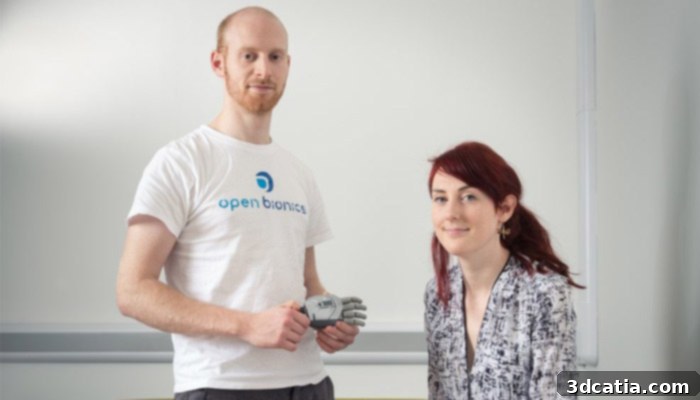
The two founders of Open Bionics
Initially, these transformative devices were exclusively available within the United Kingdom and France, reaching a limited but eager patient base. However, Open Bionics has recently unveiled a monumental new partnership with Hanger Clinic, a leading provider of prosthetic and orthotic care in the United States. This strategic collaboration is set to significantly expand the reach of Open Bionics’ innovative products, bringing its cutting-edge bionic technology to the vast and diverse US market. This expansion marks a crucial step in the company’s mission to make advanced bionic limbs available to more individuals who can benefit from them, leveraging Hanger Clinic’s extensive network and expertise in patient care.
Unveiling the Hero Arm: A Fusion of Advanced Functionality and Empowering Aesthetics
At the core of Open Bionics’ success story lies its flagship product: the 3D printed Hero Arm. This revolutionary device goes beyond mere functionality, embodying a profound understanding of its users’ needs by offering sophisticated multi-grip capabilities alongside uniquely empowering aesthetics. Designed for individuals with below-elbow amputations, it caters to both adults and children aged eight and above, recognizing that physical rehabilitation also encompasses psychological well-being. What truly sets the Hero Arm apart is its innovative approach to personalization. As its name cleverly suggests, the Hero Arm can be customized to resemble a superhero’s arm, allowing users to choose from an exciting array of designs inspired by popular culture icons such as Frozen, Marvel Comics, or even Star Wars. This not only makes the prosthetic device more appealing, particularly to younger users, but also transforms a medical necessity into a statement of identity and strength.
The functional versatility of the Hero Arm is remarkable, enabling users to perform a wide spectrum of actions with surprising ease and precision. From basic tasks like gripping various objects and giving an “OK” sign to more nuanced social gestures such as high-fiving or fist-bumping, and even the delicate act of picking up a small, intricate object, the Hero Arm empowers its users with an unparalleled range of motion and control. The company emphasizes the intuitive design, stating, “Special sensors within the Hero Arm detect muscle movements, meaning you can effortlessly control your bionic hand with intuitive life-like precision. Also, haptic vibrations, beepers, buttons and lights provide you with intuitive notifications.” This sophisticated sensory feedback system ensures that users experience a natural and responsive interaction with their bionic limb, significantly enhancing their daily independence and confidence. The integration of advanced sensor technology with haptic feedback means that users receive real-time information, making the experience of using the Hero Arm incredibly seamless and natural, blurring the lines between the prosthetic and a natural limb.
Open Bionics Expands Horizons: Launching the Hero Arm in the United States
The expansion of Open Bionics into the US market marks a monumental milestone, promising to transform the lives of countless individuals. The initial phase of this launch has already brought profound change, exemplified by 14-year-old Meredith Gross, a high school freshman and a patient at Hanger Clinic, who became one of the first recipients of the Hero Arm in the US. Meredith was born missing a portion of her lower left arm, a challenge she has navigated with remarkable resilience. A competitive golfer and volleyball player, she previously relied on sports-specific prostheses, which, while functional, often lacked the versatility required for everyday life. With the Hero Arm, Meredith is now experiencing a paradigm shift. For the first time, she is considering using her 3D printed bionic device not just for her athletic pursuits but also for a wide array of daily tasks, opening up new avenues for independence and engagement.
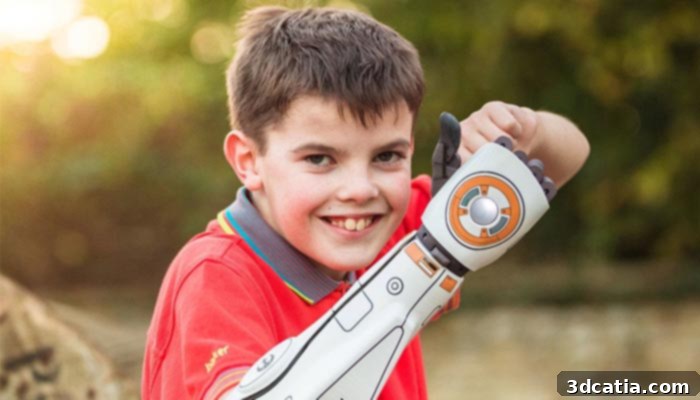
Photo Credits: Open Bionics
Meredith’s mother eloquently captured the transformative impact of the Hero Arm, stating, “The Hero Arm has opened up a whole new world for Meredith. She found success from the moment she put It on, and has been able to do things for the first time in her life. This device allows people like Meredith to own their differences with more confidence.” This powerful testimony underscores the profound psychological benefits of the Hero Arm, moving beyond mere physical function to instill a sense of empowerment and self-acceptance. For many users, this innovative bionic arm is not just a tool; it’s a catalyst for embracing their uniqueness and engaging more fully with the world around them. This shift from mere accommodation to genuine empowerment is a cornerstone of Open Bionics’ philosophy and a driving force behind the Hero Arm’s design.
The Economics of Bionic Limbs: Affordability Meets Advanced Technology
The cost barrier has historically been one of the most significant challenges in accessing advanced bionic prosthetic devices. Traditional bionic prosthetics can command prices upwards of £60,000 (approximately $78,350) apiece, placing them out of reach for many individuals and often creating immense financial burdens for families. This exorbitant cost is typically due to complex, labor-intensive manufacturing processes, specialized materials, and highly customized fitting procedures that involve significant manual craftsmanship. Open Bionics has fundamentally disrupted this economic model with its 3D printed Hero Arm. While the initial introduction mentioned a cost of £10,000 for the full device, the company effectively launched its 3D printed prosthetic arm at an incredibly competitive starting price of £5,000, making sophisticated bionic technology dramatically more accessible. This remarkable price reduction is directly attributable to the efficiency and cost-effectiveness of additive manufacturing, specifically 3D printing, which streamlines production and reduces material waste.
Beyond the initial cost, the manufacturing process itself demonstrates significant advantages. The entire 3D printing and assembly process for the Hero Arms typically takes approximately 40 hours. This relatively short production time, compared to weeks or even months for traditional methods, means that patients can receive their custom-fitted bionic arm much faster, accelerating their rehabilitation journey. The Hero Arm is also available in three distinct sizes, catering to a broad range of users, from children to adults. Furthermore, a key design triumph is its weight; the Hero Arm is recognized as the most lightweight bionic hand currently available on the market. This reduction in weight significantly enhances user comfort and reduces fatigue, encouraging longer and more consistent use throughout the day. The combination of affordability, rapid production, and lightweight design positions the Hero Arm as a true game-changer in the world of bionic prosthetics, making advanced technology a tangible reality for a far wider population.
The Promise of the Future: Open Bionics’ Vision for Innovation
Open Bionics’ journey from a UK startup to a global innovator underscores the transformative power of 3D printing in the medical sector. By combining cutting-edge technology with a deep understanding of human needs, they have not only created a highly functional device but also an empowering tool that helps individuals embrace their unique identities. The partnership with Hanger Clinic in the US is a pivotal moment, poised to bring this life-changing technology to countless new users. This expansion signals a broader trend in healthcare where personalized, cost-effective solutions are becoming increasingly vital. The continuous innovation in materials, sensor technology, and artificial intelligence promises an even brighter future for bionic limbs, with Open Bionics leading the charge in making advanced prosthetics not just functional, but truly integrated and empowering parts of their users’ lives. Their commitment to making bionic technology accessible and appealing is paving the way for a future where a disability can be transformed into a superpower.
For more comprehensive information on Open Bionics and its groundbreaking work, you can explore their official websiteHERE. Dive deeper into their mission, technology, and the inspiring stories of Hero Arm users.
What are your thoughts on the revolutionary Hero Arm and its potential impact on the lives of amputees? We invite you to share your perspectives and comments below, or join the conversation on our Facebook and Twitter pages! Don’t miss out on the latest advancements and news in the world of 3D printing; remember to sign up for our free weekly Newsletter, delivering all the essential updates straight to your inbox!