
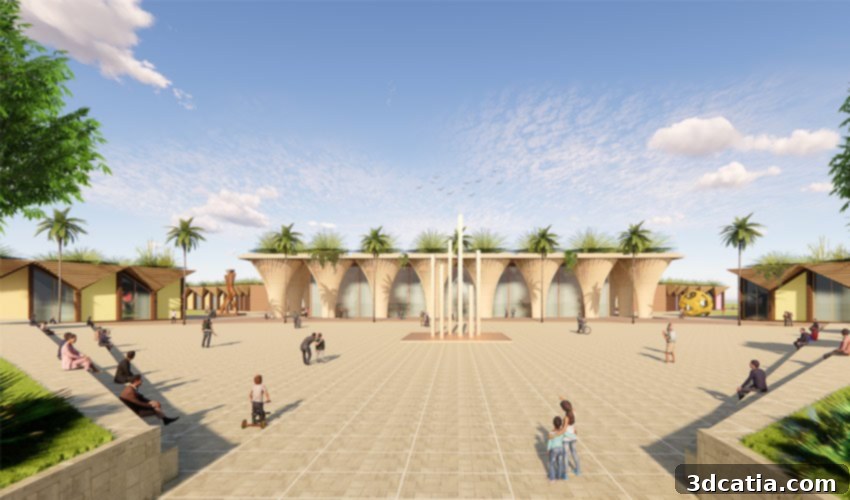
Cacao Eco Village: Pioneering Sustainable Architecture and 3D Printing with Cocoa Waste
In an ambitious stride towards a more sustainable future, Valentino Gareri Atelier has unveiled the revolutionary concept of the Cacao Eco Village. Envisioned as a beacon of innovation, this project is designed to function as a dynamic hub for cutting-edge technologies, a fertile ground for the innovators of tomorrow, and a vibrant space for co-creation that inherently respects and nurtures our planet. The architectural studio’s vision is rooted deeply in the utilization of local and natural resources, most notably cocoa beans. This seemingly unconventional choice underpins a groundbreaking approach to construction, as the village plans to leverage cocoa waste for 3D printing a significant portion of its infrastructure. Set to commence construction this year in the biodiverse landscapes of Ecuador, the Cacao Eco Village stands firmly on five foundational pillars: modularity, connectability, functionality, sustainability, and unparalleled access to technology. This holistic design philosophy promises a paradigm shift in how we conceive and construct our living and working environments, demonstrating that ecological responsibility can harmoniously coexist with technological advancement and architectural brilliance.
The chosen location for this pioneering village is Pedernales, a stunning coastal area in Ecuador, renowned for its panoramic beaches and idyllic natural beauty. This picturesque setting provides the perfect backdrop for a project that aims to redefine sustainable living. Valentino Gareri Atelier is developing this visionary infrastructure in collaboration with the esteemed chocolate manufacturer MUZE Cacao and the dedicated association Avanti. The entire conceptual framework of the Cacao Eco Village draws profound inspiration from the principles of the circular economy, pushing its boundaries to create a truly closed-loop system. Valentino Gareri, the founder of the eponymous architecture firm, articulates this philosophy with remarkable clarity: “We have pushed the circular economy core principles so much that they informed the design philosophy of the entire project. The cacao waste, result of the chocolate production process, will be re-utilized for 3D-printing parts of the village. Waste is not only turned into a resource, but into architecture. In the not-too-distant future, we will be able to design buildings entirely made of natural materials and recycle them at the end of their life cycle in order either to create new ones, or to return them back to nature.” This powerful statement underscores the project’s commitment to transforming perceived waste into valuable architectural components, thereby setting a new benchmark for resource efficiency and environmental stewardship in the construction sector. The choice of Ecuador, a country rich in biodiversity and cocoa production, further highlights the project’s deep connection to local resources and its potential for fostering sustainable economic development within the region.
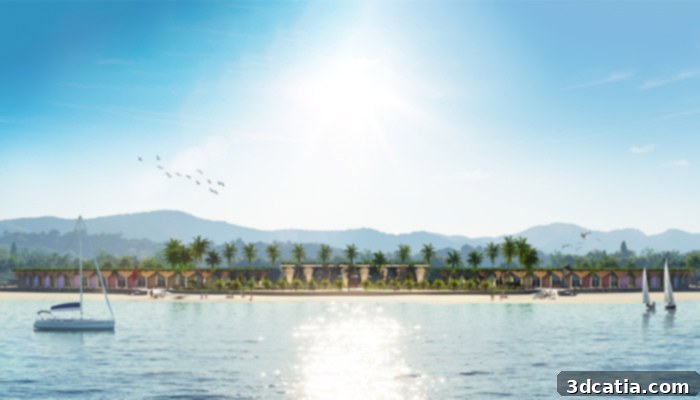
The village will be located in Ecuador (photo credits: Valentino Gareri Atelier)
Revolutionizing Construction with Cocoa Waste and Bioplastics
One of the most innovative aspects of the Cacao Eco Village is its pioneering use of cocoa waste for construction. Specifically, the discarded shells of the cocoa fruit, which represent a significant byproduct of chocolate production, are ingeniously transformed into a durable bioplastic material. This bioplastic is then utilized as the primary feedstock for advanced 3D printing processes, enabling the creation of various architectural elements within the village. While the exact components to be 3D printed are not fully specified, this method firmly aligns with the project’s overarching pillar of sustainability. This groundbreaking approach not only reduces landfill waste but also champions the use of renewable resources, dramatically lowering the carbon footprint associated with traditional construction materials like concrete. The transformation of agricultural waste into a high-performance building material exemplifies the core tenets of the circular economy, proving that valuable resources can be derived from what was once considered refuse. This innovation holds immense promise for the future of sustainable construction, offering a scalable and environmentally friendly alternative to conventional building methods.
Beyond additive manufacturing, the firm has meticulously integrated other eco-conscious design features. The roofs are engineered with sophisticated rainwater collection systems, ensuring efficient water management and reducing reliance on external water sources. An innovative natural ventilation method is incorporated into the building designs, minimizing the need for energy-intensive air conditioning and promoting healthy indoor air quality. Furthermore, the construction extensively utilizes abundant local materials such as sustainably sourced wood and bamboo, blending modern technological innovation with traditional, eco-friendly building practices. This thoughtful combination of advanced manufacturing techniques and time-honored sustainable materials ensures that every aspect of the Cacao Eco Village contributes to a truly sustainable and harmonious environment. The focus on local sourcing also supports the regional economy and minimizes transportation-related emissions, further embedding the project within its ecological and social context.
The Five Pillars: A Blueprint for a Sustainable Future
The Cacao Eco Village is meticulously designed around five core pillars that collectively form a comprehensive blueprint for sustainable and intelligent living. Each pillar is crucial to the village’s holistic functionality, its resilience, and its profound potential for global impact, demonstrating a forward-thinking approach to community development and environmental responsibility.
1. Modularity
The entire village infrastructure is conceived with modularity at its heart. This design principle allows for incredible flexibility, enabling the structures to be easily adapted to different geographical sites and varying community needs. Modularity facilitates rapid construction, simplifies maintenance, and allows for future expansion or reconfiguration without extensive disruption, making the village highly adaptable to changing circumstances. This inherent adaptability is key to the studio’s ambitious goal of reproducing the Cacao Eco Village concept elsewhere, fostering a global network of sustainable and interconnected communities. It implies that elements can be prefabricated and assembled on-site, significantly speeding up construction timelines and reducing on-site waste, while also offering customizability to individual users or functions within the village. This approach minimizes construction impact and maximizes efficiency.
2. Connectability
Beyond physical connections, this pillar emphasizes digital and social connectivity. The village is engineered to be a digitally integrated environment, facilitating seamless communication and collaboration among its residents and innovators. It fosters a strong sense of community, connecting individuals with shared values and goals, whether they are researchers, entrepreneurs, or residents. This robust network aims to accelerate knowledge sharing, spark new ideas, and bridge the gap between theoretical research and practical application, creating an ecosystem where innovation can thrive through constant interaction and collaboration. High-speed internet and integrated smart systems ensure that residents are always connected to each other and to global knowledge networks, fostering a truly collaborative environment.
3. Functionality
Cacao Eco Village is not merely a residential area; it is a fully integrated ecosystem designed for diverse functions essential to its circular economy model. It will house a state-of-the-art cocoa processing plant, an advanced education and research center dedicated to sustainable practices, and a modern chocolate factory, creating value from raw materials. Crucially, it also provides dedicated spaces for living and co-working, fostering an environment where innovation is intertwined with daily life. Every structure and space is optimized for its intended purpose, ensuring efficiency, comfort, and productivity. This multi-functional design creates a self-sustaining microcosm where production, learning, and living seamlessly merge, offering a unique blend of urban amenities within an eco-friendly framework, promoting a balanced and integrated lifestyle for its inhabitants.
4. Sustainability
This is arguably the defining pillar of the Cacao Eco Village, permeating every aspect of the design and operation. From the innovative 3D printing with cocoa waste and the extensive use of local, renewable materials like bamboo and wood, to sophisticated rainwater harvesting systems and passive ventilation strategies, every detail is engineered to minimize environmental impact. The village is conceived as a net-positive entity, aiming to generate more resources than it consumes, reduce waste to a minimum, and protect the surrounding biodiversity. It serves as a living laboratory for green technologies and practices, demonstrating that a harmonious relationship with nature is achievable even within advanced architectural contexts. This pillar encompasses energy efficiency, water conservation, responsible waste management, and the active promotion of local biodiversity, creating a truly regenerative and self-sufficient environment.
5. Access to Tech
The Cacao Eco Village is positioned as a veritable “Silicon Valley” for innovators in the circular economy. It provides unparalleled access to advanced technologies and serves as a vital testing ground for startups and companies specializing in AgTech (Agricultural Technology), FinTech (Financial Technology), and FoodTech (Food Technology). The village will attract manufacturers, producers, and researchers, offering them a unique environment to experiment, develop, and deploy sustainable solutions. This emphasis on technological access ensures that the village remains at the forefront of innovation, continuously evolving and contributing to global efforts in sustainable development. It’s a place where technology is not just implemented but actively developed and refined for maximum positive social and environmental impact, fostering a culture of continuous learning and adaptation to new challenges.
A Global Model for Sustainable Innovation and Co-Living
The Cacao Eco Village is designed to be more than just a collection of sustainable buildings; it is envisioned as a vibrant ecosystem for change-makers. As Valentino Gareri Atelier aptly concludes, “Cacao Eco Village will be the ‘Silicon Valley’ for circular economy innovators; a space for inventions and a testing ground for AgTech, FinTech, FoodTech, startups, and companies; manufacturers, producers and researchers. A destination and co-living space for change-makers to connect, co-create, get inspired, and ignite social impact.” This statement perfectly encapsulates the ambitious scope of the project: to cultivate an environment where creativity flourishes, and groundbreaking solutions to pressing global challenges are born. The integrated nature of the village, combining production facilities with educational institutions and residential spaces, ensures that a constant cross-pollination of ideas occurs. Imagine researchers from the education center collaborating directly with engineers in the cocoa processing plant to optimize waste utilization, or FinTech startups developing new financial models to support sustainable agricultural practices for local farmers. This synergy will create a dynamic feedback loop, driving continuous improvement and innovation across various sectors.
Furthermore, the Cacao Eco Village aims to have a profound impact on the local community of Pedernales and beyond. By establishing a modern chocolate factory and a cocoa processing plant, the village will create significant employment opportunities, providing skilled jobs and fostering economic growth in the region. The education and research center will offer unparalleled learning opportunities for local residents, promoting skill development in sustainable agriculture, advanced manufacturing, and green technologies. This influx of knowledge and expertise has the potential to elevate the entire regional economy, making Pedernales a hub for sustainable development in Ecuador. The project also serves as an inspiring example of how agricultural waste can be repurposed into valuable resources, offering a viable model for other regions facing similar challenges. Its inherent modularity and replicability mean that the positive impacts could extend far beyond Ecuador, inspiring similar eco-villages across the globe, especially in developing countries rich in agricultural byproducts. Ultimately, the Cacao Eco Village is not just building structures; it’s building a future where humanity lives in harmony with nature, powered by innovation, community, and a deep respect for our planet’s precious resources, providing a tangible pathway toward a more regenerative and equitable world.
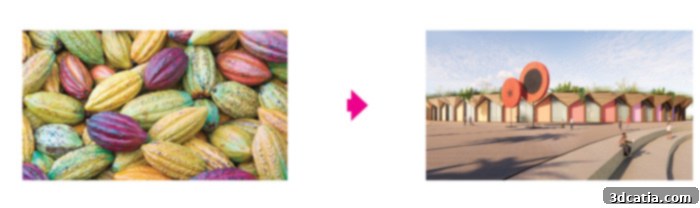
The shells of the beans represent 80% of the cocoa waste and will be used to 3D print some structures (photo credits: Valentino Gareri Atelier)
Looking Ahead: A Testament to Sustainable Innovation
The Cacao Eco Village project by Valentino Gareri Atelier stands as a powerful testament to what can be achieved when architectural ingenuity meets a profound commitment to sustainability and circular economy principles. As construction begins in Ecuador, the world will watch closely as cocoa waste transforms into innovative architecture, and a new model for living, working, and innovating emerges. This project is more than just a collection of buildings; it is a bold experiment in regenerative design, a living laboratory for green technologies, and a vibrant community dedicated to making a positive social and environmental impact. Its potential to inspire similar initiatives globally, particularly in areas rich in agricultural byproducts, cannot be overstated. By demonstrating practical solutions to waste management, sustainable construction, and community development, the Cacao Eco Village is poised to become a benchmark for future eco-conscious urban planning and design. We eagerly anticipate the evolution of this truly groundbreaking project and will continue to provide updates as it progresses, highlighting its successes and lessons learned on the journey toward a more sustainable global future.
What are your thoughts on the innovative reuse of waste materials in construction and the concept of self-sustaining eco-villages? We invite you to share your perspectives and engage in the discussion by leaving a comment below or joining the conversation on our Linkedin, Facebook, and Twitter pages! Don’t forget to sign up for our free weekly Newsletter here, to receive the latest 3D printing news straight to your inbox! You can also find all our compelling videos on our YouTube channel, showcasing incredible advancements in additive manufacturing and sustainable innovation that are shaping our world.
*Cover Photo Credits: Valentino Gareri Atelier