
Driving Innovation: How 3D Printing is Revolutionizing Electric Vehicles and Sustainable Mobility
The automotive industry is undergoing a profound transformation, moving rapidly towards a future defined by sustainability and electric propulsion. With the increasing availability and adoption of hybrid and electric vehicles (EVs), the sector is decisively shifting away from fossil fuels, driven by environmental concerns, regulatory pressures, and consumer demand for cleaner, more efficient transportation. Known for its relentless pursuit of innovation, the automotive world continuously showcases advancements in manufacturing processes, vehicle performance, and cutting-edge design. It is therefore a natural progression to see a significant integration of additive manufacturing, commonly known as 3D printing, into the development and production of electric vehicles. Many modern EVs now incorporate a variety of 3D-printed parts, with their designs often conceptualized and refined using advanced 3D modeling software. This innovative approach allows manufacturers to achieve unparalleled design freedom, reduce development cycles, and create lighter, more efficient components.
This article delves into the exciting intersection of 3D printing and electric vehicles, offering a comprehensive overview of its current and evolving role. We will explore specific examples of how leading automakers and innovative startups are leveraging additive manufacturing to push the boundaries of EV design, performance, and sustainability. The examples presented highlight the diverse applications of 3D printing in this dynamic field, illustrating its transformative potential from rapid prototyping to final part production.
The Transformative Power of 3D Printing in Electric Vehicle Manufacturing
The unique demands of electric vehicle development make 3D printing an exceptionally valuable tool. EVs require lighter components to maximize battery range, complex geometries for efficient thermal management of batteries and motors, and the ability to rapidly iterate designs to keep pace with accelerating technological advancements. Additive manufacturing excels in these areas, offering several key advantages:
- **Rapid Prototyping and Design Iteration:** 3D printing enables engineers to quickly produce physical prototypes of components, allowing for faster testing, validation, and design adjustments. This significantly reduces development timelines and costs, crucial for a fast-evolving market like EVs.
- **Lightweighting for Extended Range:** By creating intricate, optimized geometries that traditional manufacturing methods cannot achieve, 3D printing facilitates the production of lighter parts. Reduced vehicle weight directly translates to increased battery range and improved energy efficiency, a critical factor for EV adoption.
- **Customization and Personalization:** Additive manufacturing allows for the production of highly customized parts, from tailored interior components to bespoke aerodynamic elements. This opens up new possibilities for vehicle personalization and niche market solutions.
- **Complex Geometries and Functional Integration:** 3D printing can create parts with complex internal structures, ideal for optimized cooling channels in battery packs, integrated sensors, or advanced aerodynamic features that improve vehicle performance.
- **Material Optimization and Sustainability:** The technology supports the use of advanced lightweight materials, including high-performance polymers, composites, and metals. Furthermore, some processes reduce material waste compared to subtractive manufacturing, contributing to a more sustainable production lifecycle, especially when coupled with recycled or bio-based filaments.
- **Supply Chain Resilience and On-Demand Manufacturing:** 3D printing enables on-demand production of parts, reducing reliance on extensive tooling and complex global supply chains. This can be particularly beneficial for producing spare parts or low-volume specialized components.
3D Printing in the Ford Electric Explorer SUV
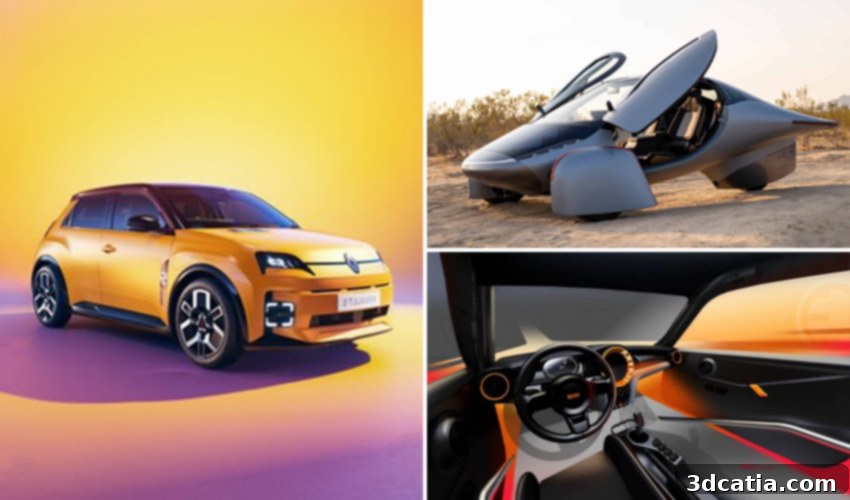
A prominent recent project demonstrating the integration of 3D printing in electric vehicle manufacturing is the new Ford Explorer SUV. The renowned American automaker strategically utilized Stereolithography (SLA) and 3D-printed parts for Ford’s Explorer SUV (photo credits: Ford)The e-Miles L7e: A Vision of Urban MobilityThe e-Miles Company stands at the forefront of developing innovative, greener mobility solutions tailored for future urban landscapes. Their recent launch, the e-Miles L7e, is a prime example of their commitment: an electric car meticulously engineered for efficient urban travel and sustainable freight transport. This pioneering vehicle redefines the driving experience with its unique control system, which replaces traditional steering wheels and pedals with a button-operated interface, thereby enhancing accessibility for a broader demographic. What truly sets the e-Miles L7e apart is its extensive reliance on 3D printing; an astonishing 90% of its components, from the sophisticated bodywork to the intricate interior elements, are produced using additive manufacturing. This approach not only facilitates rapid design iterations but also allows for significant material optimization and customization. Equipped with batteries that can be fully recharged in just 8 hours and an 8 kW motor, the e-Miles L7e is capable of reaching a top speed of 85 km/h, making it an agile and efficient solution for congested city environments and eco-conscious logistics.Photo Credits: The e-Miles CompanyDrexel Electric Racing Pioneers Metal 3D Printing for Race VehiclesWhen considering high-performance racecars, many might not immediately picture electric vehicles. However, electric racecars are a rapidly growing segment of motorsport, exemplified by innovative teams likeDrexel Electric Racing. This dedicated student-led team is at the forefront of creating open-wheel electric racecars designed to compete in demanding FSAE (Formula Society of Automotive Engineers) events. To achieve optimal performance and structural integrity, they have embraced advanced 3D printing technologies. The racing team recently participated in the SolidCAM Additive Challenge, which provided invaluable access to cutting-edge additive manufacturing processes aimed at optimizing their production processes. The experience proved highly convincing, as they subsequently integrated metal additive manufacturing into the development of their single-seater race car. Specifically, they utilized metal binder jetting and Bound Metal Deposition™ technologies to create critical components. This strategic application of metal 3D printing enabled the students to produce two robust steel back spindles and durable steel battery holders, essential for both safety and performance. Additionally, resin 3D printing was employed for ergonomically designed steering wheel grips, showcasing the versatility of additive manufacturing. This clear integration of advanced 3D printing technologies underscores its profound usefulness and increasing relevance in the high-stakes world of electric vehicle racing, where lightweighting, strength, and rapid iteration are paramount.Photo Credits: SolidCAMUILA: The 3D Printed Cargo Bike Electric Vehicle for Urban TravelOur next inclusion is particularly remarkable for its ingenious design and its ability to captivate attendees at Formnext 2022 with its innovative approach to sustainable urban mobility. We are, of course, referring to theUILA from nFrontier. This groundbreaking vehicle, a sophisticated blend of a cargo bike and an electric vehicle, has been meticulously engineered for sustainable transportation, establishing a novel category perfectly suited for addressing the pressing challenges of climate change and the global energy crisis. This four-wheeled, two-seater vehicle showcases a diverse application of additive manufacturing technologies. Stratasys’s FDM (Fused Deposition Modeling) technology was employed for producing the larger format body components, leveraging its ability to create robust and sizeable parts. For higher-volume additive manufacturing requirements within the vehicle, powder-based SAF (Selective Absorption Fusion) solutions and P3 systems were utilized, providing efficiency and detailed precision. Perhaps the most appealing aspect of the UILA is its pedal-operated mechanism, which means no driver’s license is needed, making it an incredibly accessible and convenient solution for urban commuters and cargo delivery, embodying the essence of flexible and eco-friendly city travel.Photo Credits: nFrontierThe MINI Electric Pacesetter: A 3D-Printed Formula E Safety CarOn April 10, 2021, the JCW-inspiredMINI Electric Pacesettermade its impressive debut, completing its inaugural lap as the official safety car for a Formula E race. This high-performance electric vehicle, derived from the iconic MINI Cooper, was the result of a collaborative effort between JCS, BMW, MINI Design, the FIA (Fédération Internationale de l’Automobile), and Formula E. As a safety car, its critical role is to expertly guide the racing peloton during incidents or periods of danger, effectively slowing down the race to ensure competitor safety. The MINI Electric Pacesetter embodies numerous cutting-edge innovations, prominently featuring several 3D-printed components. These include uniquely customizable 3D-printed seats, meticulously designed to offer optimal support and driver comfort, as well as an aerodynamically optimized printed fairing. Furthermore, the vehicle incorporates rear spoilers also produced using advanced 3D printing techniques, all contributing to its enhanced performance and sleek design. The application of additive manufacturing in such a high-stakes, performance-driven environment highlights its capability to deliver precise, lightweight, and functionally superior parts.Photo Credits: BMW GroupAptera: Pioneering Solar-Powered Electric Cars with Advanced ManufacturingAptera’s ambitious mission is to engineer and deliver the most efficient electric vehicle ever created, primarily powered by integrated solar energy. This innovative approach seeks to virtually eliminate reliance on external electricity sources, empowering users to significantly reduce their carbon footprint by more than 6,000 kilograms annually, according to Aptera’s calculations. The futuristic aesthetic of Aptera’s vehicles, drawing inspiration from high-performance racing cars and advanced fighter jets, is not merely for show; it is meticulously designed to optimize fuel efficiency through superior aerodynamics. As a direct result of this design philosophy, these vehicles are projected to consume approximately 30% less energy compared to many other electric and hybrid vehicles on the market. To transform this visionary design into a tangible reality, Aptera is leveraging a combination of artificial intelligence and 3D printing of composite materials. While the specific details of their proprietary manufacturing process remain under wraps, the utilization of these advanced technologies underscores their commitment to pushing the boundaries of vehicle efficiency and construction. The company anticipates commencing production by the end of 2024, contingent upon achieving its crucial funding targets. Aptera models are expected to be competitively priced, ranging between $25,900 and $46,000, offering a compelling blend of innovation, sustainability, and accessibility.Photo Credits: Alpha Sol, ApteraThe YoYo from XEV: Customizable Urban Electric MobilityThe YoYo, an innovative electric vehicle conceptualized and designed by the Italian company XEV, distinguishes itself prominently through its pioneering application of 3D printing in its manufacturing process. This 100% electric urban vehicle, ingeniously equipped with three interchangeable batteries for extended flexibility, offers an unprecedented degree of customization thanks to the inherent capabilities of additive manufacturing. Specific components, such as the distinctive “blade” (the side spoiler) and various interior elements, can be precisely adapted to meet individual users’ aesthetic preferences and functional requirements. Available in four distinct versions, the YoYo provides a range of options, from a more economically accessible basic model to a sophisticated top-of-the-range variant featuring larger wheels, an enhanced infotainment screen, and power steering for a more refined driving experience. With a maximum speed of 80 km/h, the YoYo is ideally suited for navigating congested urban environments, offering a stylish, customizable, and efficient solution for modern city dwellers.Arash Motor Company’s Hypercar: Performance Redefined by 3D PrintingArash Motor Company, a bespoke manufacturer renowned for its custom-built supercars, significantly relies on advanced 3D printing technologies to produce critical parts for its latest next-generation hypercar. Under the visionary leadership of founder and lead designer Arash Farboud, the company has meticulously engineered this model for unparalleled peak performance. The hypercar boasts a powerful carbon engine, multiple electric motors for advanced propulsion, and an exquisitely optimized aerodynamic design, all contributing to its exceptional capabilities. For this cutting-edge project, the engineering team strategically employed three MakerBot 3D printers, including the robust Replicator Z18, to fabricate complex parts such as sophisticated suspension components and intricate aerodynamic elements. TheMakerBot METHOD Xwas particularly instrumental for the production of carbon fiber-reinforced nylon parts. This material choice allowed for a crucial reduction in overall vehicle weight while rigorously maintaining the necessary structural robustness and durability required for extreme performance. This approach was especially beneficial for components like the rear wing and chassis, where minimizing mass without compromising strength was absolutely essential, showcasing how 3D printing unlocks new levels of engineering precision and material efficiency in hypercar development.Photo Creidts: UltiMakerBugatti’s Tourbillon Hypercar: A Masterpiece of Additive ManufacturingThe Tourbillon hypercar from Bugatti, the legendary Italian luxury brand, represents an extraordinary leap in automotive engineering, featuring a revolutionary 3D-printed chassis and suspension system. This advanced construction is made possible by the Divergent Adaptive Production System (DAPS), an innovative technology developed by Divergent, a pioneering American company specializing in additive manufacturing for automotive applications. This cutting-edge method enables Bugatti to create components that are significantly lighter and boast superior performance characteristics. A notable achievement is the remarkable 45% reduction in suspension weight, directly contributing to the vehicle’s agility and dynamic capabilities. Indeed, the Tourbillon’s sophisticated chassis incorporates a meticulously designed 3D-printed aluminum multi-link suspension system, showcasing the strength and precision achievable with additive techniques. Furthermore, numerous structural reinforcements throughout the hypercar were designed in 3D using advanced materials, particularly carbon composites. This high-performance material was utilized not only for the vehicle’s overall structure but also for critical aerodynamic elements such such as the front air ducts and rear diffuser, collectively enhancing the car’s performance, rigidity, and inherent lightness. The Bugatti Tourbillon thus stands as a testament to how 3D printing is fundamentally transforming the design and construction of elite hypercars, pushing the boundaries of what is mechanically and aesthetically possible.Photo Credits: BugattiThe Fiat Topolino Electric Vehicle: Customization by Carrozzeria CastagnaWhile this particular project involving the creation of a customized Fiat Topolino leveraging 3D printing was not directly undertaken by FIAT itself, it showcases the immense potential of additive manufacturing in bespoke automotive customization. The remarkable redesign was orchestrated by the esteemed Italian coachbuilding company, Carrozzeria Castagna. This specialist firm embarked on a complete re-imagination of the electric Beetle, extensively integrating 3D printing throughout the process. The various body parts of the re-envisioned Topolino are meticulously crafted from carbon fiber, utilizing an exclusive process uniquely developed by Castagna. This approach not only ensures exceptional strength and lightness but also facilitates an extraordinary degree of personalization for the vehicle. Customers are offered a wide array of finishing options and colors, ranging from elegant pastel hues to striking metallics, and even refined wood details, allowing for a truly unique and individualized electric vehicle that marries classic design with cutting-edge manufacturing.Photo Credits: Castagna MilanoLIUX and Animal: Sustainable Electric Mobility Through BiopolymersTowards the end of 2022, the Santa Pola, Spain-based company LIUX unveiled its groundbreaking Animal concept car, a visionary vehicle poised to redefine mobility with a strong emphasis on sustainability. This all-electric, 3D-printed vehicle is designed to be truly revolutionary. What sets the Animal apart is its innovative construction from organic materials, featuring a modular battery system for enhanced flexibility and an elegantly minimalist design. Both the interior and exterior components, along with a significant portion of the chassis, are meticulously crafted from biopolymers, which are advanced plastics derived from organic fibers and resin. Furthermore, other sustainable materials such as cork and linseed are incorporated, underlining LIUX’s commitment to eco-conscious manufacturing. By harnessing the power of additive manufacturing, LIUX has not only achieved a remarkable reduction in production times and energy consumption—by an impressive 70%—but has also significantly lightened the vehicle’s bodywork. This results in an electric vehicle that is not only highly efficient but also substantially more environmentally friendly throughout its lifecycle, marking a significant step forward in sustainable automotive design and production.3D Printing in the Renault 5 E-Tech Electric Vehicle: Blending Heritage with InnovationThis year, Renault proudly reintroduced its iconic Renault 5, reimagined for the electric age as the Renault 5 E-Tech. This charismatic urban model, boasting an impressive range of 400 kilometers, captivates with its compact design and extensive customization capabilities. Among its most notable innovations is the clever integration of 3D-printed accessories within the cabin. These accessories include versatile storage spaces, available in a diverse palette of colors and patterns, adding both practical functionality and a unique touch of originality to the driving experience. Renault has placed a strong emphasis on the model’s sustainability credentials, proudly announcing an 85% recyclability rate. Furthermore, the vehicle incorporates 19.4% recycled materials and draws 26.6% of its components from the circular economy, demonstrating a holistic approach to environmental responsibility. Available in a choice of five vibrant colors, the Renault 5 E-Tech represents a significant stride forward in Renault’s sustainable mobility strategy, brilliantly blending beloved heritage with future-forward manufacturing and environmental consciousness.Photo Credits: RenaultThe Road Ahead: The Future of 3D Printing in Electric MobilityThe examples highlighted above provide a compelling snapshot of how 3D printing is not just a complementary technology but a fundamental driver of innovation in the electric vehicle sector. From rapid prototyping for efficiency gains to manufacturing end-use parts that enhance performance, reduce weight, and enable unprecedented customization, additive manufacturing is proving indispensable. As materials science advances and 3D printing technologies become even more sophisticated and scalable, we can anticipate a deeper integration into the entire EV lifecycle, from concept and design to production and post-sale customization.The ability to create complex, lightweight structures, utilize sustainable materials like biopolymers, and facilitate rapid design iterations positions 3D printing as a cornerstone for future electric vehicle development. This synergy will continue to accelerate the automotive industry’s transition towards a more sustainable, efficient, and personalized future, ultimately benefiting both manufacturers and environmentally conscious consumers. The ongoing evolution of 3D printing promises to unlock even greater potential, fostering a new era of automotive innovation that prioritizes performance, efficiency, and ecological responsibility.What do you think of these compelling examples showcasing electric vehicles powered by the capabilities of 3D printing? We’d love to hear your thoughts and insights! Share your comments below or connect with us on ourLinkedIn,Facebook, andTwitterpages! For the latest updates and breaking news in the world of 3D printing, don’t forget to sign up for our free weeklynewsletter here, delivered straight to your inbox! You can also explore all our insightful videos on ourYouTubechannel.