
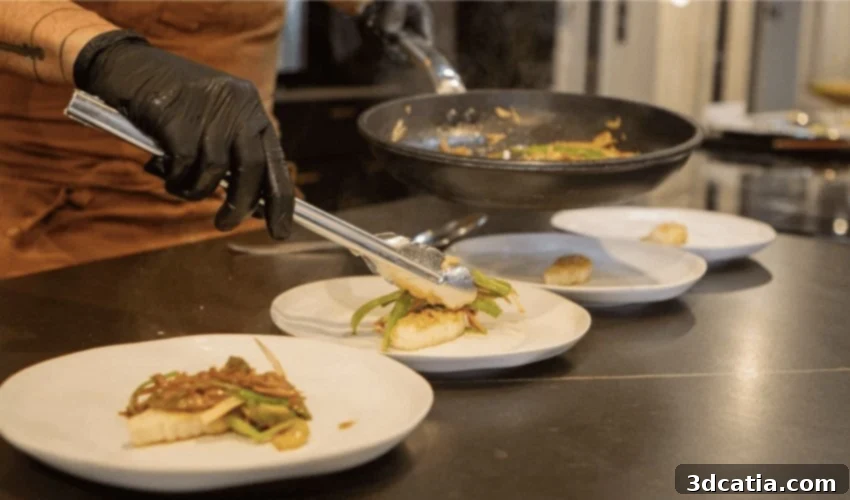
Steakholder Foods Unveils World’s First 3D Printed Eel: Paving the Way for Sustainable Seafood
The global eel industry stands at a critical juncture, grappling with immense and escalating demand that threatens its very existence. A report by Industry Research highlights the significant scale of this market, valued at an estimated $4.3 billion in 2022 and projected to reach $4.8 billion by 2028. Despite the majority of consumed eels originating from aquaculture, persistent concerns surrounding the potential extinction of numerous eel species – both saltwater and freshwater varieties – cast a long shadow over the sector. This precarious situation makes it increasingly challenging to sustain eel populations, whether for commercial farming or subsistence. The industry confronts a multitude of complex issues, including severe overexploitation of wild stocks, leading to a heightened risk of species extinction. Furthermore, the intricate life cycle of eels presents formidable difficulties for on-farm breeding, contributing to supply shortages. These challenges are compounded by pervasive poaching and the clandestine black market trade, which further decimate already vulnerable populations. Against this backdrop of ecological and economic strain, a groundbreaking solution has emerged from the Israeli start-up Steakholder Foods, which has successfully engineered the world’s first 3D printed eel, signaling a potential paradigm shift for the future of seafood.
This revolutionary breakthrough in food technology has been realized through the innovative application of bioprinting. In its current iteration, the 3D-printed eel is crafted entirely from plant-based ingredients, offering an immediate sustainable alternative. However, Steakholder Foods’ ambitious vision extends beyond this, with plans to incorporate cultured eel cells in future iterations, moving towards a true cellular agriculture product. This initial 3D-printed eel serves as a powerful demonstration of Steakholder Foods’ remarkable capability to precisely replicate the complex and distinctive texture of natural eel meat. This intricate fidelity is achieved through the meticulous layering and unique combination of proprietary materials, expertly deposited by Steakholder Foods’ exclusive 3D printing technology. The development marks a significant leap forward not only for the eel market but also for the broader alternative protein sector, showcasing how advanced manufacturing techniques can address some of the most pressing challenges in food production.
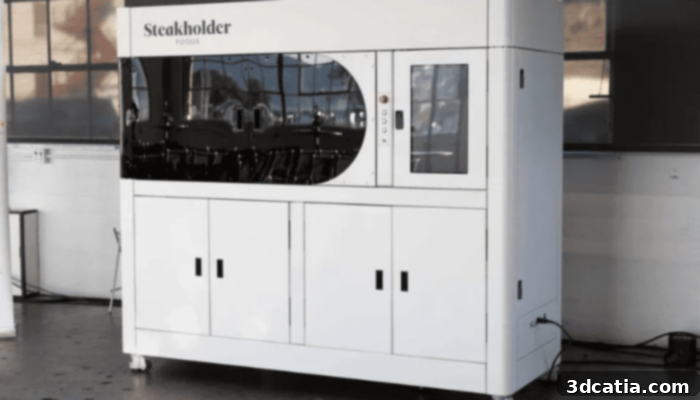
The Steakholder Foods 3D printer
Revolutionizing Seafood: The Power of 3D Printing for Culinary Innovation
Steakholder Foods, a pioneer in the field of food bioprinting, leverages its unique printing methodology – previously applied to other meat products – to significantly reduce the number of ingredients required for its 3D-printed eel product. This streamlined approach offers a distinct advantage over many conventional plant-based alternatives, which often rely on a longer list of additives and processing steps to achieve desired textures and flavors. By simplifying the ingredient matrix, Steakholder Foods aims to create a cleaner, potentially healthier, and more appealing product for consumers. This innovative approach positions Steakholder Foods’ plant-based 3D printed eel at the forefront of the burgeoning alternative seafood industry, potentially setting a new standard for efficiency and product quality. Nevertheless, recreating the unique, delicate, and often melt-in-the-mouth texture of natural eel meat remains a significant technical and culinary challenge, one that the company has meticulously worked to overcome.
While the company currently maintains discretion regarding the precise types of plants utilized in its proprietary printing process, common plant-based substitutes for eel in the market often include ingredients such as soy protein and eggplant, which aim to mimic the texture and richness. Steakholder Foods’ manufacturing process for its 3D-printed fish product employs a sophisticated blend of plant-based components, with the future potential to integrate cultured cells, to formulate a specialized biological ink. This bio-ink is then meticulously printed in a layered structure, guided by an intricate digital design that dictates the final form and texture of the product. The 3D printed eel itself is produced using DropJet technology, a cutting-edge printing method specifically engineered and optimized for seafood applications. This advanced technology precisely dispenses microscopic drops of gel, which coalesce and solidify to form the final, complex structure, thereby accurately reproducing the distinctive fibrous and succulent texture characteristic of natural fish, and in this case, eel.
The ability to accomplish such a feat prompts a deeper contemplation of its implications. While technological capability doesn’t automatically dictate desirability, the creation of the 3D-printed eel undeniably represents a monumental stride forward for the entire food industry. In recent decades, there has been a noticeable shift in consumer preferences, with conventional meat consumption showing signs of decline, driven by growing awareness of environmental impacts, ethical considerations, and health concerns. Concurrently, the demand for environmentally conscious and sustainable diets has surged globally, pushing innovators to find viable alternatives. Steakholder Foods’ 3D-printed eel offers more than just an intriguing culinary experience; it actively embraces and contributes to this expanding sustainability movement. It provides a compelling solution for consumers actively seeking eco-friendly and ethically produced alternatives to traditional seafood in their dietary choices, without compromising on flavor or texture. Moreover, eel holds a deeply integrated position within various culinary traditions across the globe, particularly in culturally rich regions such as Asia (where dishes like Japanese unagi are revered), Europe (with its diverse eel preparations), and the coastal areas of the United States. Steakholder Foods’ groundbreaking achievement in 3D-printed eel production thus offers a vital pathway for preserving the cherished cultural significance of eel-based dishes, ensuring these culinary legacies can continue to thrive without imposing further strain on fragile wild eel populations or compromising crucial environmental values.
Arik Kaufman, CEO of Steakholder Foods, articulated the significance of this development, stating, “The launch of our 3D printed eel marks a pivotal moment in the seafood industry, showcasing the vast potential of our DropJet technology – Steakholder Foods’ bespoke solution for fish and seafood printing. This revolutionary technology is designed to empower our partners to generate products on a potential industrial scale, capable of producing hundreds of tons monthly. Crucially, this can be achieved not only at significantly lower costs compared to acquiring wild eel but also with the unprecedented flexibility to create a diverse range of printed products using the very same production line. Such inherent versatility holds the promise of significantly boosting profitability for food companies, simultaneously spearheading a fundamental shift towards more efficient, ethical, and sustainable practices across the entire industry. This product exemplifies the broader possibilities and transformative potential that our advanced technology offers to our valued partners.”
This innovation addresses multiple facets of the modern food system, from ecological preservation to economic viability and culinary diversity. The industrial scalability highlighted by Kaufman is particularly important, as true impact often requires the ability to produce at volumes that can meet widespread market demand. By offering a cost-effective and adaptable production method, Steakholder Foods is not just creating a niche product but laying the groundwork for a scalable, sustainable alternative seafood industry. This technology could inspire a new wave of alternative protein development, moving beyond simple plant-based approximations to highly sophisticated, textured foods that genuinely mimic their animal counterparts. The shift towards such efficient and sustainable practices is imperative for ensuring food security and biodiversity in a world facing increasing population and climate pressures. Steakholder Foods’ 3D printed eel is more than just a novelty; it represents a tangible step towards a future where culinary traditions and environmental stewardship can coexist harmoniously.
To access the full press release and delve deeper into this exciting development, please click here. We invite your thoughts on the 3D printed eel! Let us know what you think in a comment below or connect with us on our LinkedIn, Facebook, or Twitter pages! Don’t forget to sign up for our free weekly Newsletter to receive the latest 3D printing news directly in your inbox! You can also find all our insightful videos on our YouTube channel for more engaging content.
*All Photo Credits: Steakholder Foods