
Unlocking the Future: Additive Manufacturing Innovations from SpaceX, Formnext, and Beyond
Every week, we embark on an exciting video journey through the dynamic world of additive manufacturing, showcasing the latest breakthroughs and most impactful applications. This edition promises an insightful look into how 3D printing is revolutionizing various sectors, from space exploration to sustainable food production and advanced industrial manufacturing. We’ll uncover the secret behind Elon Musk’s ambitious mission to colonize Mars by 2050, revealing the pivotal role of DMLS 3D printers in constructing SpaceX rockets. You’ll also meet Oli, a dedicated SpaceX superfan whose incredibly detailed 3D-printed rocket models have captured widespread admiration across the space enthusiast community and even caught the attention of SpaceX employees themselves. Furthermore, we’ll delve into how Redefine Meat is leveraging 3D printing technology to conquer the European market with its innovative plant-based steaks, offering a sustainable alternative to traditional meat. Lastly, discover the crucial partnership between BASF Forward AM and Replique, working together to ensure that Miele, a leading home appliance manufacturer, can produce food-safe appliance accessories using cutting-edge 3D printing techniques. Prepare to be inspired by the boundless possibilities of additive manufacturing!
SpaceX and the Mars Mission: 3D Printing’s Crucial Role
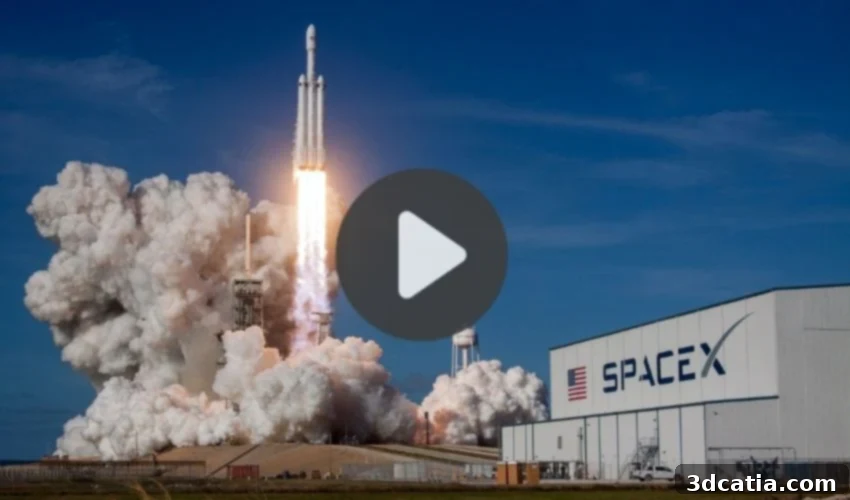
Elon Musk’s vision for colonizing Mars by 2050 is an audacious dream, but one that is steadily becoming a tangible reality, thanks in no small part to the power of additive manufacturing. Since 2014, SpaceX has been relentlessly pursuing this monumental goal, and at the heart of their rocket construction lies a critical “secret weapon”: DMLS (Direct Metal Laser Sintering) 3D printers. This advanced metal additive manufacturing technology allows SpaceX to produce complex, high-performance parts with unprecedented speed and precision. DMLS enables the creation of lightweight yet incredibly strong components, essential for the demanding environment of space travel, by fusing metal powders layer by layer with a powerful laser. This capability not only reduces material waste but also facilitates rapid design iterations, a cornerstone of SpaceX’s agile development philosophy.
Beyond the industrial application of 3D printing in rocket manufacturing, the passion for space exploration also inspires individual creativity. We’ll introduce you to Oli, a dedicated SpaceX superfan whose remarkable 3D-printed rocket models have captivated enthusiasts worldwide. His meticulously crafted replicas not only demonstrate the incredible detail achievable with personal 3D printing but also highlight the growing accessibility of this technology for hobbyists and creators. Oli’s work has garnered significant praise, even drawing recognition from employees at SpaceX, underscoring the powerful connection between innovation at an industrial scale and the inspiring community it fosters. Dive into the video below to witness the incredible technology propelling SpaceX towards the Red Planet and explore the impact of 3D printing on this monumental endeavor.
Formnext Highlights: Pioneering 3D Printing Applications
Formnext, held annually in Frankfurt, stands as the world’s preeminent international trade fair dedicated to additive manufacturing and industrial 3D printing. It’s a vital platform where the latest innovations, materials, and applications are unveiled to a global audience. Just last week, the event once again showcased groundbreaking advancements that are shaping the future of various industries. We had the privilege of exploring the exhibition floor to identify the most impactful and inspiring 3D printing applications on display. Our journey led us to the stands of five leading companies: Siemens, Massivit3D, Polymaker, Caracol, and BE-AM, each presenting revolutionary uses of additive manufacturing.
From large-scale prototypes to intricate functional parts, the breadth of applications was astonishing. Siemens demonstrated how 3D printing integrates into comprehensive industrial automation workflows, optimizing production and part performance. Massivit3D captivated visitors with its ability to produce massive, high-speed parts, ideal for automotive, marine, and entertainment sectors, showcasing applications like impressive 3D-printed boats and intricate car components. Polymaker highlighted innovative material developments, pushing the boundaries of what’s possible with FDM technology. Caracol presented advanced robotic additive manufacturing solutions, capable of producing colossal structures and furniture, including bespoke tables and even a functional wine barrel, redefining custom fabrication. Meanwhile, BE-AM focused on cutting-edge research and development in additive processes, showcasing future trends. These diverse examples underscored the transformative potential of 3D printing to create everything from functional end-use parts to artistic installations, fundamentally changing how products are designed, manufactured, and consumed. Don’t miss this captivating overview of Formnext’s best 3D printing applications!
Redefine Meat: Innovating the Future of Food in Europe
Redefine Meat, an innovative young company hailing from Israel, is at the forefront of the plant-based food revolution, employing sophisticated 3D printing technology to create meat substitute products that remarkably mimic the texture and taste of real animal meat. We’ve closely followed Redefine Meat’s journey, and their commitment to sustainability and ethical food production is truly inspiring. Unlike conventional meat alternatives, Redefine Meat’s proprietary technology allows for the precise layering of plant-based ingredients to replicate the fibrous structure and fat distribution found in animal muscle, resulting in a “New-Meat” experience that satisfies even the most discerning palates.
The company is driven by a profound mission: to offer delicious, animal-free meat products that eliminate animal suffering and the environmental impact associated with traditional livestock farming. To achieve this, Redefine Meat actively seeks collaborations with like-minded companies and partners who share their vision for a more sustainable food system. As detailed in the video, Eshchar Ben-Shitrit, CEO of Redefine Meat, outlines the company’s ambitious next steps, focusing on a strategic expansion into the highly competitive European market. This expansion represents a significant milestone, as they aim to establish their 3D-printed steaks as a mainstream choice for consumers across Europe within the coming year. Their success could profoundly impact the future of food, offering consumers a guilt-free yet authentic meat-eating experience. Witness their journey to redefine the culinary landscape.
Ensuring Food Safety with Advanced 3D Manufacturing
The food sector operates under some of the most stringent regulations and demanding safety standards globally. When it comes to manufacturing processes, particularly for components that come into contact with food, certifications and safety protocols are paramount. Ensuring a safer manufacturing process for food-contact applications has been the focus of a groundbreaking collaboration between the German platform Replique and the experts from BASF’s Forward AM division. Their joint project aimed to develop and validate a process for creating high-quality, food-grade parts for Miele, a renowned manufacturer of premium home appliances, specifically for accessories that come into direct contact with consumable goods.
The core objective was to produce these specialized parts using a certified food-grade 3D printing process. This involved selecting specific materials from BASF Forward AM known for their safety and compliance, coupled with a meticulously controlled manufacturing workflow managed through Replique’s innovative platform. To ensure efficiency and profitability for this type of low-volume batch production, the IDEX (Independent Dual Extruder) technology from the Spanish manufacturer BCN3D proved instrumental. IDEX technology allows for printing with two different materials or colors simultaneously or using one nozzle for printing and the other for support structures, significantly accelerating the production process while maintaining high quality and precision. This partnership exemplifies how additive manufacturing, when combined with rigorous material science and platform solutions, can meet the exacting standards of the food industry, providing safe, custom, and efficient production of critical components. Discover the intricate details of this pioneering project in the video below.
Formnext 2021: Showcasing Large Format 3D Printing Power
Formnext 2021 was not only a showcase for innovative applications but also a testament to the growing capabilities of large-format 3D printing. The demand for larger build volumes and the ability to produce bigger parts in a single piece is rapidly expanding across industries such as automotive, aerospace, construction, and design prototyping. During the expo, we made sure to explore the stands featuring the largest volume 3D printers, which are pushing the boundaries of what’s possible with additive manufacturing. Our tour included visits to five prominent companies that are leading the charge in this specialized niche: CMS, Cubicure, CEAD, Triton, and MX3D.
These companies demonstrated an impressive range of large-format machines designed for various materials and applications. From enormous machines capable of processing high-performance thermoplastics for industrial tooling and large prototypes, to systems dedicated to photopolymers enabling rapid production of sizable, detailed parts, and even innovative metal solutions for structural components, the diversity was remarkable. CMS showcased its extensive range of industrial 3D printing solutions, including large-scale additive systems. Cubicure impressed with its high-precision, large-volume photopolymer machines, offering unparalleled accuracy for sizable components. CEAD presented its continuous fiber-reinforced thermoplastic systems, ideal for creating strong, lightweight, and very large parts. Triton highlighted its advanced material extrusion technologies for large-scale composite applications, while MX3D displayed its robotic wire arc additive manufacturing (WAAM) for monumental metal structures. Each of these exhibitors revealed characteristics that will undoubtedly surprise you, from unparalleled build speeds to the sheer scale of objects they can produce. Delve into the video below to discover the unique features and incredible potential of these five large-format 3D printing machines.
What are your thoughts on this week’s comprehensive video compilation and the incredible advancements in additive manufacturing? We’d love to hear your feedback! Share your insights and comments below, or connect with us on our LinkedIn, Facebook, and Twitter pages! To stay at the forefront of the additive manufacturing world, don’t forget to sign up for our free weekly Newsletter here, delivering the latest 3D printing news straight to your inbox. You can also find all our compelling videos and more exciting content on our YouTube channel. Join our community and explore the endless possibilities of 3D printing!