
Alpine A390_β: Where Alpine Performance Meets Sustainable Innovation and Mountain-Inspired Design
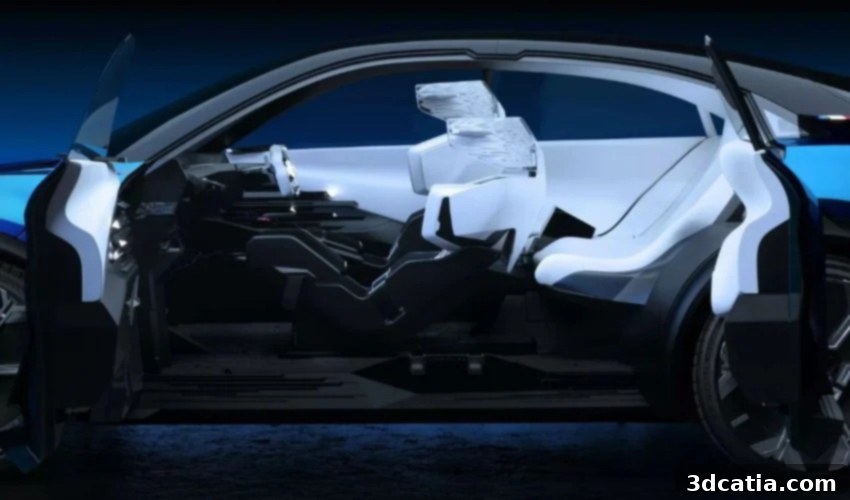
Imagine a majestic expanse of stone, its peaks dusted with pristine white snow, glistening brilliantly under the sun’s embrace. This breathtaking vision is more than just a dream for winter sports enthusiasts; it’s the profound muse that inspired the French automotive marque Alpine, part of the prestigious Renault Group. For their latest avant-garde show car, the A390_β, Alpine embarked on a journey to capture the very essence of the Alps – its rugged stone and ethereal snow – translating this natural grandeur into an automotive masterpiece. Every facet of this singular concept vehicle, from its innovative materials to its sculptural design, has been meticulously conceived to embody this unique ambience. The car’s immaculate white exterior evokes a sense of gentleness and lightness, offering a stark yet elegant contrast to the frenetic pace of modern life, while its sharply defined aerodynamic contours speak volumes about the vehicle’s inherent agility and dynamic responsiveness. The A390_β is not merely a car; it’s a bold statement, a fusion of nature’s artistry with cutting-edge engineering, signaling Alpine’s vision for the future of performance and design.
The development of such a futuristic design, aptly described by Alpine as a journey “from rock to snow,” necessitated strategic partnerships with leading French innovators. To bring this ambitious vision to life, Alpine collaborated closely with two specialized companies: Lavoisier Composites and the Erpro Group. Lavoisier Composites, renowned for its expertise in advanced material solutions, was entrusted with the crucial task of producing the interior floor, pushing the boundaries of sustainable material application. Simultaneously, the Erpro Group, a pioneer in additive manufacturing, took on the intricate challenge of 3D printing the headrests, transforming digital designs into tangible, functional components with unparalleled precision. This collaborative effort exemplifies Alpine’s commitment to leveraging the best of French industrial innovation, ensuring that every element of the A390_β reflects its core philosophy of performance, elegance, and forward-thinking design. The interior of the A390_β, along with its carefully selected materials, draws significant inspiration from the high-octane world of Formula 1, aiming to deliver a driving experience that echoes the exhilarating performance of a true sports car, blending race-track intensity with luxurious comfort.
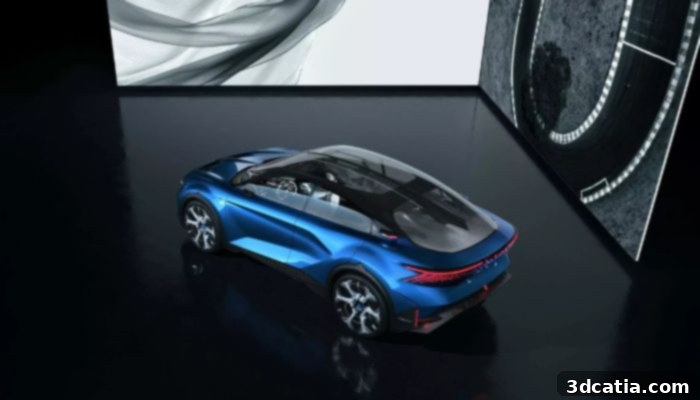
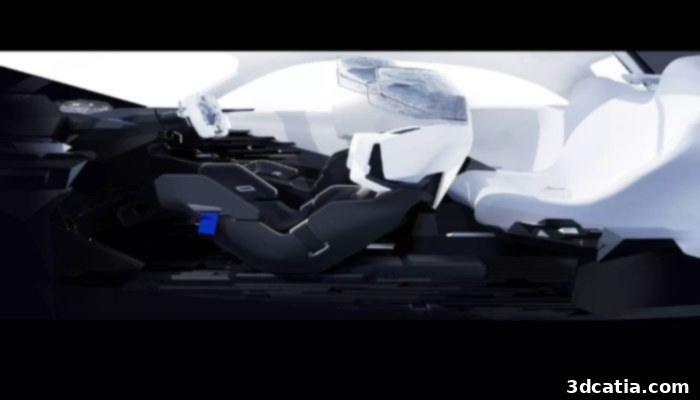
At the heart of the A390_β’s performance-oriented interior lies the extensive use of carbon fiber, a material synonymous with speed and lightweight construction. The front seat, for instance, is meticulously crafted from a lightweight carbon shell, engineered not only for structural integrity but also to immerse the driver in a racing-inspired cockpit feel. Complementing this, the vehicle’s floor is also composed of advanced carbon materials. This deliberate choice underscores Alpine’s unwavering commitment to speed and agility, as carbon fiber’s exceptional strength-to-weight ratio is crucial for enhancing dynamic performance, improving acceleration, and optimizing handling characteristics. Its inherent stiffness also contributes to the car’s overall structural rigidity, which is vital for a truly responsive and engaging driving experience. Beyond its functional advantages, the visible carbon weave itself communicates a sense of raw power and sophisticated engineering, visually reinforcing the vehicle’s high-performance identity.
Lavoisier Composites played a pivotal role in realizing this vision, particularly through its innovative approach to sourcing and manufacturing. Demonstrating a strong commitment to environmental responsibility and circular economy principles, Lavoisier Composites utilized industrial by-products originating from both the aerospace and photovoltaic industries. These “circular materials” were ingeniously repurposed and transformed to create the vehicle floor, showcasing a groundbreaking model for sustainable automotive production. The floor itself is a marvel of composite engineering, composed of 360 individual triangular profiles. These profiles were meticulously manufactured using a specialized compression molding technique, a process known for its ability to create strong, precise components with minimal waste. Following molding, these numerous profiles were then expertly glued together, forming a robust yet incredibly lightweight structure. Through this intricate process, Lavoisier Composites successfully achieved the final minimalist design for the floor, characterized by its stunning basalt effect. This unique finish allows the carbon fiber to be visibly showcased on one side, revealing its intricate weave and raw strength, while the shimmering silicon, derived from photovoltaic remnants, radiates on the other. This duality beautifully captures the “rock to snow” theme, bringing a tactile and visual narrative to the car’s interior.
Esteban Villalon, Co-Founder and Chairman of Lavoisier Composites, shed light on the intricacies of this innovative process: “For the glittering silicon, we had access to leftover photovoltaic modules, while the carbon came from the aerospace industry. We then adapted the molding process to maintain the assembly flexibility required to meet the design constraints.” This adaptation highlights the ingenuity required to marry sustainable material sourcing with demanding automotive design. Villalon further elaborated on the material composition and manufacturing technique, stating, “The profiles are manufactured using compression molding because they are two-thirds carbon fiber and one-third epoxy resin.” This specific blend ensures optimal strength and durability, while the compression molding process allows for the precise shaping and consistent quality required for such a high-performance application. The commitment to utilizing industrial by-products not only reduces waste but also pioneers a new pathway for integrating advanced, circular materials into high-end automotive applications, setting a benchmark for future sustainable practices within the industry.
A390_β Features Groundbreaking 3D-Printed Headrests with an Elegant Ice Crystal Aesthetic
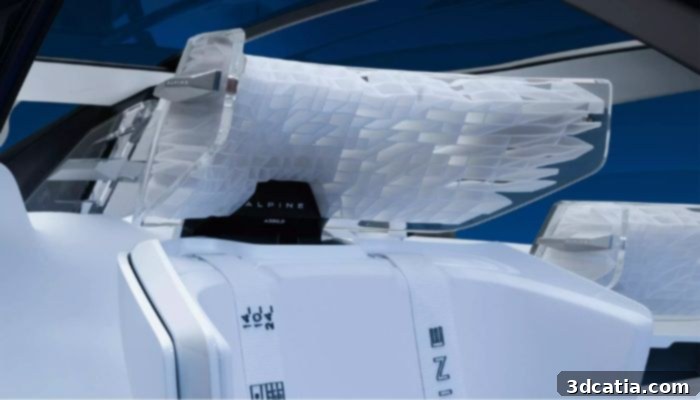
While the vehicle floor evokes the rugged, stony grandeur and untamed roughness of the Alps, the seating experience within the A390_β transitions seamlessly into the serene beauty of a pristine winter snowy landscape. Marc Poulain, Chief Advance Designer at Alpine, eloquently describes the design philosophy behind the unique bench seat: “The bench seat is seamlessly assembled from one piece. This gives passengers the feeling of being the first to set their footprints in a blanket of pure snow.” This evocative imagery captures the sense of untouched purity and individual exploration that Alpine sought to instill in the car’s interior, offering an exclusive and calming environment. Further enhancing this immersive Alpine aesthetic, the headrests are masterfully crafted to appear as if they have been delicately carved directly from solid ice, exuding a translucent, crystalline beauty. To transform this intricate design concept into a tangible reality, Alpine once again turned to its trusted and long-standing partner, Erpro Group. Leveraging their advanced expertise in additive manufacturing, Erpro Group was able to precisely implement Alpine’s original artistic and engineering visions through a sophisticated 3D printing process, pushing the boundaries of what is achievable in automotive interior design.
The development of the A390_β’s headrests was not merely an aesthetic exercise; it presented a significant engineering challenge. Beyond their striking visual complexity and “ice crystal” appeal, the final headrests were required to possess a suite of critical functional properties. They had to be exceptionally lightweight to contribute to the vehicle’s overall performance and efficiency, robust enough to withstand daily use, breathable for passenger comfort, and crucially, shock-absorbent to enhance safety. To meet these multifaceted demands, Erpro Group made an inspired material choice: Arkema’s Rebax Rnew. This innovative, flexible, and almost transparent bio-based elastomer stands out not only for its superior mechanical properties but also for its sustainable composition, which includes castor oil. This selection underscores Alpine’s commitment to eco-friendly materials without compromising on performance or design integrity. Through a rigorous series of compression tests, Erpro was able to precisely calibrate and achieve the ideal thickness for the headrests, ensuring they provided optimal comfort and support without sacrificing their inherent strength or crucial flexibility. These two exquisitely designed headrests, each seamlessly integrating discreet loudspeakers for an enhanced auditory experience, were brought to life through the rapid efficiency of additive manufacturing within an impressive timeframe of just three weeks. They perfectly complete the sophisticated overall appearance of the futuristic, mountain-inspired Alpine A390_β, harmonizing form, function, and sustainable innovation.
This visionary project with the Alpine A390_β eloquently underscores the immense and transformative added value that additive manufacturing, commonly known as 3D printing, brings to the highly competitive automotive industry. The ability to create intricate, bespoke components like the “ice crystal” headrests showcases how innovative designs can be realized with unprecedented precision and freedom, directly contributing to an impressive and unforgettable user experience. 3D printing empowers car manufacturers to push beyond the limitations of traditional manufacturing methods, enabling the production of complex geometries, customizable features, and lightweight structures that were once deemed impossible or prohibitively expensive. This technology facilitates rapid prototyping, allowing designers and engineers to iterate and refine concepts quickly, significantly accelerating the development cycle for new vehicles. Furthermore, it supports the integration of sustainable materials and promotes efficient material usage, minimizing waste. By embracing additive manufacturing for such a flagship show car, Alpine not only demonstrates its expertise and leadership in cutting-edge automotive design and engineering but also signals a clear direction for the future of the industry – one where performance, aesthetics, sustainability, and technological innovation converge to create truly exceptional vehicles. The A390_β stands as a powerful testament to this evolving landscape, where imagination and technology merge to redefine the boundaries of automotive excellence.
Discover more about the innovative new Alpine show car and its groundbreaking features by visiting the official Alpine website HERE. We are eager to hear your thoughts on the impressive and imaginative design of the Alpine A390_β! Share your opinions and insights with us in a comment below, or connect with our vibrant community on our LinkedIn, Facebook, and Twitter pages. To stay consistently updated with the very latest developments and news from the dynamic world of 3D printing, don’t forget to sign up for our free weekly Newsletter here, ensuring all the essential information is delivered straight to your inbox! Additionally, you can explore an extensive collection of our captivating videos and in-depth content on our dedicated YouTube channel, offering a visual journey into the innovations shaping tomorrow.
*All Photo Credits: Alpine