
Revolutionizing Construction: Royal3D Unveils a Sustainable, Recycled PET 3D Printed Shelter
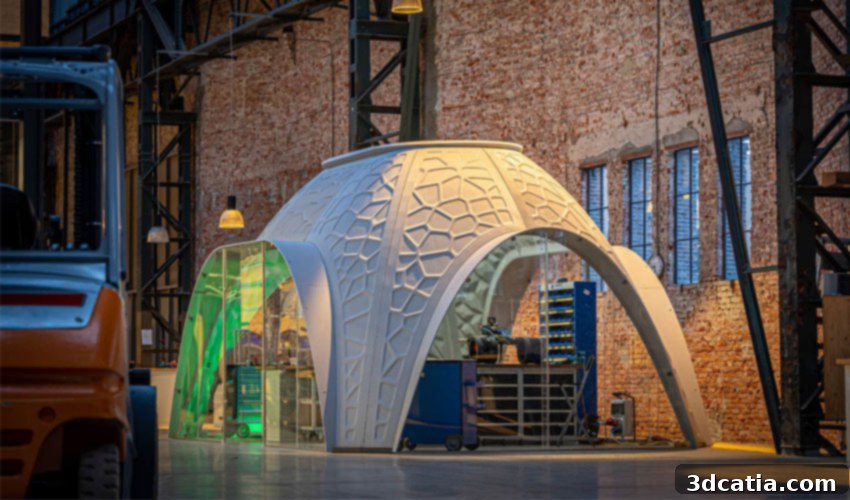
In a groundbreaking demonstration of innovation and sustainability, additive manufacturing continues to solidify its pivotal role within the construction sector, particularly in the Netherlands. The visionary 3D printing service, Royal3D, has recently achieved a significant milestone by creating an advanced shelter designed to house a modular, 3D printed workspace. What sets this project apart is its radical departure from conventional construction materials. Instead of relying on traditional concrete, Royal3D has championed the use of recycled PET – the ubiquitous plastic found in everyday water bottles and food packaging. This innovative shelter, aptly named R-IGLO, represents a remarkable leap forward, reportedly fabricated using the cutting-edge CFAM Prime machine developed by CEAD, a renowned specialist in continuous composite 3D printing. This initiative not only showcases the versatility of 3D printing but also underscores its immense potential to drive sustainable practices and circular economy principles in urban development.
CEAD, a pioneering Dutch manufacturer, stands at the forefront of large-format composite additive manufacturing. Their impressive suite of machines includes an XXL model capable of producing colossal parts measuring up to 4 x 2 x 1.5 meters. This advanced technology facilitates the extrusion of a diverse range of polymers in granular form, enabling the creation of robust continuous fiber composites. For the R-IGLO project, Royal3D made a conscious and impactful decision to utilize recycled PET. This choice aligns with a growing trend towards sustainable material sourcing, echoing the success of the first 3D printed pedestrian bridge in Rotterdam, which also leveraged CEAD’s sophisticated machinery and recycled materials. The use of recycled PET not only diverts plastic waste from landfills and oceans but also significantly reduces the carbon footprint associated with new material production, positioning Royal3D and CEAD as leaders in eco-conscious manufacturing. This collaborative effort demonstrates how cutting-edge technology and environmental responsibility can converge to create functional, aesthetically pleasing, and highly sustainable architectural solutions.

The machine used for the project (photo credits: Royal3D)
Royal3D’s R-IGLO: A Beacon of Circular Economy and Sustainable Design
The development of the R-IGLO pavilion is a testament to collaborative innovation, with the Dutch service provider Royal3D working in close conjunction with the renowned parametric design firm ArchiTech Company. This partnership brought together advanced manufacturing capabilities and sophisticated design principles to craft a structure that is both functional and symbolically rich. The name “R-IGLO” itself carries multiple layers of meaning, reflecting the core values and origins of the project. The “R” ingeniously signifies the project’s commitment to reusability and recyclability – fundamental tenets of a circular economy. Simultaneously, it pays homage to its home city, Rotterdam, a hub of innovation, and acknowledges Royal3D, the driving force behind its creation. The “IGLO” component intuitively evokes the distinctive, dome-like shape of the pavilion, a design choice that offers structural integrity and a unique aesthetic.
Currently in its pilot phase, R-IGLO is a powerful example of localized production and circular economy principles in action. The shelter has been entirely produced from plastic waste, specifically PET, sourced directly from the bustling port of Rotterdam. This strategic choice not only addresses the pressing issue of plastic pollution but also minimizes transportation costs and carbon emissions associated with material acquisition, thereby strengthening local supply chains and fostering community engagement in waste management. By transforming local waste into a valuable building material, Royal3D is setting a precedent for how urban waste streams can be reimagined as resources for future development. This localized, circular approach significantly reduces environmental impact and promotes a more sustainable model for construction and manufacturing. The R-IGLO is designed with customization and modularity at its core, offering unparalleled flexibility to meet diverse needs. Royal3D envisions offering the shelter in four distinct sizes – small, medium, large, and very large – allowing for adaptable applications ranging from individual workspaces to larger communal areas or exhibition spaces. This modular design ensures that the R-IGLO can evolve and scale with changing requirements, further enhancing its sustainability credentials through longevity and versatility.
Beyond its eco-friendly materials and flexible design, the R-IGLO integrates advanced functionalities that elevate its utility and comfort. As the creators proudly state, “R-IGLO combines several functions, such as a free-standing structure and an acoustically optimized integrated wall shape.” This means the shelter is engineered not only to stand independently but also to provide a superior acoustic environment, crucial for productive workspaces or quiet retreats. Furthermore, R-IGLO is equipped with a comprehensive suite of modern amenities, including an efficient ventilation system, integrated heating for climate control, reliable electricity for power, and energy-efficient LED lighting. These features transform the R-IGLO from a simple shelter into a sophisticated, comfortable, and fully functional environment suitable for a wide array of applications. The aesthetic appeal is further enhanced by the promise of availability in multiple colors, allowing for personalization and seamless integration into various urban or natural landscapes. This thoughtful integration of design, functionality, and sustainability makes the R-IGLO a truly holistic and forward-thinking architectural solution.
The Future of Sustainable Structures: Market Potential and Broader Impact
The successful pilot of the R-IGLO project holds immense promise for its commercialization, signaling a potential paradigm shift in the construction and design industries. Stakeholders are actively exploring opportunities to bring this innovative concept to market, envisioning its widespread adoption across various sectors. The inherent modularity and customizable nature of the R-IGLO make it an ideal solution for a multitude of applications. Imagine flexible workspaces that can be rapidly deployed in urban centers or remote locations, offering agile environments for startups, pop-up offices, or temporary project teams. Exhibition stands could be revolutionized, moving beyond conventional, single-use structures to reusable, visually striking, and environmentally friendly pavilions. Even residential applications, such as extensions or backyard offices, could benefit from the R-IGLO’s design and rapid assembly. Royal3D highlights a significant advantage: the construction process itself is remarkably efficient, requiring only a few weeks for production and an impressive two days for on-site assembly. This speed and ease of installation drastically reduce project timelines and labor costs, making the R-IGLO an economically attractive option alongside its environmental benefits.
This initiative is more than just a new product; it is a powerful demonstration of how 3D printing can be seamlessly integrated into a comprehensive circular economy strategy. By utilizing recycled materials and designing for reusability, Royal3D is not only meeting contemporary architectural needs but also setting a new benchmark for sustainable construction. The R-IGLO project exemplifies a future where buildings are not just erected but intelligently fabricated with minimal waste and maximum resource efficiency. It challenges traditional notions of construction, proving that advanced manufacturing techniques can deliver high-quality, durable, and aesthetically pleasing structures while simultaneously contributing positively to the planet. The project serves as an inspiring blueprint for how industries can transition towards more responsible and regenerative practices, fostering a new era of sustainable development that balances technological progress with ecological stewardship. For more comprehensive details on this pioneering project and Royal3D’s vision, interested parties are encouraged to explore further HERE.
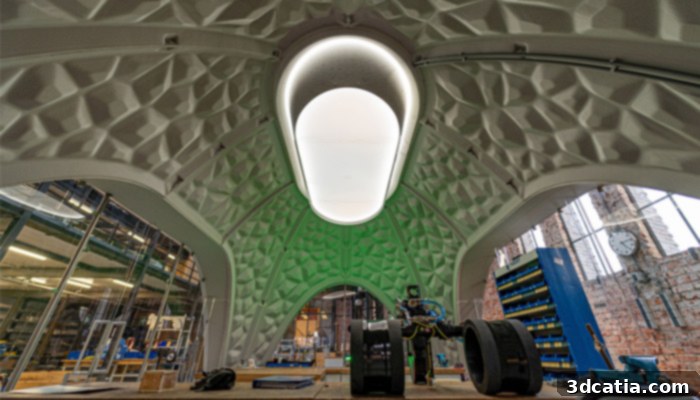
R-IGLO is modular and customizable (photo credits: Royal3D)
The R-IGLO project by Royal3D and ArchiTech Company marks a significant stride in additive manufacturing, demonstrating its capacity to deliver sustainable, functional, and aesthetically pleasing solutions using recycled materials. This initiative not only addresses the growing demand for eco-friendly construction but also showcases the potential for local production and circular economy models to thrive within the architectural landscape. As the world grapples with environmental challenges, projects like R-IGLO offer tangible hope and practical pathways towards a more sustainable future, where innovation and responsibility go hand in hand.
What are your thoughts on the innovative R-IGLO shelter? How do you perceive 3D printing’s growing influence and transformative potential within the architectural and construction sectors? We invite you to share your insights and comments below, or engage with us on our social media platforms: Linkedin, Facebook, and Twitter! For the very latest updates, breakthroughs, and news from the exciting world of 3D printing, remember to sign up for our free weekly Newsletter here, delivered straight to your inbox.