
Transforming Lives: How 3D Printing is Revolutionizing Disability and Accessibility
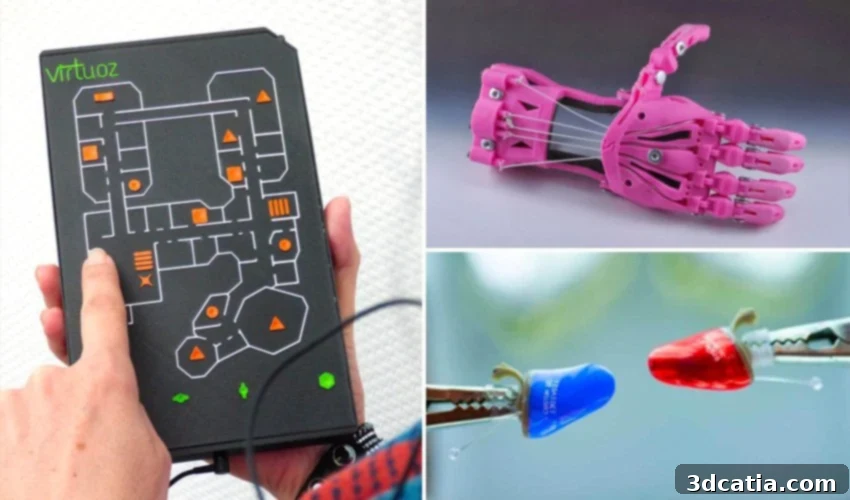
3D printing, also known as additive manufacturing, has emerged as a groundbreaking technology, profoundly enhancing the daily lives of countless individuals with disabilities. This innovative process facilitates the creation of highly personalized and user-friendly objects and services, specifically tailored to address unique needs. From custom-fit wheelchairs to advanced prostheses and orthoses, the applications are vast and continuously expanding. A key advantage of additive manufacturing lies in its ability to make customization easier, faster, and significantly more affordable. This level of personalization ensures that each device perfectly matches its user’s specific requirements, offering unparalleled comfort and functionality. Moreover, 3D printing often introduces an important aesthetic component, challenging traditional perceptions of disability. Imagine children’s prostheses designed to resemble their favorite superheroes – such creativity not only provides practical assistance but also boosts confidence and self-esteem. As we delve deeper, you’ll discover the increasingly diverse and impactful applications of 3D printing in the disability sector, showcasing remarkable projects that are truly changing lives.
3D Printed Prosthetics: Customization Meets Innovation
The field of prosthetics is perhaps one of the most prominent areas where 3D printing has made an undeniable impact. The confluence of 3D technologies and custom prostheses is accelerating, enabling the design of devices that are not only more affordable but also highly personalized and produced in significantly shorter timeframes. This rapid evolution is largely due to the democratization of the FDM (Fused Deposition Modeling) process, which has made 3D printing accessible to a wider audience. Consequently, a growing number of associations, companies, and communities are actively involved in providing 3D printed prostheses. A shining example is e-NABLE, a global network of volunteers and makers dedicated to designing and 3D printing free prosthetic hands and arms for those in need, with a particular focus on children. Their open-source designs and collaborative spirit have empowered thousands, offering functional devices that were once financially out of reach for many.
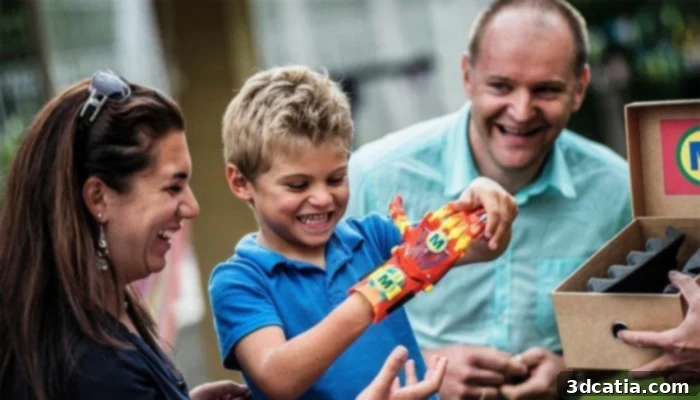
Photo Credits: J. PACHOUD/AFP
Beyond charitable initiatives, several commercial entities have also embraced 3D printing to create innovative prosthetic solutions. Companies like UNYQ have pioneered stylish and custom-designed covers for prosthesis sockets for both upper and lower limb amputees. These covers transform a medical device into a unique fashion statement, allowing wearers to express their individuality. Each UNYQ solution is tailor-made to the wearer’s aesthetic preferences and anatomical measurements, with production typically completed in a mere three weeks. The personalization extends beyond mere aesthetics, contributing significantly to the wearer’s comfort and confidence. Other notable innovators include Unlimited Tomorrow, renowned for its ultra-realistic and highly functional prosthetic limbs; Open Bionics, creators of the award-winning Hero Arm, a bionic hand inspired by pop culture; and Exoneo, specializing in advanced 3D printed foot prostheses. The continuous influx of such projects underscores the transformative power of 3D printing in delivering diverse, effective, and visually appealing prosthetic devices.
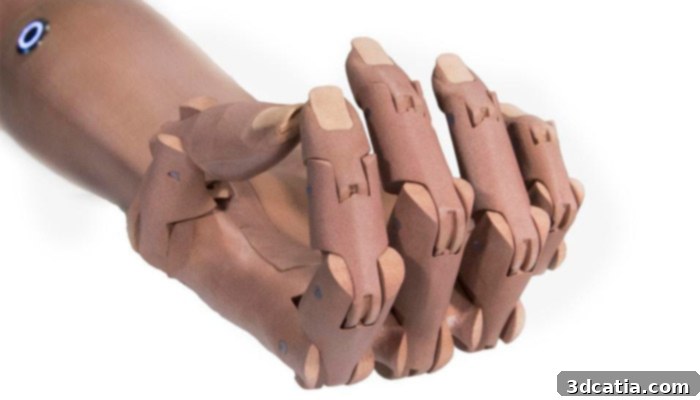
Photo Credits: Unlimited Tomorrow
A Visionary Breakthrough: The First 3D Printed Prosthetic Eye
In a monumental medical achievement in 2021, London’s Moorfields Eye Hospital successfully fitted patient Steve Verze with the world’s first fully 3D printed prosthetic eye. This remarkable feat was the culmination of four years of dedicated research and development, a collaborative effort involving Moorfields Eye Hospital, the UCL Institute of Ophthalmology, and Fraunhofer. The traditional method of crafting prosthetic eyes is a labor-intensive, manual process that can take weeks, involving skilled artisans. However, with 3D printing, the patient’s eye socket was precisely scanned in a mere 2.4 seconds, followed by the rapid 3D printing of the prosthetic eye using a machine from Fit AG. This dramatically reduces manufacturing time, offering a quicker and more comfortable experience for patients. Steve Verze himself articulated the profound impact, stating that the prosthesis has given him renewed confidence after waiting nearly two decades for this moment. This innovation perfectly exemplifies how 3D technologies are capable of not only accelerating production but also enhancing the quality of life for individuals by providing incredibly accurate, custom-fit, and aesthetically convincing solutions, drastically cutting down on waiting times for essential medical devices.
Navigating the World: 3D Printed Tactile Maps for the Visually Impaired
3D printing is also proving invaluable in enhancing independent mobility for the visually impaired through the creation of tactile maps. These innovative maps allow users to “feel” places and routes, providing crucial spatial information through touch. Numerous projects of this nature have emerged over the years, contributing significantly to accessibility. One such initiative is See3D, which focuses on providing 3D printed models to blind and visually impaired individuals. A recent and impactful project hails from Italy, where the S. Alessio Margherita di Savoia Hospital, in partnership with 3DItaly, developed a comprehensive tactile model. This model, strategically placed at the entrance of the Spallanzani Hospital in Rome, was designed to guide visually impaired patients to the COVID-19 vaccination center. Printed using an Ultimaker S5 Pro Bundle printer, the map ingeniously incorporates volumetric shapes, Braille text, and bright, high-contrast colors, making identification easier for those with residual vision. Another remarkable application comes from French startup FeelObject, which created Virtuoz – an interactive 3D printed touch map. Virtuoz is designed to represent the intricate interiors of buildings and homes, integrating audio information and universally recognized symbols for key landmarks such as emergency exits, restrooms, and reception areas. These tactile maps represent a significant step forward in enabling greater independence and ease of navigation for the visually impaired, transforming complex environments into comprehensible tactile experiences.
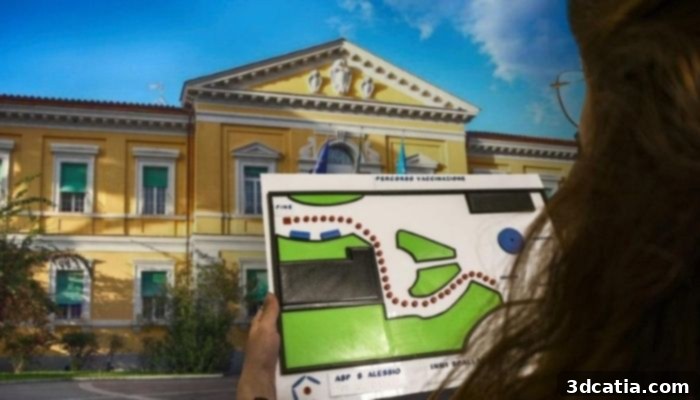
The 3D printed tactile map at the Spallanzani Hospital in Rome. (Photo credits: 3Ditaly)
TypeCase: A Revolutionary 3D Printed Keyboard for the Blind
For individuals with visual impairments, interacting with a smartphone’s virtual touch keyboard can present significant challenges. Recognizing this barrier, Dougie Mann, an accomplished mechanical engineering and product design graduate from Imperial College London and the Royal College of Art, conceived and developed an innovative solution: TypeCase. This ingeniously designed accessory is a 3D printed keyboard seamlessly integrated into a smartphone case, dramatically reducing the number of keys from a typical 50 to just 5. These five keys are strategically positioned along the sides of the smartphone, ensuring easy and ergonomic access for each finger of the hand. To compose letters, words, or characters, users simply tap the keys in specific sequences, akin to a simplified Morse code or chorded keyboard system. But TypeCase offers more than just input; it also facilitates reading. Through a sophisticated haptic feedback system, the user can “feel” the text as subtle vibrations in each finger, employing the same code used for writing. This tool is not only innovative but also exceptionally intuitive, providing a highly effective and accessible alternative to traditional keyboards for visually impaired people, fostering greater digital inclusion and independence in communication.
Tailor-Made Vehicles: Enhancing Mobility for Drivers with Disabilities
German company Paravan GmbH is at the forefront of adapting vehicles to meet the unique needs of drivers with disabilities. Their mission revolves around transforming standard motor vehicles and offering specialized electric wheelchairs to empower individuals to drive independently and safely. A critical aspect of their customization process involves precise dimensional measurements to ensure optimal comfort and control. To achieve this, Paravan leverages advanced 3D scanning technology, specifically employing a Go!SCAN SPARK from Creaform3D. This scanner accurately determines the ideal seating position for the driver, meticulously mapping out the placement of various control tools, such as steering mechanisms and accelerator-brake systems. Traditionally, these intricate adjustments on a customer’s vehicle would require extensive manual work, with the customer present for every modification, a time-consuming and often cumbersome process. With the integration of the 3D scanner, Paravan can now perform many adjustments virtually and in advance, significantly streamlining the customization workflow and drastically reducing the time required for vehicle modifications. This technological adoption not only enhances efficiency but also ensures a perfectly tailored and ergonomic driving experience, greatly improving the mobility and independence of individuals with disabilities.
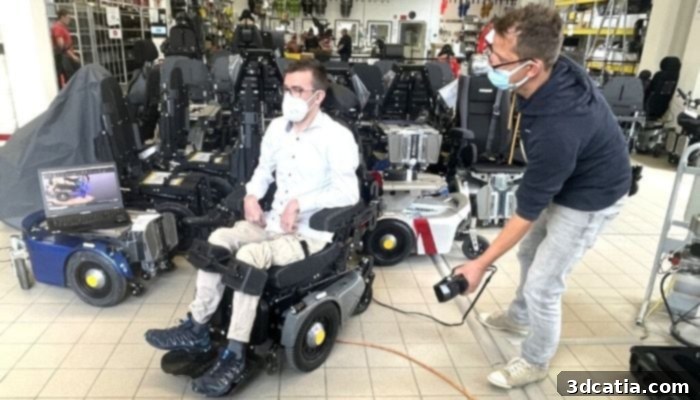
Photo Credits: Paravan GmbH
Sonova: Crafting Customized Hearing Aids with 3D Printing
Sonova, a global leader in hearing solutions, extensively utilizes 3D printing to develop highly customized hearing aids, demonstrating the technology’s vital role in sensory assistive devices. Their focus is on creating personalized in-the-ear and behind-the-ear devices that precisely match the unique anatomical features of each patient’s ear canal and their specific degree of hearing loss. For hearing aids, a perfect fit is paramount; it ensures maximum comfort, optimal sound transmission, and minimizes acoustic feedback. The manufacturing process begins with a traditional, hand-crafted mold of the patient’s ear canal. This physical impression is then digitized into a 3D model. Expert designers at Sonova adapt this digital model to create the ideal housing shape, which is then sent to advanced 3D printers. During the additive manufacturing process, a light-curing acrylic resin is meticulously built up layer by layer, accurately shaping the intricate housing of the hearing aid. This sophisticated approach allows for unparalleled customization, leading to devices that are not only comfortable and discreet but also acoustically superior, significantly improving the quality of life for individuals with hearing impairments. The precision afforded by 3D printing ensures that each hearing aid is a bespoke solution, perfectly integrating with the user’s anatomy for optimal performance.
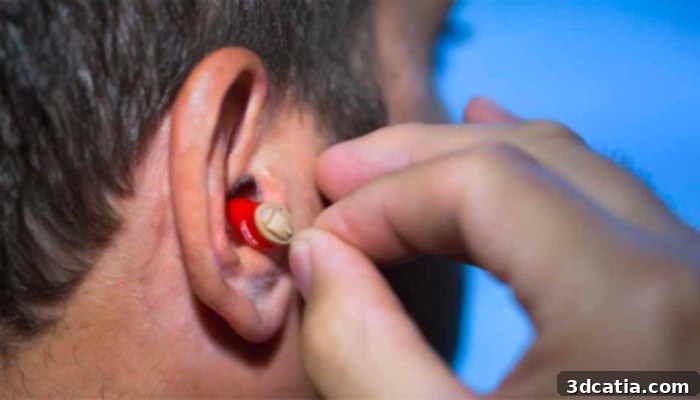
Photo Credits: Sonova
IKEA and the ThisAble Range: Accessible Furniture for Everyone
The global furniture giant, IKEA, has made a commendable foray into inclusive design with its innovative product line called ThisAble. This initiative offers a range of 3D printed furniture extensions designed to enhance the accessibility and usability of everyday IKEA products for people with disabilities. These extensions can be easily attached to various furniture items such as cabinets, sofas, and even shower curtains, simplifying daily tasks and improving independence within the home environment. What makes ThisAble particularly impactful is its commitment to open-source accessibility: the 3D files for these extensions are freely available online for download. This empowers individuals, caregivers, and local makers to 3D print the necessary modifications at home or at a local service, promoting a community-driven approach to accessibility. The range is continually evolving, with new models being added regularly, catering to both adults and children. For instance, users can 3D print an extension to elevate a sofa, making it easier to sit down and stand up, or install specialized window protections to prevent damage from wheelchair impacts. Other examples include larger handles for easier gripping, aids for pressing buttons, and enhanced stability features. By providing these practical and customizable solutions, IKEA, through the ThisAble range, demonstrates how mainstream brands can leverage 3D printing to make their products more inclusive and contribute significantly to improved daily living for people with diverse needs. You can explore all the available models HERE.
3D Printing for Handicapped Animals: Restoring Mobility and Quality of Life
Finally, no comprehensive overview of 3D printing’s impact on disability would be complete without acknowledging its profound benefits for animals. In recent years, numerous heartwarming cases have emerged where animals, facing mobility challenges or injuries, have regained their ability to move and thrive thanks to 3D printed solutions. Whether it’s a prosthesis for a missing limb, an orthosis to support an injured joint, or a custom implant for a complex surgical need, additive manufacturing provides unparalleled flexibility in design and fit. Unlike human prosthetics, animal prosthetics often require even more intricate customization due to the vast diversity in animal anatomies – from a tiny bird to a large dog. 3D printing’s ability to create perfectly tailored devices, adapting to the unique contours and gait of each animal, is truly revolutionary. Companies like Bionic Pets, Wizard of Paws, and DiveDesign specialize in leveraging additive manufacturing to offer medical devices that are not only functional but also comfortable and durable for their animal patients. These personalized tools allow beloved pets and wildlife to regain their mobility, reduce pain, and significantly improve their quality of life, showcasing the boundless compassion and innovation enabled by 3D printing across all species.
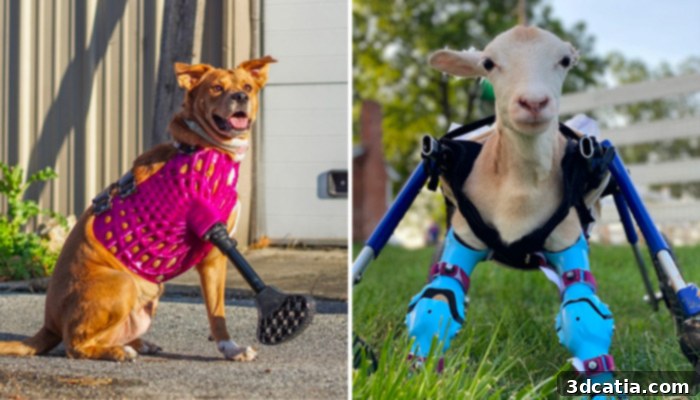
The diverse applications highlighted above underscore a pivotal truth: 3D printing is not just a technological advancement but a powerful tool for promoting inclusivity, independence, and improved quality of life for individuals with disabilities, and even for our animal companions. Its capacity for rapid prototyping, cost-effective customization, and aesthetic integration continues to open new avenues for innovation, transforming challenges into opportunities. Which of these innovative applications resonated with you the most? We invite you to share your thoughts and comments below or connect with us on our LinkedIn, Facebook, and Twitter pages! Don’t forget to sign up for our free weekly Newsletter here to receive the latest 3D printing news directly in your inbox. You can also explore all our insightful videos on our YouTube channel.