
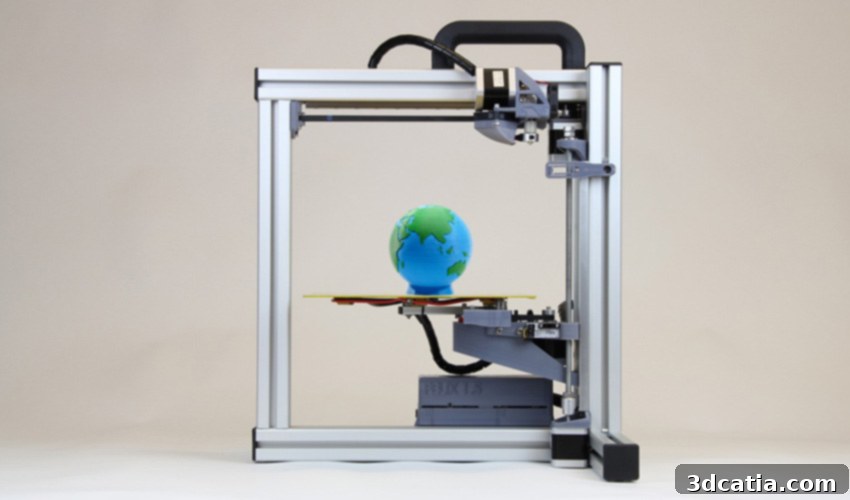
Innovative Sustainability: How 3D Printing Transforms Waste into a Greener Future
3D printing, or additive manufacturing, is increasingly recognized as a fundamentally greener manufacturing method compared to traditional techniques. Its inherent efficiency stems from the ability to build objects layer by layer, consuming only the material required for the final product. This contrasts sharply with subtractive manufacturing processes, which, by definition, carve away material from a larger block, often leading to significant waste. Beyond this core advantage, the additive manufacturing sector is actively embracing sustainability through innovative projects that champion recycling, waste reduction, and the creation of eco-friendly materials. On occasions like World Earth Day and throughout the year, these pioneering initiatives highlight how 3D printing can be a powerful tool in developing a more environmentally respectful approach to production and consumption. We are excited to delve into 12 inspiring projects that brilliantly merge 3D printing with sustainability, offering tangible solutions for our planet. The collective hope is that the number of such impactful projects will continue to grow exponentially, driving a global shift towards a truly circular economy.
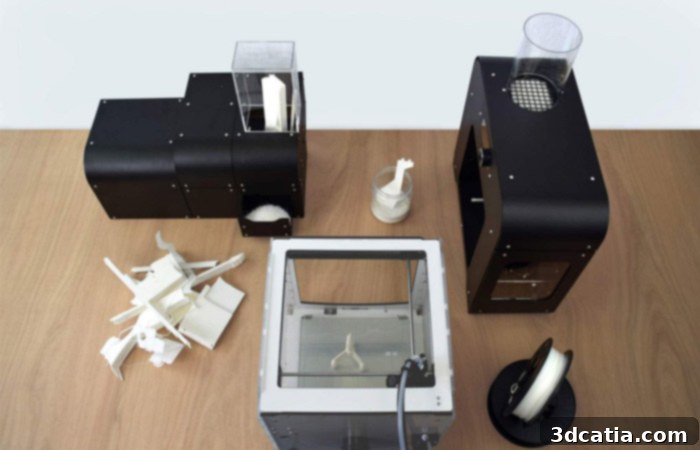
ProtoCycler from ReDeTec: Pioneering Waste Reduction Through 3D Printing
Addressing the often-overlooked waste stream within the 3D printing community itself, the ProtoCycler machine, developed by the innovative Canadian company ReDeTec, offers a groundbreaking solution. ReDeTec recognized that despite 3D printing’s material efficiency, significant amounts of plastic scraps, failed prints, and support structures frequently ended up in landfills. Their response was to create not just an additive manufacturing accessory, but a complete recycling ecosystem. The ProtoCycler allows users to produce their own high-quality plastic filament directly from recycled waste plastics or virgin granules. This revolutionary system efficiently grinds, melts, and extrudes plastic into usable filament, effectively closing the loop on material consumption for 3D printing enthusiasts and professionals alike. Initially capable of recycling the most common plastics used in the market, ReDeTec is continuously expanding its material compatibility. The long-term vision for ProtoCycler is ambitious yet vital: to transform how plastic waste is managed, ultimately replacing traditional plastic disposal bins with a ubiquitous recycling and filament production system, fostering a truly sustainable 3D printing environment.
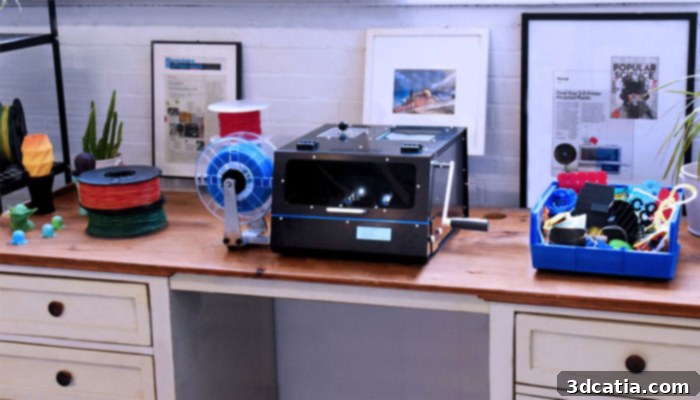
SHR3D IT from 3Devo: Revolutionizing Waste into Valuable 3D Printing Materials
Founded in 2015, the Dutch company 3Devo emerged as a significant player in the sustainable 3D printing landscape. In 2017, they introduced SHR3D IT, an ingenious machine designed to tackle the global plastic waste crisis by transforming everyday plastic waste into high-quality 3D printable granules. This powerful system ingeniously combines the functionalities of a robust shredder, demonstrating impressive efficiency by recycling up to 5.1 kilograms of plastic per hour. But 3Devo’s commitment to a circular economy doesn’t stop there. Complementing the SHR3D IT, the startup has also developed a sophisticated filament extruder that allows users to create fresh 3D printing filament directly from these newly processed granules. This dual-machine setup offers a comprehensive, integrated solution for material recycling and production, empowering individuals, workshops, and businesses to establish their own closed-loop systems for 3D printing. By turning what was once considered waste into a valuable resource, 3Devo’s SHR3D IT exemplifies how technological innovation can drive profound environmental benefits, making personalized material creation both accessible and sustainable.
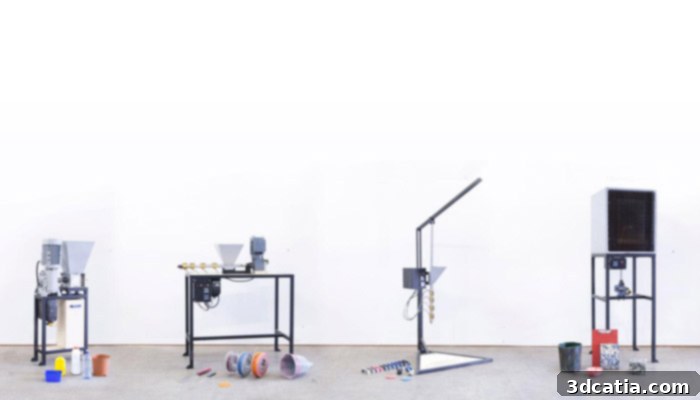
Precious Plastic: Empowering Global Communities in the Fight Against Plastic Pollution
The Netherlands continues to be a hotbed of innovation in sustainable 3D printing, exemplified by the globally recognized Precious Plastic initiative. This ambitious project directly confronts the pervasive issue of plastic pollution by empowering individuals and communities worldwide to take recycling into their own hands. Precious Plastic isn’t just a concept; it’s a comprehensive, open-source ecosystem comprising designs for various plastic recycling machines. These include robust shredders capable of breaking down plastic waste, extrusion systems for producing 3D printing filament, and even injection and compression machines for creating new products. What makes Precious Plastic truly revolutionary is its open-source philosophy: all machine blueprints and operational guides are freely available, enabling anyone with basic technical skills to build and operate these systems in their local communities. The initiative fosters a vibrant global network, facilitating knowledge sharing and practical workshops, ensuring that people not only have access to the technology but also the expertise to utilize it effectively. By decentralizing plastic recycling and promoting local manufacturing, Precious Plastic stands as a powerful testament to collective action, transforming waste into valuable resources and making a tangible impact on the fight against plastic pollution, one community at a time.
Refil: Merging 3D Printing and Sustainability with Innovative Recycled Filaments
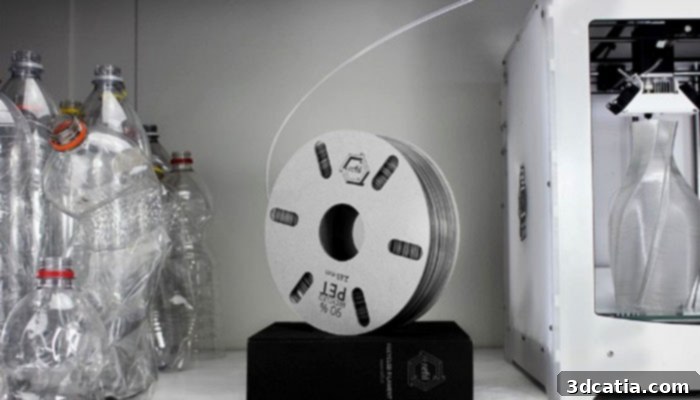
Based in the Netherlands, Refil is a pioneering company deeply committed to integrating sustainability into the core of 3D printing by offering high-quality filaments made from recycled plastics. As a project under the innovative Better Future Factory design studio, which specializes in sustainable developments, Refil meticulously sources plastics from various industrial and consumer waste streams, transforming them into premium filaments suitable for FDM 3D printers. Their dedication to circularity is evident in their impressive product range. Refil has successfully developed four distinct types of 100% recycled filaments, each with a unique origin story. These include ABS filament derived from discarded car dashboards, PET filament ingeniously repurposed from plastic bottles, and PLA filament created from white plastics such as yogurt containers. Most recently, they introduced HIPS filament, produced by recycling old refrigerators, demonstrating their continuous innovation in material recovery. By giving new life to waste, Refil not only reduces landfill burden but also provides environmentally conscious 3D printing enthusiasts with accessible and affordable alternatives, with coils priced competitively at around 30€, proving that sustainable choices don’t have to come at a premium.
Francofil: Sustainable 3D Printing with Groundbreaking Bioplastic Filaments
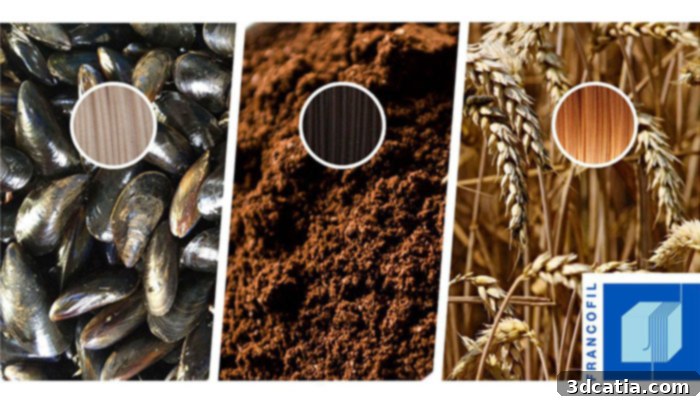
From France, the innovative startup Francofil is carving a niche in the sustainable 3D printing market by developing unique filaments based on bioplastics, marketed under the NaturePlast brand. Their approach is truly pioneering, as they leverage waste streams from diverse industries to create eco-friendly materials. Francofil’s filaments are not only derived from recycled products but also incorporate unusual organic sources like mussel shells, oyster shells, and even scallops, turning what would otherwise be discarded into valuable printing resources. Beyond seafood waste, they also ingeniously recycle agricultural byproducts such as wheat and coffee waste, transforming these into functional and aesthetically pleasing filaments. This innovative spirit is reminiscent of similar efforts by companies like the American firm 3Dom, pushing the boundaries of what constitutes a viable 3D printing material. By utilizing these unconventional bioplastics, Francofil offers users the ability to imbue their 3D printed projects with a distinctive, original touch, complete with natural textures and subtle scents. For instance, a coil of their oyster-based filament can be purchased for approximately 35€, providing an accessible way for designers and makers to embrace truly sustainable and uniquely tactile materials in their creative endeavors.
3D Fuel: Leading the Charge with Hemp and Other Sustainable Filaments
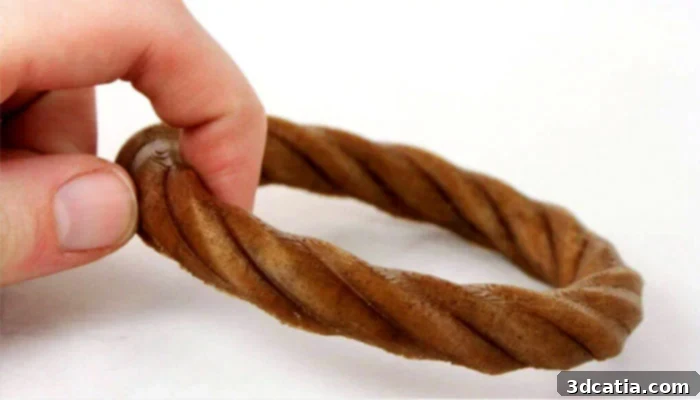
3D Fuel, an American startup, is making significant strides in the realm of sustainable 3D printing materials, specializing in the manufacture of high-quality filaments crafted from recycled and bio-based sources. Much like their French counterpart, Francofil, 3D Fuel embraces innovative approaches to material creation. Their product line includes unique filaments derived from coffee waste, offering a distinct aesthetic and sustainable appeal. Expanding on this creative foundation, they also feature beer-based filaments in their range, demonstrating a commitment to repurposing unexpected organic byproducts. Furthermore, 3D Fuel actively participates in plastic recycling, offering a PET filament made from recycled bottles and even a filament sourced from general recycled garbage, directly tackling the pervasive issue of plastic pollution. However, one of 3D Fuel’s most notable and outstanding innovations is their development of a 3D filament based on hemp. This remarkable material stands out in the industry due to its versatile possibilities, impressive production capabilities, and inherently low environmental impact. Hemp is a rapidly renewable resource that requires minimal water and no pesticides to grow, making it an exceptionally eco-friendly choice. By offering materials like hemp filament, 3D Fuel provides creators with robust, sustainable options that contribute to a greener future for additive manufacturing, with a coil of this unique material available from 45€ on their website.
Million Waves Project: Transforming Ocean Plastic Waste into Life-Changing Prostheses
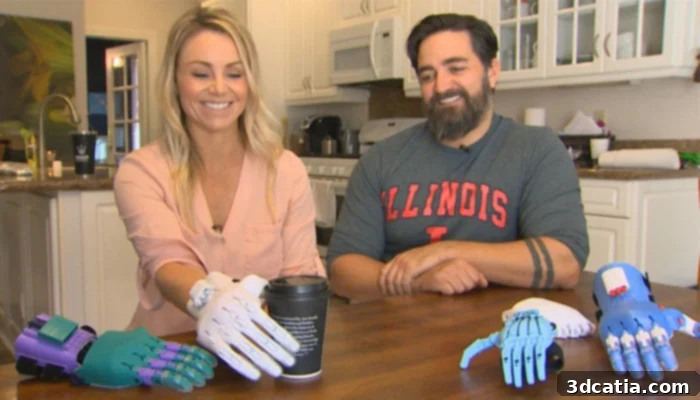
The Million Waves Project embodies a powerful synergy between environmental clean-up and humanitarian aid, demonstrating how 3D printing can address two critical global challenges simultaneously. This inspiring initiative is dedicated to transforming vast quantities of plastic waste, particularly that found on beaches and in our oceans, into functional and affordable 3D printed prostheses. The project’s dual mission is to significantly reduce marine plastic pollution while providing much-needed medical solutions for individuals in developing countries who lack access to conventional prosthetic limbs. Since its inception, the Million Waves Project has yielded promising results, showcasing its potential to positively impact countless lives and contribute meaningfully to freeing our oceans from at least a portion of the pervasive plastic garbage. The project leverages an innovative app-based platform that connects individuals requiring prostheses with a global network of volunteers equipped with 3D printers. After essential measurements are submitted, custom-fit, low-cost prostheses can be designed and printed, often for as little as $45. This collaborative, technology-driven approach not only offers practical medical assistance but also raises awareness about the urgency of plastic recycling and the transformative power of additive manufacturing for social good.
Artificial Reef by XtreeE: Combating Climate Change with Innovative 3D Printed Solutions
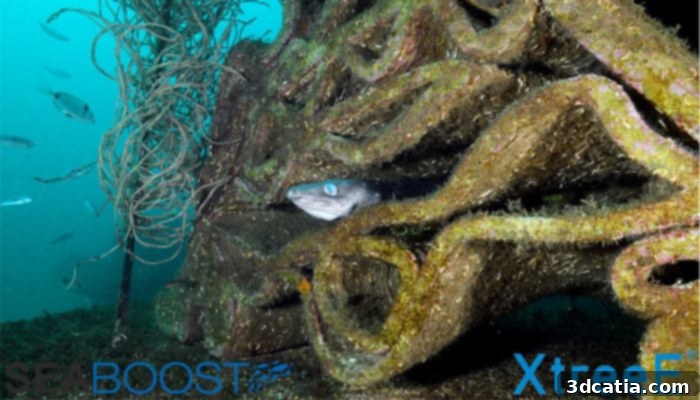
In a remarkable demonstration of how large-format 3D printing can contribute to ecological restoration, the French company XtreeE made headlines in 2017 by installing the world’s first 3D printed artificial coral reef. This pioneering project, situated in the ecologically vital Calanques National Park in southern France, aimed to revitalize a degraded marine habitat and foster biodiversity. XtreeE collaborated with Seaboost, a division of the Egis Group renowned for its expertise in marine biology and ecological engineering. By combining their profound knowledge in large-format concrete 3D printing with cutting-edge marine biological design principles, they were able to create an intricate, innovative reef structure. XtreeE’s advanced 3D printing technology allowed for the precise fabrication of complex geometries that closely mimic natural coral formations, providing ideal crevices and surfaces for marine life to colonize and thrive. This method offers a sustainable and efficient way to create bespoke artificial habitats at scale. By the end of 2018, the success of the project was evident, with XtreeE proudly reporting the arrival of the first inhabitants to the newly established reef, underscoring the potential of additive manufacturing to combat environmental degradation and restore delicate ecosystems.

Print your City!: Transforming Urban Plastic Waste into 3D Printed Furniture
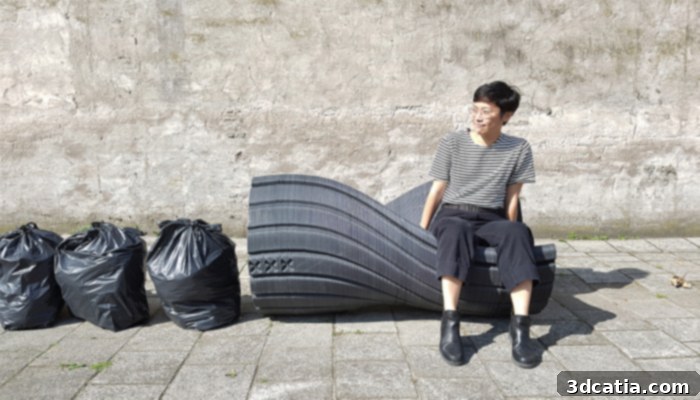
Print your City! is a visionary initiative that harnesses the power of large-format 3D printing to tackle urban plastic waste head-on. This innovative project focuses on transforming discarded plastics into functional and aesthetically pleasing street furniture, directly contributing to the beautification and sustainability of cities. The core concept revolves around creating a localized circular economy where plastic waste collected from urban environments is processed and then 3D printed into benches, planters, and other public amenities. This not only diverts massive amounts of plastic from landfills and incinerators but also actively engages local communities in the urban design process. Citizens can often participate by contributing their plastic waste or even by suggesting designs, fostering a sense of ownership and collective responsibility for their urban spaces. Print your City! operates in partnership with The New Raw, an acclaimed design and research studio that successfully implemented a similar project in Thessaloniki, Greece. The program exemplifies how combining plastic recycling with community collaboration and advanced manufacturing can lead to tangible environmental benefits and enhanced civic pride, making cities greener and more engaging through locally sourced and produced 3D printed solutions.
WASP: Sustainability at the Heart of its 3D Printing Construction Projects
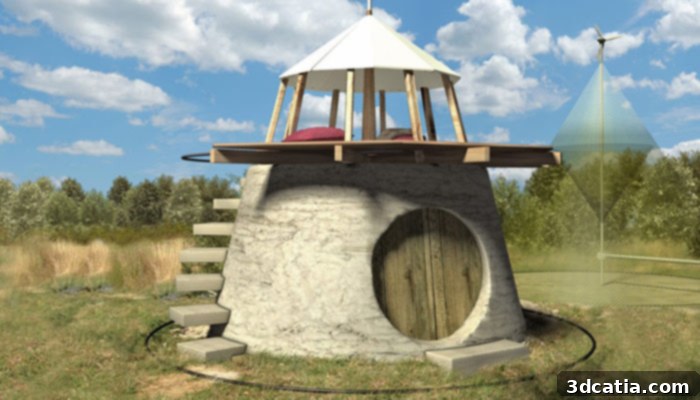
The Italian manufacturer WASP (World’s Advanced Saving Project) has consistently positioned sustainability at the very core of its mission, particularly within the construction sector. In 2015, WASP unveiled its groundbreaking BigDelta machine, a colossal 12-meter-high 3D printer initially conceived to facilitate the construction of affordable, sustainable housing worldwide. A year later, the group further solidified its ambitious vision by announcing plans to build an entire ecological village named Shamballa in Italy. The initiative aimed to 3D print the majority of the homes and essential buildings within this village using WASP’s additive manufacturing solutions, exclusively employing local and natural materials such as earth, straw, and compost. This philosophy is driven by a deep conviction that 3D printing technologies can be democratized and leveraged to sustainably meet humanity’s most fundamental needs. Most of WASP’s projects, therefore, ingeniously combine the transformative power of 3D printing with robust sustainable practices. In 2018, WASP advanced its construction technology by releasing the Crane WASP, a modular and collaborative 3D printer offering diverse configurations for various construction needs. This machine was notably tested in the “Gaia” project, a house 3D printed entirely from a mixture of earth, straw, and compost. More recently, WASP achieved another milestone with the completion of TECLA, the world’s first fully 3D printed house constructed entirely from local raw earth, proving the viability of large-scale, eco-friendly, and cost-effective construction methods for a sustainable future.
Solar Voyager: Raising Awareness with an Expeditionary 3D Printed Electric Vehicle
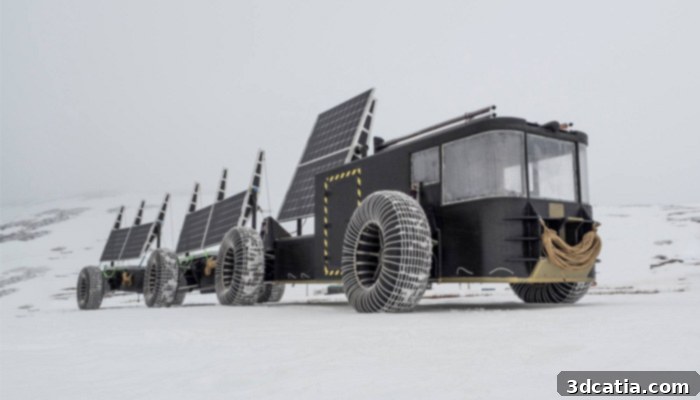
The Dutch association Clean2Antarctica is a powerful advocate for a zero-waste lifestyle, passionately promoting the development of sustainable alternatives to our current consumption patterns. To vividly illustrate the immense potential of 3D printing technologies in fostering sustainability, the association embarked on an ambitious partnership with experts to conceive and construct the Solar Voyager. This groundbreaking electric vehicle stands as a testament to eco-friendly innovation, as it was largely constructed from recycled plastic waste. The materials for this unique all-terrain vehicle were meticulously sourced by “urban miners” – dedicated young individuals who diligently collected plastic waste from the streets of their hometowns and from communal waste bins. This salvaged plastic was then transformed and used to 3D print the robust and lightweight body of the vehicle. In a symbolic and impactful journey, the founders of Clean2Antarctica piloted the sun-powered Solar Voyager on an expedition to the South Pole in Antarctica. The choice of destination was deliberate and profoundly meaningful: Antarctica, containing 90% of the world’s ice, belongs to no one and epitomizes a pristine, zero-waste environment. Taking the Solar Voyager to this untouched continent served as an undeniable and compelling statement, effectively raising global awareness about plastic pollution, the imperative of recycling, and the transformative capabilities of sustainable 3D printing.
Upprinting Food: Transforming Food Waste into Delicious 3D Printed Snacks
The global issue of food waste, exacerbated by mass production, presents a significant environmental and ethical challenge, with colossal amounts of food discarded at every stage of the supply chain—from processing and distribution to final consumption. Recognizing this pervasive problem, Elzelinde van Doleweerd, a bright young entrepreneur from the Netherlands, developed an innovative process to rescue and repurpose food that would otherwise be destined for waste. Her project’s remarkable success led to the establishment of Upprinting Food, a pioneering company dedicated to producing delicious and visually appealing 3D printed snacks from various forms of food waste. For example, by transforming stale bread into a finely textured food paste, she developed a method to 3D print it into a much tastier and more appealing alternative to its original, discarded form. This paste-based approach not only extends the shelf life of food by preventing exposure to air and spoilage but also offers new culinary possibilities. Upprinting Food is currently extending its impactful work to China, a region facing particularly high rates of food waste, especially concerning staple foods like rice. Beyond its practical benefits, Upprinting Food’s creations are celebrated for their unique artistry and elegant presentation, cleverly disguising the humble origins of their ingredients and proving that sustainability can indeed be both innovative and delectable.

These 12 pioneering initiatives beautifully illustrate the transformative power of 3D printing in addressing some of our planet’s most pressing environmental challenges. From repurposing plastic waste into valuable filaments and life-saving prostheses to constructing sustainable homes from local earth and transforming food scraps into gourmet snacks, additive manufacturing is proving to be a versatile and indispensable tool for a greener future. These projects demonstrate a clear path towards a more circular economy, where waste is minimized, resources are optimized, and innovation serves the greater good. What are your thoughts on these groundbreaking endeavors? Share your insights and join the conversation in the comments below or on our Facebook and Twitter pages! Don’t miss out on the latest advancements in sustainable 3D printing – sign up for our free weekly Newsletter here and get the freshest news delivered straight to your inbox!