
Embracing Sustainability in 3D Printing: The Essential Guide to Refill Filaments and Reusable Spools
The rapid growth of fused deposition modeling (FDM/FFF) 3D printing has brought incredible innovation, but it has also presented a pressing environmental challenge: the substantial accumulation of empty plastic filament spools. This issue is a common pain point for countless 3D printing enthusiasts and professionals alike. While some conscientious users attempt to recycle these spools, a significant number end up in general waste streams, making proper sorting and recycling nearly impossible. Beyond the undeniable environmental impact, these discarded spools can quickly become a cumbersome burden, particularly for those who frequently use large quantities of filament, leading to storage dilemmas and increased clutter.
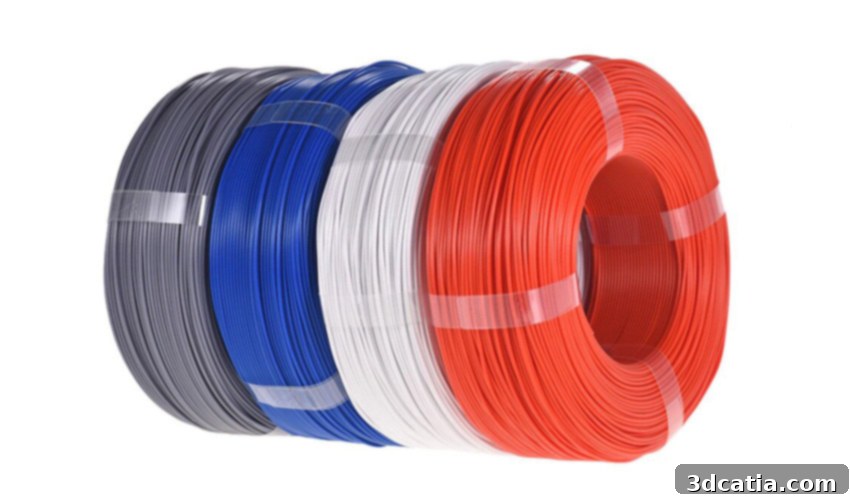
In a concerted effort to mitigate these growing barriers and promote more sustainable practices, several innovative material manufacturers have re-envisioned the very concept of filament packaging. They have introduced “spool-less” filament solutions, commonly referred to as “Refill” systems. These groundbreaking initiatives represent a crucial step towards reducing waste in the additive manufacturing sector. For instance, in France, the prominent distributor Atome3D has been a leading proponent of these sustainable alternatives, actively offering refill solutions from reputable brands such as eSun and Tag3D, with Rosa3D soon to join their eco-conscious lineup. Their commitment underscores a broader industry policy aimed at significant waste reduction, aligning 3D printing with a more circular economy.
While 3D printing inherently champions material efficiency by only utilizing the precise amount required for a specific print, thereby minimizing overconsumption, its overall environmental footprint remains a critical area of concern. The industry, by its very nature, is a significant consumer of plastics, and the intricacies of recycling these materials continue to be a central focus for many stakeholders. The discussion extends beyond the mere composition of polymers—whether derived from fossil fuels or natural, bio-based resources—to the often-overlooked challenge of packaging. For the ubiquitous FDM/FFF process, filaments are almost universally sold wound around plastic spools. Once these spools are depleted, their fate is often uncertain. While some creative individuals repurpose them for storage, organization, or as DIY winders, they inevitably occupy valuable space and still represent a single-use item in their original context.
This recognition of the packaging problem has spurred the development of intelligent, refillable spool systems, most notably the “MasterSpool” concept. This ingenious approach draws inspiration from other industries that have successfully transitioned towards sustainability. Consider the cosmetics sector, where consumers increasingly find refillable soap or shampoo bottles, allowing them to purchase only the product, not the container, once the original bottle is empty. Similarly, the widespread adoption of reusable water bottles has drastically reduced the consumption of single-use plastic bottles. Applying this successful model to 3D printing filaments offers a clear path towards minimizing plastic waste, promoting a more responsible and eco-friendly manufacturing ecosystem, and fostering a conscious shift away from disposable packaging towards durable, long-term solutions.
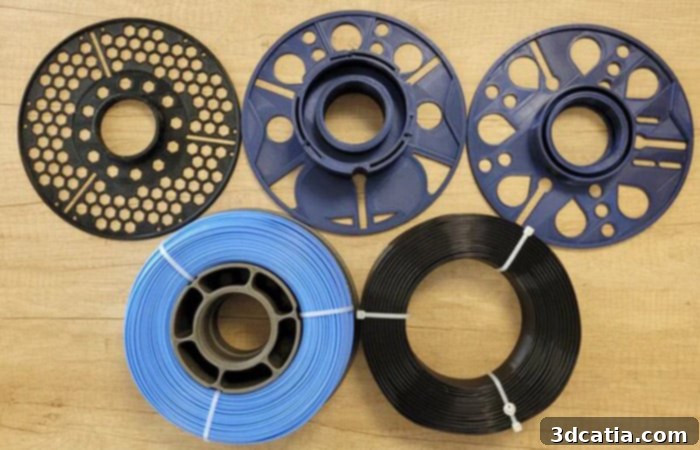
The 3D printed spool and Refill filaments, showcasing a sustainable solution for FDM printing (photo credits: Atome3D)
Atome3D, a frontrunner in providing sustainable 3D printing solutions, proudly offers a comprehensive range of filaments without traditional spools, known as Refill filaments. These innovative materials are primarily designed and manufactured by industry leaders such as eSun and Tag3D, though it’s worth noting that the market is rapidly expanding with more and more manufacturers recognizing the demand for this eco-friendly option. The Atome3D Refill filament collection encompasses popular materials like PLA (Polylactic Acid) and PETG (Polyethylene Terephthalate Glycol-modified), both renowned for their ease of use and versatility in 3D printing. These filaments are available in an impressive array of colors and varying weights, typically offered in 750-gram and 1-kilogram options, catering to diverse project requirements and user preferences. Each Refill filament package is meticulously prepared; it includes essential clamps to securely hold the filament coil in place during storage and handling, and it is meticulously vacuum-packed to provide robust protection against moisture and humidity, ensuring optimal print quality and filament longevity.
To complement these convenient filament refills, users are also presented with highly practical and sustainable reusable spool options. The beauty of this system lies in its flexibility, offering several pathways to embrace a more eco-conscious workflow. One straightforward option is to purchase eSun’s dedicated eSpool coil directly, which is remarkably affordable, typically priced at less than 6 euros. This accessible price point makes it an attractive initial investment for those looking to transition. Furthermore, Atome3D sweetens the deal by offering the eSpool free of charge with every order of three or more Refill filaments, encouraging bulk purchases and further incentivizing sustainability. However, for those who truly wish to personalize and fully integrate the reusable philosophy, the option to create your very own MasterSpool exists. This ingenious system champions the spirit of 3D printing itself: creation. Users simply need to download the readily available STL file from Atome3D’s website and print the spool components right at home on their own 3D printers. The MasterSpool is ingeniously composed of two distinct parts designed to be easily screwed together, creating a robust and functional spool. A thoughtful design feature allows users to visually monitor the amount of filament remaining on the spool, preventing unexpected run-outs mid-print. Additionally, a clever blocking system integrated into the edge of the spool ensures that the filament remains neatly secured when not in active use, preventing tangles and ensuring a smooth printing experience. This DIY approach not only reduces waste but also provides a satisfying, hands-on experience, transforming a disposable item into a valuable, reusable tool.
The implementation of refillable filament systems like the MasterSpool represents a significant stride towards addressing the often-overlooked environmental footprint of 3D printing. By empowering users to print their own reusable spools, it fosters a sense of ownership and directly engages the community in sustainable practices. This model not only reduces the demand for new plastic spools but also minimizes the energy and resources associated with their manufacturing and transportation. The long-term benefits extend beyond immediate waste reduction; it cultivates an ethos of sustainability within the growing 3D printing community, encouraging innovation in material science and closed-loop recycling systems. As the industry continues to mature, solutions like these will become increasingly vital in balancing technological advancement with environmental responsibility, ensuring that the additive manufacturing revolution contributes positively to a greener future.
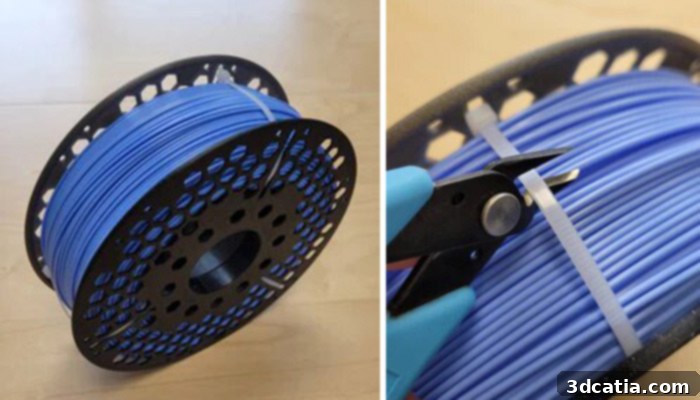
Thanks to the MasterSpool, you can easily and sustainably refill your printer with a new filament, contributing to reduced waste (photo credits: Atome3D)
The shift towards refill filaments and reusable spool systems is more than just a trend; it’s a testament to the industry’s evolving commitment to environmental stewardship. The economic advantages are also noteworthy, as refill filaments can often be more cost-effective per gram due to reduced packaging and shipping weight, offering savings that benefit the end-user. Moreover, the convenience of having a standardized, reusable spool that can be loaded with various materials from different manufacturers simplifies inventory management for frequent printers and reduces the clutter of disparate empty spools. This modular approach aligns perfectly with the DIY spirit of 3D printing itself, where customization and efficiency are highly valued. As awareness of plastic waste grows globally, the demand for such thoughtful and sustainable solutions in all manufacturing sectors, including additive manufacturing, is projected to surge, making these early adoptions by companies like Atome3D and their partners pivotal in shaping the industry’s future.
For those ready to make the switch to a more sustainable 3D printing workflow, you can explore the diverse range of Refill filaments offered by Atome3D and its partners HERE. To guide you through the process of designing and printing your own reusable MasterSpool, and for detailed instructions on how to seamlessly install your new Refill filament, comprehensive tutorials are available HERE (please note, these instructions are currently available in French only). Engaging with these sustainable options not only reduces your personal environmental impact but also supports an industry moving towards a greener, more responsible future.
What are your thoughts on Refill filaments and reusable spool systems? Have you made the switch, or are you considering it? We invite you to share your experiences and insights in a comment below, or join the conversation on our LinkedIn, Facebook, and Twitter pages! Don’t forget to sign up for our free weekly Newsletter here to receive the latest 3D printing news, innovations, and sustainable solutions directly in your inbox. You can also explore all our informative videos and tutorials on our YouTube channel, where we continue to explore the cutting edge of additive manufacturing.
*Cover Photo Credits: eSun